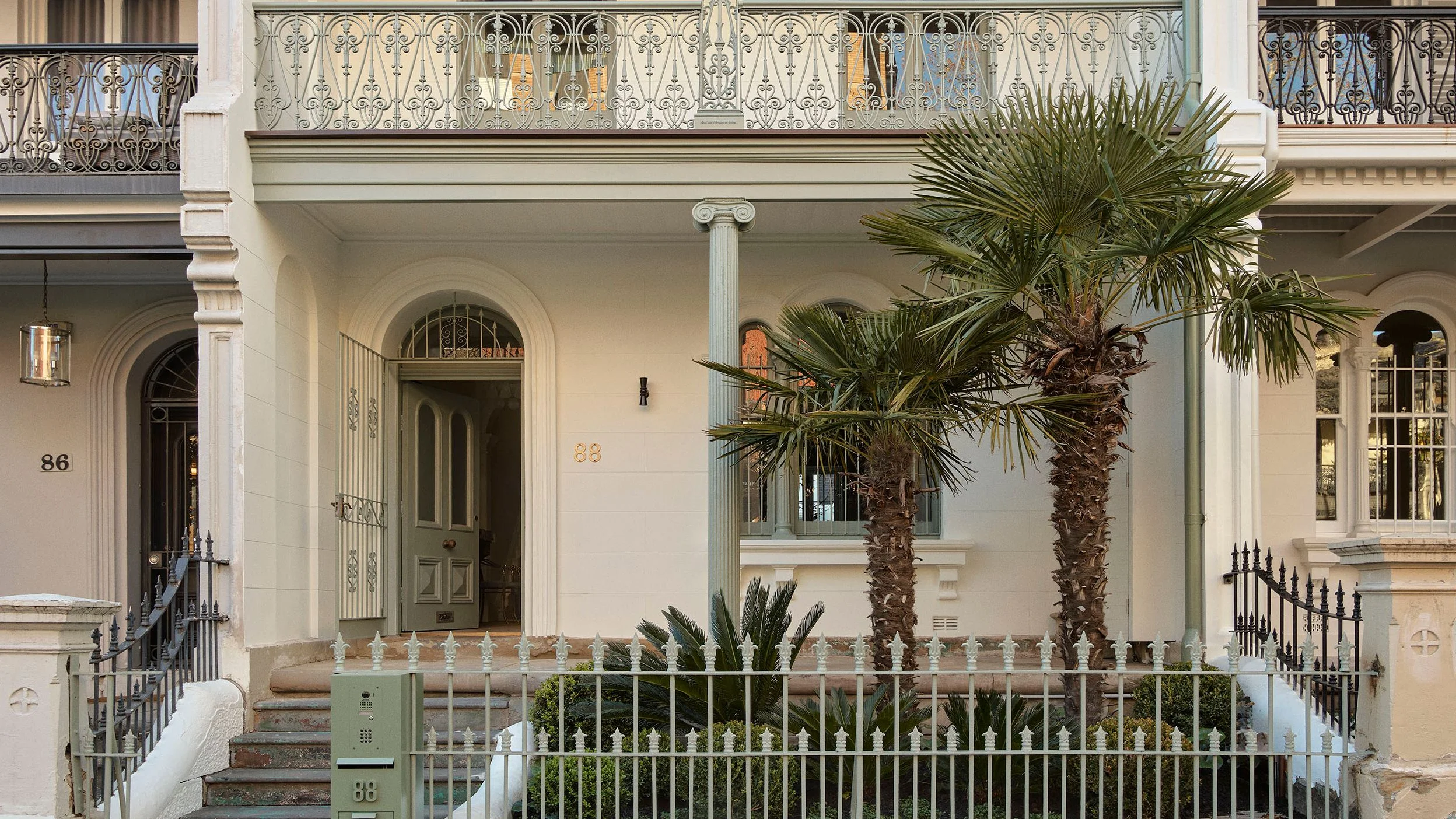
Sometimes the next chapter is just across the street: After living in a Tasmin Johnson–renovated home in Potts Point, a family bought a larger Victorian row house opposite—rough around the edges but ripe for reinvention. It had remained untouched since the 1970s, when Potts Point was still a neighborhood of strip clubs, prostitution, and other illicit activities. It has become—like some other gentrified neighborhoods around the world, such as Soho in London and Pigalle in Paris—a residential area of tree-lined streets with coffee shops and coveted real estate. “The essentials were intact and beautiful, as is true of many traditional row houses in Australia,” says Johnson of the house.
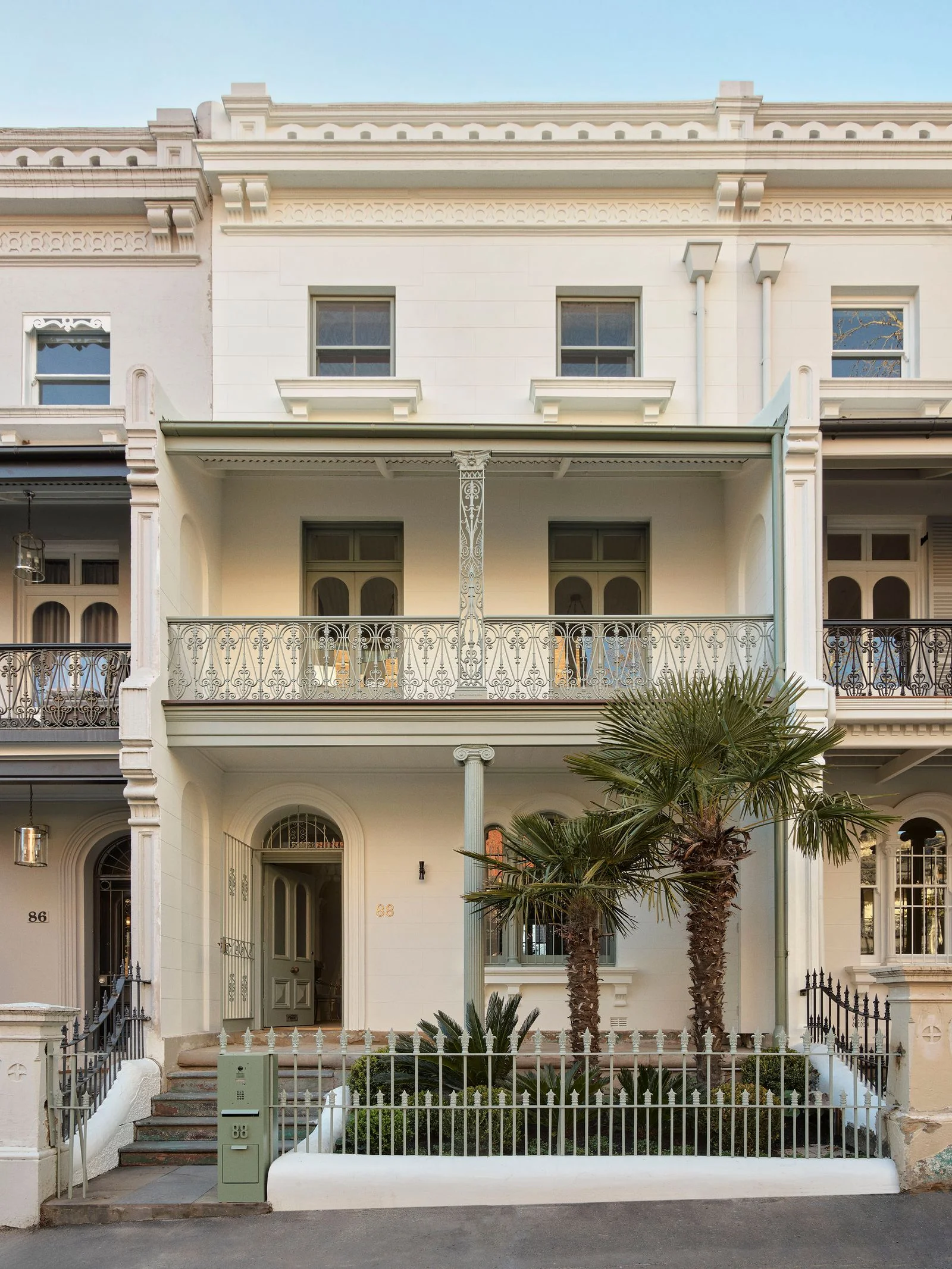
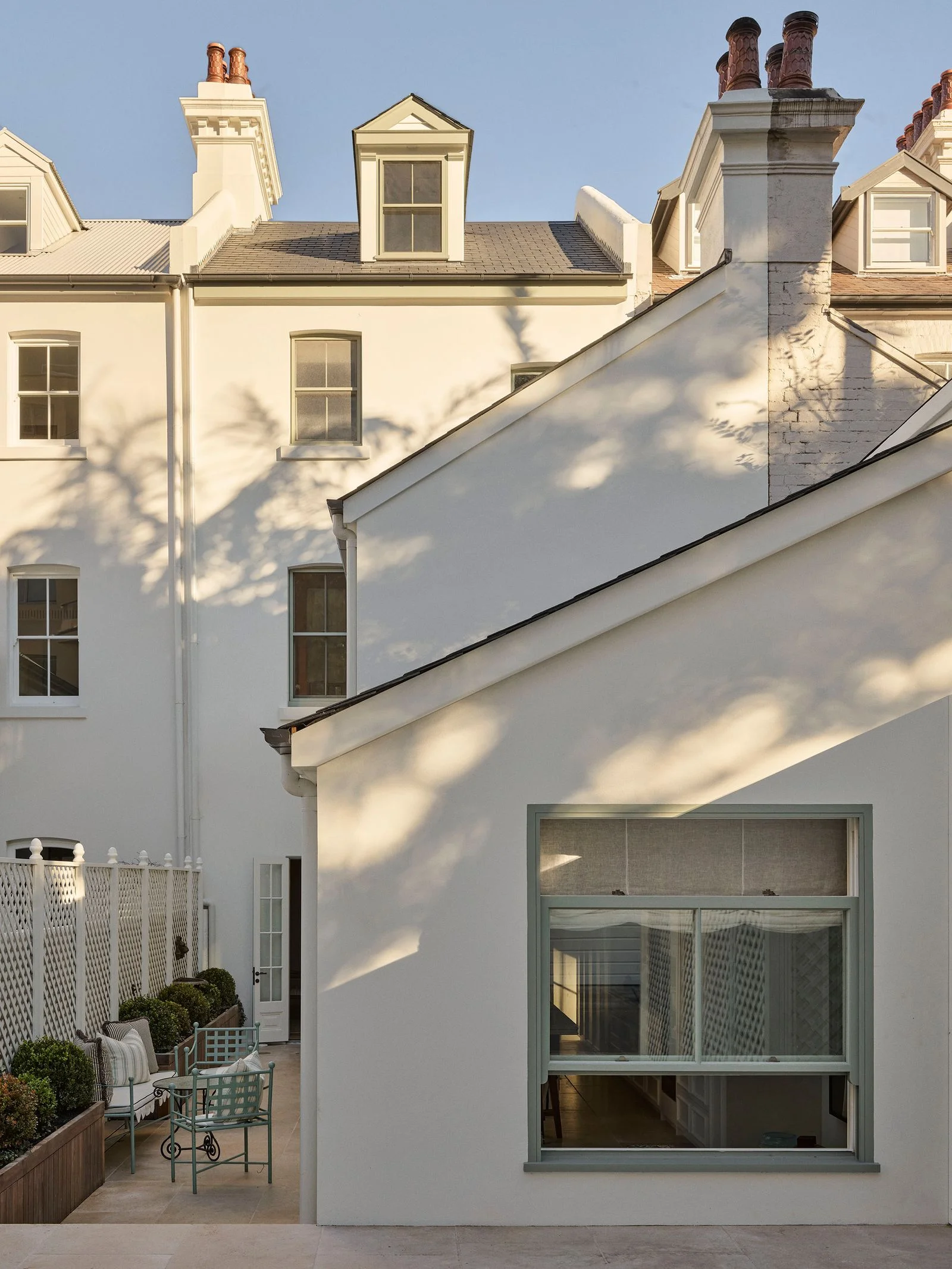
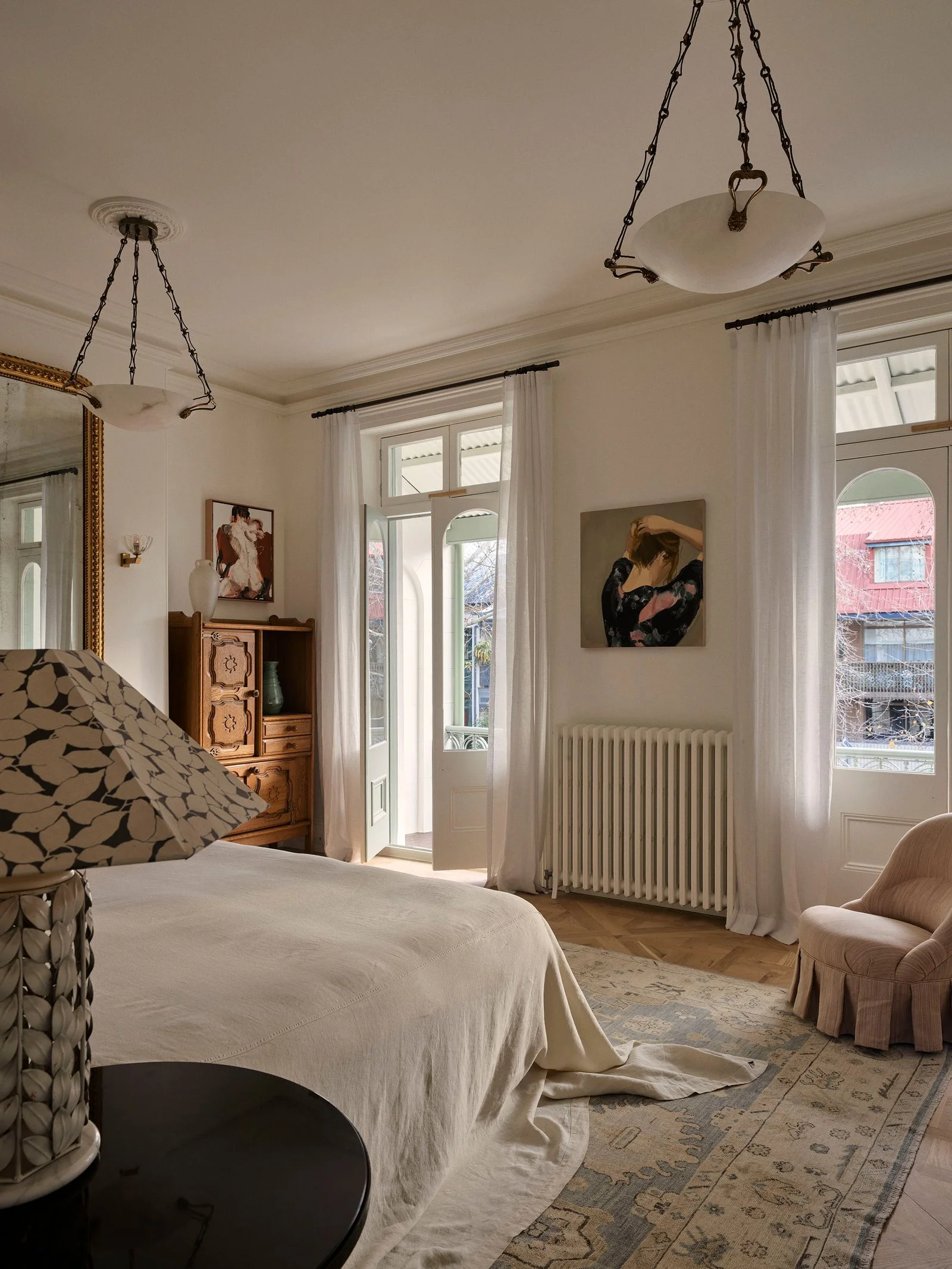
After adding two floors to the original structure, Johnson focused on opening up the rather cramped spaces of the original structure to create a pleasant, but still Victorian home. The facade, which had been neglected over the years, required special attention. “I think it had been painted yellow and black,” Johnson recalls, “but I know it was in very poor condition. We restored everything while preserving the original features. It was clear that would have to recreate certain elements to match the original ones.” Inside, all the floors were Versailles parquet, which matched the fireplace surrounds, rosettes, and cornices, all of which were also restored. In terms of ambiance, the owners wanted an elegantly neutral backdrop for the home’s characterful details, including their many antique pieces.
Mediterranean influences
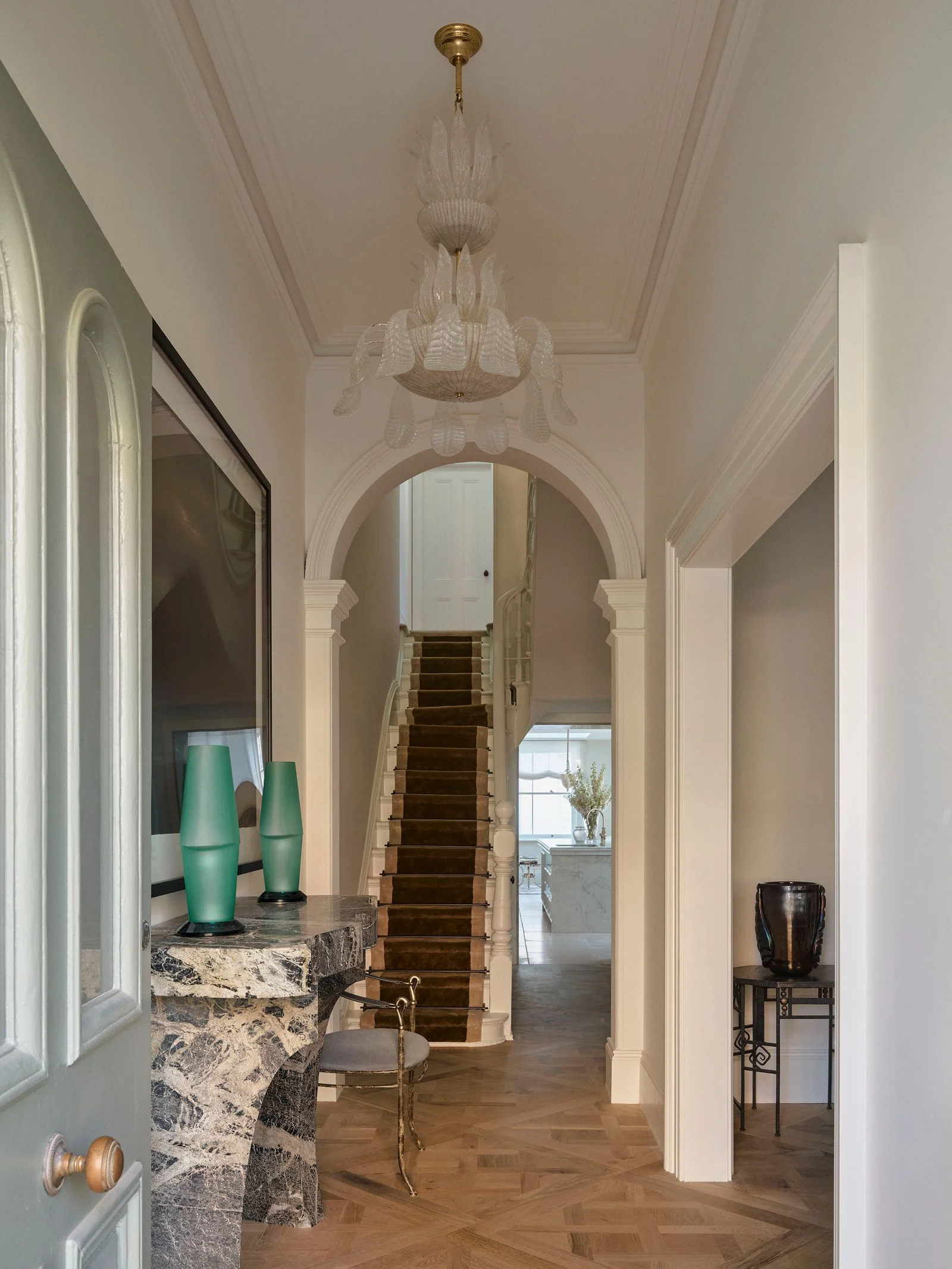
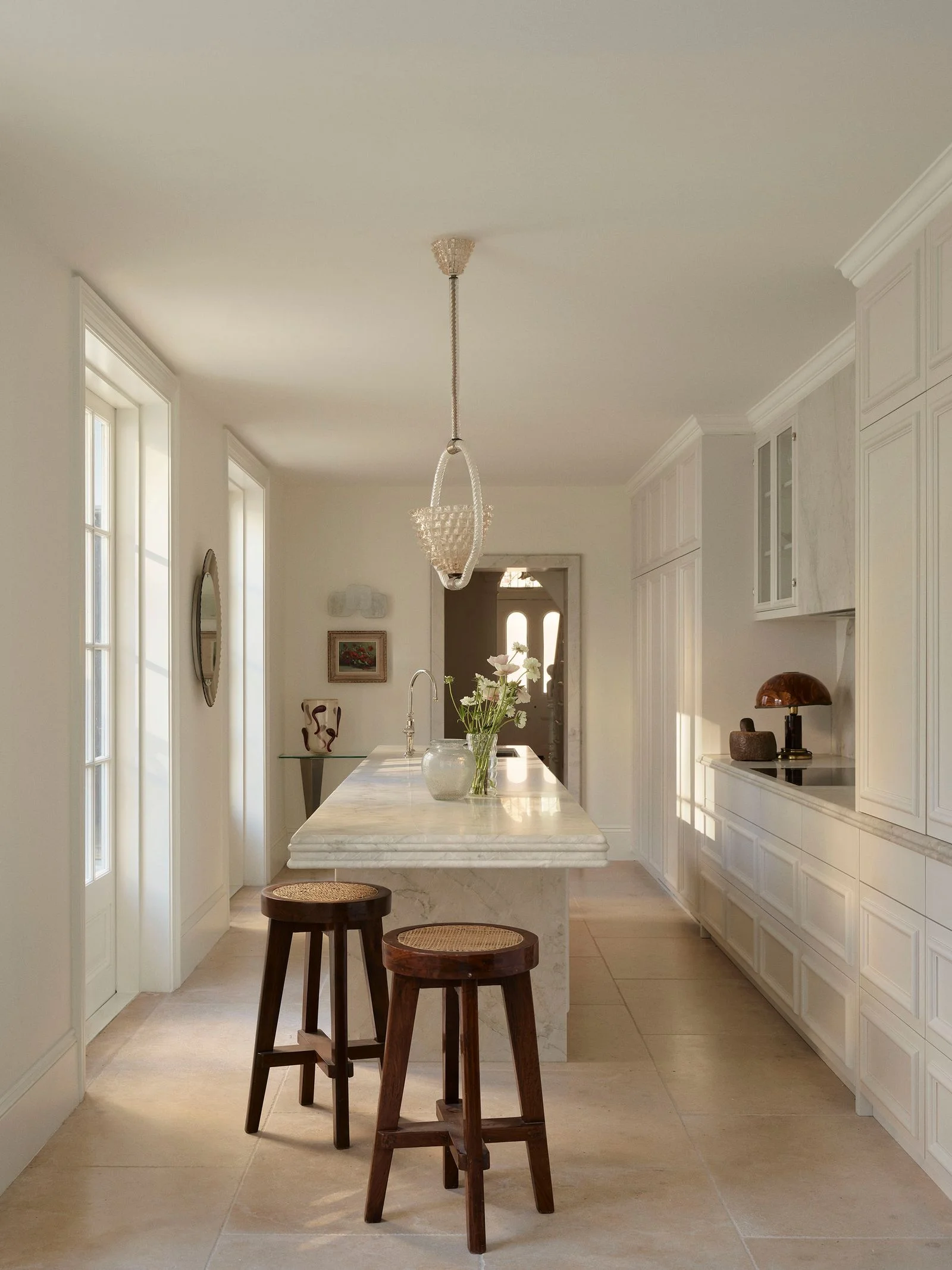
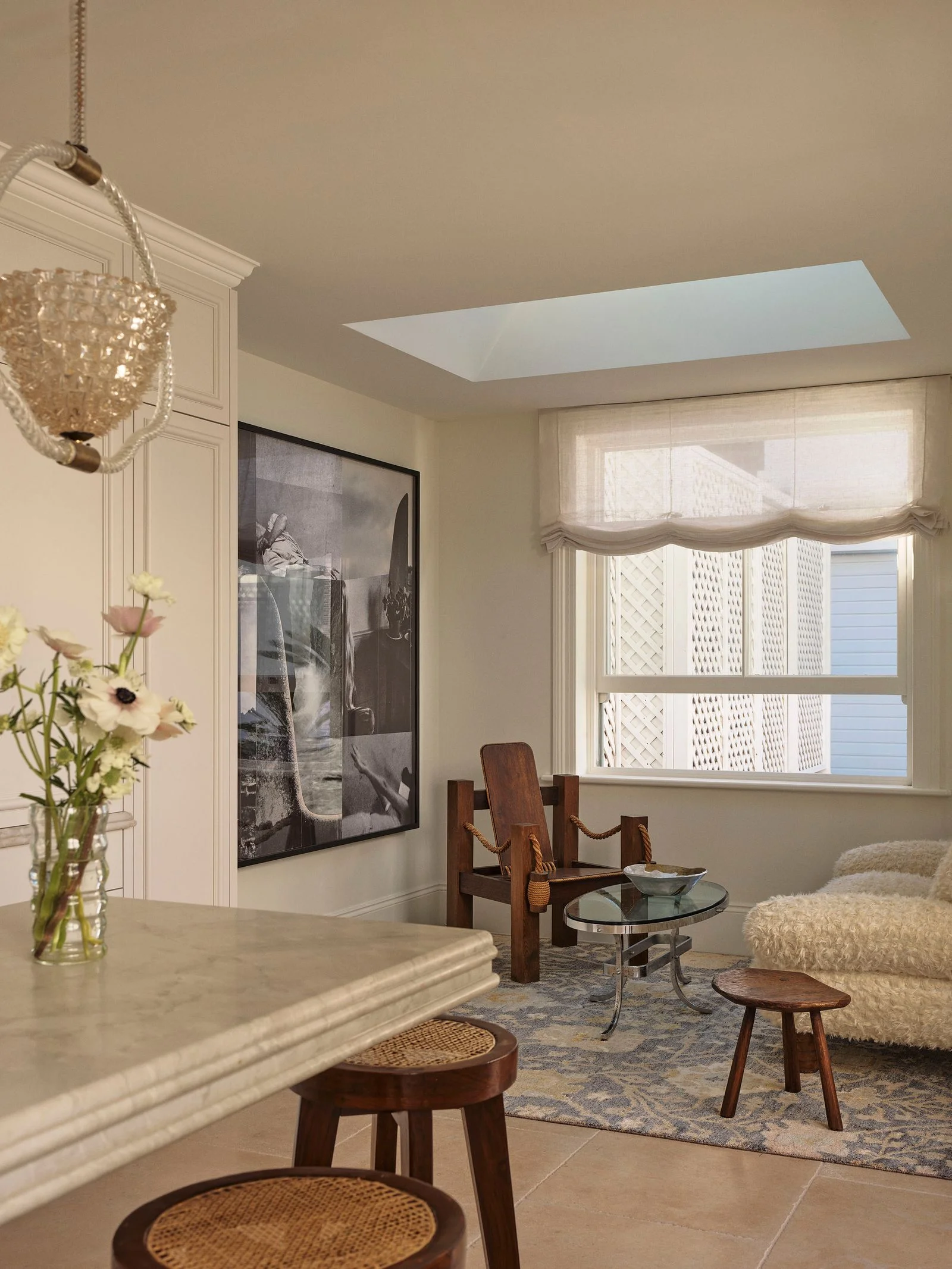
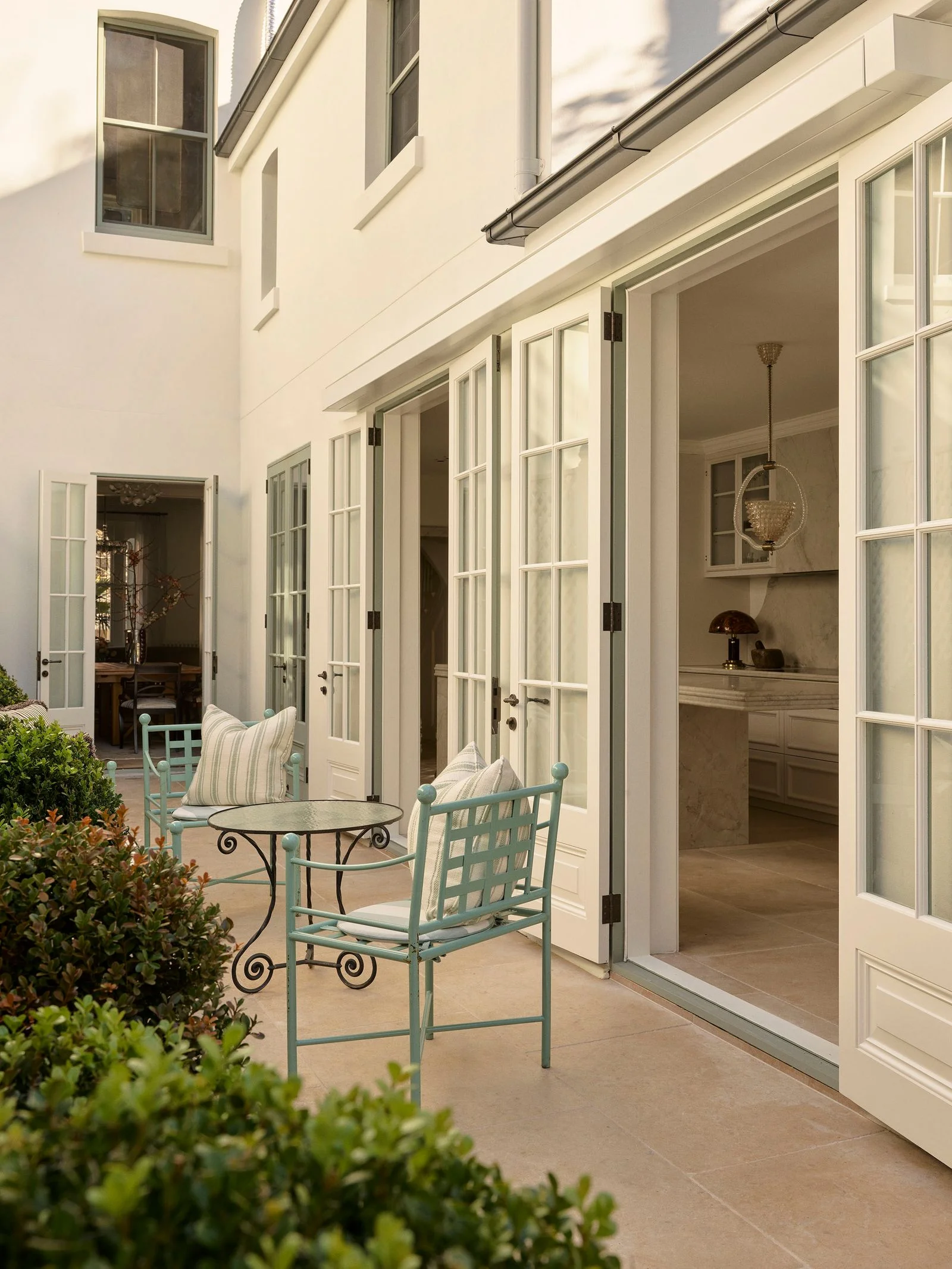
The entrance hall features a green marble console table from Italy, complemented by Gio Ponti lighting and a photograph of Mount Etna by Bill Henson. “It’s a little Italian entrance,” sums up Johnson, who has continued to incorporate vintage Italian furniture and objects in this interior already rich with European references (mostly French and Spanish). The kitchen has marble worktops and stone floors, and direct access to both the creamy white and green terrace, which is decorated with lots of plants, and the small adjoining living room.
All in the details
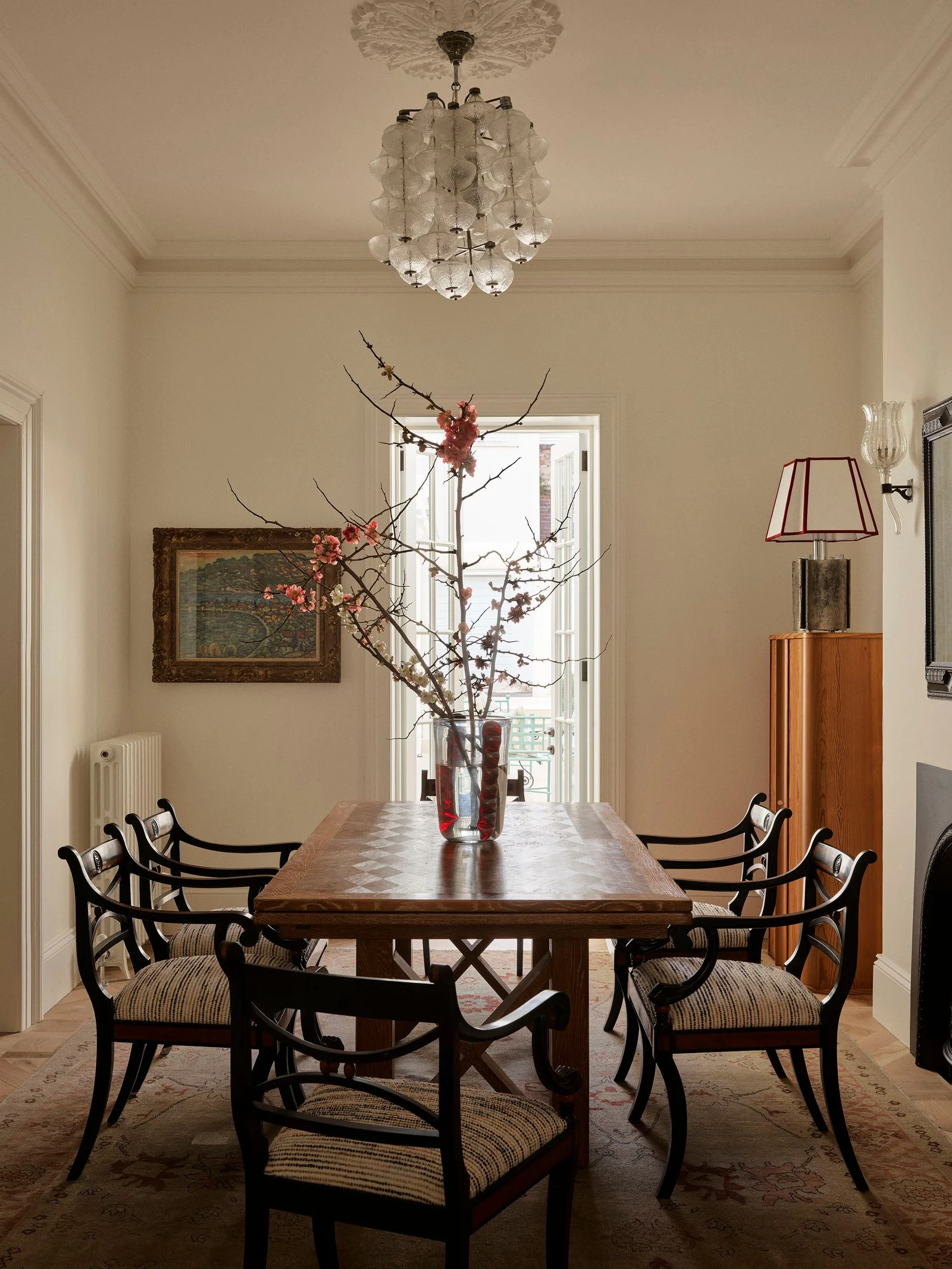
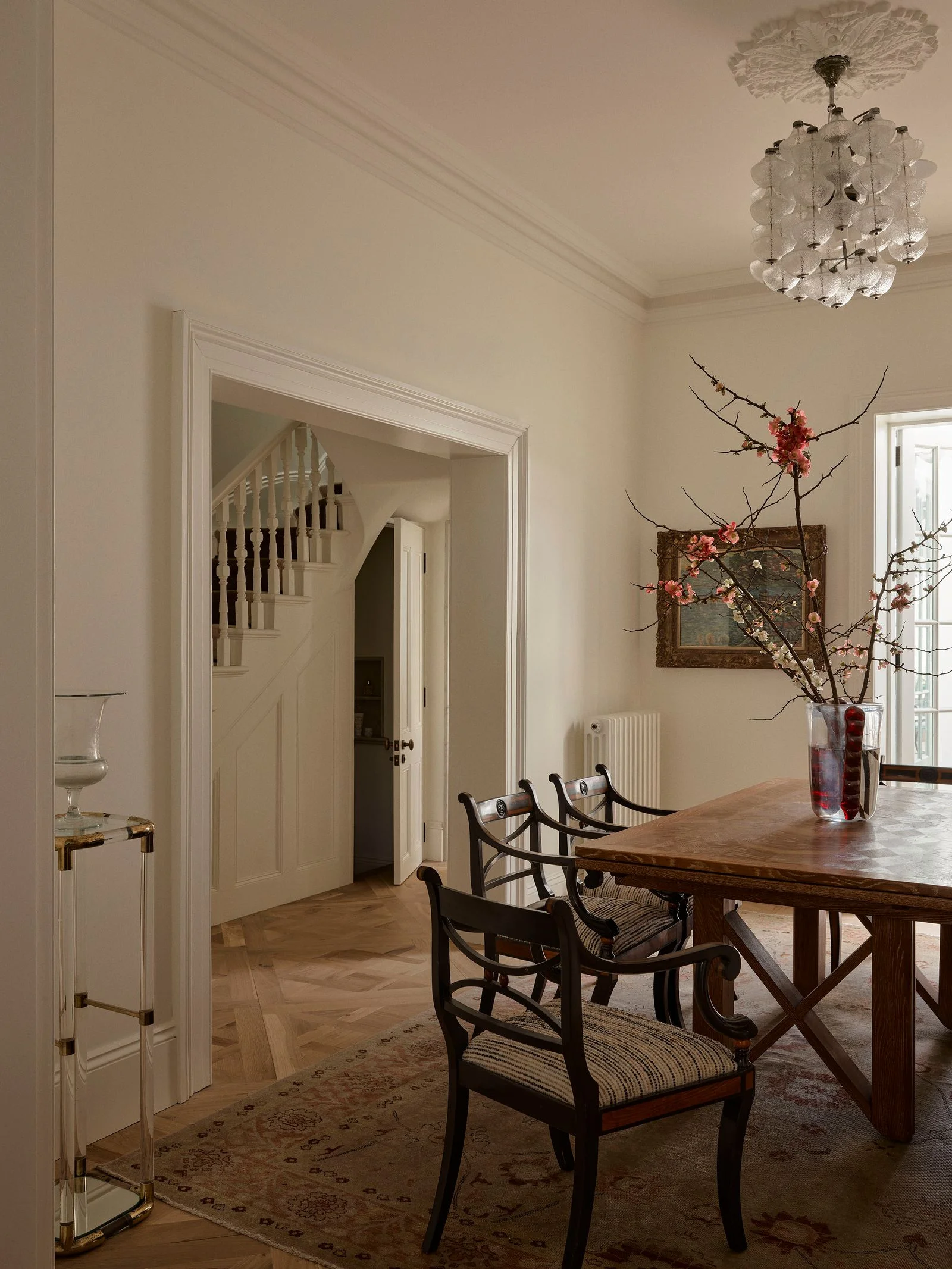
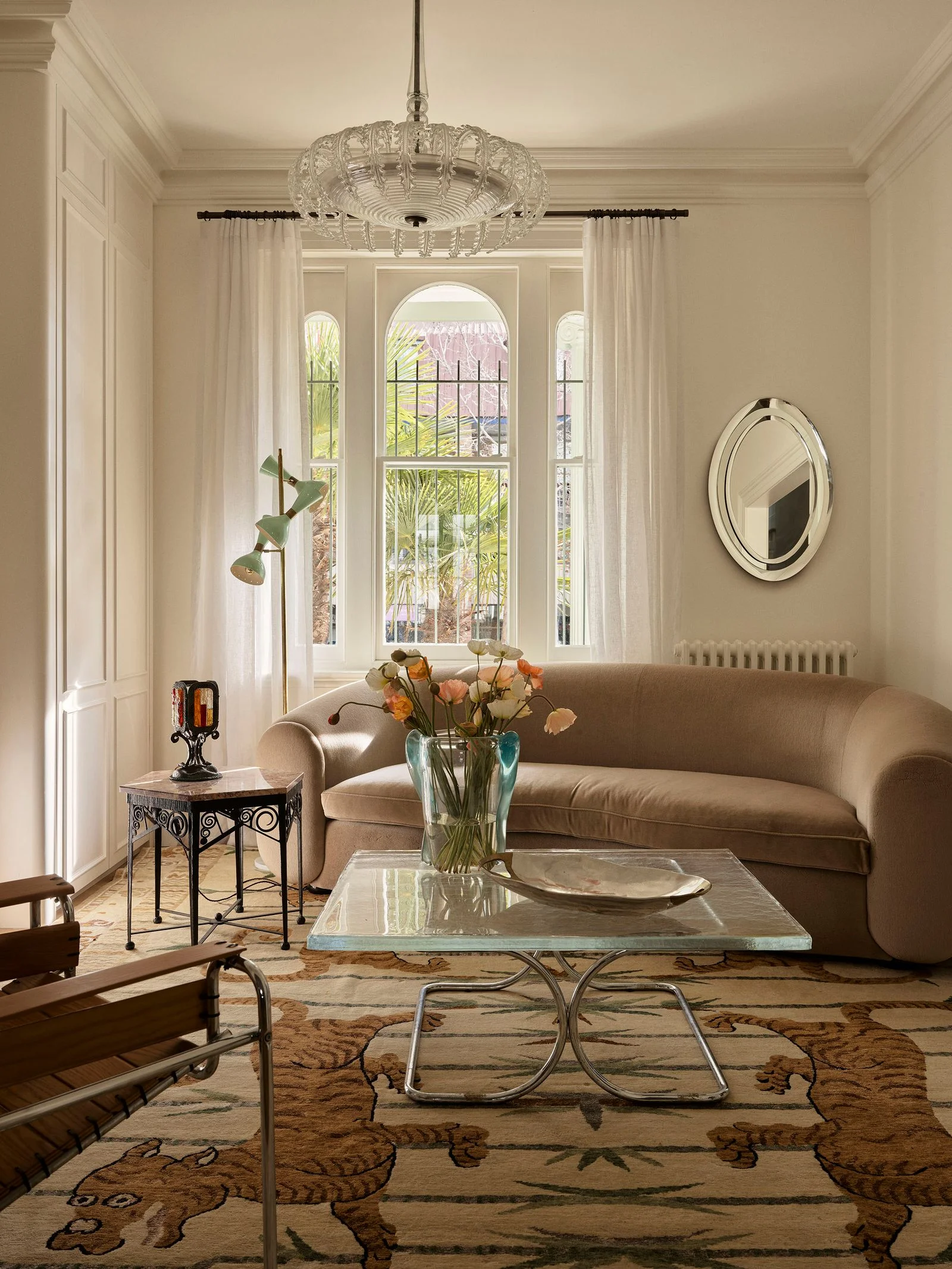
“The atmosphere is very social, but the living room still feels separate from the rest of the house,” Johnson explains. In keeping with the vintage spirit, the living room and dining room feature a wide variety of pieces sourced from Europe, dating from the 1920s to the 1980s. They manage to create a warm and lively atmosphere: Murano glass, clean lines, and fine fabrics interact with stainless steel and brass elements.
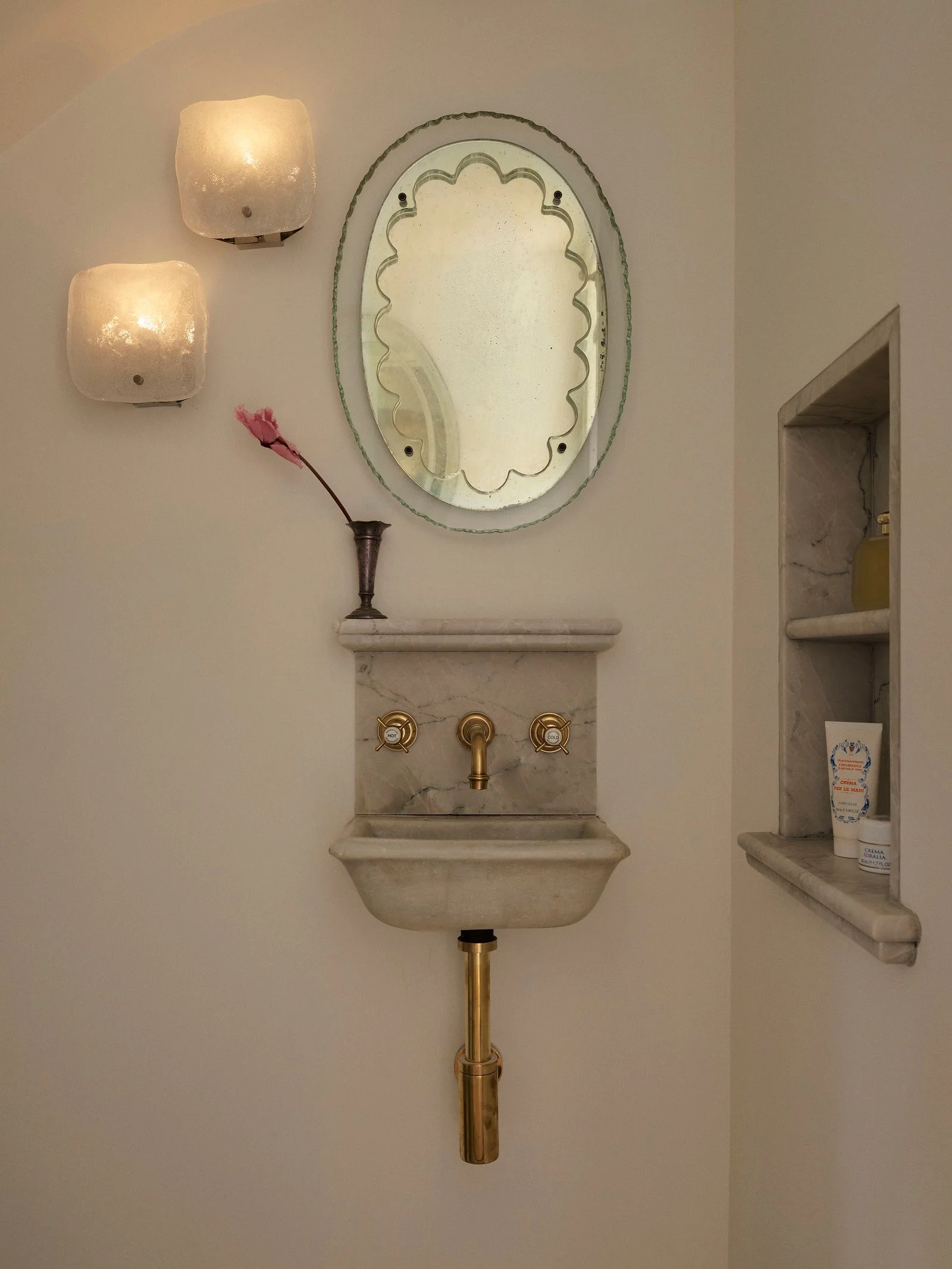
“We opted for fairly simple interiors, though they are obviously still quite theatrical,” says Johnson. “The objects coexist harmoniously, without contrasting or competing with each other.” She’s particularly fond of the small half bath underneath the stairs. “It’s as if you were opening a hidden door to discover a lovely little jewel box,” Johnson says.
The art of good taste
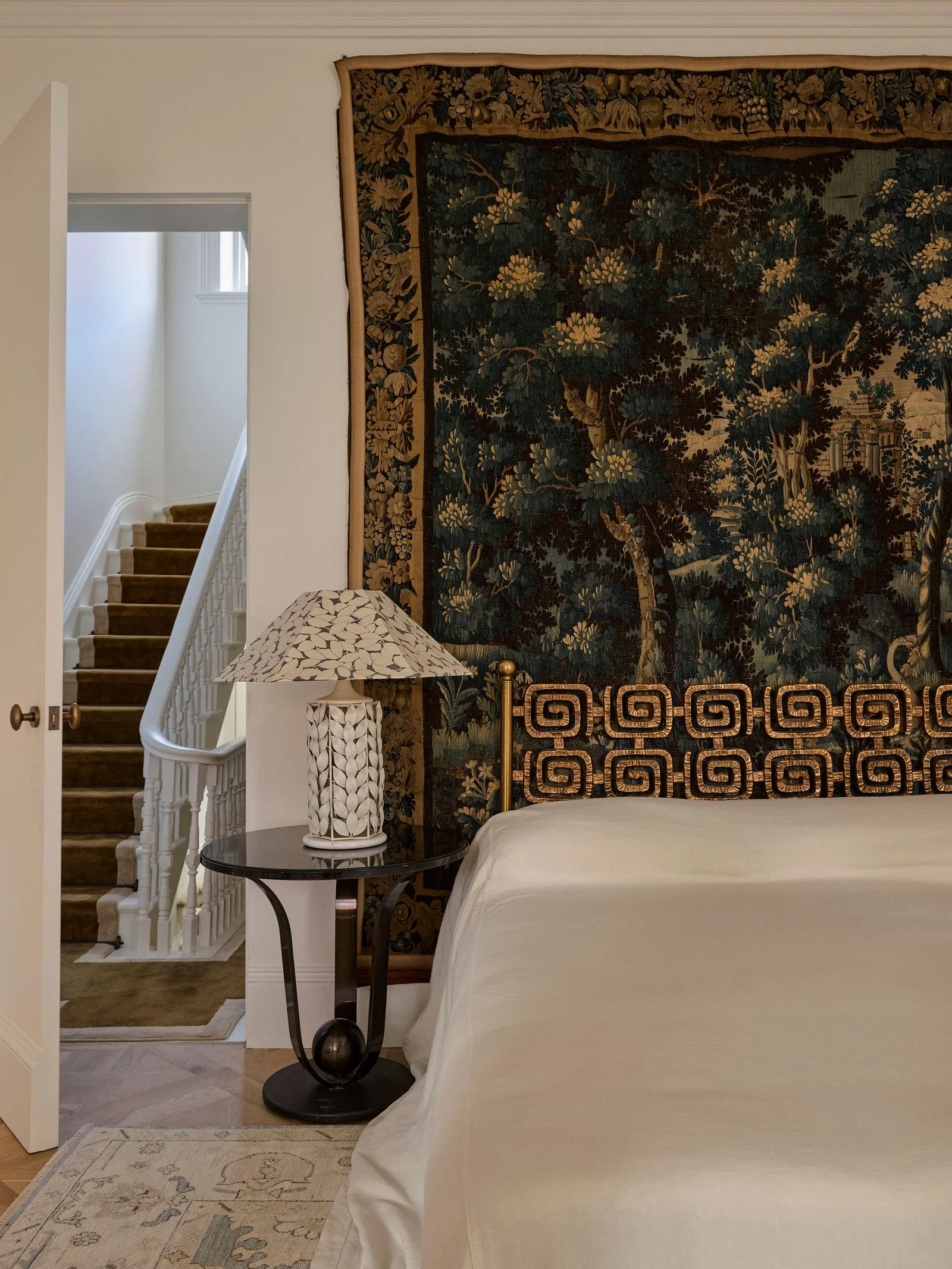
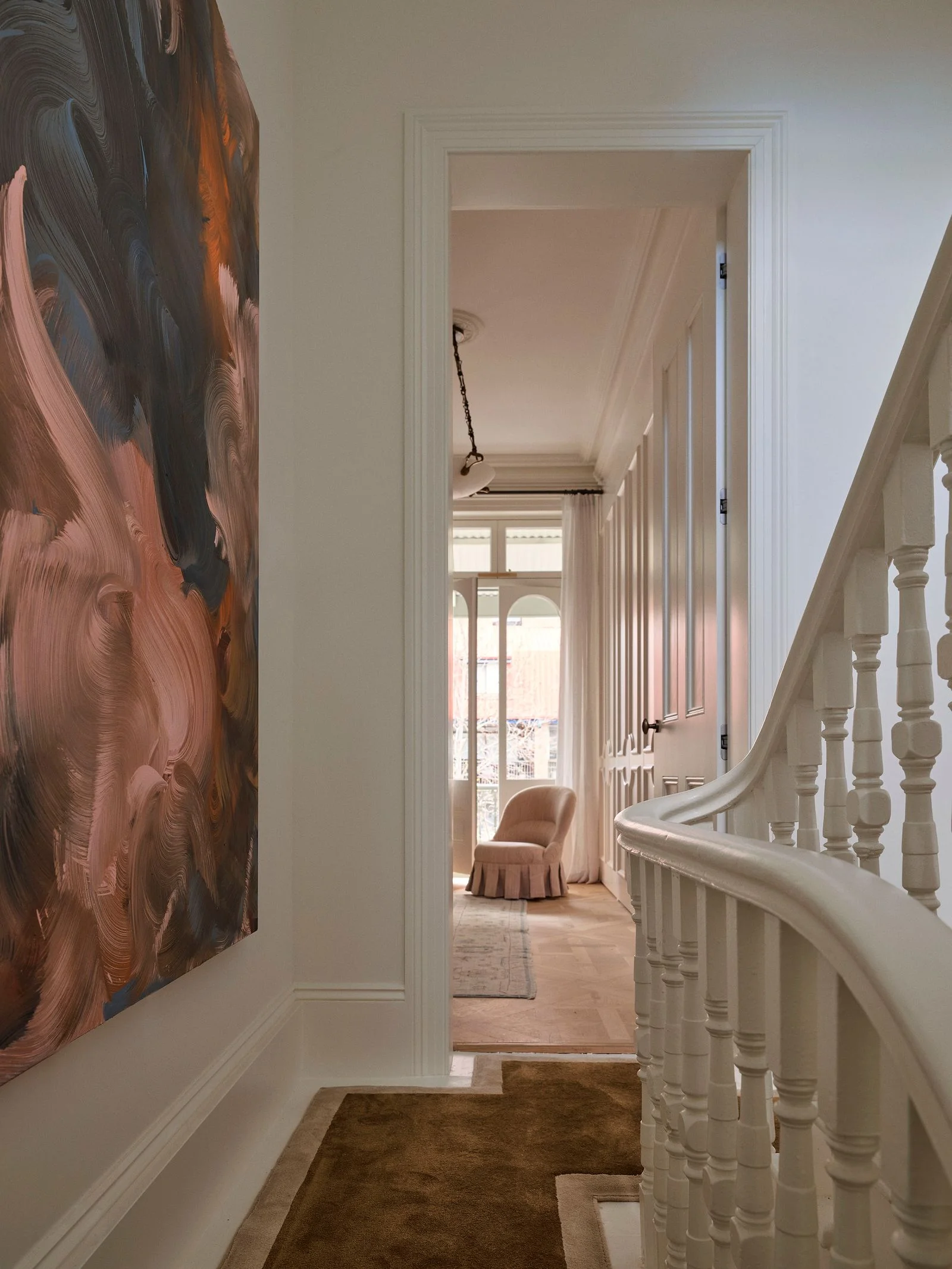
The main staircase was renovated, redesigned, and lined with a shimmering carpet. The bedrooms also feature beautiful materials: in the principal bathroom, for example, moldings and oval mirrors are set against a backdrop of Elba marble. Johnson also installed an Aubusson tapestry at the head of the bed, paired with a wrought iron headboard. The designer found it at a fair in France. “I think it could date back to the 1930s,” she says. “To me it looks like a giant object that might be used as part of a tea service.”
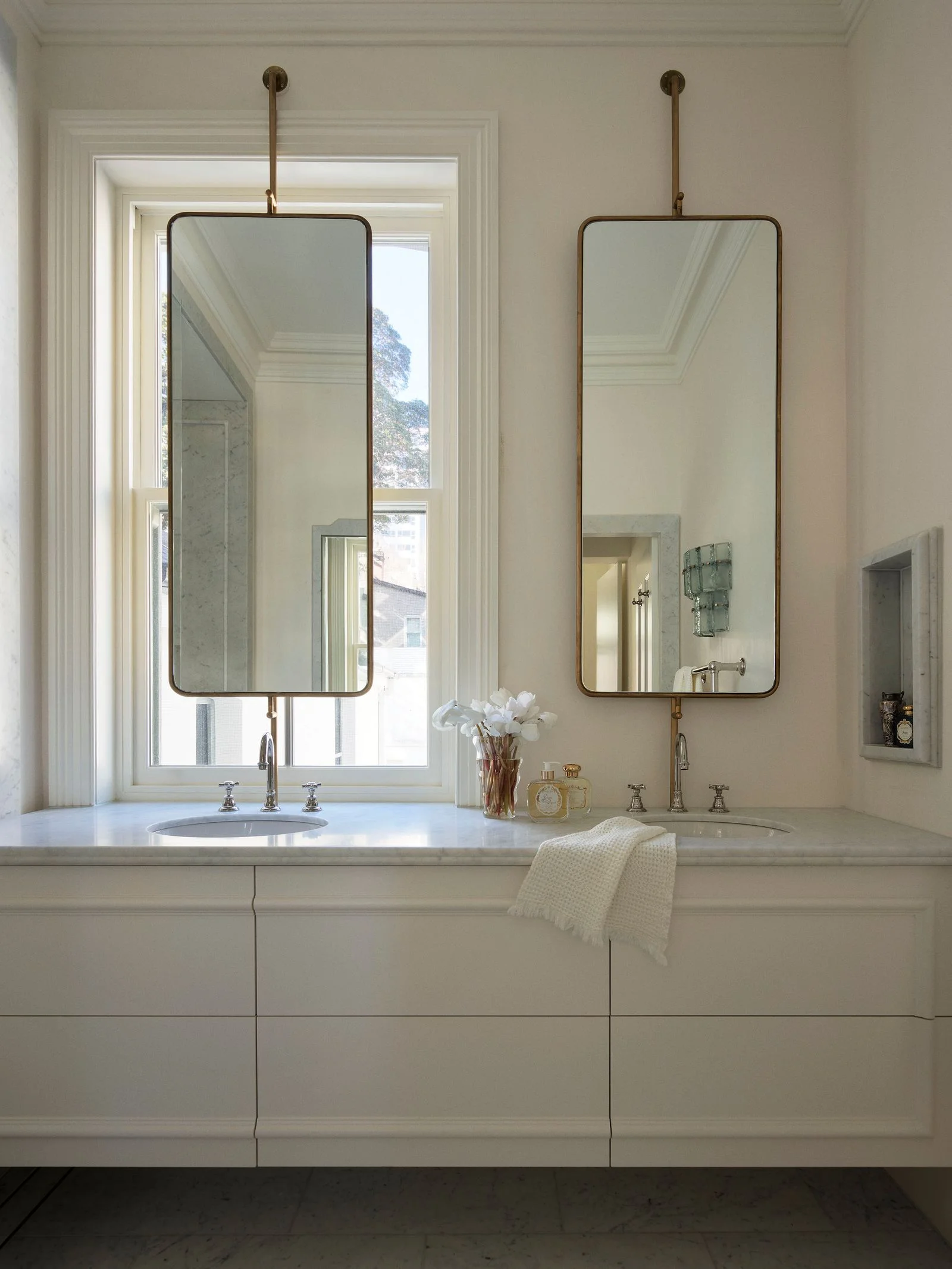
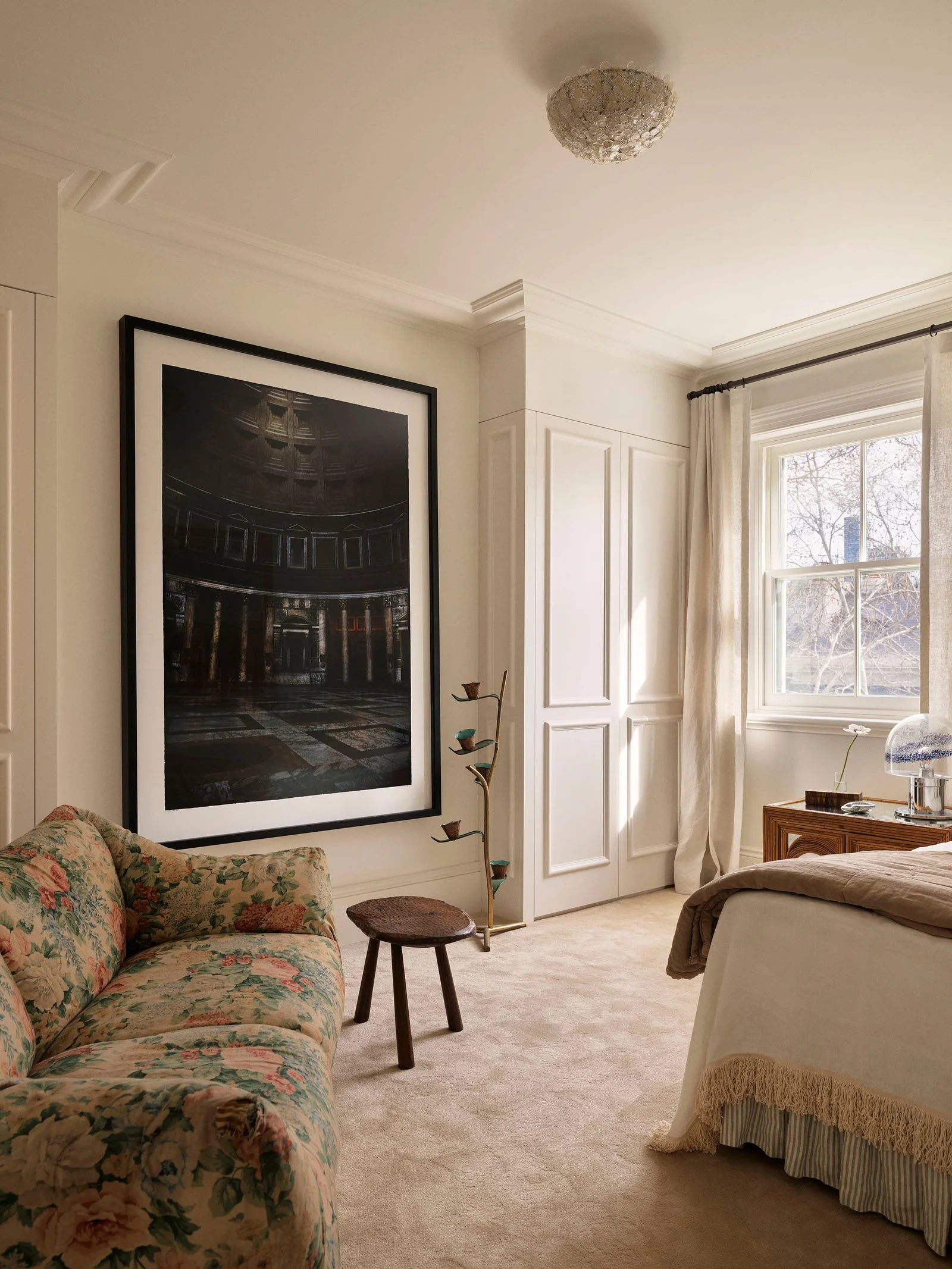
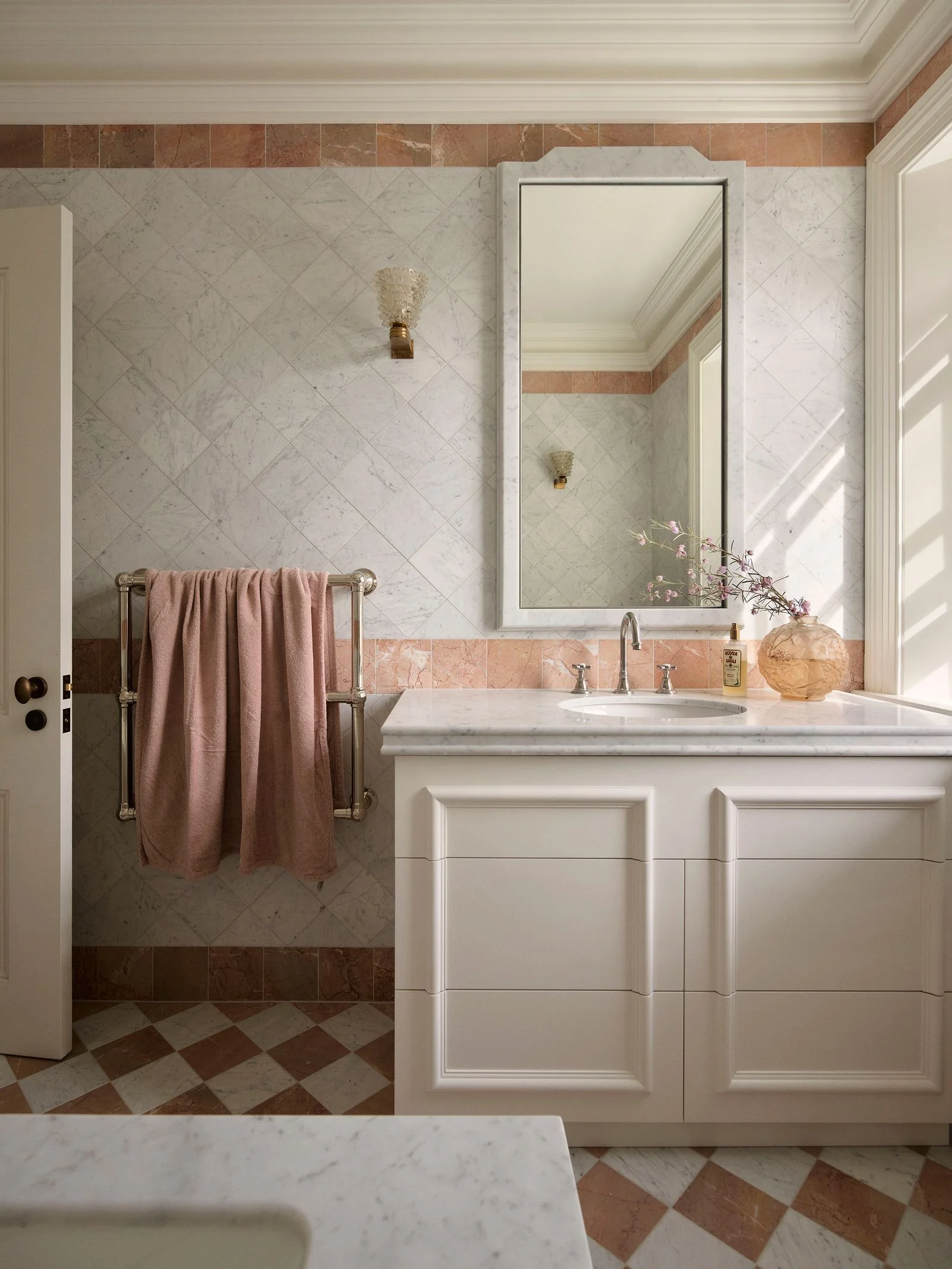
Johnson brought the same care to the design of the children’s bedrooms. The daughter’s room is decorated in soft, subtle tones, inspired by a floral sofa that Johnson says she fell in love with. In keeping with the color scheme, the pink and white checkered bathroom has the feel of a hotel suite. “We wanted some uniform tones and identical fixtures in the bathrooms to create a sense of continuity.”
Happy clients in a happy home
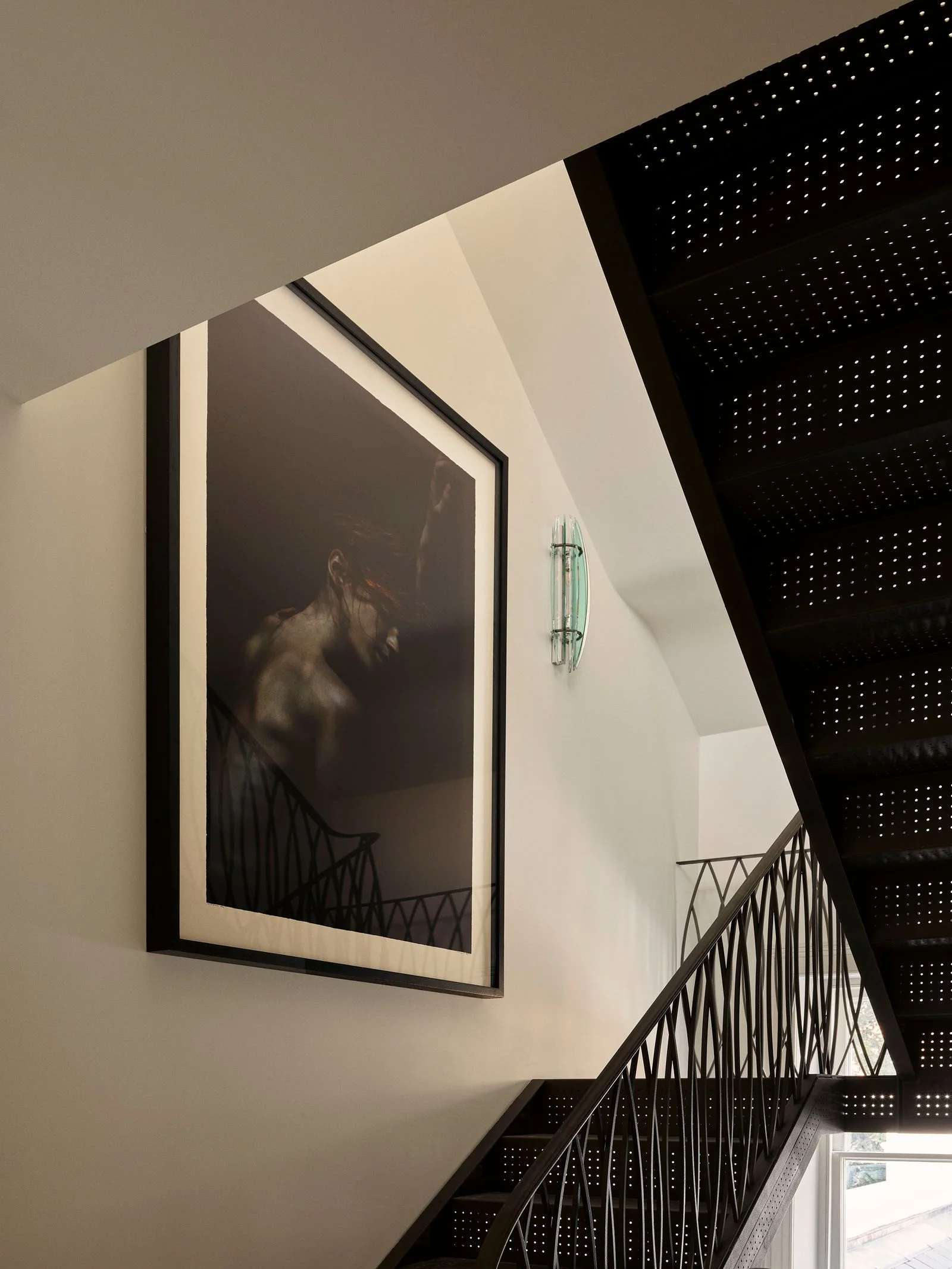
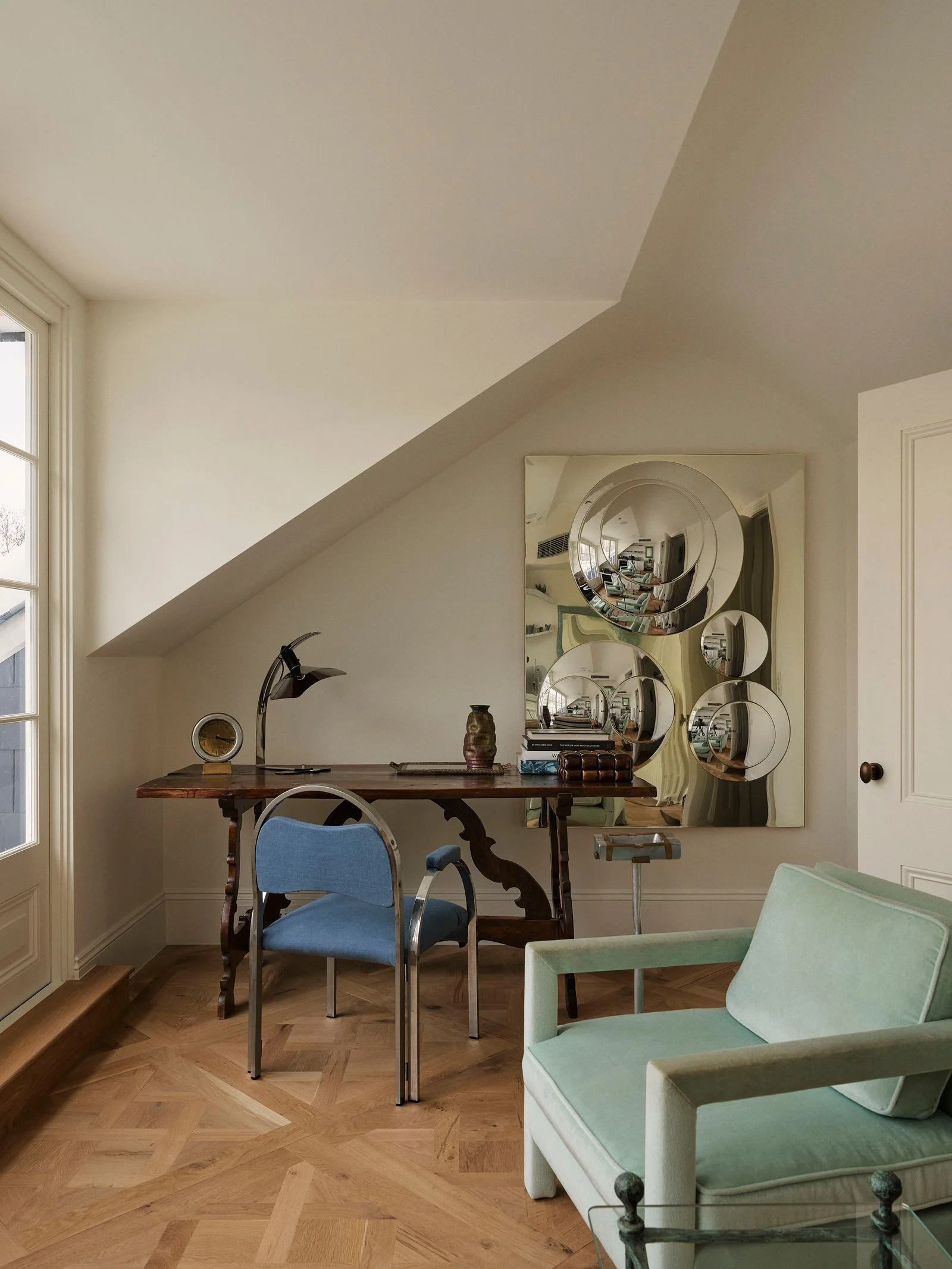
Finally, the home’s attic office, with its show-stopping Murano glass light fixture, completes the Italian theme first introduced at entrance to the house. It is accessed via a staircase designed in a completely different style from the other created by Johnson. “We worked with a local architect, Luigi Rosselli,” she explains. “It’s a kind of perforated wrought iron. We played around with different paint colors, but in the end we wanted a raw look. I didn’t want to reproduce a traditional Victorian look a second time.” Johnson reports that the family living in this new home is “very happy,” especially when watching the fireworks over the Sydney Harbor from their terrace.
This Victorian row house tour was originally published by AD France.