There's no single path into interior design—but attending one of the top interior design schools remains a good bet. “To really work in the high end of the industry, formal schooling is an absolute necessity,” says AD100 Hall of Fame talent and Parsons School of Design alum Jamie Drake. “It isn't just about whether you can say, oh, that floral looks good with that stripe.” Rather, he explains, it’s about mastering foundational design principals and developing fluency with the rendering and software tools required of day-to-day work. It’s about “designing to satisfy a question,” he says.
Over the past several years, an increasing number of US states have begun requiring licensure for design professionals—some combination of classroom education, professional experience, and passing a standardized exam—making design classes and degree programs an increasingly worthwhile investment.
Beyond licensure, the best programs offer guidance on navigating the full spectrum of challenges that come with working in the industry, from building a professional network to running a creative business. Many also feature structured opportunities for internships, study abroad, and co-ops. Some schools on this list are recognized by the Council for Interior Design Accreditation (CIDA), a designation that signals a program has met the highest standards for design education and covers what the industry considers fundamental.
Regardless of your exact career path, the 17 programs featured below are well equipped with everything you'll need to succeed. First, a few back-to-design-school basics:
Frequently Asked Questions
A formal education from an interior design university has benefits beyond licensure. The best schools for aspiring interior design professionals are those that offer guidance on how to navigate the spectrum of challenges that come with working in the industry, from developing a professional network to handling the myriad tasks involved in running a creative business.
First, figure out what kind of designer you want to be, as each sub-sector of the profession necessitates a certain level of academic understanding. Some examples include:
- Licensed/registered interior designer: A professionally credited interior designer, typically holds a degree and is registered based on varying state laws.
- Residential & decorating specialist: Focuses on certain aspects of homes, primarily on layout, furnishings, color schemes, lighting, materials, and finishes. Does not need to be licensed or hold a degree.
- Home stager: Prepares homes for sale to appeal to buyers, mainly styling, does not require a degree.
- Sustainable design or specialty focus (ex. healthcare): Has advanced knowledge in a niche area of design, usually requires a degree or accreditation like LEED.
An academic certificate opens some doors that are difficult to reach for non-licensees:
- You can work as a registered interior designer. In many US states, a degree from an accredited program is needed to pass the NCIDQ examination (in combination with work experience.) Without a degree, this path is often much harder.
- Easier path into commercial/corporate design. Firms that design offices, restaurants, retail stores, and hospitality spaces often look at graduates from interior design programs. It’s easier to look at a pool of vetted applicants, knowing for certain that these graduates know the basics of space planning, construction, material specs, and more.
- Higher earning ceiling. Degree holders can often access higher salaries at larger firms and have more qualifications for faster promotions. Or, they can open their own licensed design firms and command higher rates due to their certification.
- Teaching credentials. It makes sense that if you want to teach interior design, you usually have to have an interior design degree yourself. Also, if you want to specialize in sustainable design (ex. LEED-accredited roles) you typically need a degree.
Certain interior design colleges on this list are recognized by the Council for Interior Design Accreditation (CIDA), meaning they’ve met the highest standards for interior design education. (In other words, this designation certifies that a given academic program will help students learn whatever the interiors industry considers to be fundamental.)
This is different from the CIDQ (Council for Interior Design Qualification): a CIDA accredits educational programs to ensure quality, while NCIDQ certifies individual professional competency through examination. NCIDQ certification allows you to stamp and submit construction drawings (in regulated areas), work on commercial projects (offices, hotels, healthcare), handle building codes, ADA compliance, and life safety, and ultimately, call yourself a “Registered” or “Licensed Interior Designer.”
Again, no. But for the above reasons, it may make a career in the industry a little bit more tricky. Without a degree, you have to rely on your portfolio, networking, business skills, and personal brand a little bit more.
“I would say if somebody came to me with all the skills and didn't have a college degree, that wouldn't necessarily be a deciding factor," says Drake. “But I don't know how you get all the expertise of drawing, and the software skills without going to a design school.”
Completing a Bachelor’s degree (BA) takes 3-4 years, while Masters (MA or MFA) degrees take 1-4 years. An Associate’s degree (AAS) takes around 2 years—while it isn’t a full degree, it provides students with foundational skills that are necessary for entry-level roles.
Editor’s note: The costs mentioned for each interior design school are an estimate of the tuition and do not include room and board. Costs will vary from student to student. The job-placement statistics shown here feature the most recently available data for each program or for the university, if program-specific data was not available.

Savannah College of Art and Design
Savannah College of Art and Design, commonly known as SCAD, appears consistently on all lists ranking top-tier interior design colleges (Red Dot Rankings recently named SCAD the No. 1 Design University in the Americas and Europe, and Art&Object recently ranked SCAD the No. 1 Art and Design University in the United States). SCAD students are also regularly honored by the International Design Awards (IDA), reflecting the program’s excellence worldwide.
“Interior design at SCAD prepares students like no other institution with unique collaborative
experiences,” says Dr. Geoffrey S. Taylor, Dean of the School of Building Arts. Experiences include an annual three-day event called SCADstyle, in which industry-renowned designers, architects, and editors gather together for a series of panel discussions and other student-involved activations. At its collaborative design studio, SCADpro, students can pitch and generate new ideas and products for internationally renowned brands. Speaking of real-world experience, career prep also plays a vital role in the program’s offerings: resumé and portfolio development, mock interviews, and self-promotion are all built into the curriculum.
Indeed, the program at SCAD encourages innovation, critical thinking, and effective communication, with offerings extending well beyond its classrooms. With satellite campuses in Atlanta, Georgia, and Lacoste, France, SCAD offers students access to education on a global level.
- Program: Interior Design
- Location: SCAD Savannah, SCAD Atlanta, SCAD Lacoste, and online via SCADnow (for MA only)
- Degrees offered: BFA, MA, MFA
- CIDA accredited: Yes
- Local opportunities: Yes. High-level internships are encouraged in Atlanta, Savannah, and Lacoste, France.
- Cost: BFA: $42,165/year; Graduate: $43,155/year
- Job placement: 99 percent of graduates reported being employed, pursuing further education, or both within 12 months of graduating, according to a 2025 study.
- SAT range for interiors program: 1140–1430 (the overall Fall 2025 undergraduate student SAT
range) - Notable alumni: Eny Lee Parker, Monet Masters of Forbes Masters, Bradley Jerry Odom of Studio Dixon Rye, Christian Sottile, Maruja Fuentes, Jessica Ma
- An alum's perspective: “If I could advise my younger self, I would say to fully take advantage of every resource that Savannah College of Art and Design offers, including the opportunities that come simply through association. The program is truly what you make of it, and I would leave no stone unturned as if my life depended on it. Professors, industry partnerships, and collaborative opportunities across multiple disciplines are all within reach if you’re willing to be proactive. Don’t wait until graduation to start building relationships or gaining real-world experience.”—Monet Masters, principal, Forbes Masters

The New School, Parsons School of Design
In 1906, Parsons launched the first-ever interior design curriculum in the US. The New School institution has long since offered students a research-based and comprehensive foundation for building a career in interior design. The program’s curriculum draws from a range of academic fields, encouraging interdisciplinary learning and exploring the city’s vibrant resources.
“It’s a school that really focuses on preparing people to address the problems of today and tomorrow,” says AD100 Hall of Famer Jamie Drake, who graduated from the program in 1978. As part of Parsons’s School of Constructed Environments, the interior design program focuses on sustainability, equity, diversity, innovation, and well-being in its teachings. Coursework and specific areas of study range from materiality, art history, and design theory, to hand drawing, renderings, and three-dimensional modeling.
Parsons offers a four-year BFA as well as graduate programs for concentrated fields—the interior design MFA program offers students hands-on access to cutting-edge industry innovations, from exploring bio-based materials to working with virtual and augmented realities. Its two-year Associate of Applied Science (AAS) interior design degree is also a great option for those with prior college education. Whichever degree program fits, students leave Parsons well-prepared to pursue work in interior, lighting, set, event, and exhibition design, as well as in historic preservation.
- Program: Interior Design
- Location: New York City
- Degrees offered: BFA, MFA, AAS
- CIDA accredited: No
- Local opportunities: Many. Parsons offers easy access to New York City’s abundant people and resources—including studios such as Yabu Pushelberg, Rockwell Group, SOM, and Gensler—as well as connections through its valuable alumni network.
- Cost: AAS/BFA: $60,240/year; MFA: $61,778/year
- Job placement: More than three out of four Parsons undergraduate students are employed or furthering their education within one year of graduation.
- SAT range for interiors program: Test-optional/test blind, with SAT not required or considered as part of the admission process.
- Notable alumni: Mario Buatta, Jamie Drake, Albert Hadley, Victoria Hagan, Angelo Donghia, Bob Williams

Cornell University
At Cornell, interior design is taught through the University’s Design and Environmental Analysis program (D+EA), which is part of the Department of Human Centered Design. Students can opt in to the Interior Design Pathway, where specializations fall under one of three primary research themes: design innovation and strategy, sustainable futures, or health and wellbeing. Throughout the department, tools and processes taught in the humanities, social sciences, and physical sciences are incorporated into the curriculum. In fact, Cornell’s design program is one of few that offers a substantive, flexible curriculum that is also STEM-certified. Students can also choose to pursue a minor, complete an honors thesis, or plan off-campus study.
Cornell also offers graduate or doctorate programs. The D+EA program hires faculty from a wide spectrum of disciplines, emphasizing innovation and offering multidisciplinary training in everything from interior design to environmental psychology, ergonomics, and workplace strategies.
- Program: Design and Environmental Analysis
- Location: Ithaca, New York
- Degrees offered: BS, MA, MS, PhD
- CIDA accredited: Yes
- Local opportunities: Some. Many students participate in off-campus study or summer internships, typically in New York City, Washington, DC, or abroad.
- Cost: BS: $48,010/year for NYS residents; $71,266/year for non-residents (because the College of Human Ecology is a state contract college within the university, New York State residents are eligible for the in-state fee).
- Job placement: 85 percent of students in the 2022 graduating class were employed by the end of August 2022.
- Notable alumni: Art Gensler, Richard Meier

New York School of Interior Design
Founded in 1916, the New York School of Interior Design (NYSID) has has built a legacy few institutions can match. Housed primarily in a former carriage house on East 70th Street—a stone's throw from The Frick Collection—the school was originally known as The School of Interior Decoration, and that sense of history runs deep. "There's no other institution of our caliber that focuses solely on interior design," says president David Sprouls. "Because we are single-focused, our students tend to be older than those at other design schools. They're often coming to interior design as a second career, and therefore highly goal-oriented."
That singular focus shapes everything about the NYSID experience, from its curriculum—which satisfies educational requirements for membership in major industry associations and prepares students for the National Council for Interior Design Qualification exam—to its diverse program offerings. Students can pursue a Bachelor of Fine Arts or an Associate in Applied Science degree, both available full- or part-time, or opt for the one-year Basic Interior Design Certificate Program for a more streamlined path to the fundamentals. Many programs are also offered online, a flexibility that makes NYSID particularly appealing to working professionals looking to pivot.
Beyond the classroom, students benefit from required internships, study-abroad opportunities, and a faculty of over 100 active, practicing designers from firms including Jeremiah Brent, Gensler, HOK, Perkins+Will and Williams Lawrence). Graduates leave not only with strong design instincts but with the presentation skills, business and legal literacy, and technical proficiency needed to thrive in the real world.
- Location: New York City
- Degrees offered: AAS, BFA, MFA, MPS
- CIDA accredited: Yes
- Local opportunities: Many. NYSID’s extensive network of connections means internships and professional networking is easy to access. Its Office of Career and Internship Services works closely with students and firms on job placement and internships (once 12 credits of coursework are successfully completed).
- Cost: MFA: $23,400/semester; AAS, BFA, and non-matriculated undergraduate courses: $1,380/credit; MPS: $1,560/credit.
- Job placement: 92 percent of undergraduates and 94% of graduate students were employed or pursuing further education within six months of graduation.
- Notable alumni: Kiki Dennis, Peti Lau, Elizabeth Lawrence, Susan Marinello, Rose Tarlow, Holly Hayden Taylor, Penny Drue Baird
- An alum's perspective: “I was 28 when I enrolled at NYSID, and I liked that I would be among a diverse group of students around my age—not students who had recently graduated from high school. I did the intensive two-year Associate program that included summer courses and a study abroad in London. It allowed me to gain hands-on experience through the intensive curriculum and an internship at Cullman & Kravis.” —Peti Lau, Peti Lau Interior Design

Syracuse University
First established in 1922, Syracuse’s interior design program has managed to keep ahead of the academic curve by focusing on innovative technology. As part of Syracuse University’s College of Visual and Performing Arts, students of the environmental and interior design program (EDI) explore art, design, and architecture in a studio environment that mimics professional settings. The program shares courses, design laboratories, and studios with other disciplines in the School of Design, creating a cross-disciplinary lab for learning.
Syracuse’s EDI encourages students to become creative problem-solvers and understand the various impacts of their design decisions, embracing sustainable design concerns with an acute awareness of social responsibility. The program’s focus on cross-disciplinary philosophies and environmental design, in addition to encouraging a broad liberal arts education, makes it a uniquely balanced option.
In addition to the EDI program, Syracuse’s interior design department teaches visualization and communications skills alongside in-depth technical methods. Students are encouraged to study abroad in their junior year, with opportunities in London and Florence, amongst other locations. Engagement with industry professionals is woven throughout the curriculum, preparing graduates to enter the field and pursue competitive positions in the design industry.
- Program: Environmental and Interior Design
- Location: Syracuse, New York
- Degree offered: BFA
- CIDA accredited: Yes
- Local opportunities: Yes, though students are encouraged to look for opportunities beyond the Syracuse area.
- Cost: $30,655/semester for full-time undergraduates
- Job placement: 92 percent of Syracuse graduates who entered the workforce earned jobs related to their career goals.
- Notable alumni: Thom Filicia, Ian Schrager, Eva Groos
- An alum's perspective: “Syracuse University gave me more than a design education—it gave me a point of view. The design program pushed me to think critically, to edit fearlessly, and to understand that great interiors are never just about how a room looks, but how it makes people feel. It was rigorous, it was humbling, and it was incredibly empowering. Those years shaped not only my aesthetic, but my confidence — they taught me that design is storytelling, and that your perspective is your greatest asset.”—Thom Filicia, New York-based designer

Drexel University
Part of the University’s Antoinette Westphal College of Media Arts & Design, Drexel’s interior design degree blends design theory with real-life experience and intense, collaborative professional development. General education requirements are encouraged in tandem with art, art history, and core interior design courses. By their final year, students in Drexel’s interior design program are well-equipped to tackle their senior project—a capstone that allows undergraduates to hone their skills and expand their expertise in a specific area of interest.
“The program has amazing faculty who care deeply,” says Tia James, director of recruitment at Westphal College of Media Arts & Design. “The level of expertise they infuse into the curriculum along with mentorship makes Drexel’s program a standout. It’s one thing to learn how to design; it’s another to be supported and nurtured in a way that elevates your work beyond aesthetics to create meaningful impact.”
Indeed, Drexel teachers and students explore forward-thinking design, as well as a responsible approach to the creative design process. Experiential learning is paramount, fulfilled through a professional co-op program that provides students with hands-on experience working at a real design firm. Drexel also emphasizes sustainable practices as an inherent facet of contemporary design: Students can choose to pursue a minor in Sustainability in the Built Environment, as well as opportunities to study abroad in Prague, London, or Denmark.
- Program: Interior Design (undergraduate); Interior Architecture and Design (graduate)
- Location: Philadelphia
- Degrees offered: BS, MS; Drexel’s Westphal College of Media Arts & Design also offers pre-college courses for aspiring designers.
- CIDA accredited: Yes (Interior Design and Interior Architecture & Design)
- Local opportunities: Yes. Undergraduate students must complete a six-month professional co-op work experience, and internships are encouraged.
- Cost: BS: $20,614 plus $790/term; MS: $1,190, plus $140–$280 fee/term (99.9 percent of undergraduates receive financial aid or gift aid from Drexel).
- Job placement: 97 percent of Drexel’s undergraduate interior design class of 2024 reported attending graduate school or finding employment in design-related fields. 100% of Drexel’s 2024 graduate class of interior architecture reported attending more school or finding employment in design-related fields.
- Notable alumni: Douglas Ellington, Maxfield Parrish, Floss Barber, Eileen Madigan, Patricia McCaul, Brenda Nyce-Taylor, Sherri King Parente, Elena Sabinson, Tashia Tucker

Fashion Institute of Technology
The Fashion Institute of Technology (FIT) has a track record for turning out successful, creative interior design professionals who blend artistry into their day-to-day work. The largest of its kind in New York City, the interior design program at FIT is built around introducing students to the most important fundamentals of design history, design theory, and career-related business practices. Students develop a thorough understanding of lighting, computer modeling, and materials. Making students proficient in the latest technology, business, and presentation skills—and giving them a solid foundation in the liberal arts—is equally integral to the curriculum.
BFA-seeking undergrads get real-world experience through their two-semester capstone project, where will later be evaluated by a jury of professionals. Each student is paired with both industry mentors and a thesis faculty member during this process to support their evolutions in design thinking. FIT also offers a two-year AAS program designed to prepare students for entry-level positions in the industry.
“FIT offers a rare balance of affordability, industry access, and academic rigor,” says Ethan Lu, chair of the Interior Design department. “Students receive a CIDA-accredited education in New York City, gain hands-on experience through internships with leading firms, and graduate with strong professional outcomes without the financial burden often associated with top-tier design programs.”
- Program: Interior Design
- Location: New York City
- Degrees offered: AAS, BFA
- CIDA accredited: Yes
- Local opportunities: Students have ample opportunity to intern and network with high-profile designers and architects at top firms such as Gensler, Perkins & Will, Ted Moudis, ZGF, TPG, IA, Corgan, and Rockwell Group.
- Cost: AAS: $2,745/semester for NY residents, $8,235/semester for out-of-state residents; BFA: $3,585/semester for NY residents, $10,846/semester for out-of-state residents.
- Job placement: 76 percent of Bachelor’s graduates are working and/or continuing their education, according to recent alumni survey responses.
- Notable alumni: Tony Chi, Kathryn Gustafson, Cathy Hobbs, Jhane Barnes, Calvin Klein
Join the AD PRO Directory, our professional network that puts you in front of the right clients. Learn more


University of Cincinnati
With a curriculum focused on problem-solving, formal design skills, industry history, and technical expertise, the School of Architecture and Interior Design at the University of Cincinnati prepares students for the ever-changing requirements of professional life. At UC, students learn skills like how to analyze client needs, develop design concepts, create detailed plans and drawings, select appropriate materials and furnishings, and more. Accredited by the National Association of Schools of Arts and Design as well as the CIDA, this five-year program begins with pursuit of a common curriculum for the first three semesters. In the second year of the program, students start their first of five co-ops or paid internships with national and international firms. To complete their degree, students conduct a research capstone, where they develop an independent project guided by UC faculty. The program also features study abroad opportunities in the fourth year, followed by a double co-op period that allows them to work in offices in Europe.
- Program: School of Architecture and Interior Design
- Location: Cincinnati, Ohio
- Degree offered: BS
- CIDA accredited: Yes
- Local opportunities: Some. Cincinnati offers a variety of cultural resources and work opportunities. Five required co-ops (paid internships) are arranged with firms all over the world.
- Cost: Ohio Resident (Uptown): ~$13,000/year; Non-Resident (Uptown): ~$28,000/year; Metro Rate (specific KY/IN counties): ~$13,198/year.
- Job placement: 78 percent employment for graduates of the School of Architecture and Interior Design.
- Notable alumni: Michael Graves, Eva Maddox, Christopher Wynn, Kevin Roche

Rhode Island School of Design
Often referred to as RISD (“rizz-dee”), the Rhode Island School of Design has long been celebrated for its dedication to arts education. Unlike other interior design programs, the school’s interior architecture program narrows in on context, and is “focused on design for the built environment in response to a project brief,” says Department Head Eduardo Benamor Duarte. “Our practice intersects with a broad range of adjacent areas in the arts, humanities and sciences.”
RISD’s interior architecture program offers a BFA, as well as three advanced degrees: a one-year + Master of Arts (MA), a two-year + Masters of Design (MDes) in adaptive reuse, and a two-year + MDes in exhibition and narrative environments. The four-year BFA program begins with a series of foundational classes that all RISD students are required to take. Sophomore year is filled with introductory courses that cover basic principles, general concepts, and industry vocabulary. Students then explore working in the field through studio sessions, and by exploring a variety of technical, theoretical, and historical class options.
Undergraduate and graduate students from around the world learn how to communicate ideas through drawings, as well as the nuances of navigating a collaborative work environment in the school’s intimate setting (Providence, Rhode Island is quite the small town, and RISD’s graduating classes are even smaller). Adaptive reuse and transformation of existing buildings remain fundamental pillars of this particular interior design college. Areas of focus for studios include domestic, retail, and theater/production design, as well as tackling issues relating to preservation and conservation.
- Program: Interior Architecture
- Location: Providence, Rhode Island
- Degree offered: BFA, MDes
- CIDA accredited: No
- Local opportunities: Some. The school’s dynamic career center and easy access to New York City and Boston, along with the thriving art and design scene in Providence, make for varied internship opportunities.
- Cost: $63,966/year for both BFA and MDes
- Job placement: For the class of 2021, 77% of surveyed alumni reported being professionally engaged in career opportunities directly related to their studies as of December 2022.
- Notable alumni: Sara Kim, Emily Lindberg, Nader Tehrani, Michael Maltzan, Andrea Valentini
- An alum's perspective: “I didn’t want a huge campus or a big city full of distractions. Providence offered focus and immersion. It ultimately felt like a place where I could grow both technically and conceptually.” —Emily Lindberg, 2025 AD New American Voices honoree

Kansas State University
K-State’s undergraduate interior design program explores intersections between human ecological theory, design theory, and interior design practice. After spending the first two years of the program exploring fundamental design principles and practices, students spend junior and senior year applying the knowledge they’ve gained. Courses include studies in working with real-life variables—like building codes and legal regulations—alongside classes in lighting, acoustics, color and aesthetics.
With an emphasis on promoting well-being, pursuing sustainability, and using evidence-based strategies, K-State’s design program helps students acquire skills like building methods, project management, and strategic management that they’d need to strike out on their own in the design world. Its professional mentorship program and study abroad programs in South Korea, Italy, France, and the UK also offer unique opportunities for students to round out their education with a global perspective. Many Kansas State University interior design students receive jobs, internships, and other opportunities at top companies, including Knoll, HOK, and Gensler.
- Program: Interior Design
- Location: Manhattan, Kansas
- Degree offered: BS
- CIDA accredited: Yes
- Local opportunities: Some. The school’s annual Design Expo unites students and professionals from firms around the country, leading to summer and academic internships as well as postgraduate employment.
- Cost: $12,020/year for Kansas residents; $29,974/year for out-of-state residents (before financial aid and based on 30 total credit hours)
- Job placement: 94 percent employment post-graduation for interior design graduates.
- Notable alumni: Jo Staffelbach Heinz, Amy Higgins, Audrey Koehn

Auburn University
The highly competitive interior design program at Auburn University is part of the department of consumer and design sciences. Undergraduates enrolled in Auburn’s CIDA-accredited BS receive a well-rounded general education from the liberal arts university, in addition to a rigorous design foundation. At the end of the first academic year, interested students are evaluated, and the top 60 are admitted into the prestigious interior design program.
The comprehensive, four-year BS program allows students to broaden the scope of their design curriculum with electives in finance, healthy equity, and women’s studies, among other subjects. The program’s curriculum covers nine semesters with weekly, labor-intensive design studio sessions and a required professional internship (all interior design majors must complete at least one full-time internship lasting 10 weeks or more). Many students have participated in study abroad programs around the world through the school’s sister programs. They can also earn LEED Green Associate credentials through classwork (Auburn students achieve an exceptional first-time pass rate exceeding 94%). Advanced class offerings at the Masters and PhD levels include opportunities for specialization and options for pursuing a range of career paths through the consumer and design sciences department.
The interiors program has an advisory board composed of industry professionals who actively mentor students. To further support career readiness, the program hosts an Annual Product and Networking Fair, and celebrates student excellence through its annual Interior Design Senior Exhibit—both of these initiatives engage industry leaders and alumni in recognizing students’ work.
- Program: Interior Design
- Location: Auburn, Alabama
- Degree offered: BS
- CIDA accredited: Yes
- Local opportunities: Undergraduate students are required to complete internships at reputable firms (not necessarily local) in order to graduate.
- Cost: $6,659/semester for Alabama residents; $18,011/semester for non-Alabama residents ($2,355 professional fee for students enrolled in the interior design and pre-interior design programs per semester).
- Job placement: Over 90% of graduates reported being employed, pursuing further education, or both within six months of graduating, according to a 2024-2025 report.
- Notable alumni: Samuel Mockbee, Paul Rudolph, Ashley Gilbreath, Courtney Brannan

Virginia Tech
At Virginia Tech’s School of Design, a mix of rigorous theory, research, and practical knowledge teach students how to improve their environments. All students begin the program with a shared foundation year that not only emphasizes disciplined inquiry, but creates a common baseline, and welcomes students from a wide range of backgrounds, including those who may not have had access to formal design programs before college (VT also offers a Interior Design Summer Foundation Lab, which is a mandatory first-year experience for transfer students or those changing majors into interior design). From a shared starting point, students then move towards professional readiness through sustained studio work, technical integration, internships, and applied research.
Students at Virginia Tech are taught to highly consider human health, safety, and well-being in design. Students also learn the ins and outs of complying with various codes and regulations, amongst other courses that fall under the umbrella of professional practice, which include business procedures, building systems, lighting design, construction documents, and computer applications. The curriculum also offers courses dedicated to helping students unpack important conceptual frameworks, like geometry and the mathematics of design.
Interior design students at VT regularly collaborate with peers and faculty through initiatives like the Digital Mentorship Collaborative and the student-run design journal, Studio Collective. Opportunities to study abroad include a two-week summer course in Italy and a semester-long residency in Riva San Vitale, Switzerland (for which students can apply for the Steger Center for International Scholarship). Most students also choose to enroll in an interior design field study before graduation.
The school also strongly encourages service: to the student body, local design community, and the larger geographical region. It's another piece of a balanced curriculum that provides students with the skills and experience required to build a better world.
- Program: Interior Design
- Location: Blacksburg, Virginia
- Degree offered: BS
- CIDA accredited: Yes
- Local opportunities: Students who have completed their third year of student can take part in a field study internship, earning credit while supervised by a licensed or certified interior designer or architect. Industry partners include Gensler, AECOM, Steelcase, IA Interior Architects, ASD, Little, and Allsteel.
- Cost: $13,934/year (in-state undergraduate tuition); $36,414/year (out-of-state undergraduate tuition)
- Job placement: 93 percent of 2022 VT Interior Design graduates reported finding employment.
- Notable alumni: Martin Felsen, Charles W. Steger
- Application tips: “Pay attention to what energizes you. Lean into what you are genuinely curious about—the strongest students are those who have invested deeply in something, whether that is art, science, community work, technology, music, athletics, or another discipline, and who are also motivated to understand how environments influence human life. Intellectual engagement grows from sustained curiosity, and that curiosity often begins well outside a design studio.” —Brad Whitney, Program Chair and Associate Professor of Interior Design

Pratt Institute
With one of the first interior design programs developed in the United States, the Pratt School of Design is widely recognized as one of the most prestigious as well. This Brooklyn-based institution is a hub and home for artists and makers, with a range of programs that emphasize spatial design, texture, and surface embellishment. As part of the School of Design, the interior design program has a strong focus on the human side of things—nearly every course emphasizes using empathy in design, and developing sensitivity to a structure’s human occupants takes priority.
Once BFA students complete their first-year foundation courses, they begin studio classes that focus on collaboration during sophomore year. Then, in the spring semester of their junior year, students have the opportunity to study abroad at the Danish International School in Copenhagen. With a firm commitment to social and environmental responsibility and professional ethics, Pratt’s interior design program rigorously prepares students for entry into the modern workforce by introducing them to advanced and group study, networking in professional associations, and preparing to pass the NCIDQ exam. Also, the location is a plus: “Brooklyn and New York, with their intrinsic resources, provide a robust professional network for our graduates,” says David Foley, Chairperson of Interior Design at Pratt.
The MFA in interior design delves deeper into the full spectrum of scales of the built environment, exploring larger architectural contexts as well as objects, material forces, and their historical, social, and cultural implications. The program offers curricular flexibility, allowing students to create an individual plan of study—it can be completed in either two or three years. Whether working toward a BFA or MFA—both of which require completion of a thesis by graduation—students leave Pratt with a clear, profound understanding of the intersections between human behavior and practical design.
- Program: Interior Design
- Location: Brooklyn, New York
- Degree offered: BFA, MFA
- CIDA accredited: Yes
- Local opportunities: Pratt’s New York City location provides students access to leading design firms, studios, and showrooms, as well as the broader professional design community.
- Cost: BFA: $64,703/year (full-time, 12–18 credits); MFA: $69,300/year (two year program); $55,440/year (three year program)
- Job placement: 92 percent of Pratt Institute’s Class of 2023 secured employment or enrolled in further education within one year of graduation.
- Notable alumni: Annabelle Selldorf, Peter Zumthor, Michelle Marshall, Joseph D’Urso, Pascale Sablan, Laura Bohn
- Application tip: “I see how Pratt Institute's interdisciplinary environment encourages awareness of each design discipline's potential. A creative education requires a balance between technique and intuition, discipline and free play. Don’t be afraid of holding on to your childlike curiosity—that is the source of creativity!”—Francine Monaco, Principal Architect at D’Aquino Monaco, professor in Pratt Institute’s Interior Design department

Florida State University
FSU’s Department of Interior Architecture & Design has been one of the top interior design programs in the US for more than 50 years. Building on this legacy, the university recently announced that the program will officially become known as the FSU School of Design in Fall 2026, offering the same opportunities in interior design, as well as a new major in interdisciplinary design.
Part of FSU’s College of Fine Arts, the School of Design provides a comprehensive education in all aspects of residential, health care, hospitality, commercial, and low-income housing project design. The program has excellent facilities for hands-on learning—the Studio D maker lab and the Materials and Objects Testing Lab provide close-up explorations into the processes of designing furniture, custom textiles and fixed finishes. Students may also opt into the school’s study abroad program in London.
Indeed, FSU’s curriculum also places a strong emphasis on acquiring real-world experience: All FSU interior design students complete at least one internship before graduation. Additionally, the four-year program equips graduates for the NCIDQ exam and helps them become legally licensed interior designers in the state of Florida. In addition to MS and MFA programs, FSU offers a first professional MS degree for students who did not study interior design, interior architecture, or architecture during their undergrad years.
- Program: School of Design
- Location: Tallahassee, Florida
- Degrees offered: BS, BA, MS, MA, MFA
- CIDA accredited: Yes
- Local opportunities: Yes. Required internships are arranged with local interior design and architectural firms in Florida and throughout the US.
- Cost: BS: $6,516/term for Florida residents; $23,199/term for out-of-state residents. MS/MFA: $8,677/term for Florida residents; $21,179/term for out-of-state residents.
- Job placement: Approximately 90% of graduates of FSU’s undergrad program are employed within nine months of graduation. More than 85% of graduate program alumni secured design industry employment or additional graduate school acceptance within nine months of graduating.
- Notable alumni: Emory Johnson, Lisa Kinch Waxman, Tory Winn, Sue Markham, Sonya Haffey

Thomas Jefferson University
The robust interior design program at Thomas Jefferson University in Philadelphia offers a creative, research-driven education that intersects with topics like human behavior, construction detailing, and more.
Thomas Jefferson University works to give students a comprehensive and diverse understanding of the industry, through a mix of studio experience and varied coursework. Hand drawing and model-building courses meet in-depth academic studies of commercial, residential, institutional, and other building types. Students may choose to pursue a secondary specialization in business, construction management, textile design, historic preservation, or photography.
Optional study-abroad programs in Copenhagen and Rome offer students a well-rounded college experience. At the end of the four-year interior design program, students are required to complete a capstone project, combining their knowledge of history, theory, technology, innovation, and human behavior into a single physical space.
Students with design, non-design, and architecture backgrounds may pursue an MS in interior architecture or sustainable design at Thomas Jefferson University. The school also offers two accelerated pathway programs into the Masters program: the BArch/MSIA and the BSArchStudies/MSIA.
- Program: Interior Design
- Location: Philadelphia
- Degree offered: BS, MS
- CIDA accredited: Yes
- Local opportunities: Yes, many. TJU has a digital internship board and has ties with local firms, as well as firms in nearby New York City.
- Cost: BS: $52,139/year; MS: $1,585/credit.
- Job placement: 97 percent of students who graduated Thomas Jefferson University in 2021 are employed, enrolled in a graduate program, or completing military service.
- Notable alumni: Ghislaine Viñas, Kim Wannop

School of Visual Arts
The School of Visuals Arts (SVA) has built its interior design program around laying the foundation for a long, successful career in the field. From day one, students are immersed in a design-firm atmosphere, complete with top-of-the-line technology and their own studio workspaces. The four-year undergraduate program instills a deep understanding of residential, commercial, and institutional spaces. It also provides alternate avenues into furniture, lighting, or product design.
In addition to its comprehensive curriculum, SVA boasts a 1:2 teacher-to-student ratio. With course offerings like Rhino and Digital Fabrication Concepts, Advanced Computer Rendering Techniques, and Furniture Design, students can customize the program to meet individual needs. SVA’s interior design degree also meets all the requirements to sit for the NCIDQ exam.
The program encourages students to present work before an assortment of internationally acclaimed designers. As a result, SVA has trained many major award winning students, with student work shown at two ECC Venice Biennale exhibitions and ICFF. SVA also hosts a running lecture series called “Inside the Box,” which brings world-class designers to their students for guidance.
- Program: Interior Design: Built Environments
- Degree offered: BFA
- Location: New York City
- CIDA accredited: Yes
- Local opportunities: Yes. SVA’s administration and faculty assist with finding summer and part-time internships in NYC and elsewhere. Starting in 2026/27, incoming freshmen will be required to do one internship, which the school will organize.
- Cost: $26,700/semester.
- Job placement: In 2025, 50% of graduates generally continue on to graduate school; the other 50% are fully employed in design firms.
- SAT range for interiors program: SAT is not required, but the average in 2024 was 1445 (for all SVA BFA entrance)
- Notable alumni: Genevieve Gorder
George Washington University
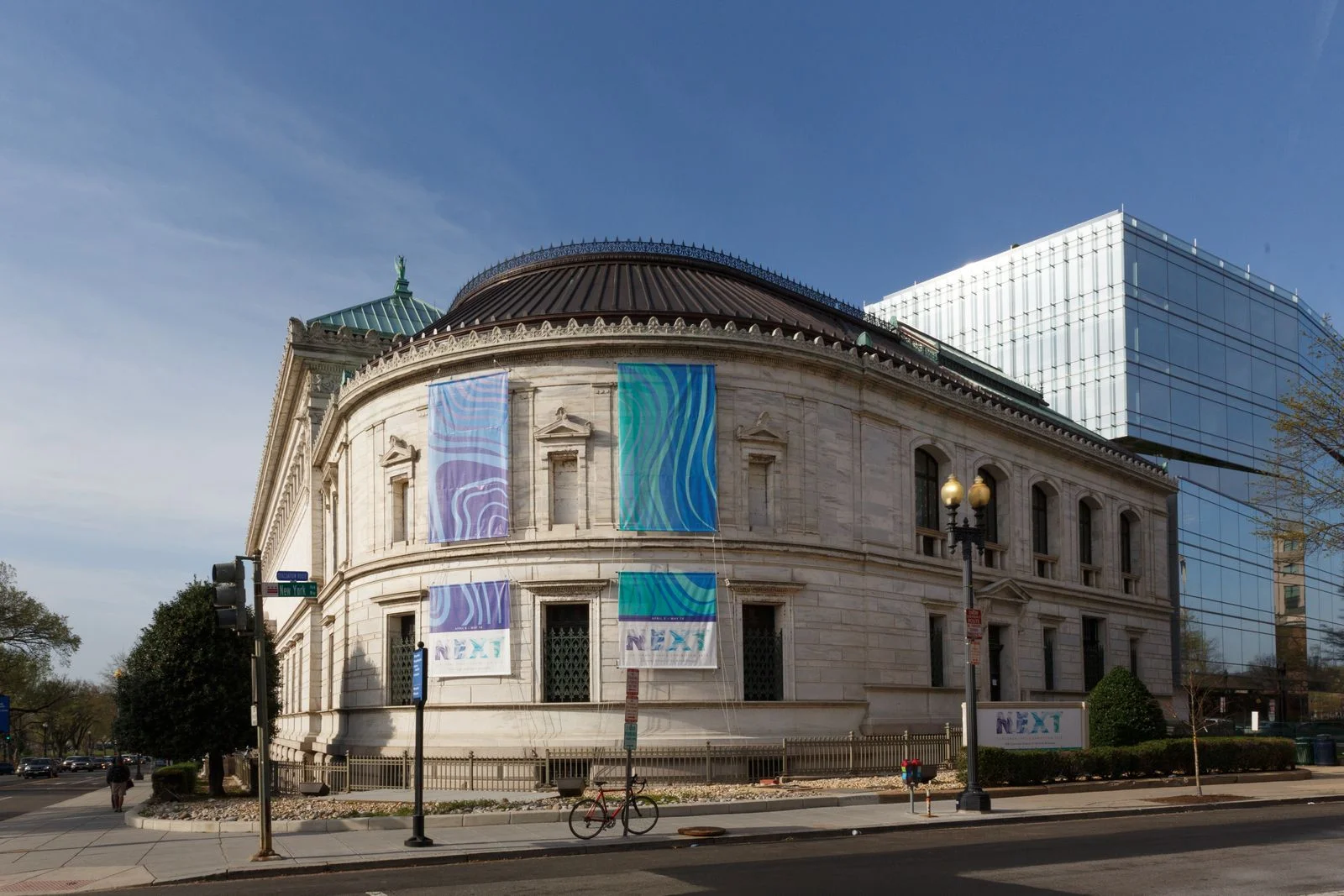
“Our Interior Architecture program combines rigorous design thinking with the cultural and professional advantages of studying in the nation’s capital,” says Douglas Crawford, program head at the GWU Interior Architecture department. “As the only CIDA-accredited interiors program in Washington, DC, we prepare students to lead the future of the built environment through technical excellence, creativity, and real-world engagement.”
Part of the Corcoran School of the Arts & Design, the interior architecture program seeks to educate up-and-coming talent on every aspect of the industry. Once undergrad students complete the required core classes, the interior-specific curriculum encourages them to challenge convention and explore three-dimensional environments with modern methods and technologies. The Corcoran School of the Arts & Design is spearheaded by a faculty of top-notch design professionals from all around the world, offering students a global perspective as well as opportunities to join study abroad programs in Berlin, Rome, London, Paris, or Copenhagen.
The studio-based, graduate-level interior architecture (IA) MFA program is a rigorous, two-year curriculum designed for students wanting an advanced degree with no undergraduate degree in the field. It offers a carefully sequenced series of courses building on theoretical, technical, and creative challenges inspired by real-world design issues. MA and MFA candidates also collaborate with other GW departments to develop adaptive reuse projects positioned within historic contexts in the nation’s capital.
Undergraduates who receive their BFA in interior architecture are invited, if they choose, to apply and stay at GW for an additional consecutive year to earn their Masters of Arts in interior architecture and receive 10% off through the Grad2Grad Program. Graduates of GW’s programs have gone on to receive job offers at top design firms and blockbuster businesses, supported by a firm foundation of conceptual thinking and design processes.
- Program: Interior Architecture
- Location: Washington, DC
- Degrees offered: BFA, MA, MFA
- CIDA accredited: Yes
- Local opportunities: Some. Internships are encouraged, as is utilization of the school's global design firm network.
- Cost: BFA: $69,780/year; MFA: $62,730/year; MA: $62,730/year
- Job placement: 85 percent of BFA interior design students and 92% MFA recipients who graduated in 2021 are employed in an industry-related position.
- Notable alumni: Lauren Waters, Brittany Watson Jepsen, Lauren Waters