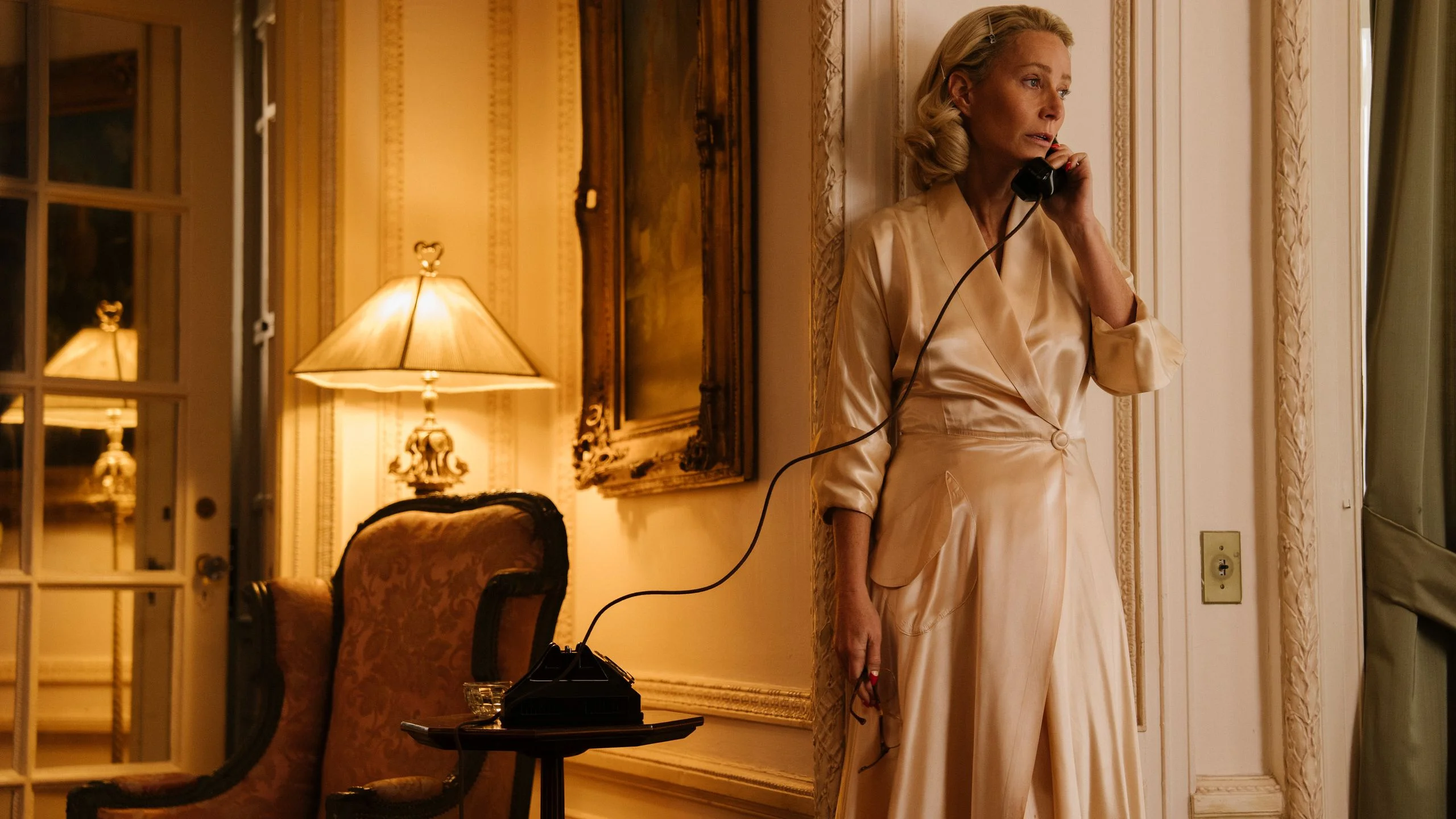
A24’s sports comedy drama Marty Supreme, directed by Josh Safdie, loosely rehashes the late Marty Reisman’s real-life ascent to table tennis stardom. Timothée Chalamet portrays protagonist Marty Mauser, a mischievous shoe salesman determined to become a table tennis prodigy by any—and we mean any—means necessary. The fictionalized version of his life, Marty Supreme has racked up a heap of nominations, including nine at the forthcoming Academy Awards in March.
But it isn’t just the performances from Chalamet, Gwyneth Paltrow, and Tyler, the Creator that captivate. In its set design, Marty Supreme creates a world that captures the gritty, postwar essence of New York in the early 1950s. Industry veteran Jack Fisk, Hollywood’s go-to production designer for period-specific projects, was tasked with forging an atmosphere that meets Marty even at his most erratic and unhinged. Marty Supreme is an amalgamation of Fisk’s half-century of experience from past films; through his “method-style” approach, he brought to life the oil-boom-era West Texas in There Will Be Blood (2007), the 19th-century frontier in The Revenant (2015), and 1920s Oklahoma in Killers of the Flower Moon (2023)—all three of which earned him Oscar nominations for best production design.
“I’ve been doing this for about 55 years, so everything I’ve done has made the next project easier,” Fisk tells AD. “But I’m always looking for films that are difficult because it’s boring if it’s not difficult.” It seems he found that challenge with Marty Supreme—and perhaps, it will be the project that finally secures him the coveted statuette. Below, AD breaks down Marty Supreme, with Fisk revealing the process behind the film’s Oscar-nominated set design. Here are five under-the-radar design cues from Marty Supreme.
Marty Supreme re-created Reisman’s IRL table tennis parlor
Upon onboarding Safdie’s ambitious project, Fisk was presented with two challenges: designing a world that authentically emulated 1950s New York and collecting table tennis paraphernalia from that era. Neither Safdie nor Fisk was acquainted with either. Plus, Fisk grew up in the small town of Canton, Illinois, and Safdie was born and raised in the 1980s. “[Josh] was handicapped in a way because he was born in the ’80s—he’s Jewish from the Lower East Side, though,” Fisk tells AD. “But I was born in the ’40s, so I could tell him more about what he needed for the film—and he needed a lot. He wanted a lot.”
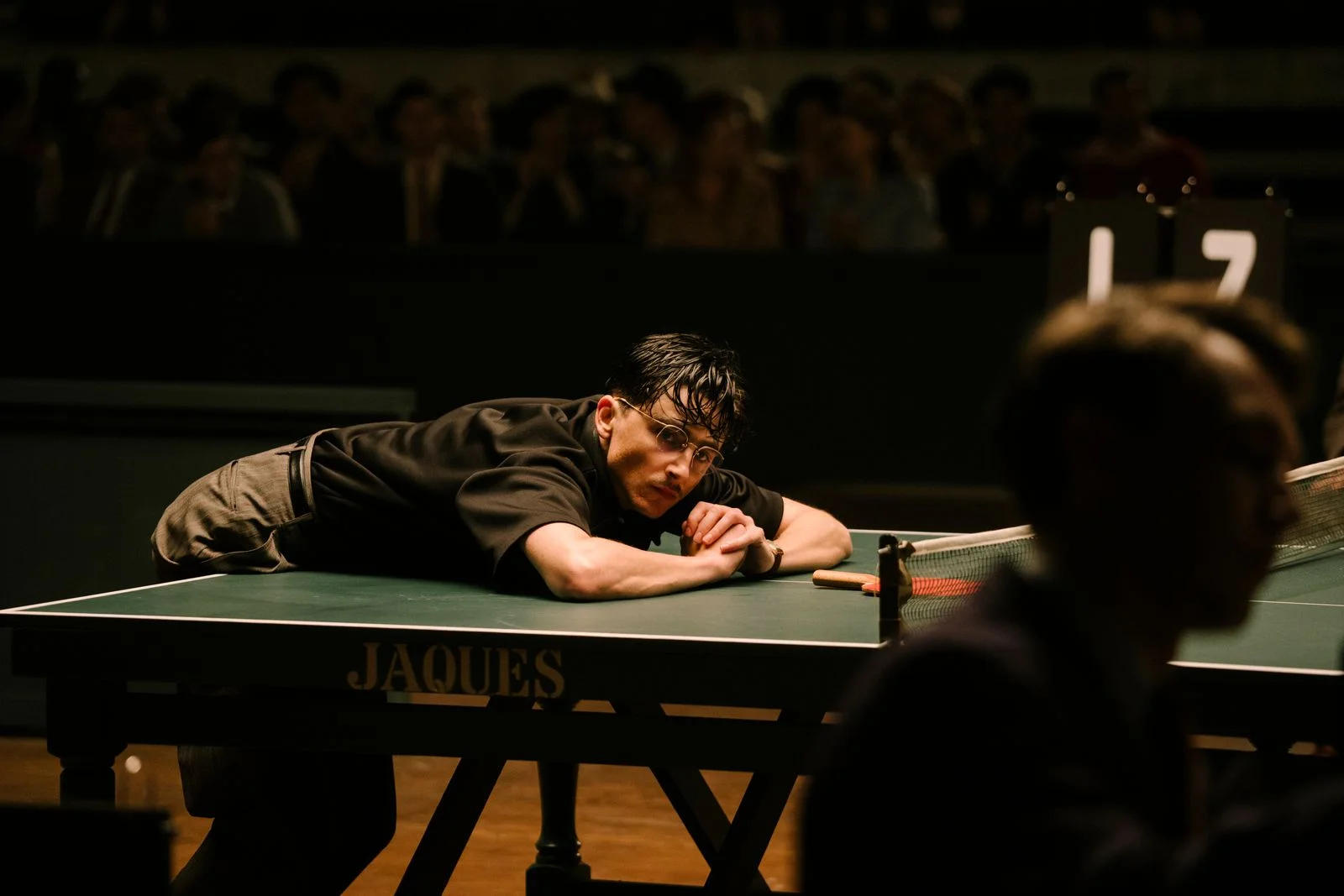
Fisk worked closely with Safdie and his wife, producer Sarah Rossein, on the movie’s historical research. The trio swapped ideas and photographs, and toyed with the script before molding it to perfection. The first place that stood out to Fisk was Lawrence’s Table Tennis Club, a Black-owned, Prohibition-era speakeasy located in Midtown Manhattan. Reisman frequented the parlor, which, in its heyday, served as a social hub for table tennis and high-stakes hustling. The designer was able to locate and piece together the original floor plan of the now-defunct parlor through archival imagery from a copy of Look magazine and city tax records. “The city of New York keeps a lot of blueprints as buildings are remodeled, so I had the physical presentation of the building,” he recalls. “I could look at the floor plan and figure out how tables were probably laid out…I saw the red floor, the tone of the blue walls…it was helpful.”
Before real-life owner Herwald Lawrence bought the second-floor parlor, the table tennis club served as an indoor golf club, landscaped in murals of a garden, trees, and fog. “The real Marty and Lawrence were there every day. It was an interesting place because on Fridays, they’d have tournaments,” Fisk says. “There was also a lot of gambling going on. Young kids aspiring to become better at table tennis would play with the club’s best players and earn money. A lot was going on in the table tennis world.”
Fisk re-created 1950s NYC stores with his childhood in mind
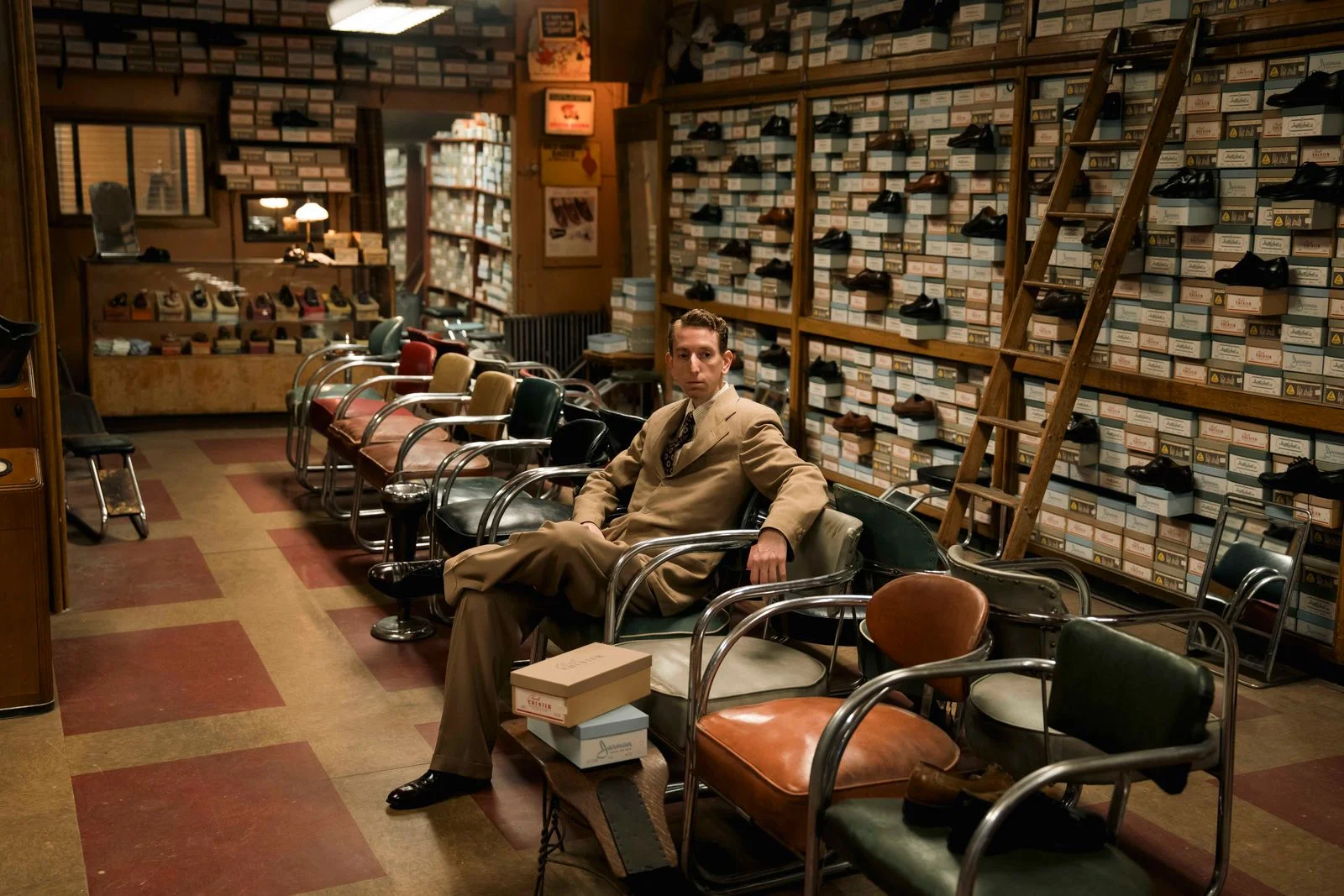
To re-create the downtown stores of 1950s New York, Fisk and set decorator Adam Willis scoured vintage shops, prop houses, and stores that have retro equipment. An unlikely source of inspiration? Fisk’s childhood. “I remember when I was a kid in a little town in Illinois, I went into the shoe store that had a machine where you could put your feet in. You could see your skeleton inside your shoes—that was how they measured shoes back then—and that machine was one of the first things that our set decorator, Adam, found [for the film].”
When possible, Marty Supreme juggled transforming real spaces, including temporarily buying out businesses and Reisman’s table tennis stomping grounds. Norkin Shoes, the shoe store that Marty and his uncle operate, was created by filling a Lower East Side dessert store to the brim with roughly 8,000 boxes, all color-checked and stamped with era-specific labeling. “We’re lucky that there have been photographs since the 1860s—so, by the ’50s, there were color photographs, and that helped us out,” says Fisk.
Marty Supreme’s production designer is famous for two Oscar-nominated splash scenes
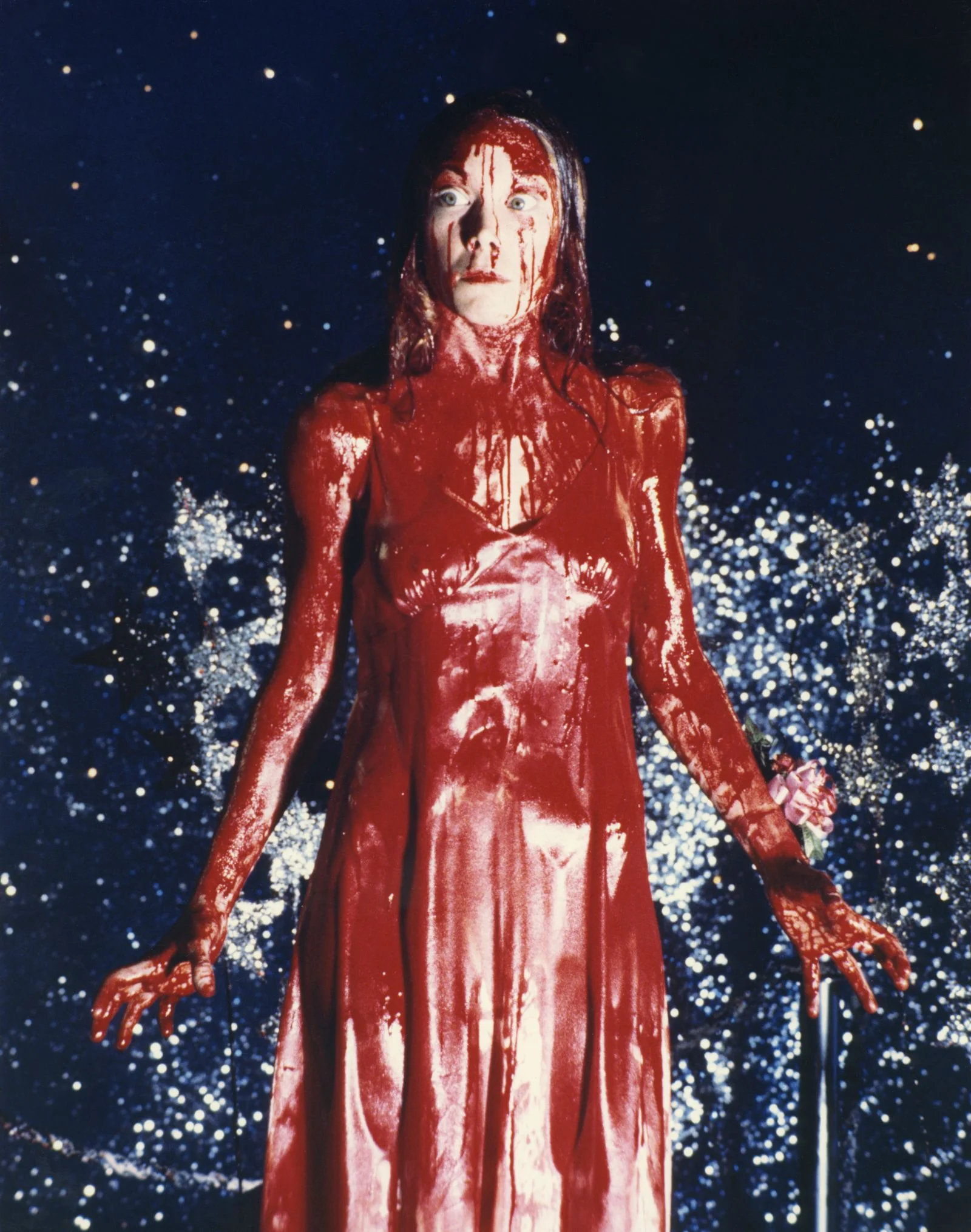
One of Fisk’s early career showstoppers was the pig’s blood scene in the 1976 horror flick Carrie. Five decades later, he applied his trompe l’oeil expertise to the bathtub crash shot in Marty Supreme—the scene where Marty checks into a rundown Garment District hotel (“the Halsey on 28th”), ignores the front desk instruction, and jumps in the tub—with his dog—anyway.
Sissy Spacek (who played the original Carrie and happens to be Fisk’s wife) recalls getting doused in fake blood as “sticky and terrible.” And Fisk can’t promise that the bathtub stunt was any more pleasant. For the out-of-the-blue drop, he opted to build the hotel’s interior on a stage.
“We had the ceiling and all the interior supports and plaster that could crash down on him and not hurt him—poor Timothée was naked, the dog was wet, and [Ezra] the gangster (Abel Ferrara) had his hand in the tub. There were a lot of things to consider, and it was worked out carefully.”
There were two bathtubs set aside—just in case. “We developed it so we could shoot it more than once, but it was timely,” Fisk says. “If you were going to shoot it more than once, you had to replace the ceiling piece and get the tub back upstairs. But thankfully, it worked really well the first time. I think we did it one more time the next day, but it was a great trick. We had a real dog and a puppet dog. Timothée—he was right in it.”
Marty Supreme’s tenements were actually built on a stage
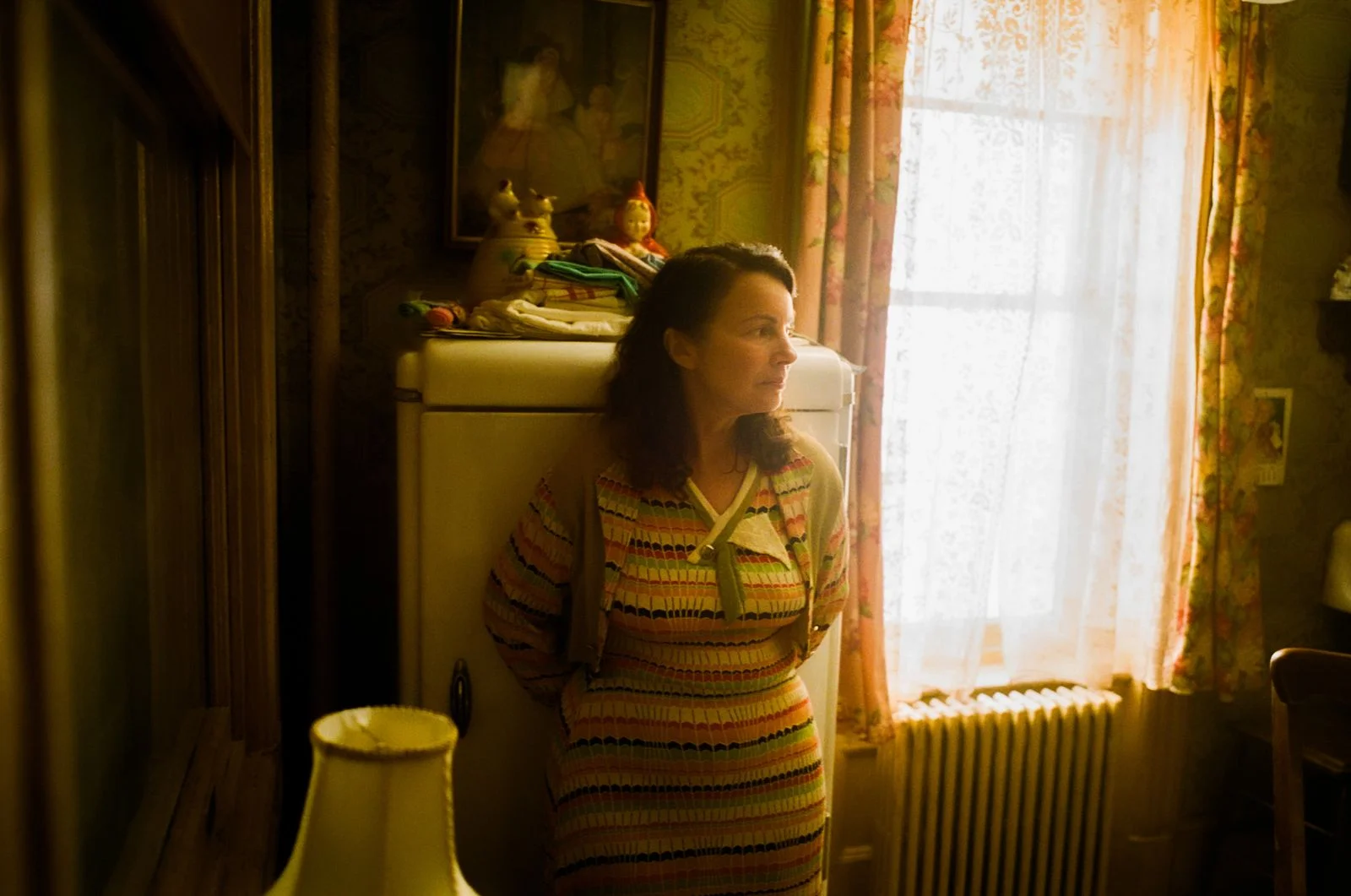
The tenements featured in Marty Supreme of course replicated those from the 1950s. Fisk confirms that they weren’t real tenements preserved over the decades, as modern upgrades would get in the way. “We couldn’t shoot in a real one because now they’ve got modern windows, steel doors, and they're either too confining or too tight to shoot in,” he says. “There’s no way to light them, either.”
For Fisk, it was easier to re-create an authentic ’50s-style tenement on a stage. “We designed it—built it, painted it, wallpapered, and everything,” Fisk says.
Over 100 animals were used for Marty Supreme’s pet store
When Rachel (Odessa A’zion) wasn’t covering up for Marty and his shenanigans, she was a pet-store employee who handled the downtown rush of customers, primarily children looking to purchase hamsters, birds, and even an armadillo.
Fisk confirms that the animals were real—and, in fact, there were over a hundred of them on set. As for the location, the crew chose a little narrow store that was for rent three blocks from Orchard Street in the Lower East Side. “I didn’t think we could shoot there,” he says. “But the next day, we went to look at it. I was trying to figure out ways to make it wider. But Josh embraced the tightness of the shop.”
From there, they rebuilt the building’s exterior, and then assembled shelves, hung cages from above for birds, and organized all the animals to come in. “We had puppies, rabbits, armadillos, birds, and fish—it was like a working pet shop,” Fisk adds. “On the day of shooting, we were able to close two blocks for a couple of hours where [Timothée] ran to the pet shop. It was one of my favorite sets because it was so real. It looked nothing like it did when we found it. That’s the magic of doing production design for films. Transforming.”