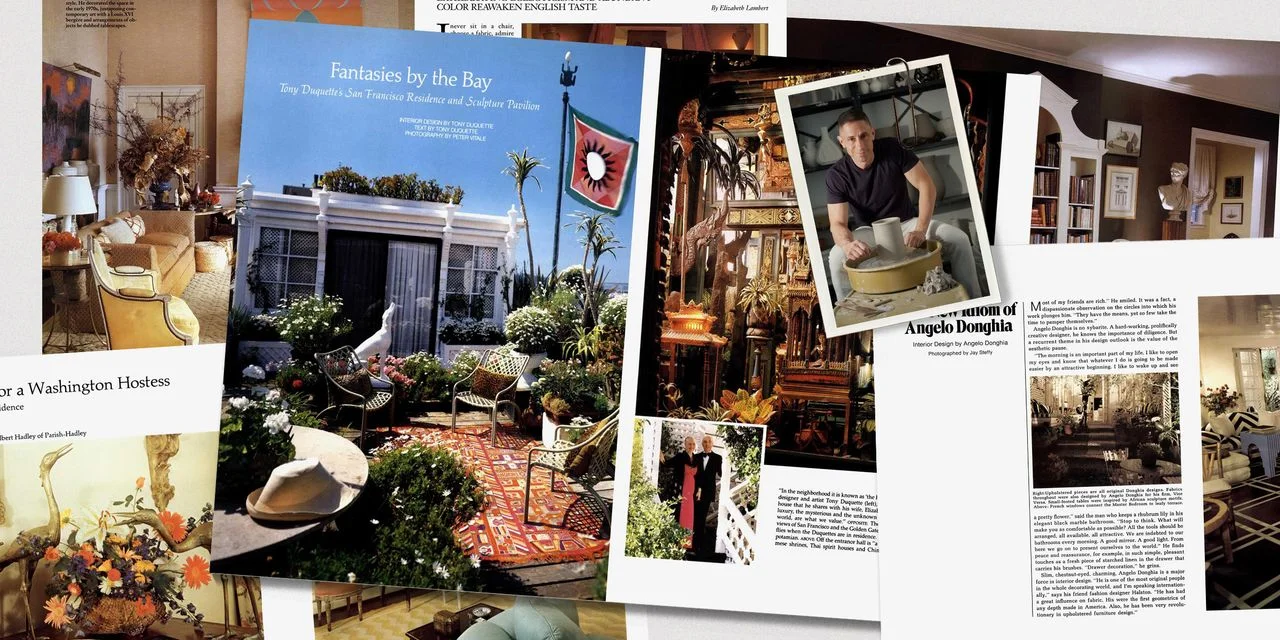
Jonathan Adler’s universe is not for fans of bland. The designer’s home goods empire—which grew from a line of whimsical pottery stocked at Barneys New York in the early 90s—encompasses kooky pill-shaped pillows, Op Art-inspired rugs, cabochon-studded consoles, and countless other creations infused with his signature camp-chic energy.
The New Jersey native’s latest coup is an exhibition at the Museum of Arts and Design in New York, The Mad MAD World of Jonathan Adler (on view through April 19), which also marks his curatorial debut. The show brings together more than 60 works from the museum’s permanent collection alongside many of Adler’s own iconic designs, demonstrating not only his witty sensibilities but his encyclopedic command of 20th century decorative arts. A natural raconteur whose homes and projects have appeared in AD for decades, Adler was an obvious choice for our series highlighting AD’s archives.

November 1973
Angelo Donghia’s Louche Yet Comfy New York apartment
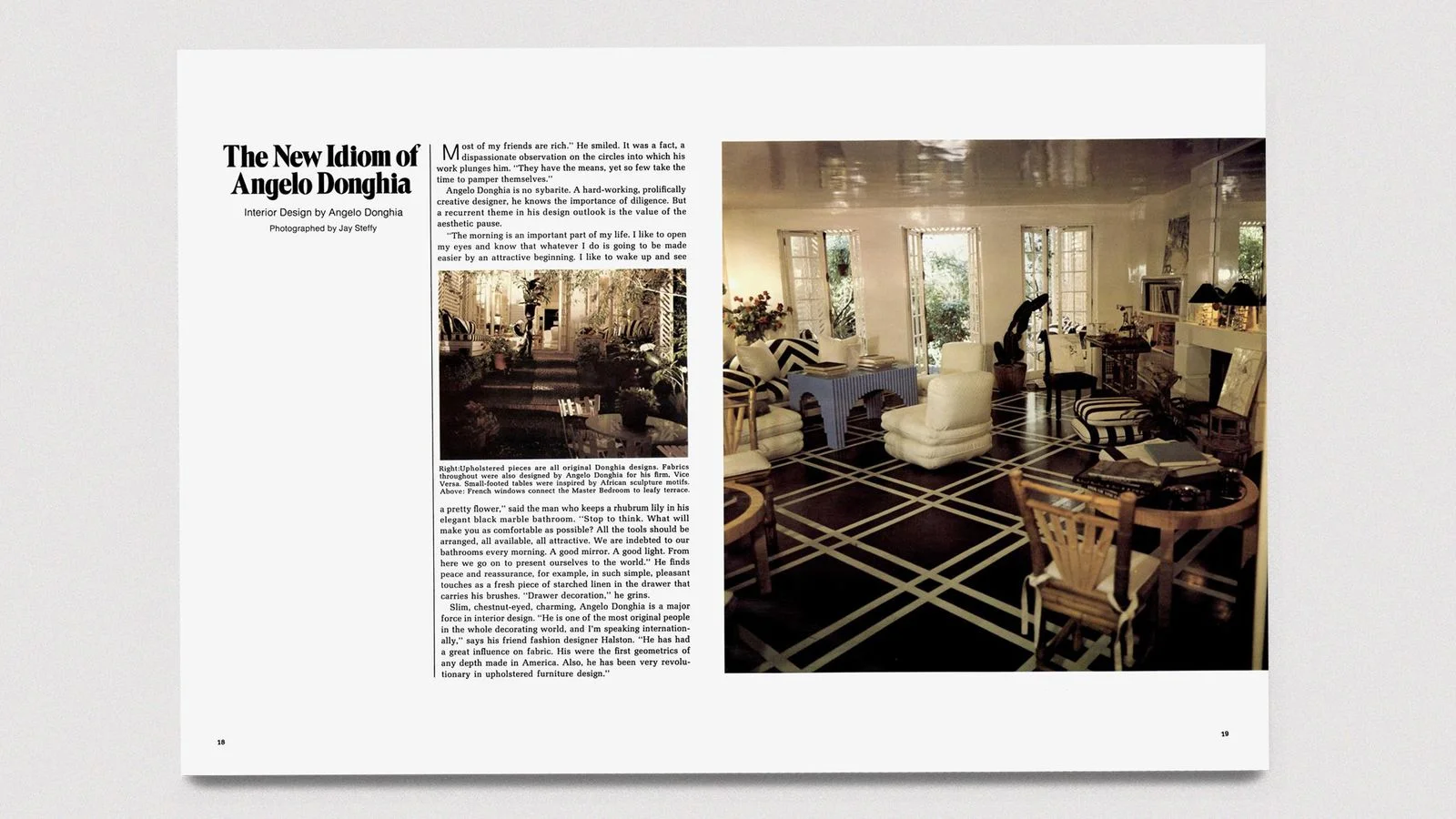
Some designers can do chic, some can do comfy, but only a chosen few can marry the two. When I think of Angelo Donghia, I think of the fabulous way he combined the loucheness of the 70s with the overstuffed sofas of the 80s. This story, featuring Donghia’s own NYC apartment, featured his pioneering upholstery—the 70s stripe that really found its stride a decade later. And that lacquered ceiling! So luminous and weird.
March 1975
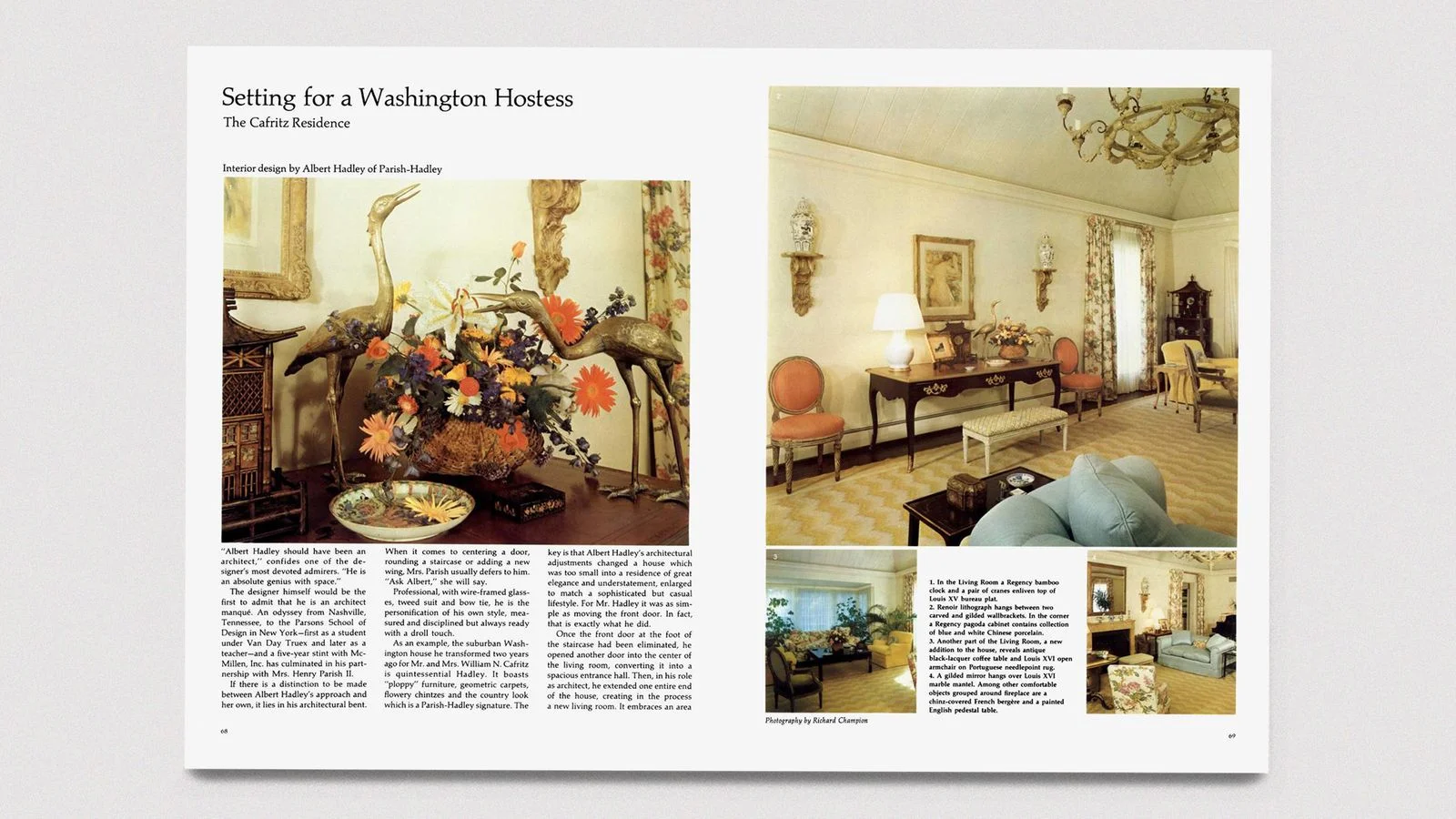
If I had to hire another designer to design my house I would pick the late Albert Hadley. I think of him as the American GOAT. He made fancy rich people seem like a lot of fun. He could mix the precious antiques of his super-rich clients with Arteluce triennale floor lamps and the occasional Saarinen chair. This project, a suburban house for a Washington, DC couple, is quintessential Hadley. It’s luxe and obviously rigorously designed and coordinated, but feels effortless. It’s also really grounded in a sense of place. For instance, that custard colored dining room with traditional wood chairs is very much of the design idiom of Washington, DC, but he took that aesthetic and managed to update it from colonial to modern.
May 1989
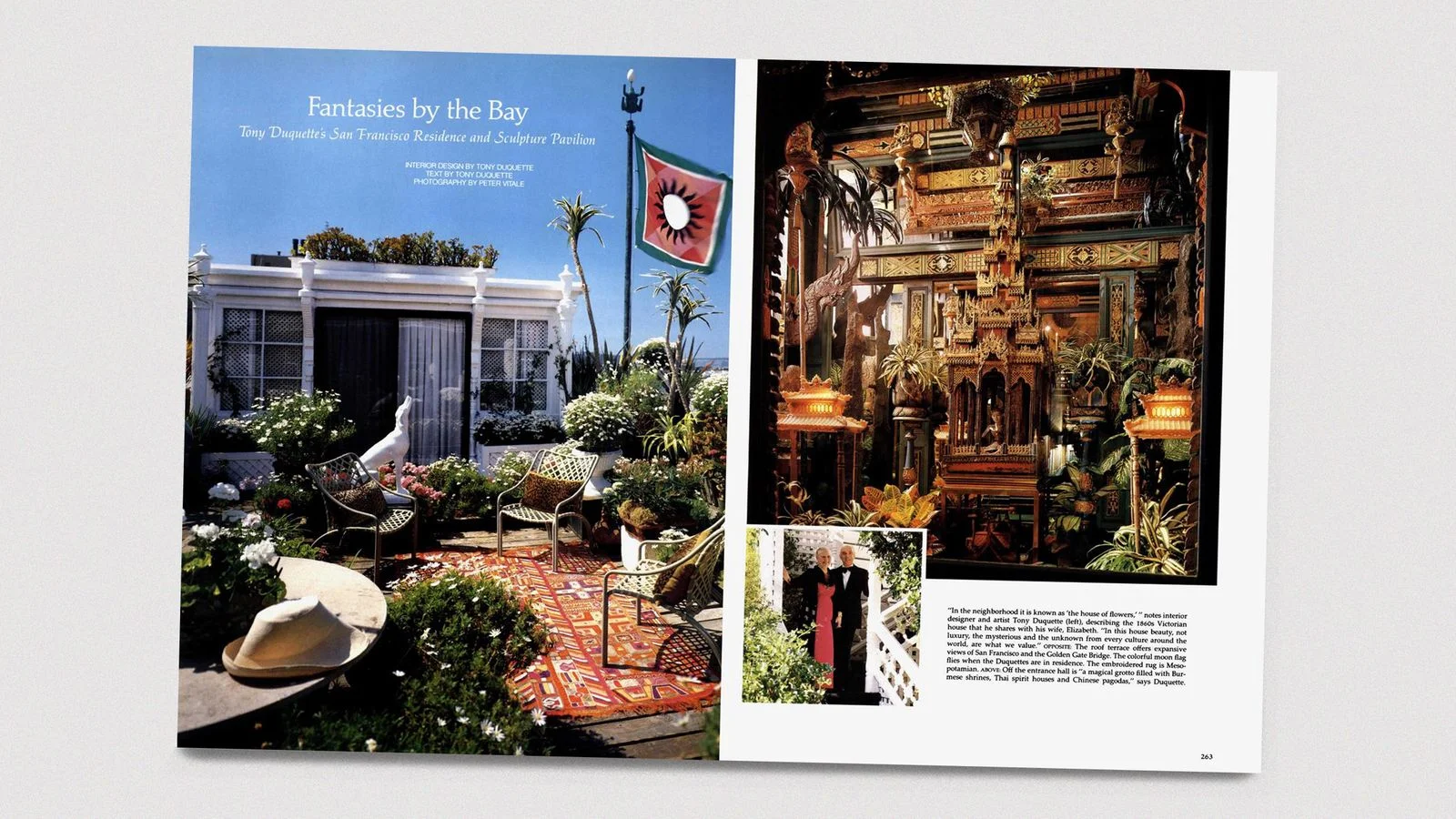
This was Tony Duquette’s Bay Area home, an 1860s Victorian that was known locally as the “house of flowers.” Like his famous Los Angeles property, Dawnridge, this was a multicultural freak out, mixing chinoiserie with Balinese accents and jewel tones, layer upon layer upon another layer still. Duquette was so good at creating a feeling of opulence and excess, even when the objects themselves were not necessarily precious. He combined sublime antiques with things like twigs repainted to resemble precious coral. He designed many Hollywood sets and looked straight out of a Hollywood set himself—impossibly tall, berobed, and bejewelled.
September 1996
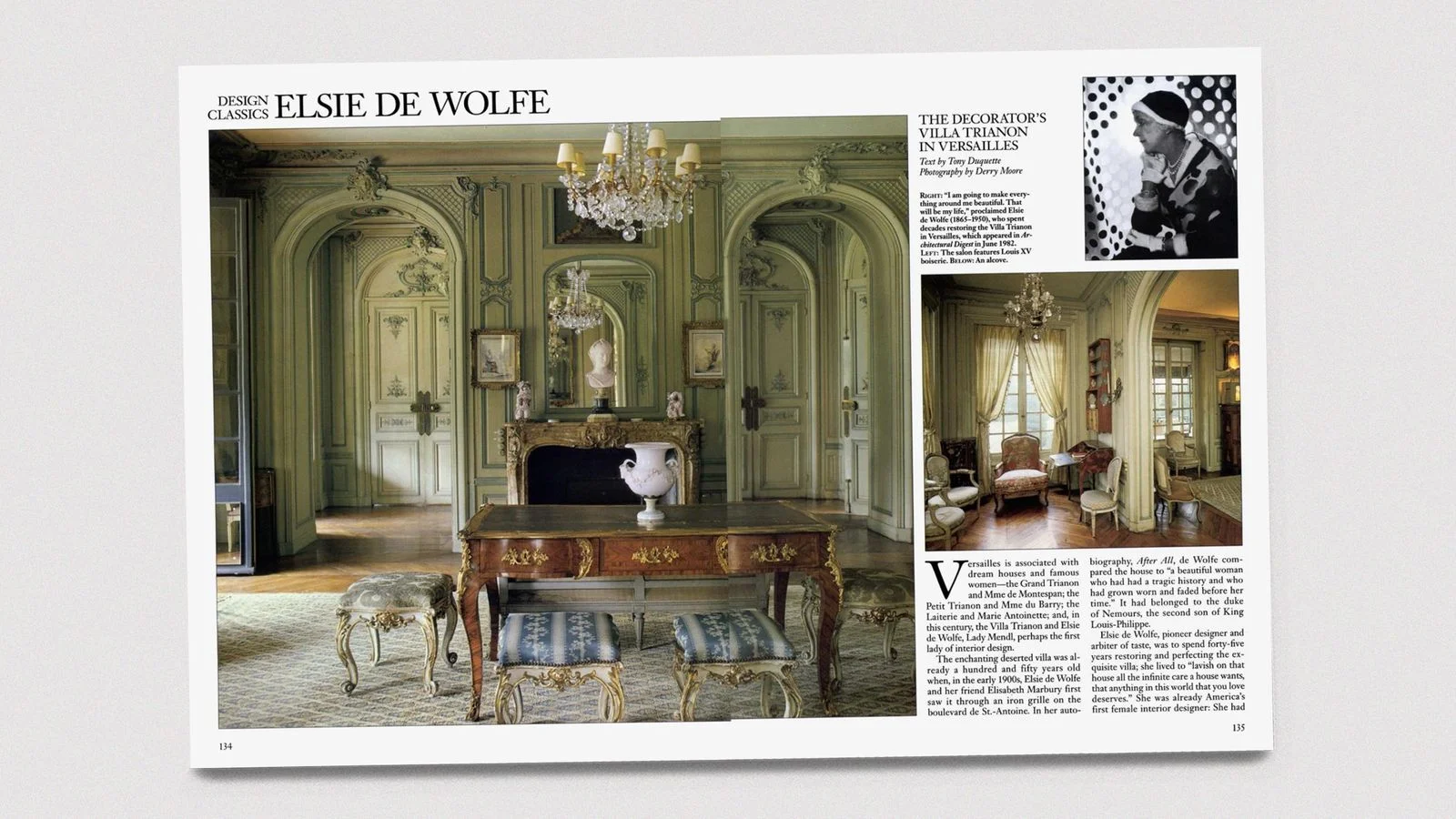
The opening spread of this Elsie de Wolfe feature (written by none other than Tony Duquette!) features the salon of her Villa Trianon in Versailles. I love how it’s so light and lively—even the way she positioned the stools around the desk helps create a feeling of airiness and lightness in a room that could go heavy real quick. Even though de Wolfe used lots of 18th century antiques, her interiors were spare and jaunty, and were an important first step toward modernism. I also love that she was such a dogmatic diva. She had a huge persona, blazing the trail for such pronouncement-slingers as Diana Vreeland, Andre Leon Talley and Polly Allen Mellen. My fave quote: “It is not chic to be too chic.”
January 2000
Mark Hampton’s Perfectly Personal Rooms on Park Avenue and Beyond
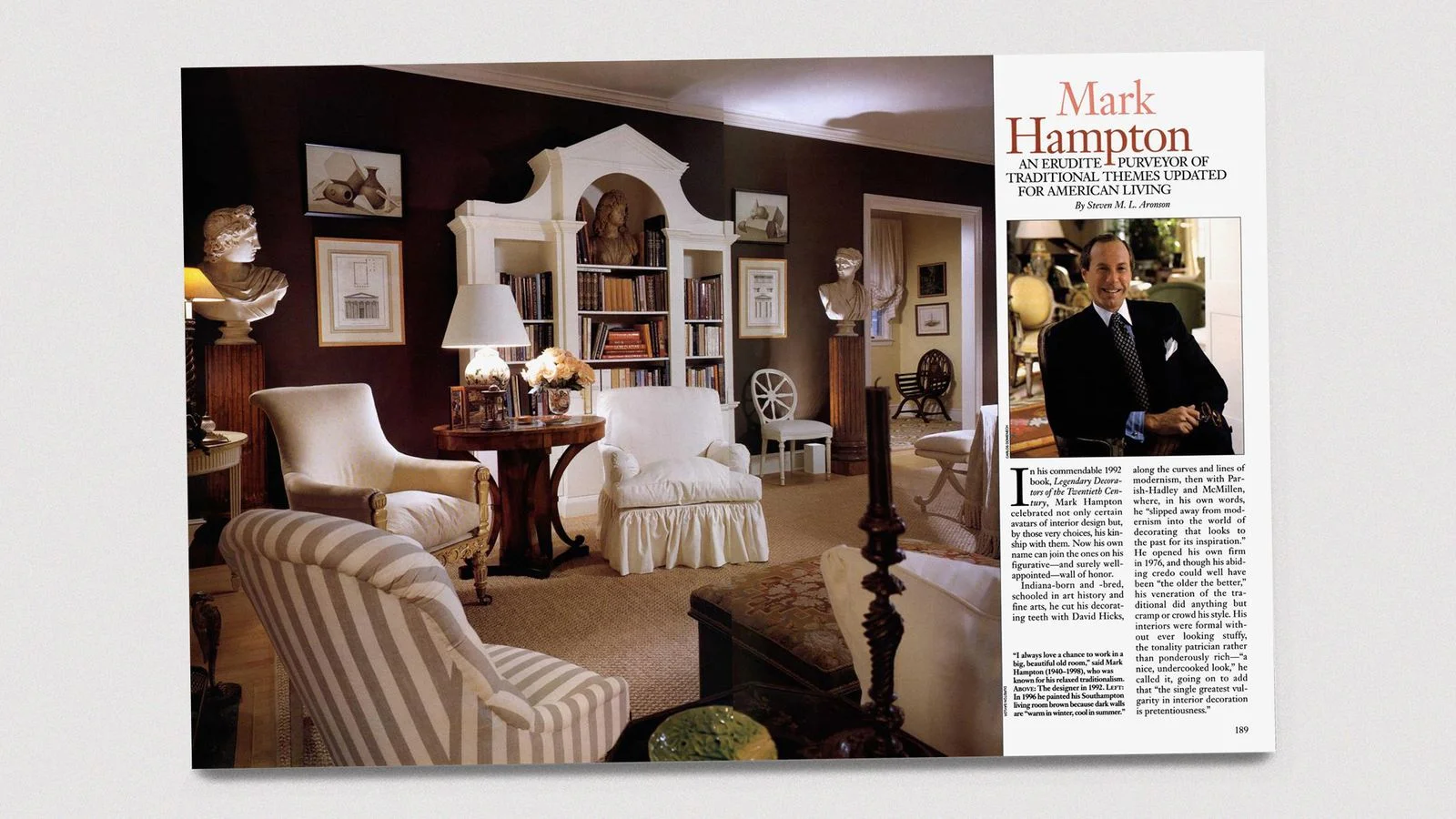
I’m not by nature traditional, but I can imagine sinking into a Mark Hampton interior and changing my entire sensibility. He could totally turn me into a squishy, luxe traditionalist. It wasn’t that he invented a new style—for instance, there's a Mark Hampton dining room in the story that was clearly influenced by Elsie de Wolfe. But his signature decor was an an insouciant, unimpeachably gorgeous mix of tradish and tailored. He just had it. And as it turns out, it is hereditary—his gorgeous daughter Alexa Hampton has kept the dream and the firm alive. What a legacy!
January 2000
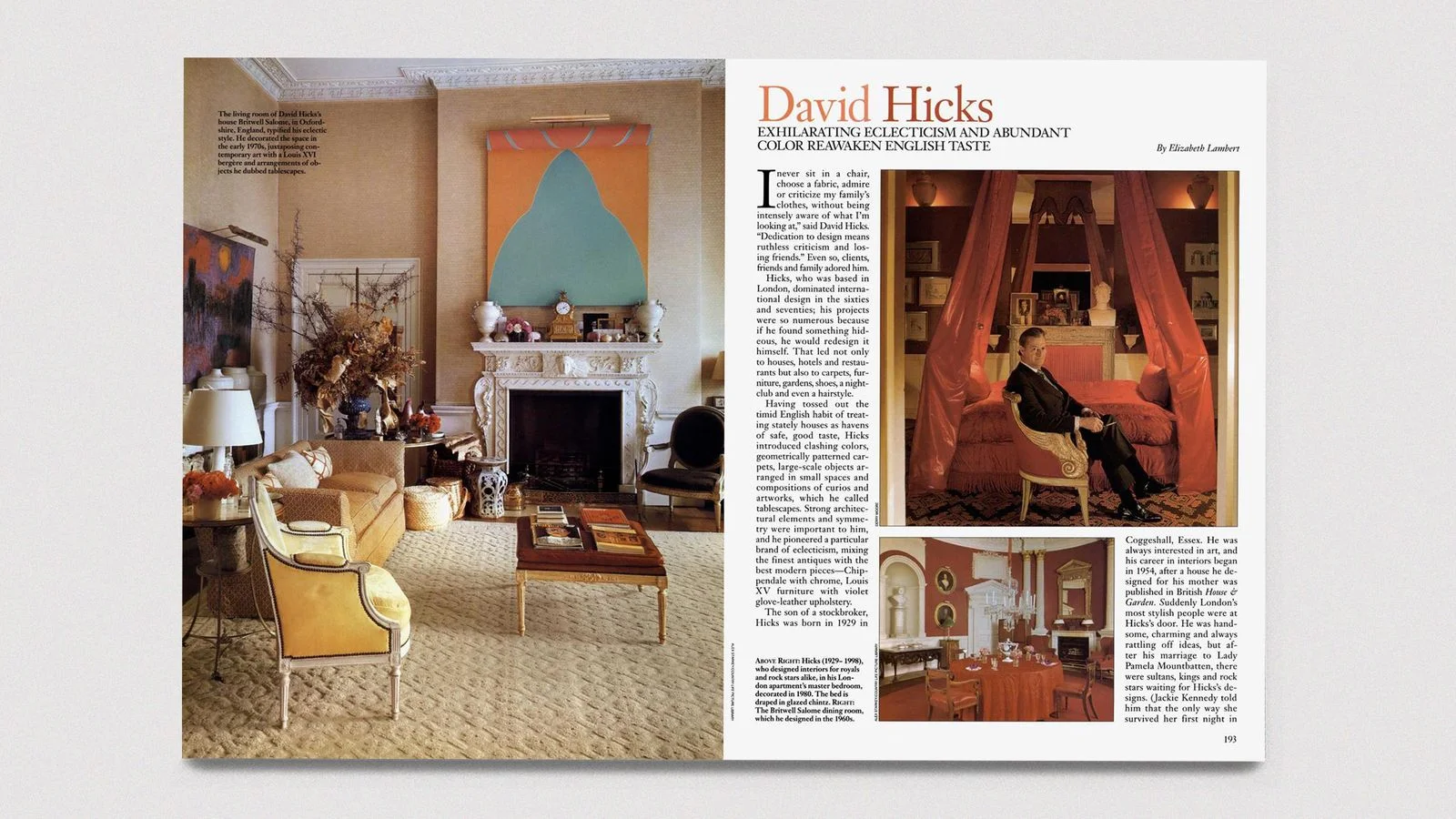
David Hicks’s work is so firmly lodged in our collective design imagination that we almost take his genius for granted. He understood the look and feel of English traditional richesse but moved that style from the past and into a future of jet set chic. This feature is a medley of his greatest hits—he was a mix master of improbable and singular color combos, tailored trim, graphic carpets, books, and of course, those hexagon patterns! I especially love his Oxfordshire country house with abstract paintings and jolts of sharp unexpected color. He really was the GOAT.
September 2017
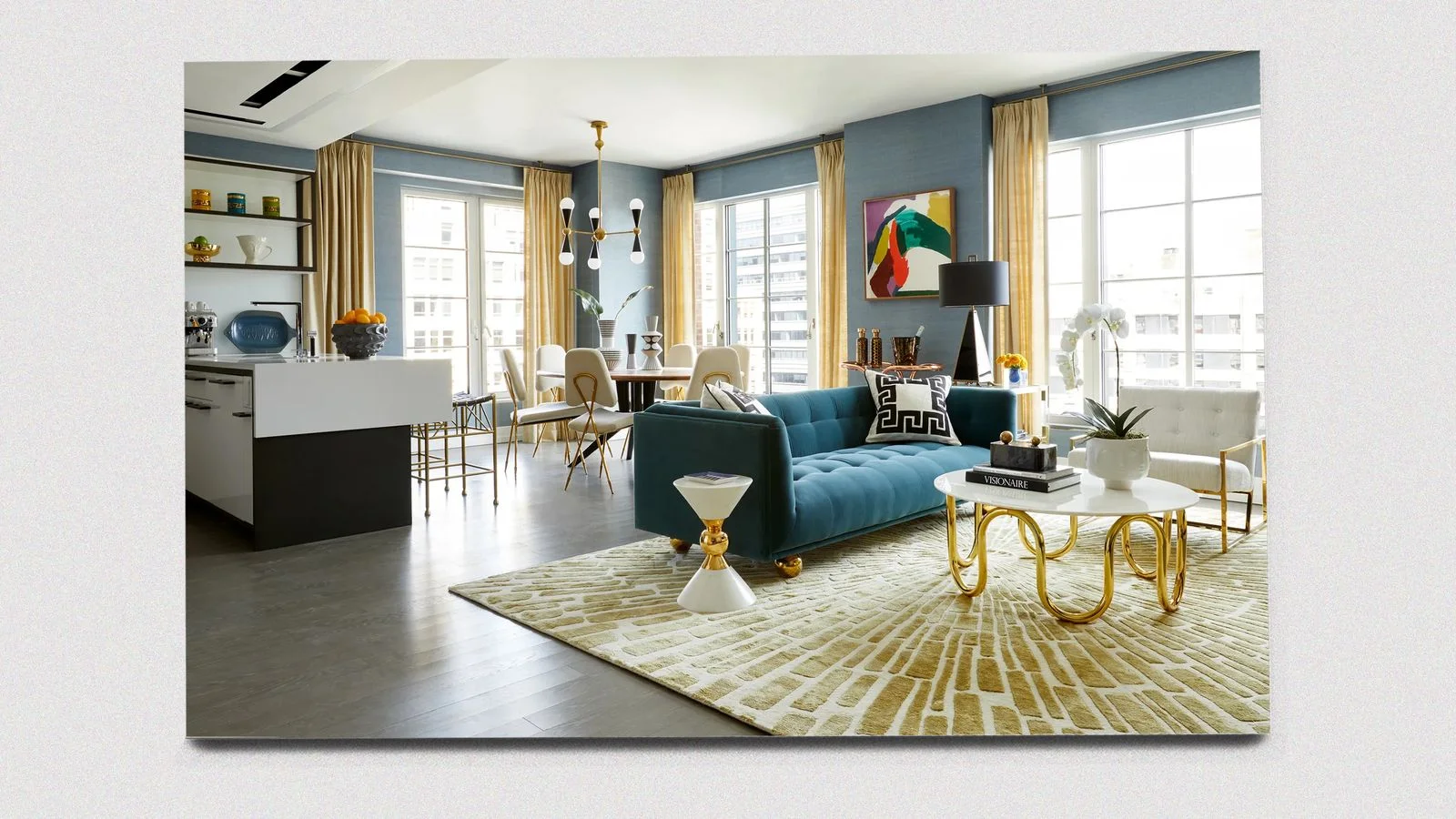
Oh hey, it’s me! I use three words to describe my work: Modern American Glamour. “Modern,” because my work, I hope, feels like today. “American,” because my style is optimistic. “Glamour,” because I believe everything you surround yourself with should make you feel a little bit more glamorous than you think you are. Glamour is about swagger, confidence and being memorable. This apartment is a good example of these three words, since pretty much everything in it is designed or stocked by me!
March 2019
Mario Buatta’s Curtain Call: the Last Project by the Prince of Chintz
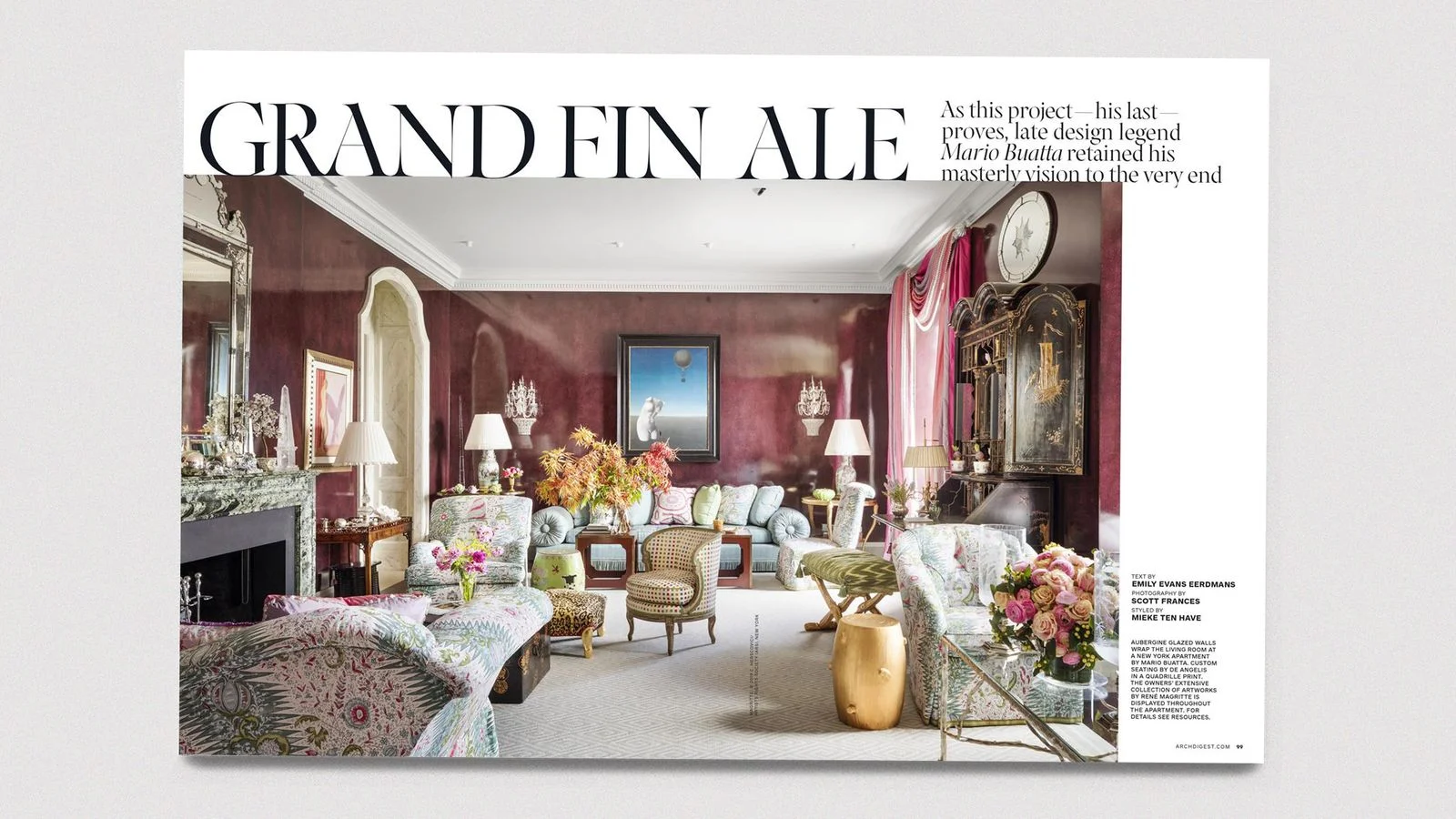
This project was Mario Buatta’s very last project before his passing. He was known as the prince of chintz, but he was more like the emperor of chintz. This is traditional cranked up to 11, everything matchy and layered and rich. I love that the story also includes an archival photo of Mario’s own NYC apartment, which featured a flight of dog paintings, each one hung with a decorative silk bow. As a person, Mario was super sweet and fun, very unpretentious. Once, during my skinny jeans era, he looked at me and said, “Your pants are like a cheap hotel—no ballroom!”
Each month, we’re inviting leading tastemakers from the design world and beyond to explore the vast Architectural Digest Archive—more than a century of extraordinary homes, innovative designs, and cultural landmarks dating back to 1922. Previous curators include Wes Gordon, Colin King, and Ellen Van Dusen.