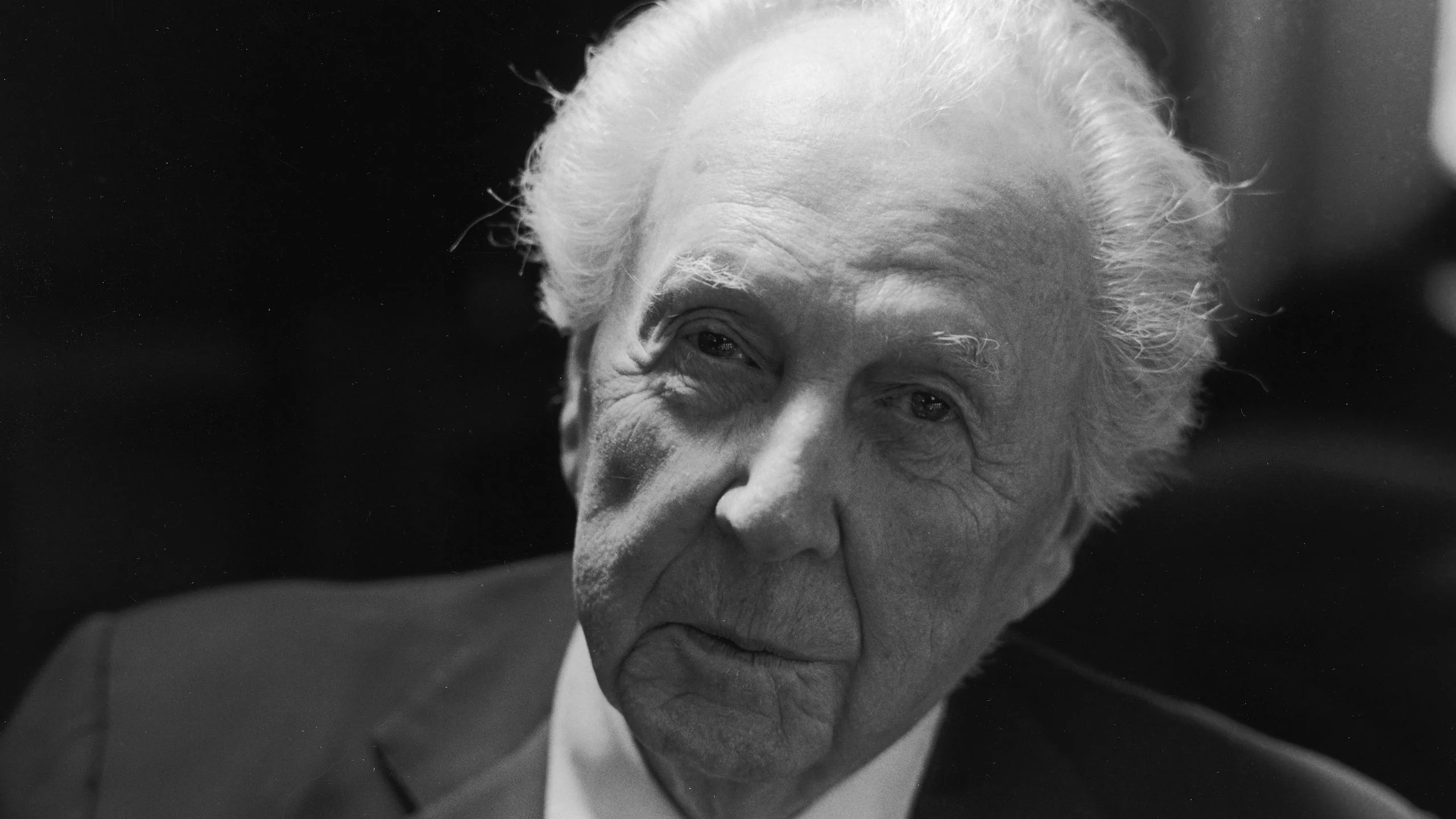

With a career that spanned 70 years, there are no shortage of facts about Frank Lloyd Wright to dissect. But it’s not just his buildings that offer fodder for intrigue, the architect was equally a magnet for personal controversy. With three wives and eight children (seven biological, one adopted), Wright spent much of his adult life racking up sensational, though not untrue, headlines like “Suit ends Wright Romance; Sculptress Who Fled With Architect to Japan Obtains Alimony” (New York Times, 1925) or “Issue Warrant for Wright; Architect's Wife Seeks to Re-enter Their Wisconsin Home” (also New York Times, also 1925). Each refers to the personal tumult that seemed to follow the architect through much of his adult life.
Scholars have long been tempted to link these fascinating personal dramas to the singular genius of Wright’s work, particularly in how the architect would come to shape 20th-century home life in the US. But for all that’s common knowledge about Wright, there are a number of tantalizing details lying just below the surface. Below, 10 little-known facts that offer a glimpse into the architect’s fascinating life.
- 1. Wright’s childhood nursery was decorated with engravings of English cathedrals
- 2. Wright abandoned his practice for a year in 1909 to run away with Mamah Borthwick Cheney
- 3. A disgruntled servant carried out a brutal seven-person murder at Wright’s Taliesin estate in 1914
- 4. Wright was vehemently against the American Institute of Architects (AIA)
- 5. In 1926, Wright was arrested in violation of the Mann Act, a stipulation that made it illegal for men to transport women across state lines for “immoral” purposes
- 6. Wright dabbled in fashion design
- 7. Richard Neutra briefly worked for Wright
- 8. Wright was a prominent dealer in Japanese art
- 9. The architect’s son John Lloyd Wright invented Lincoln Logs.
- 10. Wright was an early automobile adopter and a car collector his whole adult life
- 11. Wright once made a guest appearance on What’s My Line?
- 12. His granddaughter was a silver-screen star
- 13. He didn’t like New York skyscrapers
1. Wright’s childhood nursery was decorated with engravings of English cathedrals
In his autobiography, Wright discusses how his mother prophesied his future as an architect, decorating his nursery with buildings to encourage this development. She also famously purchased her son a Froebel Gifts block set, and used it heavily in his early childhood education.
2. Wright abandoned his practice for a year in 1909 to run away with Mamah Borthwick Cheney
The pair were first connected in 1903 when Cheney and her husband Edwin commissioned Wright to build their Oak Park, Illinois, home. The amorous couple abandoned their spouses, children, and lives (and Wright his practice) in 1909 to spend a year together in Europe before relocating to Taliesin in 1911. This elopement would estrange Wright from several of his children for decades to come.
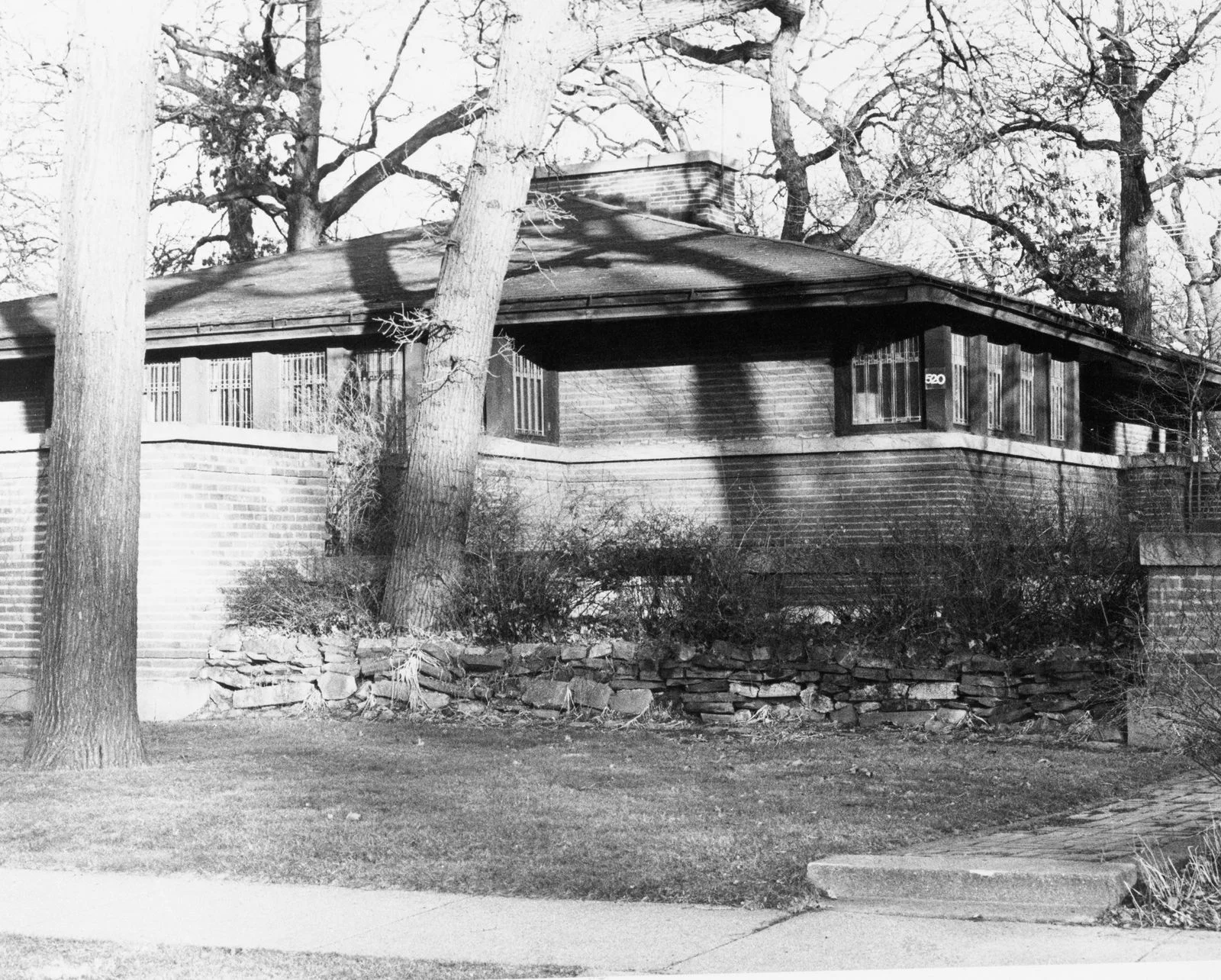
3. A disgruntled servant carried out a brutal seven-person murder at Wright’s Taliesin estate in 1914
While Wright was away on business in Chicago in 1914, a disgruntled servant at Taliesin set the structure’s living quarters on fire before murdering seven of the home’s residents, including Wright’s then-partner, Mamah Borthwick Cheney. The incident has been dramatized several times, including in an opera called Shining Brow (the English translation of “Taliesin”) that premiered in 1993 and the 2007 novel Loving Frank by Nancy Horan.
4. Wright was vehemently against the American Institute of Architects (AIA)
Wright was famous for his disdain for other architects, and he refused to join the AIA. According to the biography Frank Lloyd Wright by Meryle Secrest, Wright would refer to it as the “American Institute of Appearances,” and make other disparaging remarks about the institution publicly. “His slights had the effect of maintaining the gulf between himself and other professionals and of adding further weight to the idea of himself as a gifted maverick, an iconoclast,” Secrest writes. Even so, the organization awarded the architect its gold medal in 1949.
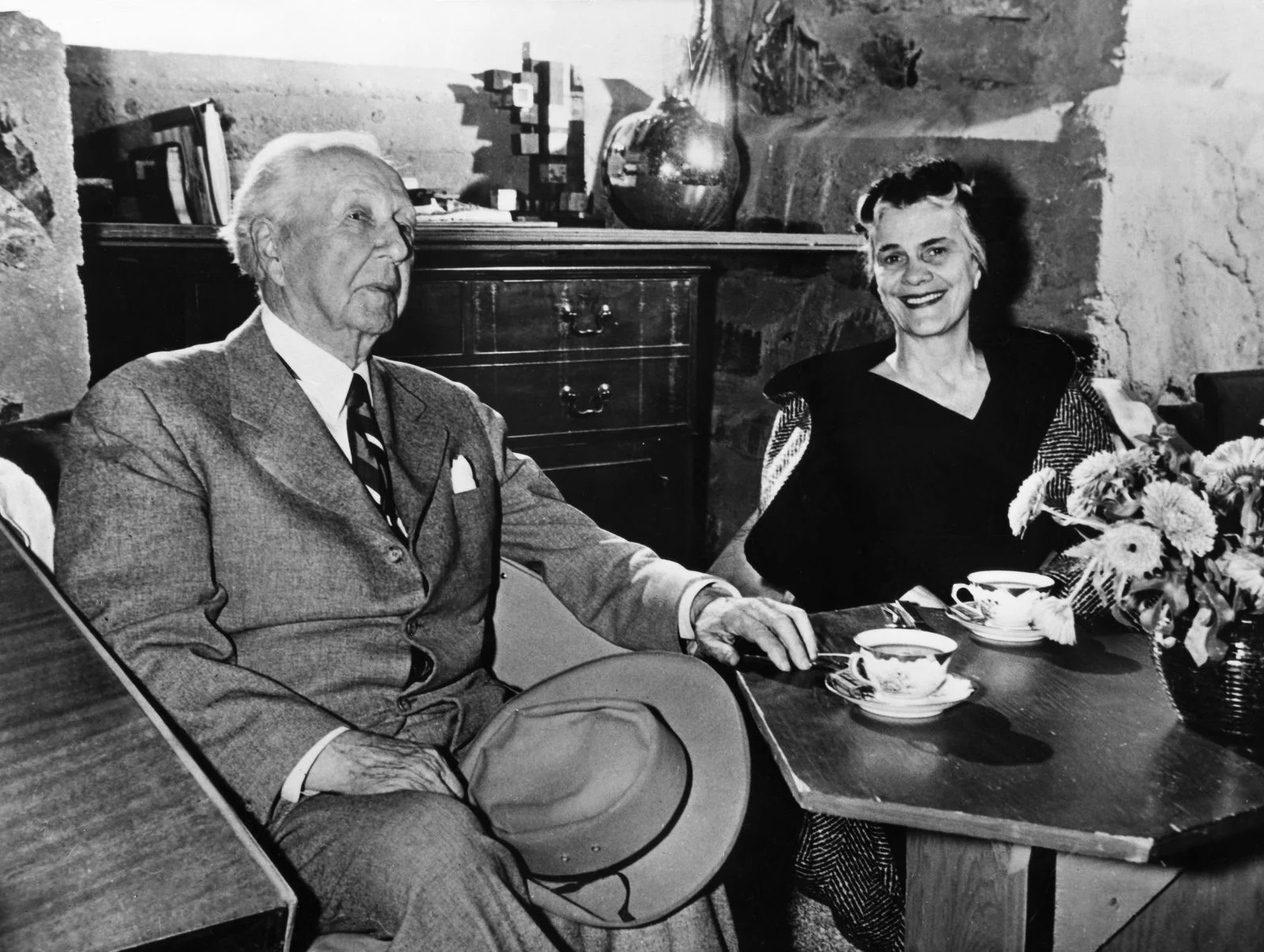
5. In 1926, Wright was arrested in violation of the Mann Act, a stipulation that made it illegal for men to transport women across state lines for “immoral” purposes
Though his divorce with second wife Miriam Noel was not yet final in 1926, Wright was already in a committed relationship with the woman who would become his third wife, Olgivanna Lazovich Hinzenburg. The pair had met at a Russian ballet and had a daughter together, Iovanna, in 1925. In 1926, Wright drove with Olgivanna to a cottage in Minnesota, crossing state lines and leading to a night in the county jail. The charges would later be dropped, and the pair would be formally married in 1928.
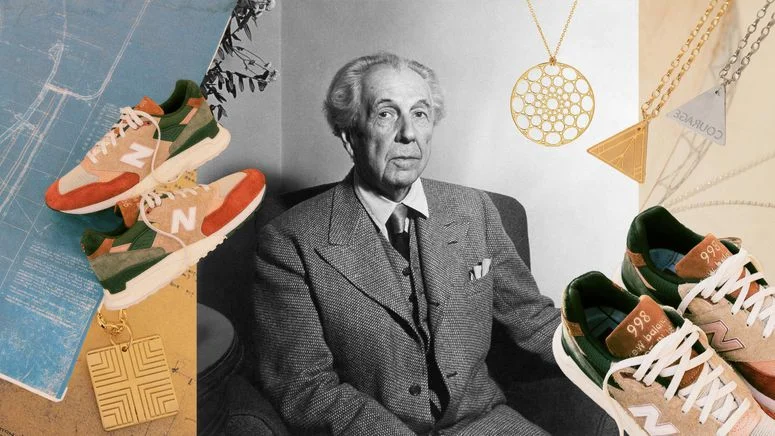
6. Wright dabbled in fashion design
Wright was known for his obsessive eye for detail, insisting on specific furnishings and challenging clients who threatened to compromise his vision for their homes by trying to inject their own taste into the spaces. According to Wright biographer David Hanks, this interest in the total environment led him to create select clothing as well. The architect designed dresses for his wife Catherine Tobin Wright and female clients. Though little documentation exists around the designs, two images are shown in Hanks’s book The Decorative Designs of Frank Lloyd Wright.
7. Richard Neutra briefly worked for Wright
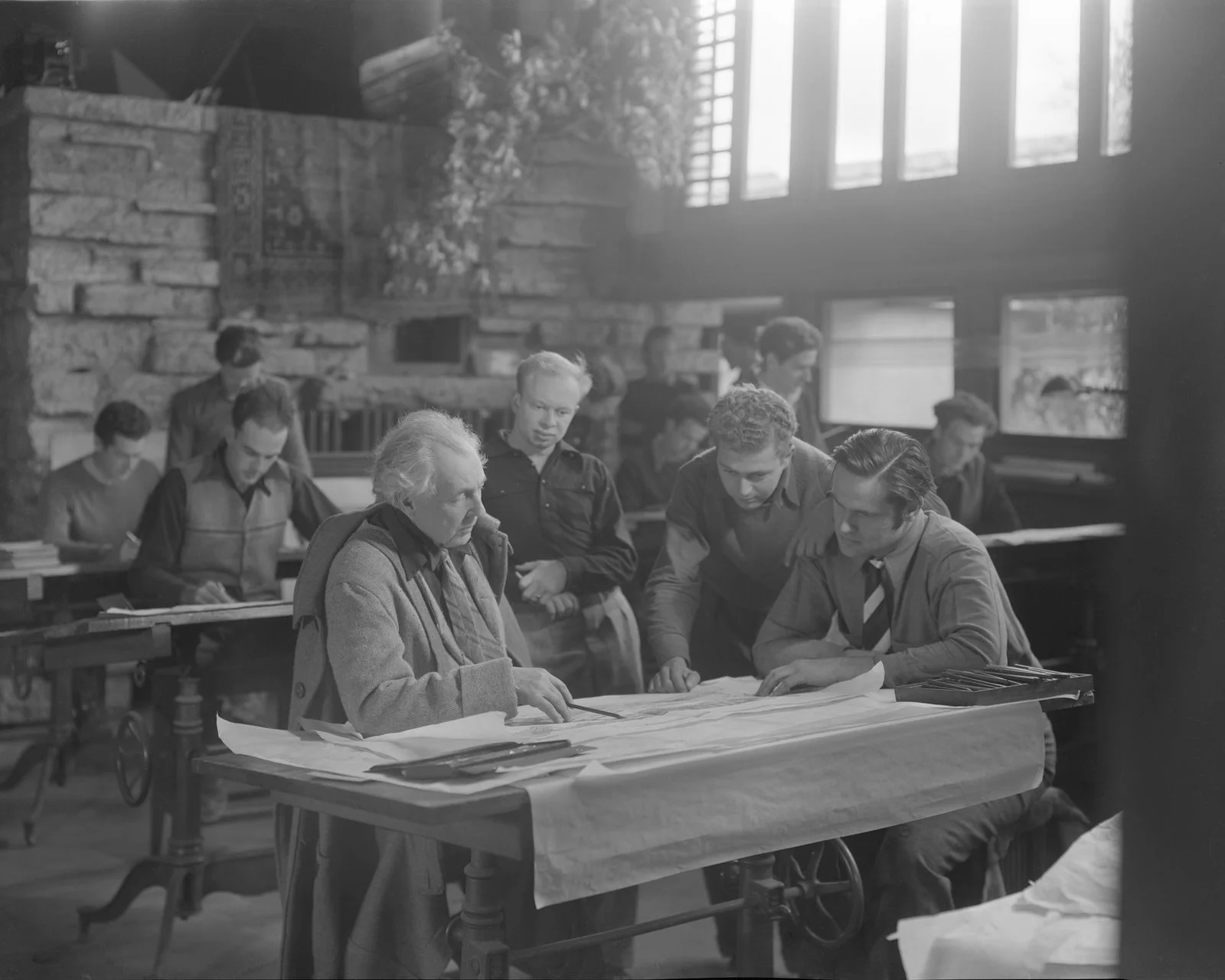
After seeing Wright’s Wasmuth Portfolio, Austrian-born Neutra was transfixed. “Whoever he was, Frank Lloyd Wright, the man far away, had done something momentous and rich in meaning,” Neutra wrote, per Secrest’s biography. “This miracle man instilled in me the conviction that, no matter what, I would have to go to the places where he walked and worked.” Neutra spent a brief stint at Wright’s practice with his friend, architect Rudolph Schindler, before ascending to modernist fame himself.
8. Wright was a prominent dealer in Japanese art
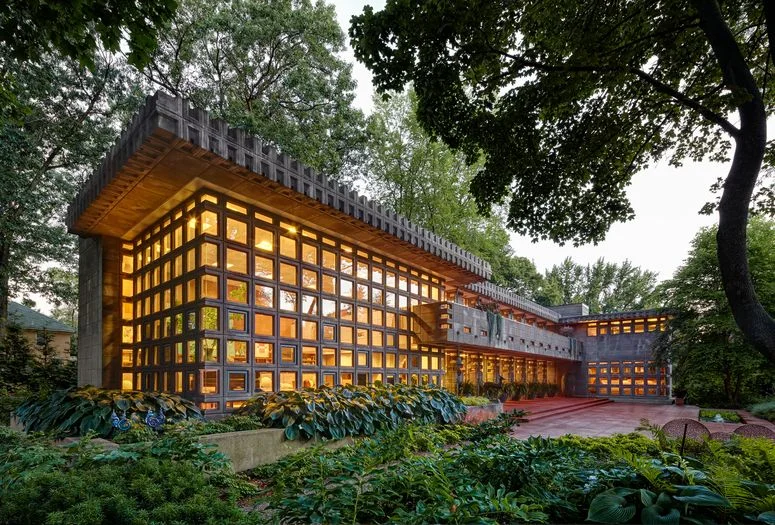
Until his death in 1959, Wright managed a prosperous business dealing Japanese block prints. It’s been said that at times during his career, Wright earned more from this operation than his architectural practice.
9. The architect’s son John Lloyd Wright invented Lincoln Logs.
Wright’s second eldest son, John Lloyd, followed in his father’s footsteps to a career in architecture, designing and building numerous buildings in San Diego County, where he lived in adulthood. Still, his most remembered creation is the invention of Lincoln Logs, which are still in production over 100 years later. The toy was named after Abraham Lincoln as a reference to the president’s boyhood log cabin home. However, Wright’s original middle name was also Lincoln, changed to Lloyd only after his parents divorced to underscore the young boy’s connection with his mother’s family, the Lloyd-Joneses.
10. Wright was an early automobile adopter and a car collector his whole adult life
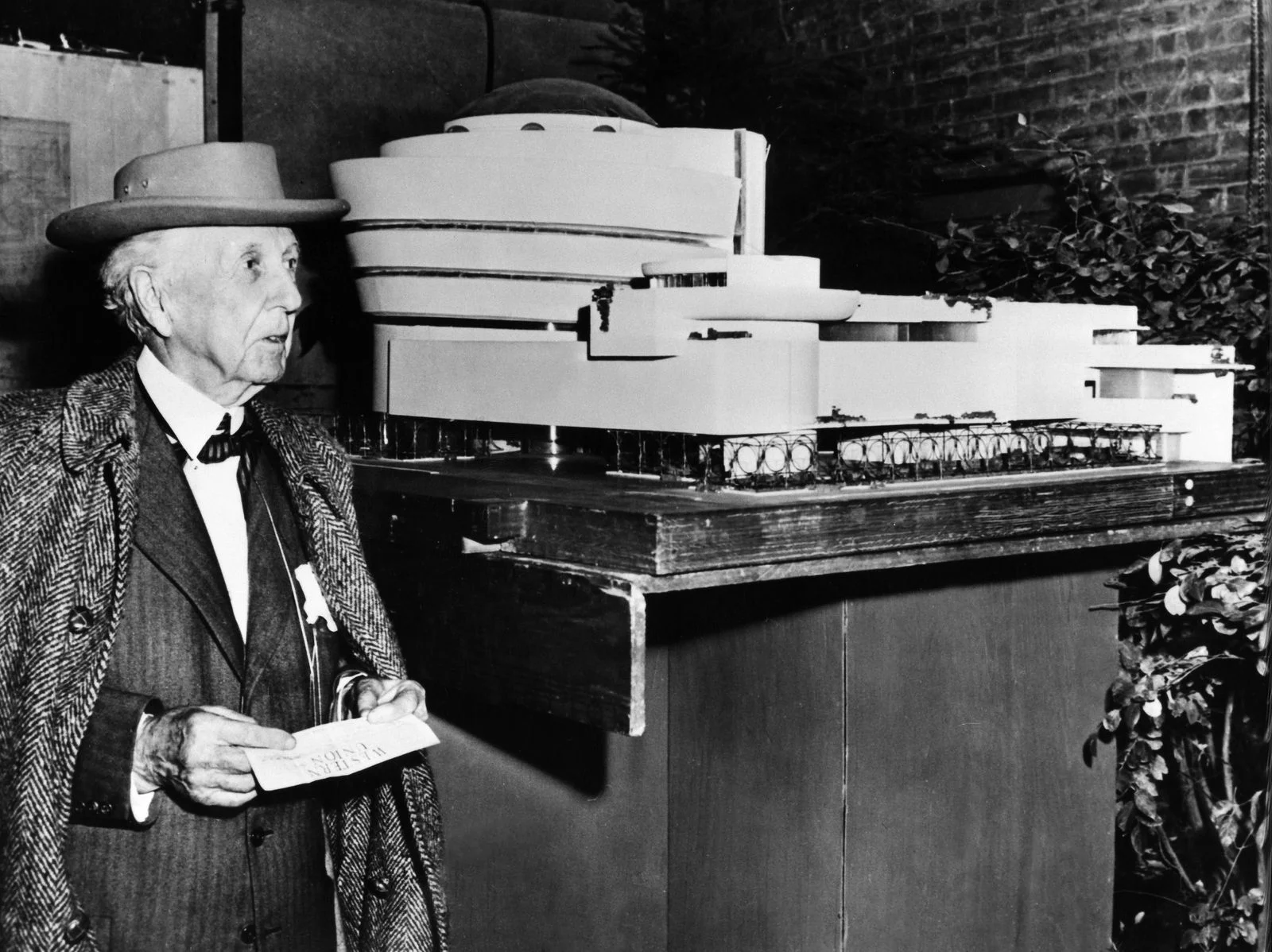
Wright is said to have owned more than 50 cars in his adult life, a staggering number considering he was born two decades before the invention of the automobile. His love of cars informed the ramped design of his final project, the Guggenheim Museum in New York City. The architect left an indelible mark on car culture by creating the term “carport.” Wright is considered partially responsible for the popularization of the feature, which he used on some of his Usonian homes.
11. Wright once made a guest appearance on What’s My Line?
In 1956, Wright appeared on the CBS program, What’s My Line? The architect was a “challenger” on the show, to whom blindfolded contestants asked questions in order to determine who the mystery guest was and what their occupation might be. “We will describe our challenger as self-employed,” the host, John Daly, told the contestants. During his appearance, Wright responded to most questions with short witty remarks. When asked if he performed a service for both men and women: “At least I think so.” Do clients approach him? “They must. I have never gone to them.” Did his profession have anything to do with the law? “Unfortunately, yes.” (The audience, who knew the guest was Wright, laughed at that one). At one point, he even pointed out that the studio had “acoustic problems.” The contestants did finally guess who they were speaking to, eliciting a pleased smile from the architect.
12. His granddaughter was a silver-screen star
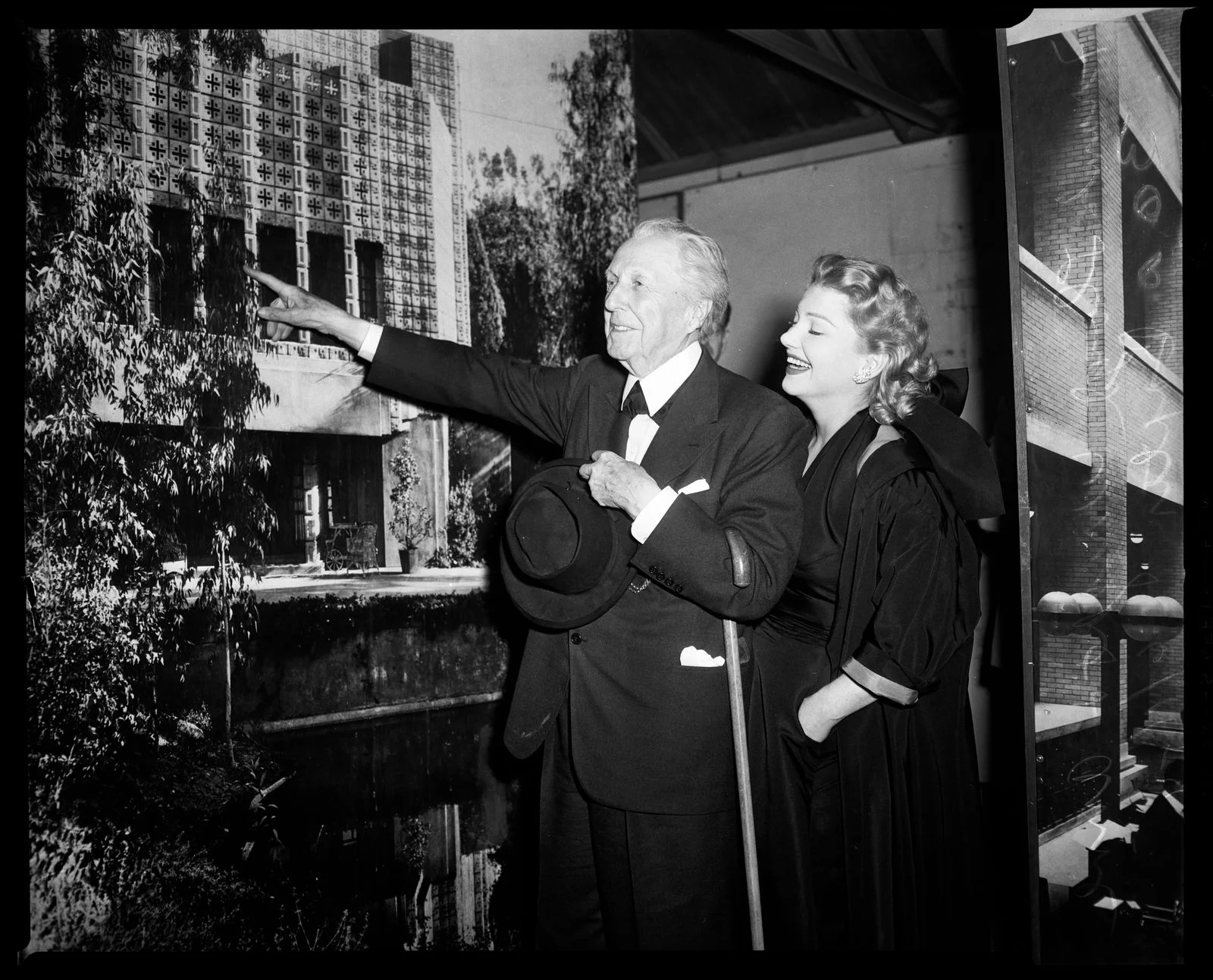
Anne Baxter, the Golden Age actor known for Batman, All About Eve, The Razor’s Edge, and The Ten Commandments, was Wright’s granddaughter. The daughter of Wright’s first daughter, Catherine, she was born in 1923 in Michigan City, Indiana. According to the Michigan Historical Society, the actor remembered advice her grandfather gave once, saying that “Habit of any kind is absolute death. You must change, you must grow, you must not be hemmed in with habits.”
13. He didn’t like New York skyscrapers
Though the Guggenheim is one of Wright’s most famous projects, he didn’t particularly like what the architecture of the Big Apple represented. During a television interview with Mike Wallace, he said the city’s skyline didn’t excite him. “Because it never was planned—it’s all a race for rent, and it is a great monument I think to the power of money and greed.”