Are you tired of the crowded beaches on the Mediterranean coast during the lazy days of summer? When sourcing our top 15 architectural destinations to visit around the world, we prioritized less obvious places—you don’t need us to tell you that Rome, Paris, and New York have some stunning buildings—to focus on some more low-key, equally spectacular options. If the hoards near the Eiffel Tower make you anxious, or the line at the Colosseum feels a little claustrophobic, we’ve got an alternative architectural destination on this list that’s just right for you.
1. Mers-les-Bains, France
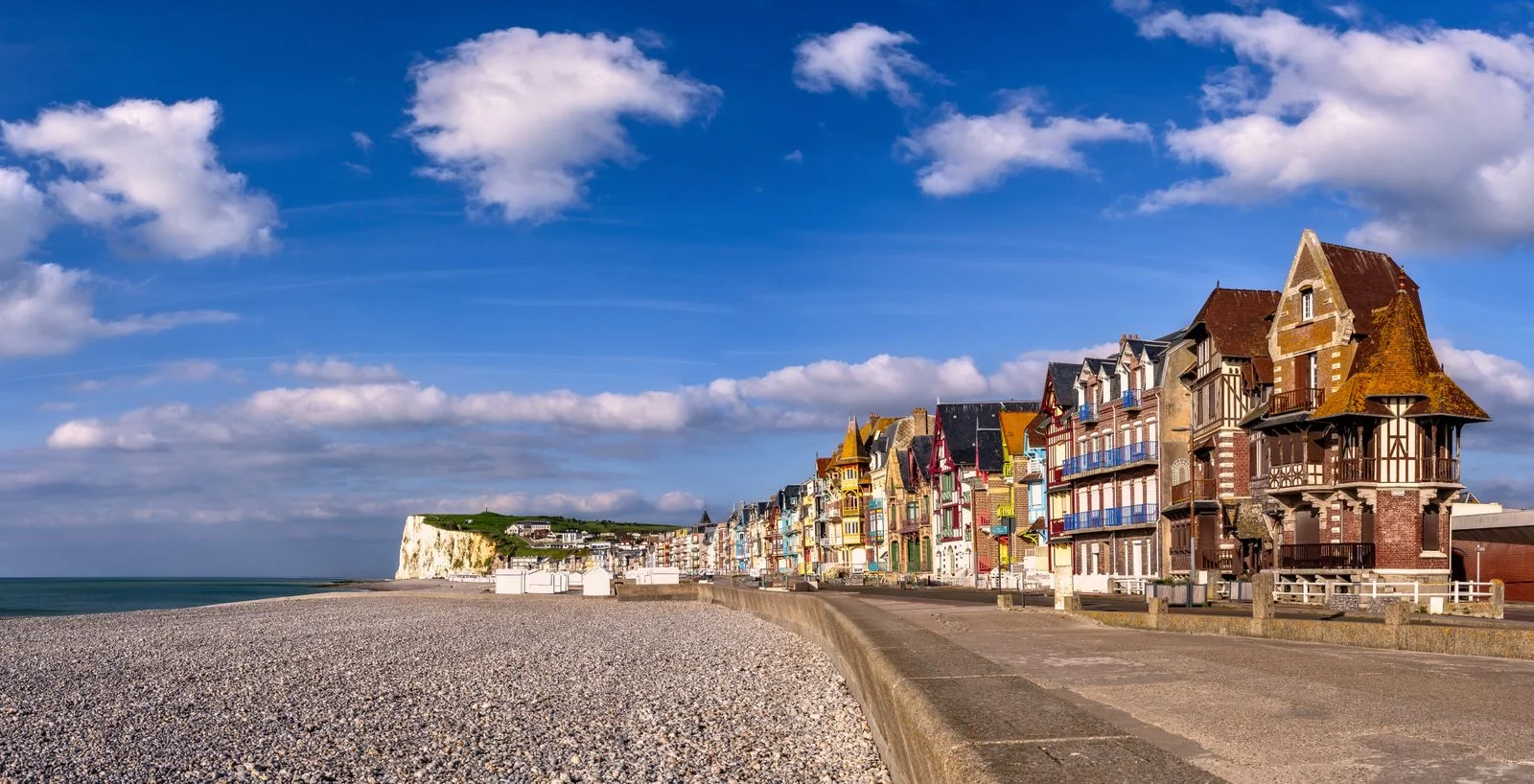
As part of the English Channel, this charming resort town first emerged on travelers’ maps in the 19th century when bathing in the sea surged in popularity. Today, some 600 Belle-Époque villas line the beach at Mers-les-Bains, which sits on the Bay of the Somme. The town’s colorful buildings feature bow windows, loggias, colorful mosaics, and delicate rosettes in a delightful Belle Époque style. You can tack this summer escape onto a holiday in Paris, which is just three hours away by car.
2. Ålesund, Norway
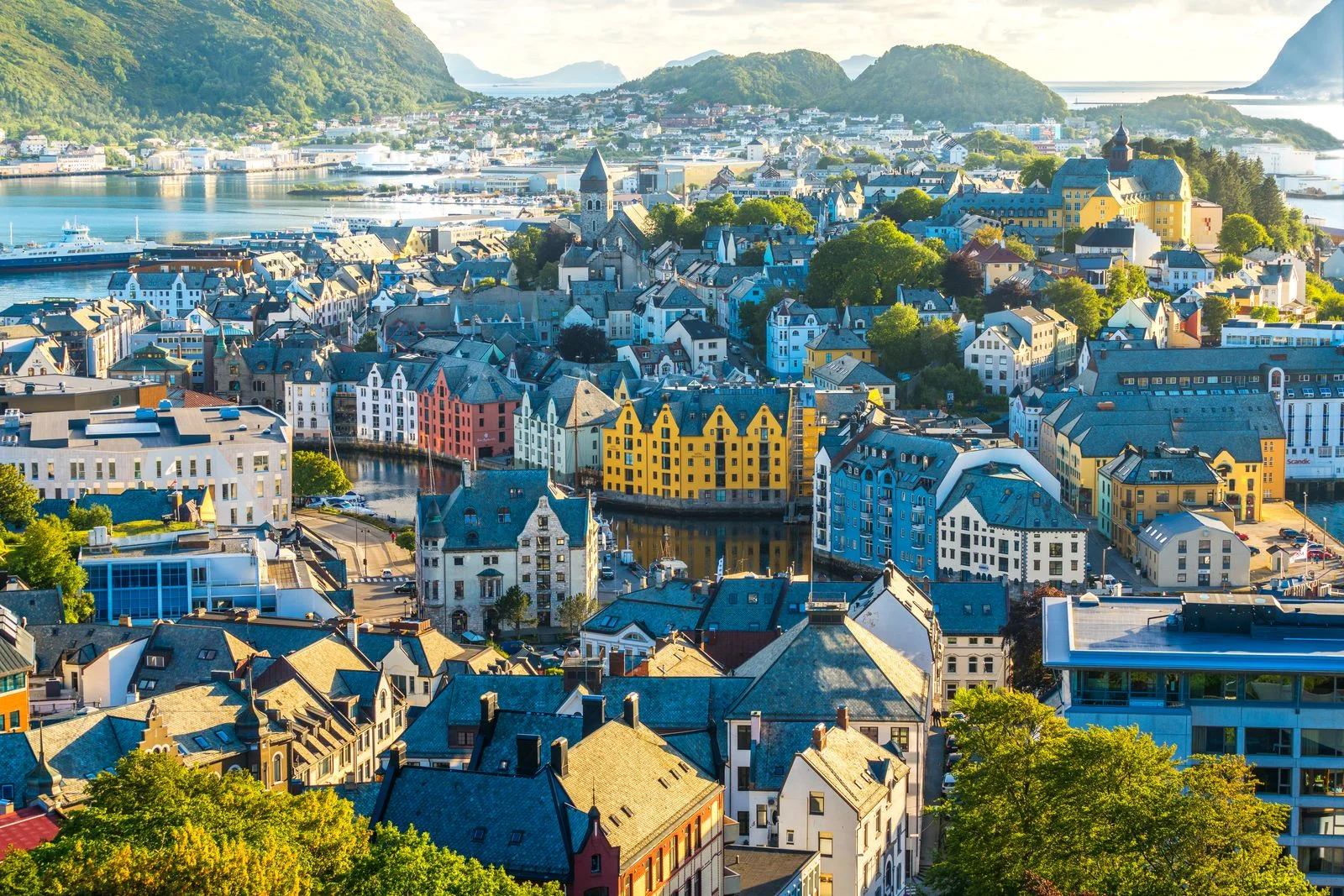
In 1904, the western Norwegian town of Ålesund suffered a devastating fire that destroyed over 900 homes. A fishing village in the heart of the fjord region, it was then rebuilt in two styles popular in northern Europe at that time: Art Nouveau and its German counterpart, Jugendstil. On many buildings, Viking details helped to ground the architecture in its Norwegian setting. Since then, Ålesund has been known as a Scandinavian architectural gem, set against a breathtaking natural backdrop.
3. Costa Nova, Portugal
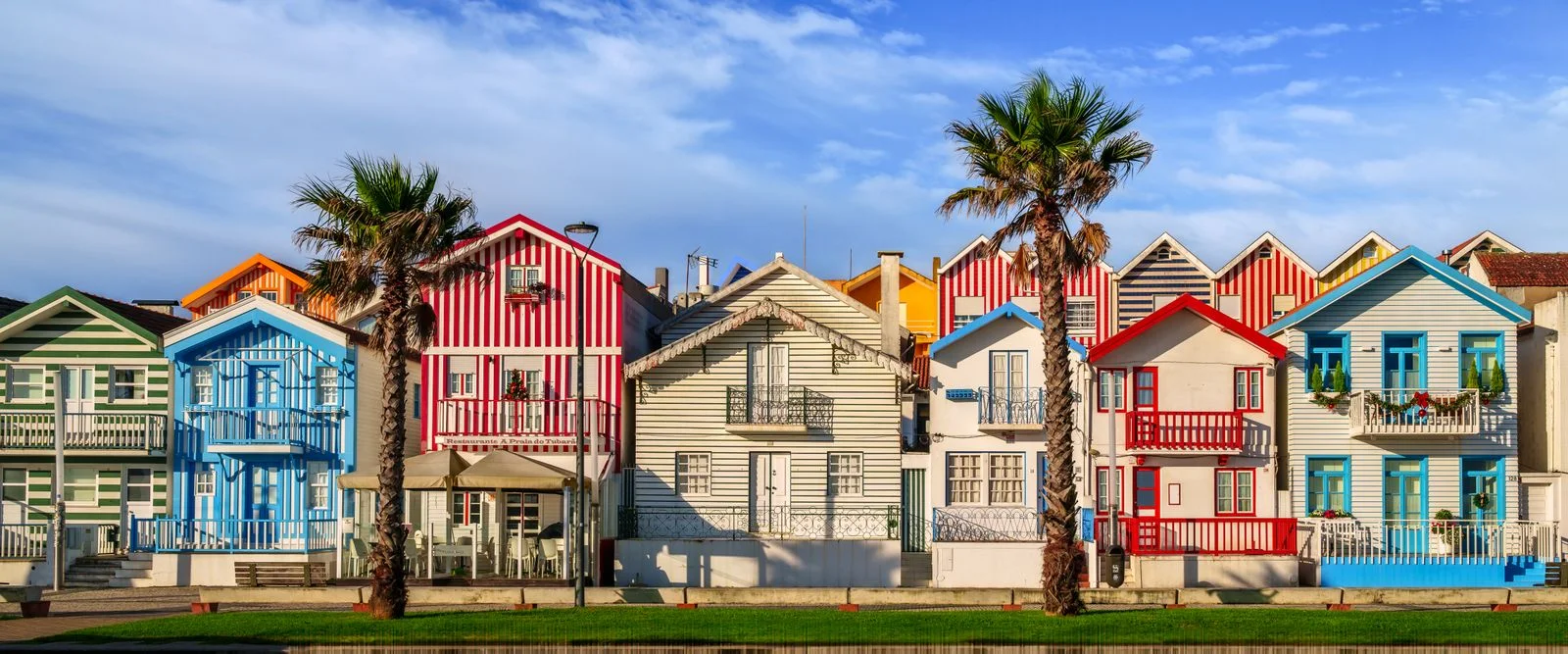
An hour south of Porto, the coastal town of Costa Nova has a cheerful row of striped houses sitting along its promenade. These palheiros, or former fishermen’s homes, have long been painted in bright colors to make it easier for sailors to spot their homes from the open sea. The fresh seafood dishes paired with Portuguese wines and ocean breezes don’t hurt, either.
4. Calpe, Spain
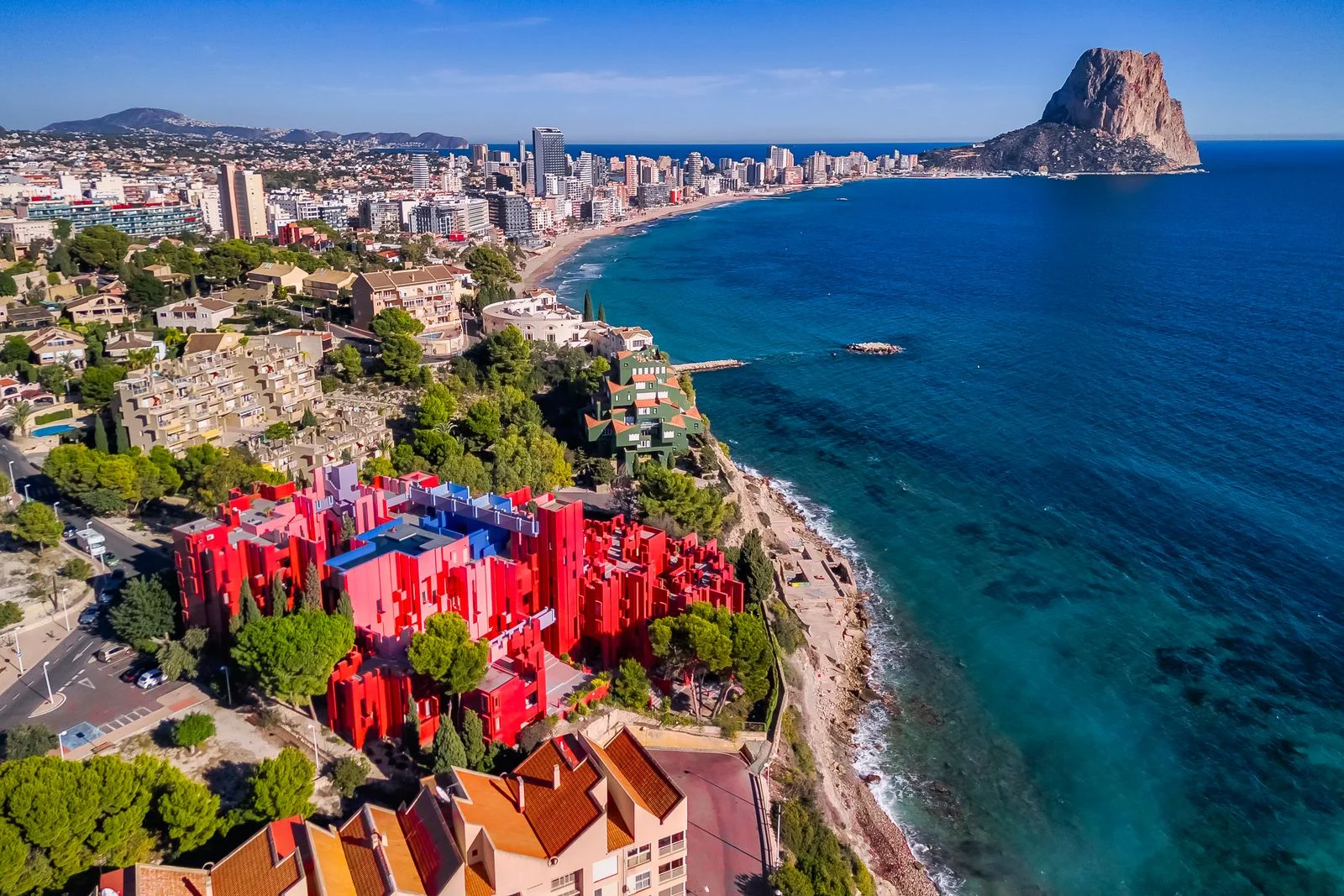
In Calpe, Spain, an imposing red building might be familiar to many AD readers: Ricardo Bofill’s Muralla Roja is an Instagram favorite, as the complex’s unique architecture has made it a design icon. Originally built as vacation homes in 1973, Muralla Roja (also known as the Red Wall) was meant to bring tourists to the seaside town of Calpe, which sits between Valencia and Alicante. But beyond Bofill’s masterpiece—which is now an operating resort and apartment complex—the locale is geographically stunning. A vast nature reserve is another highlight waiting to be explored.
5. Rügen, Germany
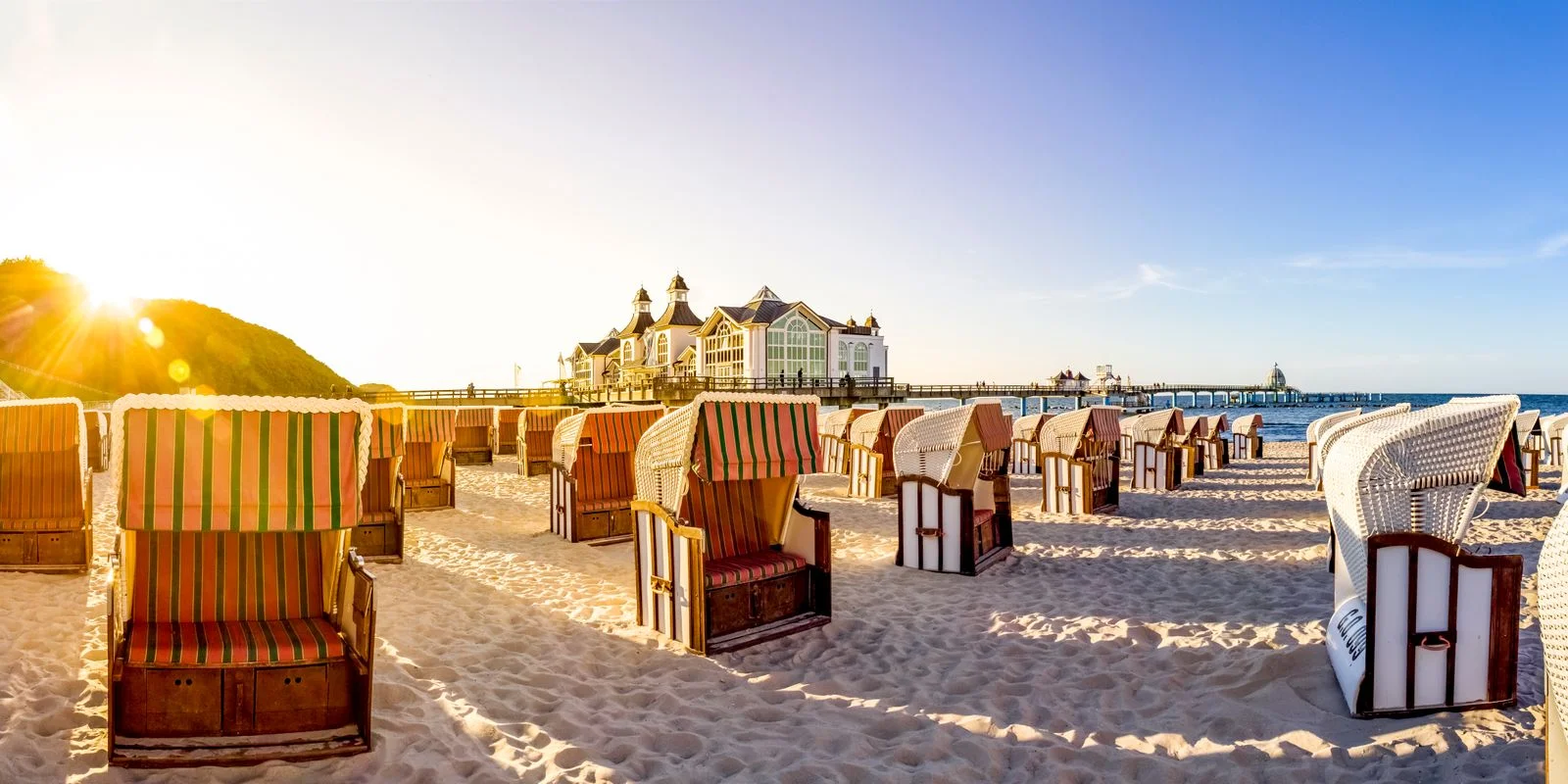
At roughly 350 square miles, Rügen is Germany’s largest island, sitting in the Baltic Sea to the northeast of the country’s mainland. Perhaps it’s surprising that a German isle can boast immense beaches, white chalk cliffs, and quaint seaside resorts—but Rügen has been popular with wealthy German families since the early 20th century for this very reason. To this day, the island hosts a celebrated open-air theater festival every summer. The picturesque fishing village of Vitt, the colorful thatched cottages of Putgarten, and the Sellin pier are among Rügen’s must-sees.
6. Lamu, Kenya
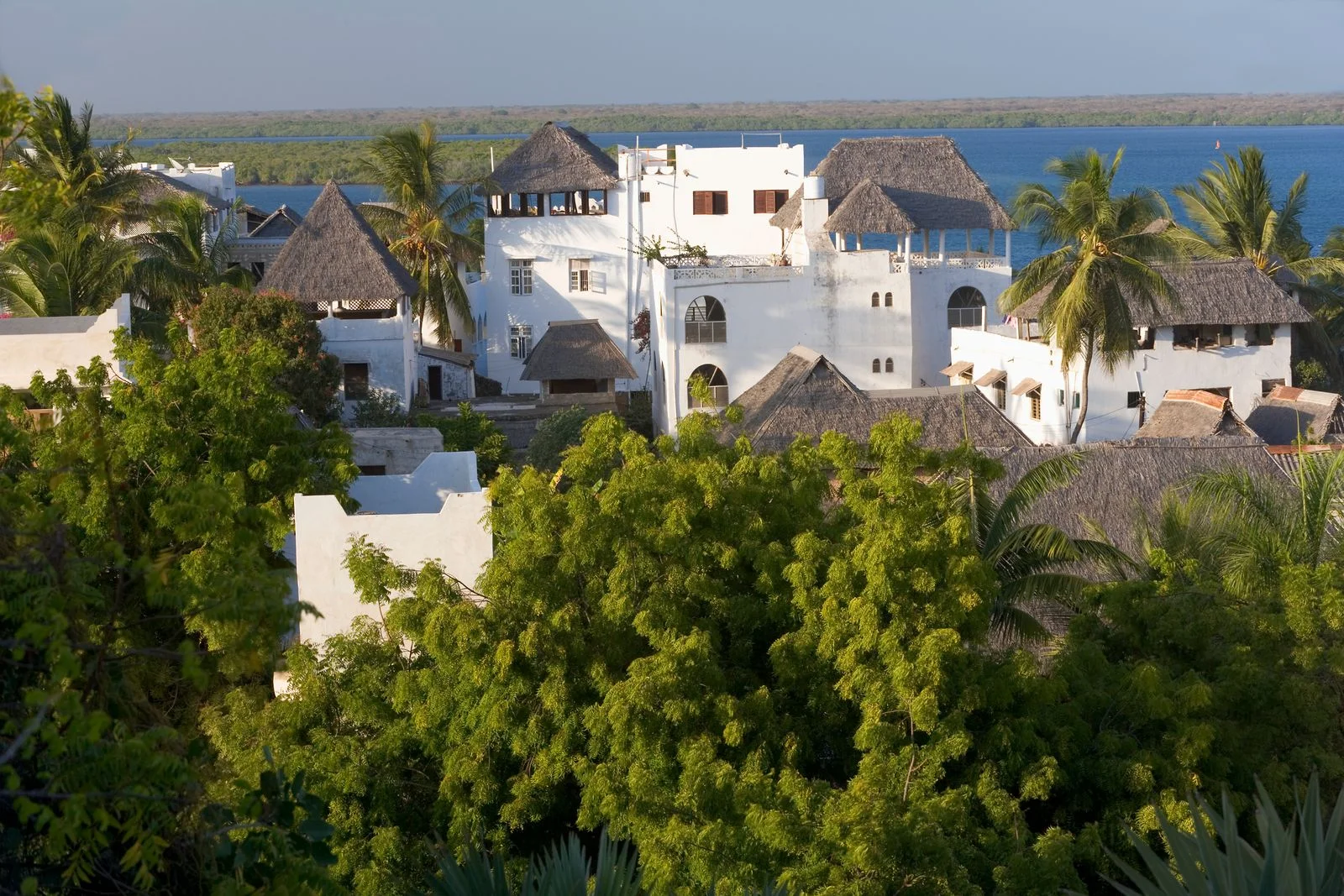
Sitting in the Indian Ocean to the northeast of the Kenyan mainland, Lamu is one of the cradles of Swahili culture. A relatively undiscovered destination, the car-free island is ideal for anyone in search of tranquility. It is also known for its unique architecture that reflects a medley of cultures, including African, Persian, European, and Indian influences. Unsurprisingly, the island’s old town has been recognized as a UNESCO World Heritage Site. Its 19th-century fort, beaches, and donkey sanctuary are all worth a visit.
7. Ganvie, Benin
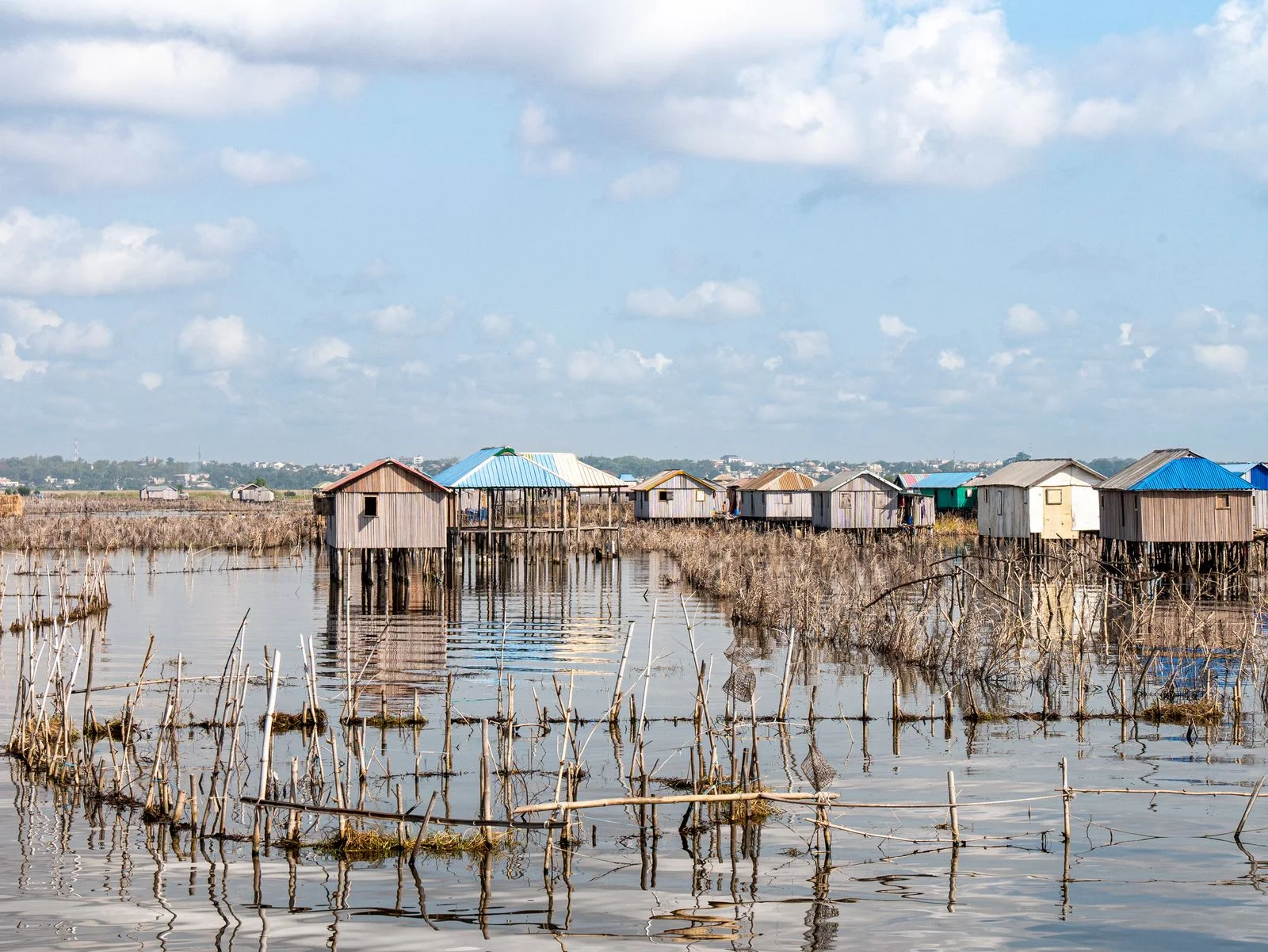
The largest lakeside town in Benin, Ganvie’s houses sit on stilts atop Lake Nokoué, which has earned it the nickname of “the Venice of Africa.” Its straw and bamboo huts make for an unforgettable boat trip, especially if you stop off at the floating market—pirogues filled with local produce are a unique (and delicious) delicacy! The area around Ganvie with its pristine forests, animal reserves, and traditional villages is also worth exploring.
8. Savannah, Georgia
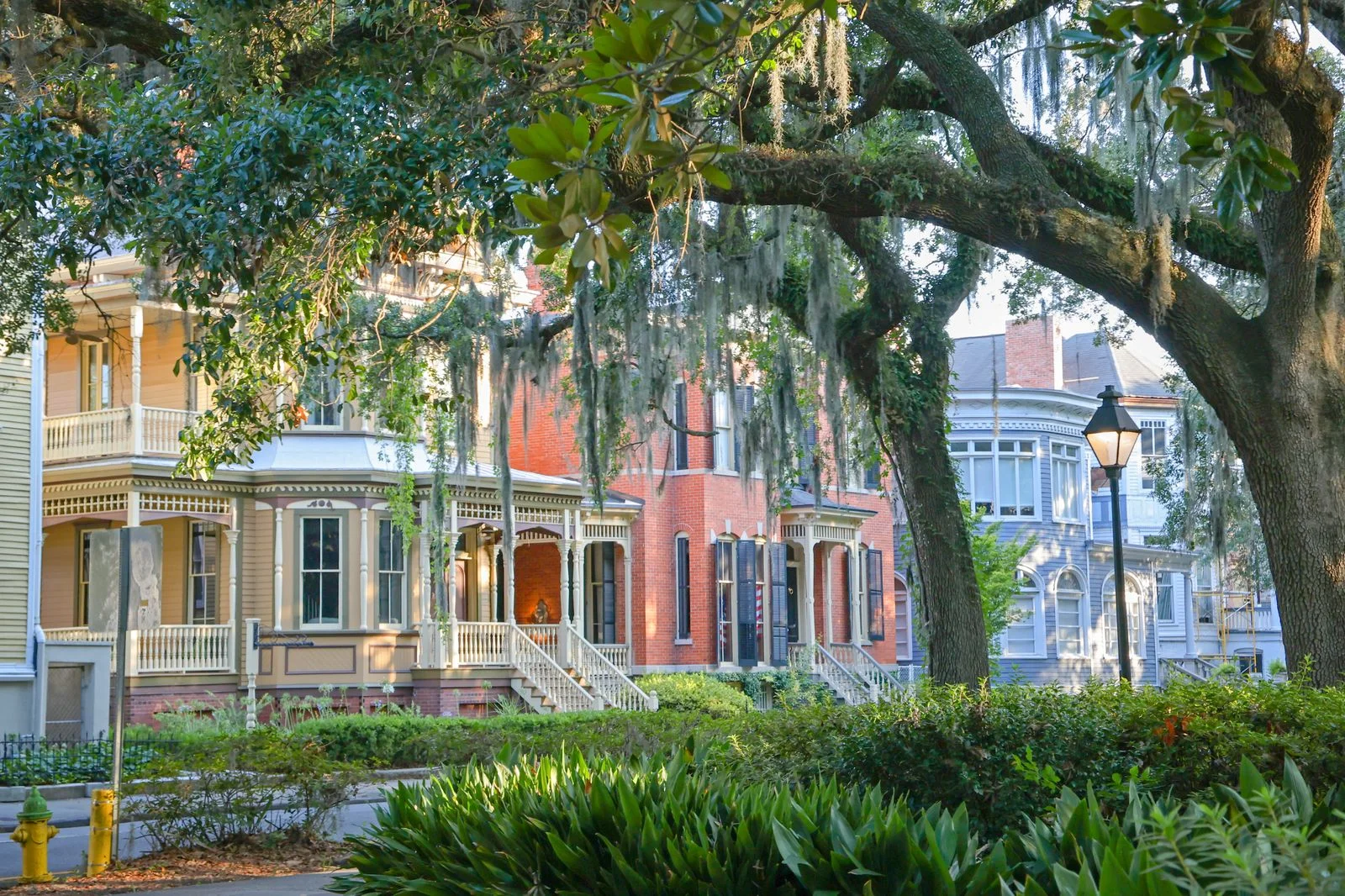
“Over 40 percent of Savannah’s 2,500 buildings are of architectural or historical interest,” the city boasts on its website. This Southern gem is home to a wide range of architectural styles: Georgian, Victorian, Gothic Revival, Italianate—the list could go on and on, creating a rich variety of facades rarely all found in one place (this is largely because Savannah was left relatively untouched during and after the Civil War). Beyond the historic architecture, Savannah welcomes visitors with its warm and cosmopolitan atmosphere in every season.
9. Carmel-by-the-Sea, California
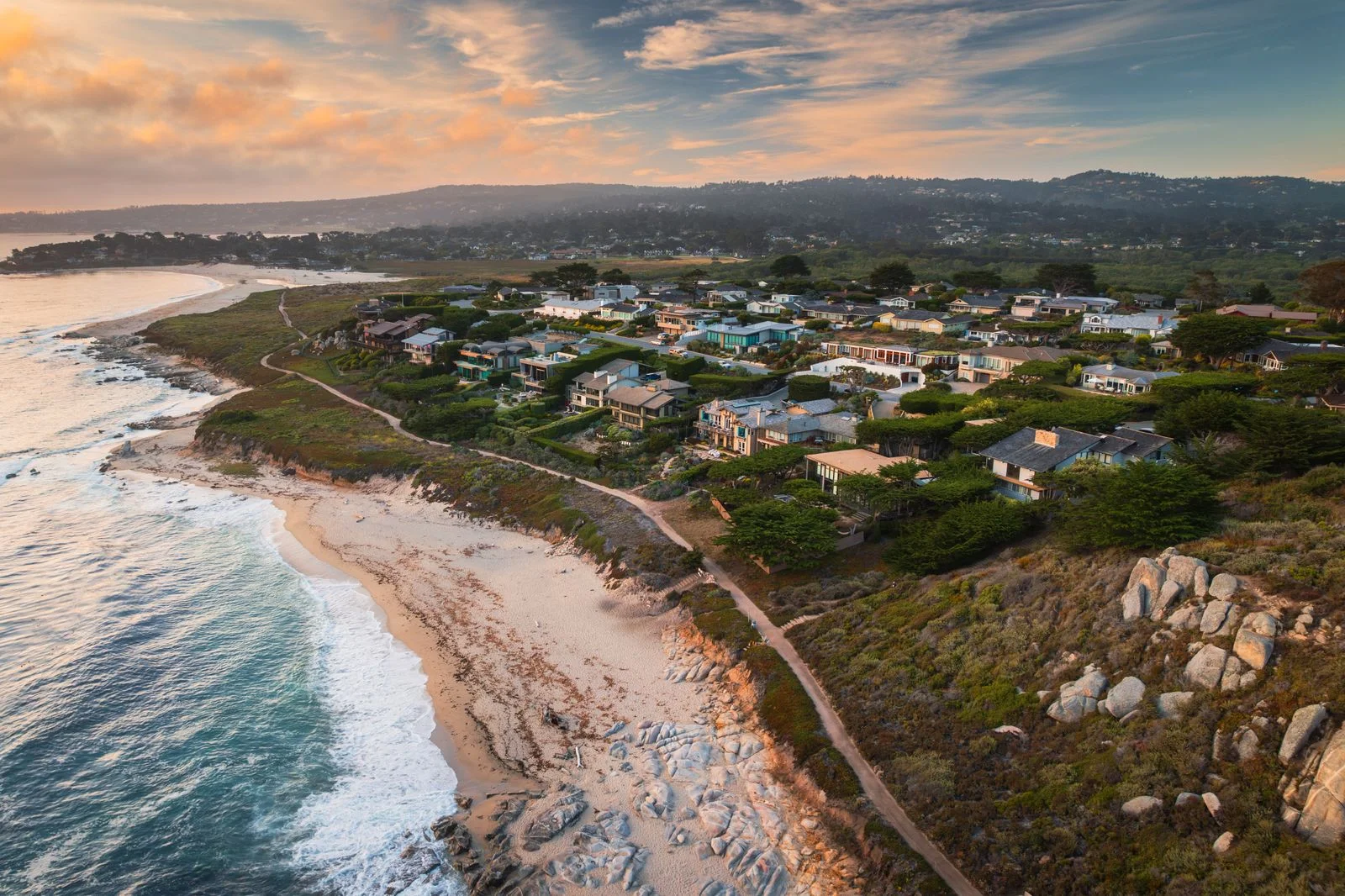
Forget Los Angeles—this California town offers a dream setting with its enormous beach, quaint village, and buildings which include Spanish revival landmarks, modest beach bungalows, and a few designed by acclaimed architects. Frank Lloyd Wright and Hugh Comstock are among those who left their mark on the town. This stretch of the NoCal coast is also ideal for hikes through redwood forests with ocean views.
10. Miami’s South Beach, Florida
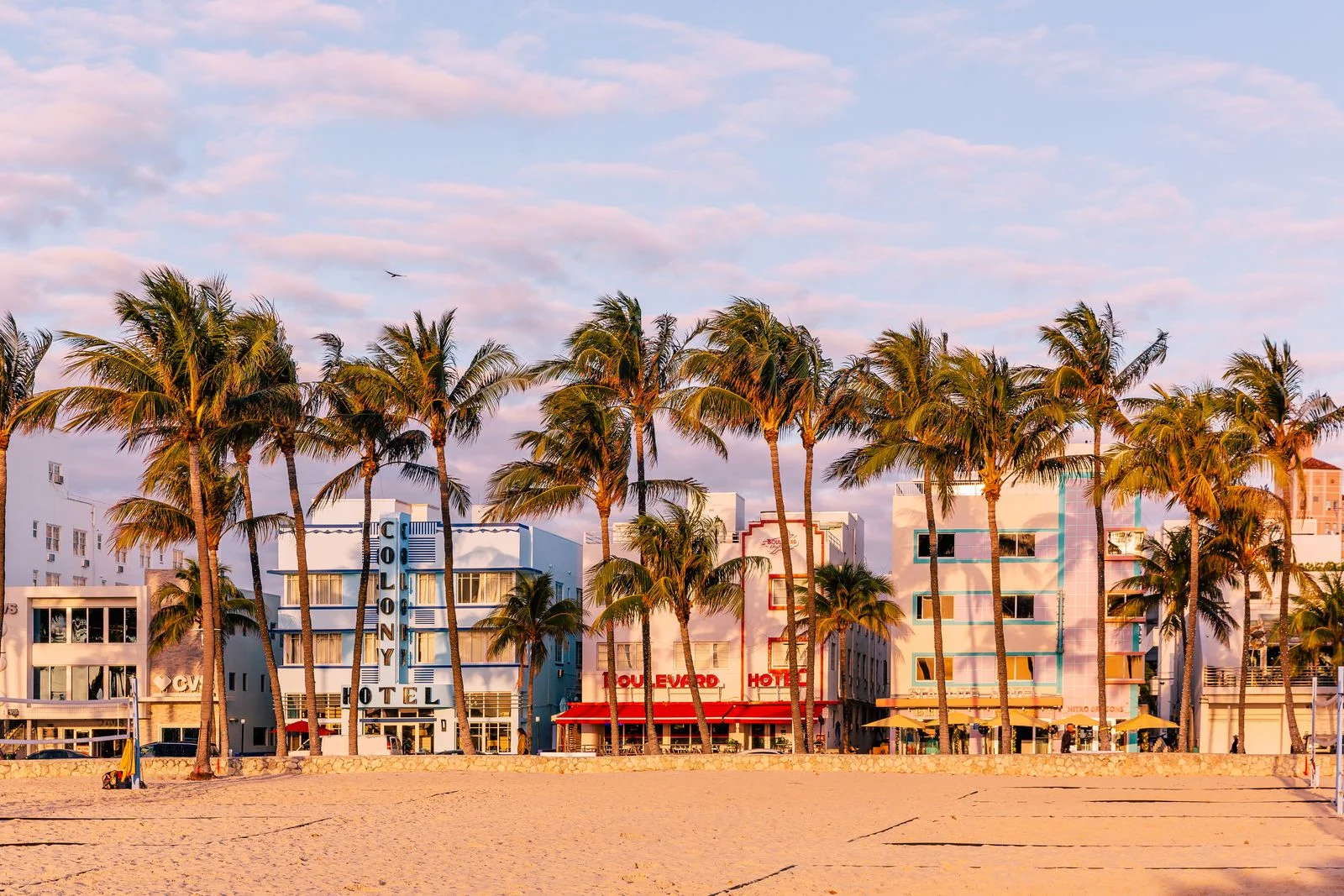
South Beach, Miami, is the perfect place to admire Art Deco architecture—its blue, pink, and purple pastel apartment buildings and hotels could be the settings of a Wes Anderson film. There are no fewer than 800 Art Deco buildings in the peninsulas surrounding this Floridian city. Or, more precisely, the Tropical Deco here is different from other forms of Art Deco, thanks to its tropically inspired details. We hear the beaches, restaurants, and local nightlife aren’t too bad, either.
11. Niterói, Brazil
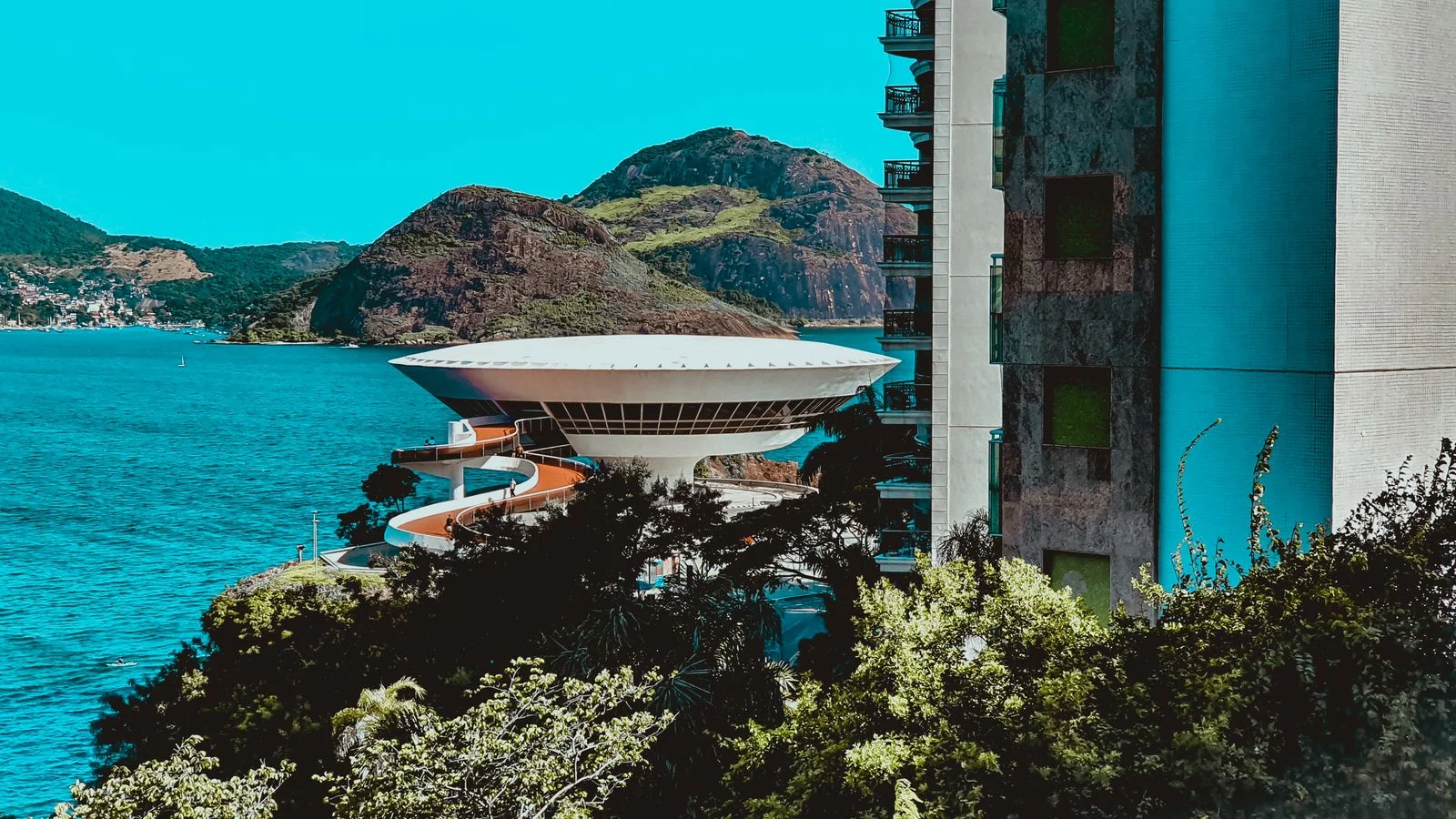
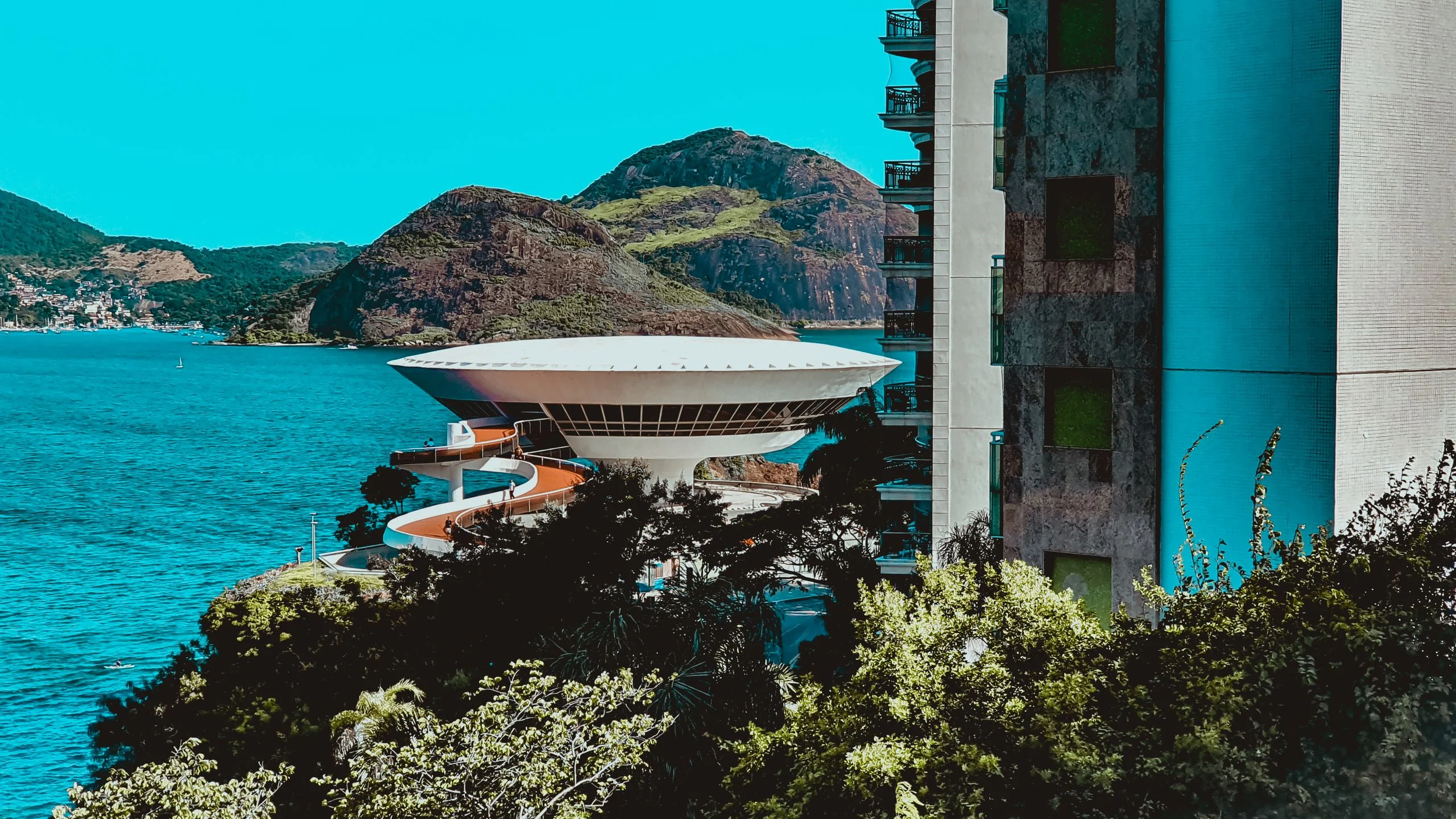
If you prefer to spend your holiday seaside instead of in Brazil’s very urban capital, Brasilia, then Niterói might be the place for you. From Rio, you can cross Guanabara Bay to reach the city via the Caminho Niemeyer route, along which you’ll find many of acclaimed architect Oscar Niemeyer’s masterpieces. Among them are the MAC (Museum of Contemporary Art), which stands like a Space Age vision on the edge of the Atlantic.
12. Valparaíso, Chile
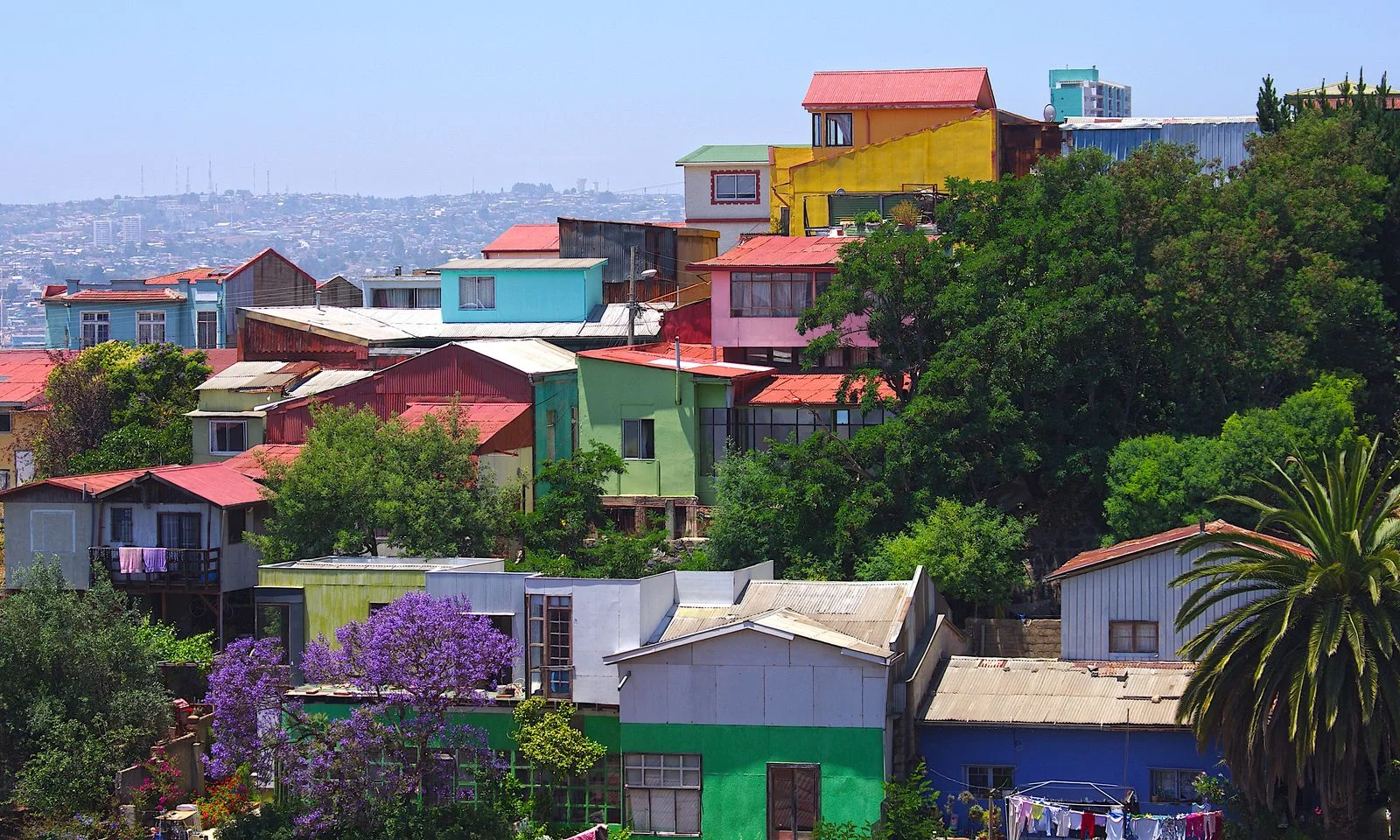
“The colonial city of Valparaíso offers an example of late 19th-century urban and architectural development in Latin America,” notes UNESCO, which lists Chile’s iconic port as a World Heritage Site. Valparaíso colorful houses and civic buildings reflect the diversity of its residents—an international mix of merchants and sailors has occupied the town for hundreds of years. Other highlights include La Sebastiana, a house that was once the home of the Nobel laureate and acclaimed poet Pablo Neruda, and the historic funiculars which climb the city’s steep slope that faces the Pacific.
13. Guatapé, Colombia
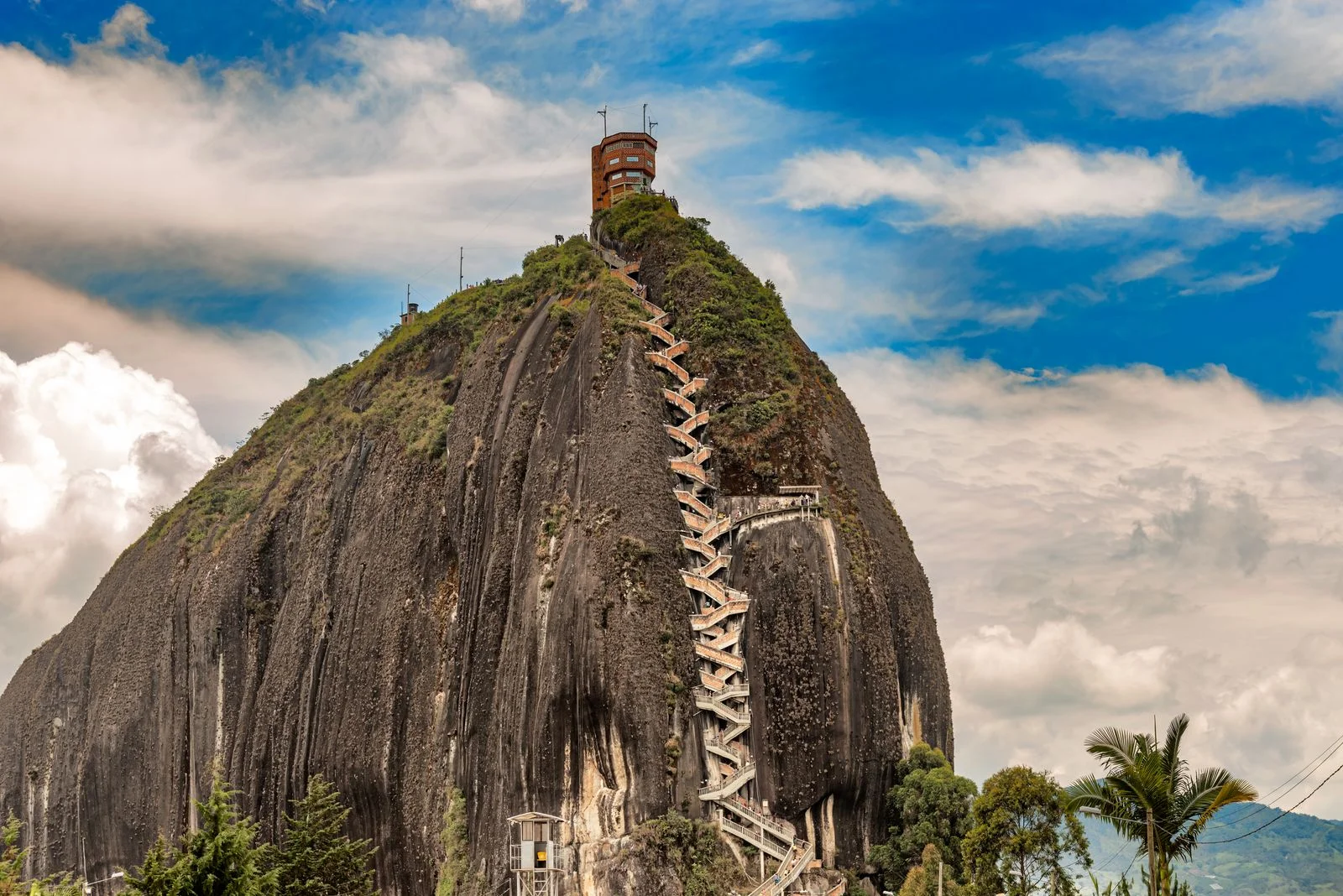
The Antioquia region, near Medellín, is home to an incredible rock, at the foot of which sits a colorful village. A Colombian national monument, this monolith named Piedra del Peñol offers a breathtaking panoramic view of Guatapé (all you have to do to enjoy it is climb 740 steps!) The houses below are famously adorned with colorful reliefs that recount the history of each owner’s family.
14. Malacca, Malaysia
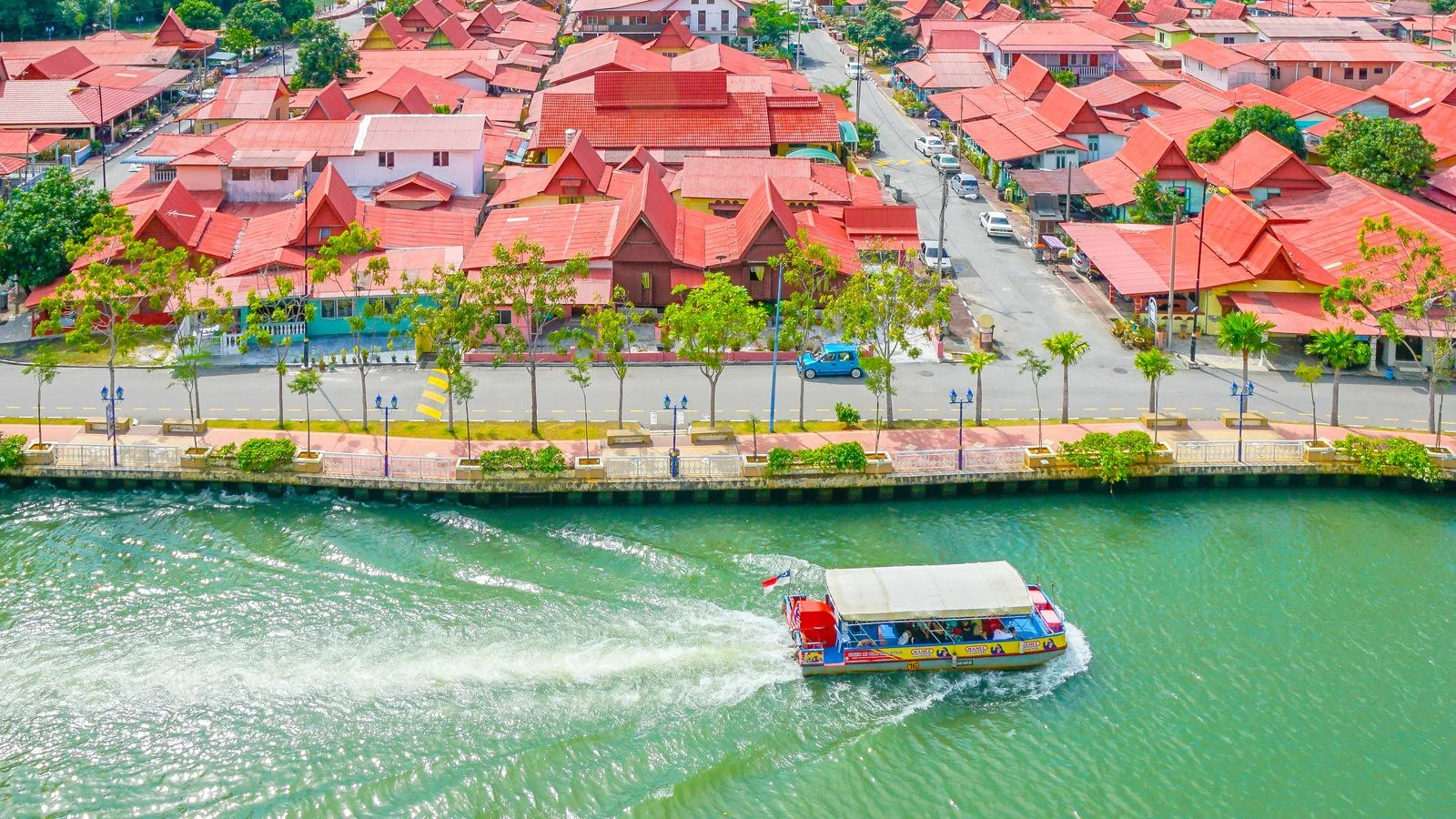
Another UNESCO World Heritage Site on our list, Malacca boasts a surprisingly diverse architectural portfolio. Controlled at different periods by Chinese, Indians, Portuguese, and Dutch settlers, the city boasts red brick houses typical of the Netherlands, a number of Portuguese buildings, and mosques and temples representing its Chinese and Malay past. Malacca is also known as one of the culinary capitals of Malaysia—with curries, flatbreads, and coconut rice among the many dishes you’ll want to sample.
15. Macau, China
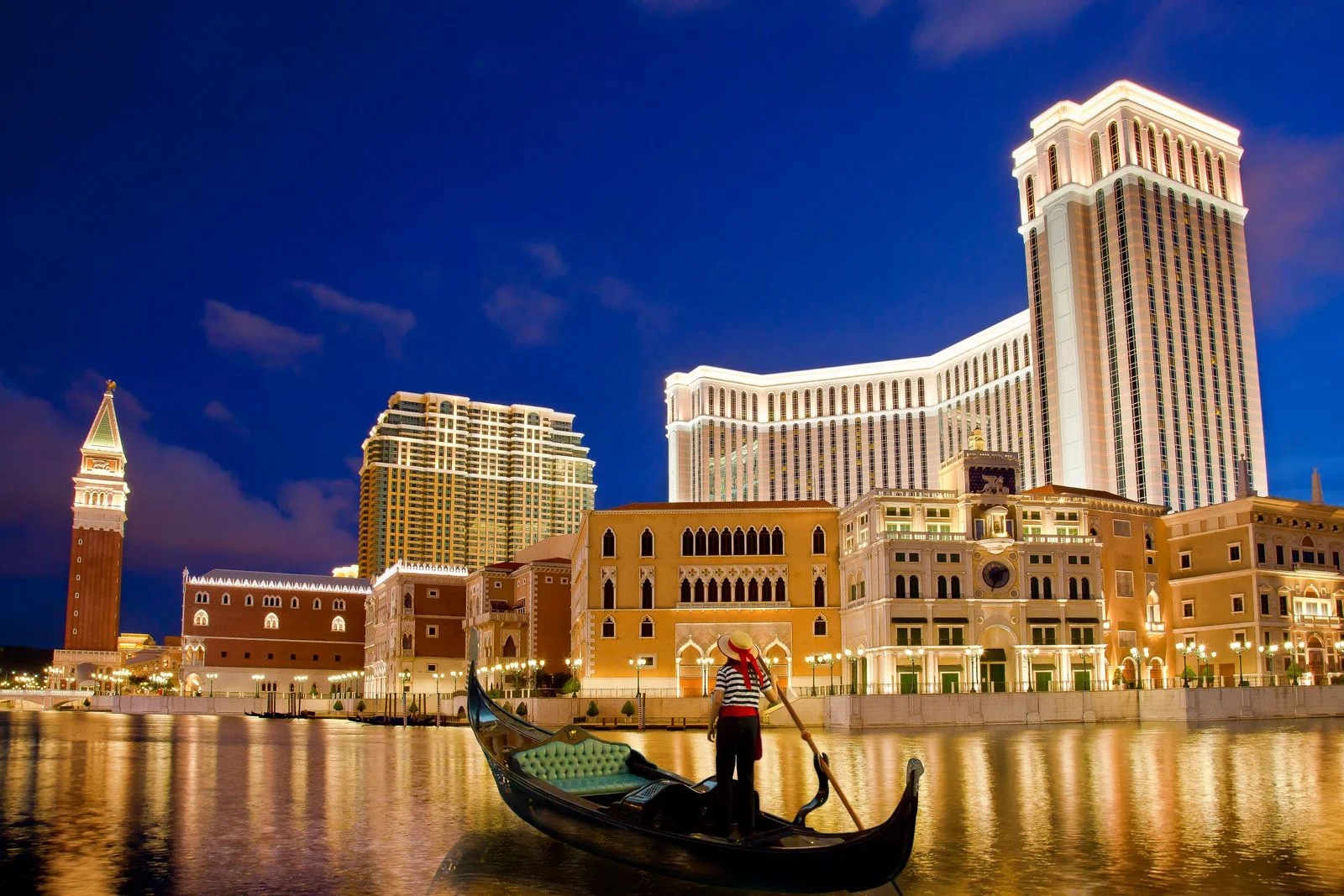
At the crossroads of a number of different civilizations, Macau is today a small enclave of China with—like nearby Hong Kong—a unique status as a special administrative region. With its many millionaires and casinos, it has been called the Monaco of Asia as well as the Vegas of China. The city is also unique with its mix of Portuguese and Chinese influences (it was controlled by Portugal from 1557 to 1999), along with the international influences from its long history as a major port. Today the city’s casinos, banks, and skyscrapers include works by many top contemporary architects.
This round-up of architectural destinations was originally published in AD France.