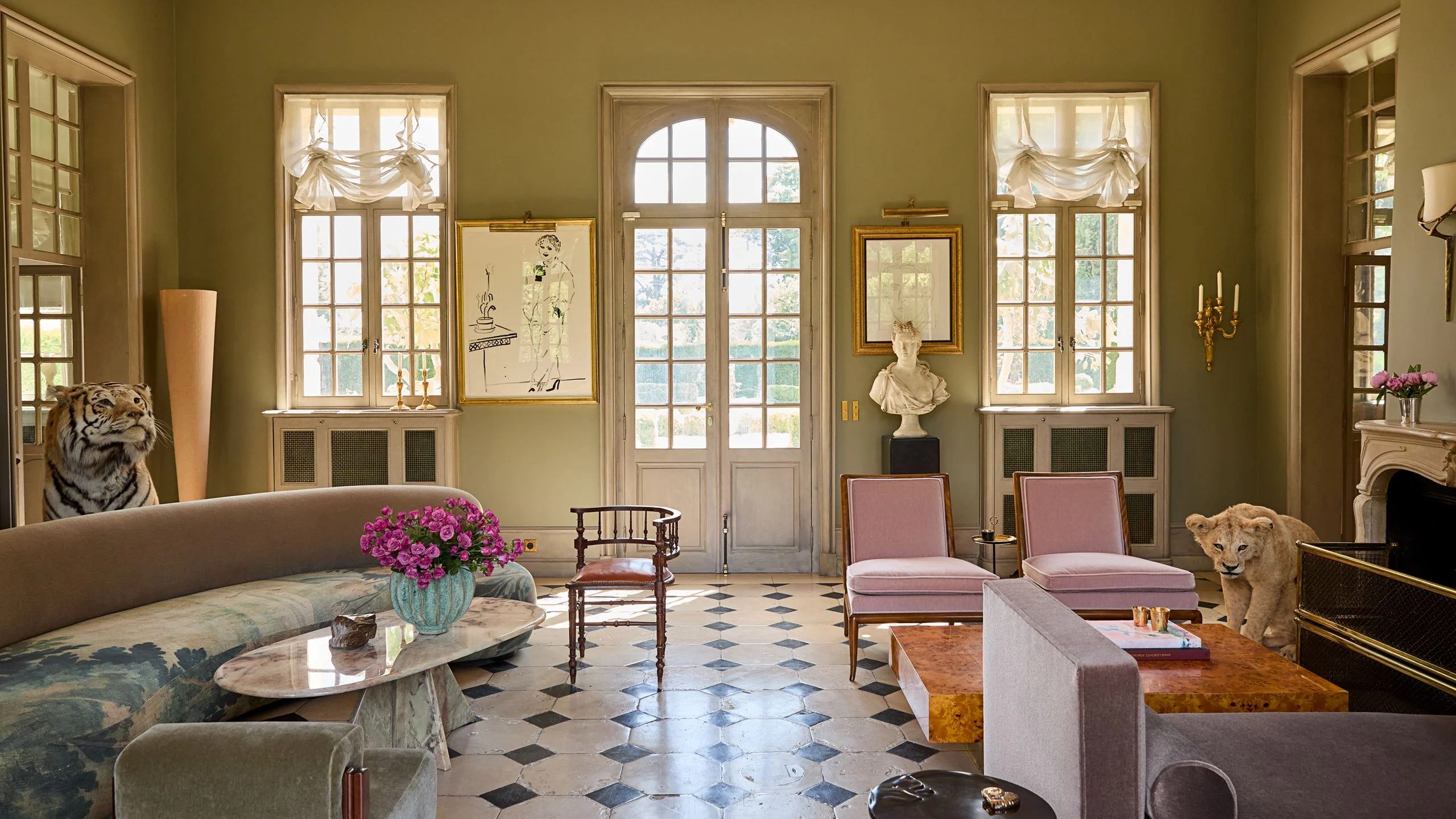
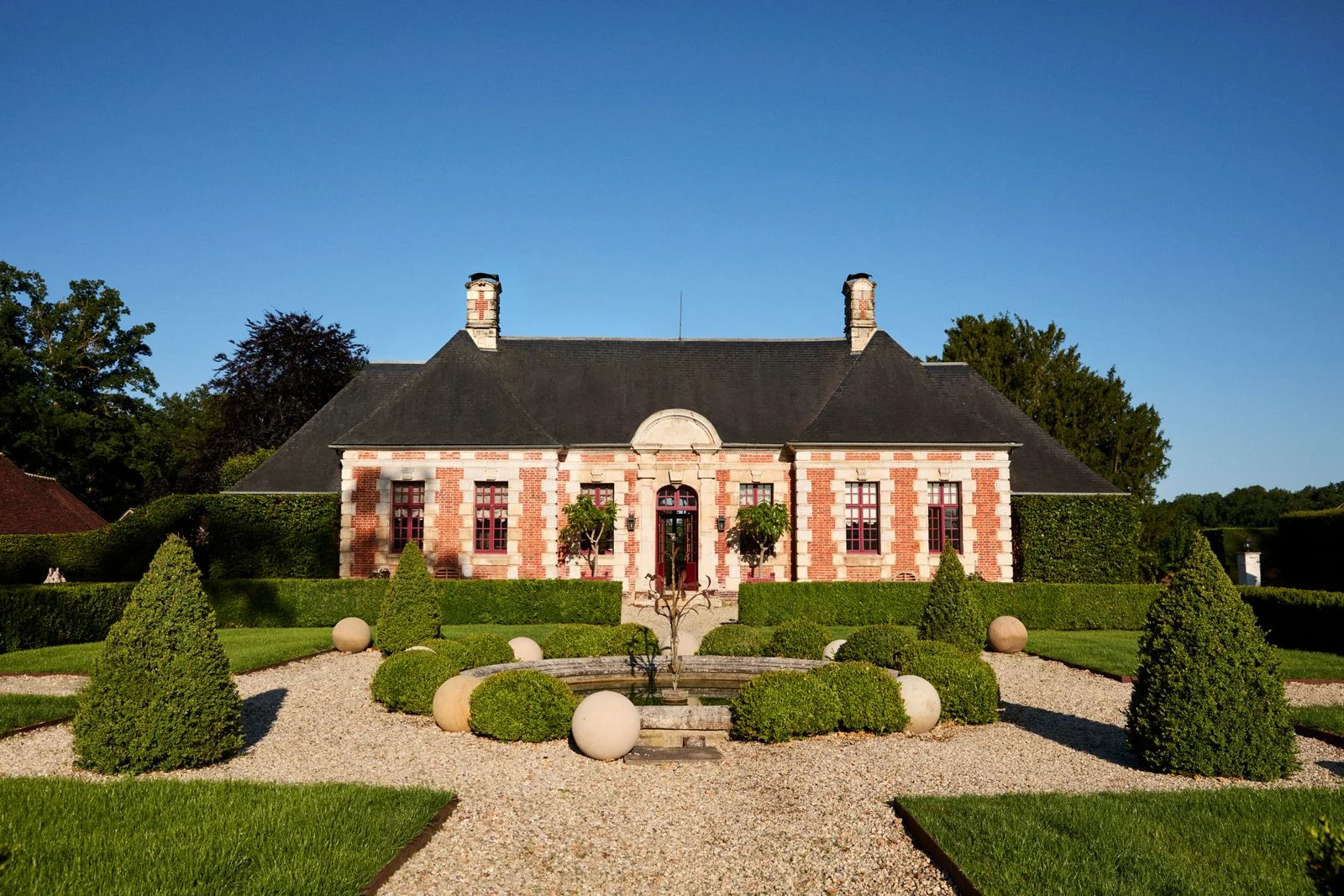
A few miles from the medieval town of Conches-en-Ouche, this French château is just 20 minutes away from Champ-de-Bataille, a palace steeped in history and restored by interior designer Jacques Garcia. This part of France is known for its landscapes of rolling green hills, villages with half-timbered buildings, and its rich cultural heritage. This home was long the retreat of an American woman of Scottish origin who divided her time between Los Angeles and Paris. When she died, her daughter, who lives in Los Angeles, inherited the home and continued to use it as a place for her family to escape their daily routines.
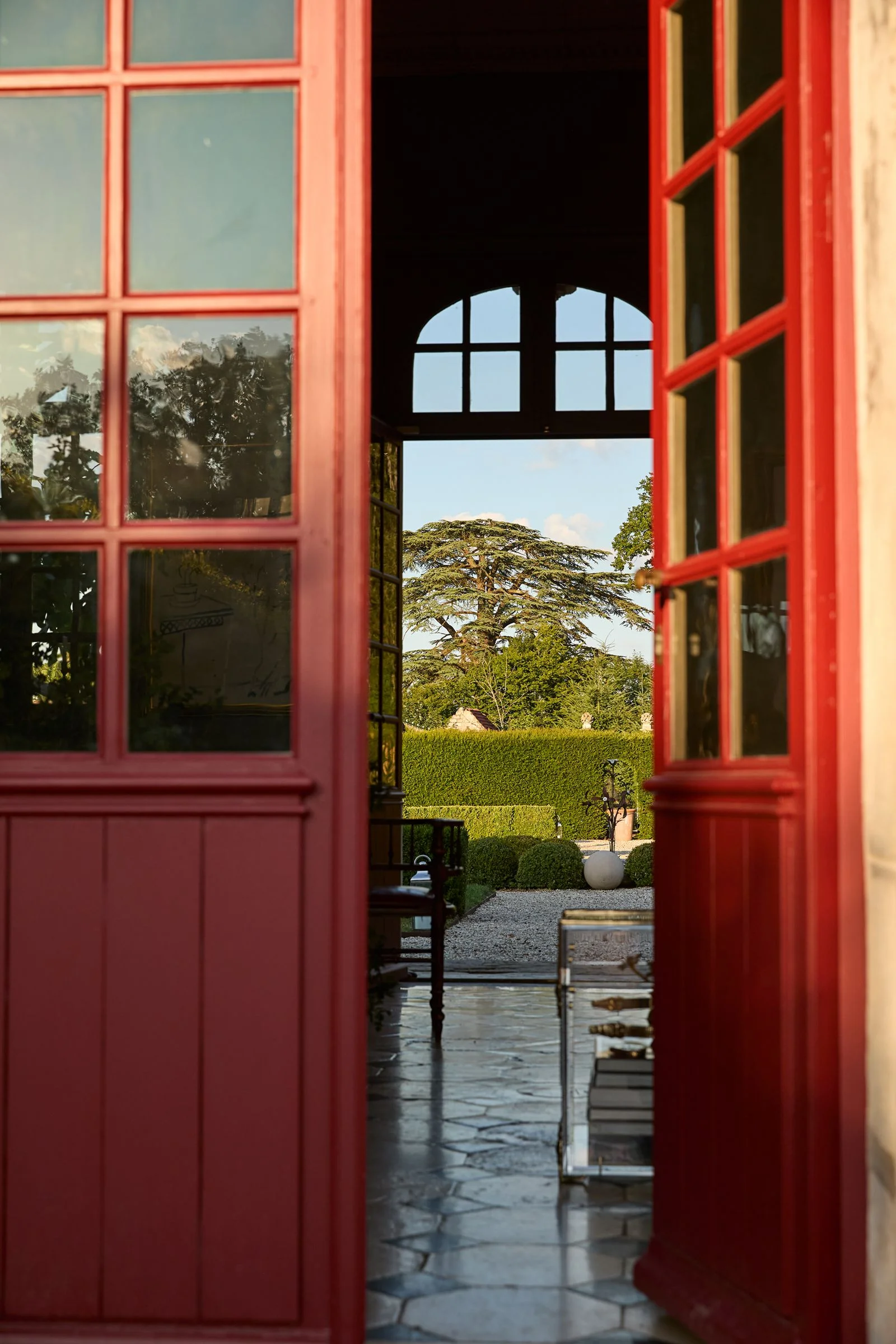
The family’s villa still possesses its extensive gardens and sumptuous interiors of centuries past. While the former owner did much to improve the estate during an initial restoration—largely thanks to sculptor, designer, artist, and set designer Hubert Le Gall—the new owner had a few tweaks in mind to bring the manse closer in line with her own aesthetic sensibilities. “Having been surrounded from an early age by collectors and designers, she nurtured an unwavering connection with French design and craftsmanship,” says interior designer Darcy Cobb of Studio Paiire. Alongside her copartner Elizabeth Clark, Cobb was whom the owner trusted with the latest restoration.
A historic hunting lodge
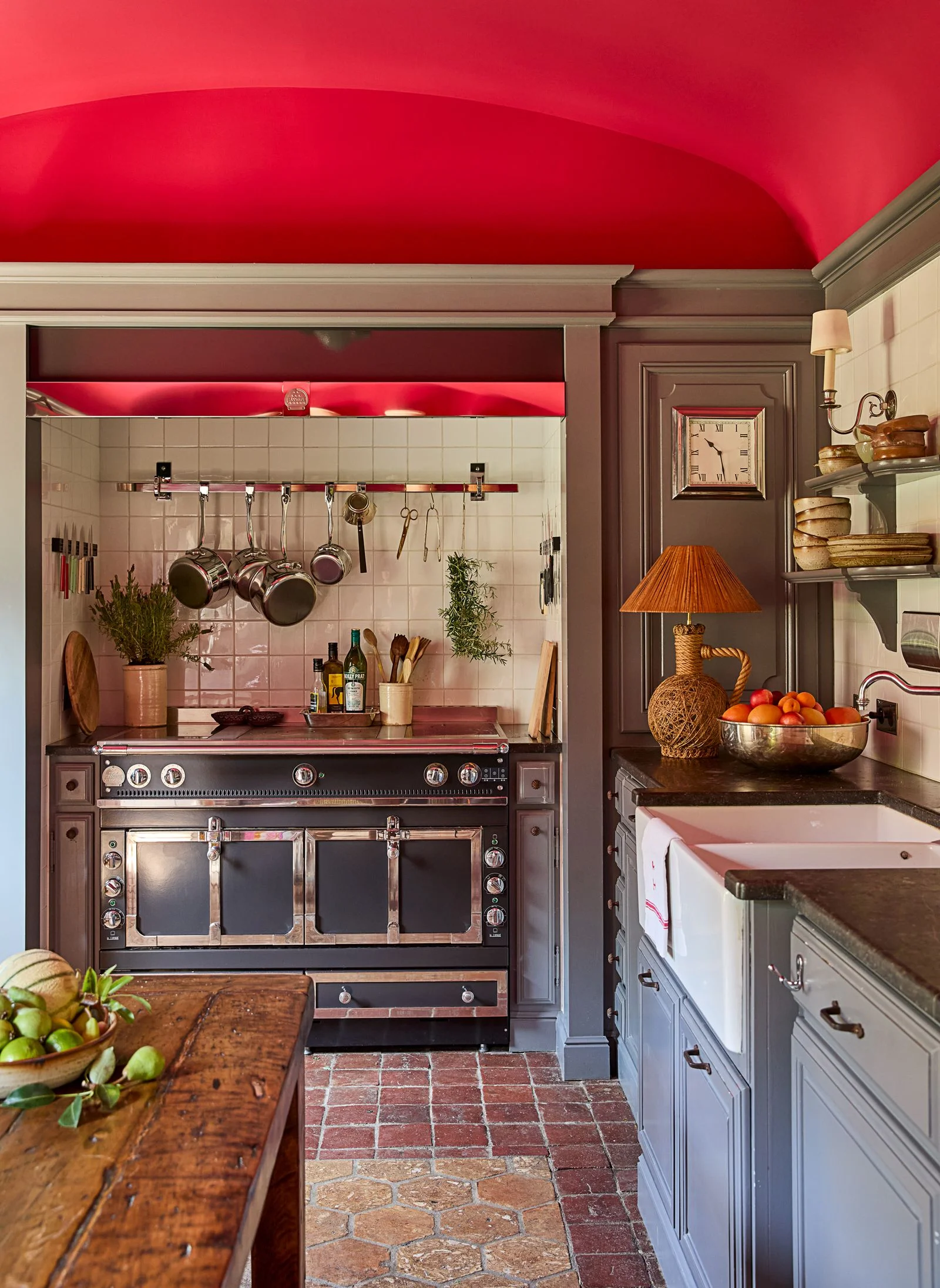
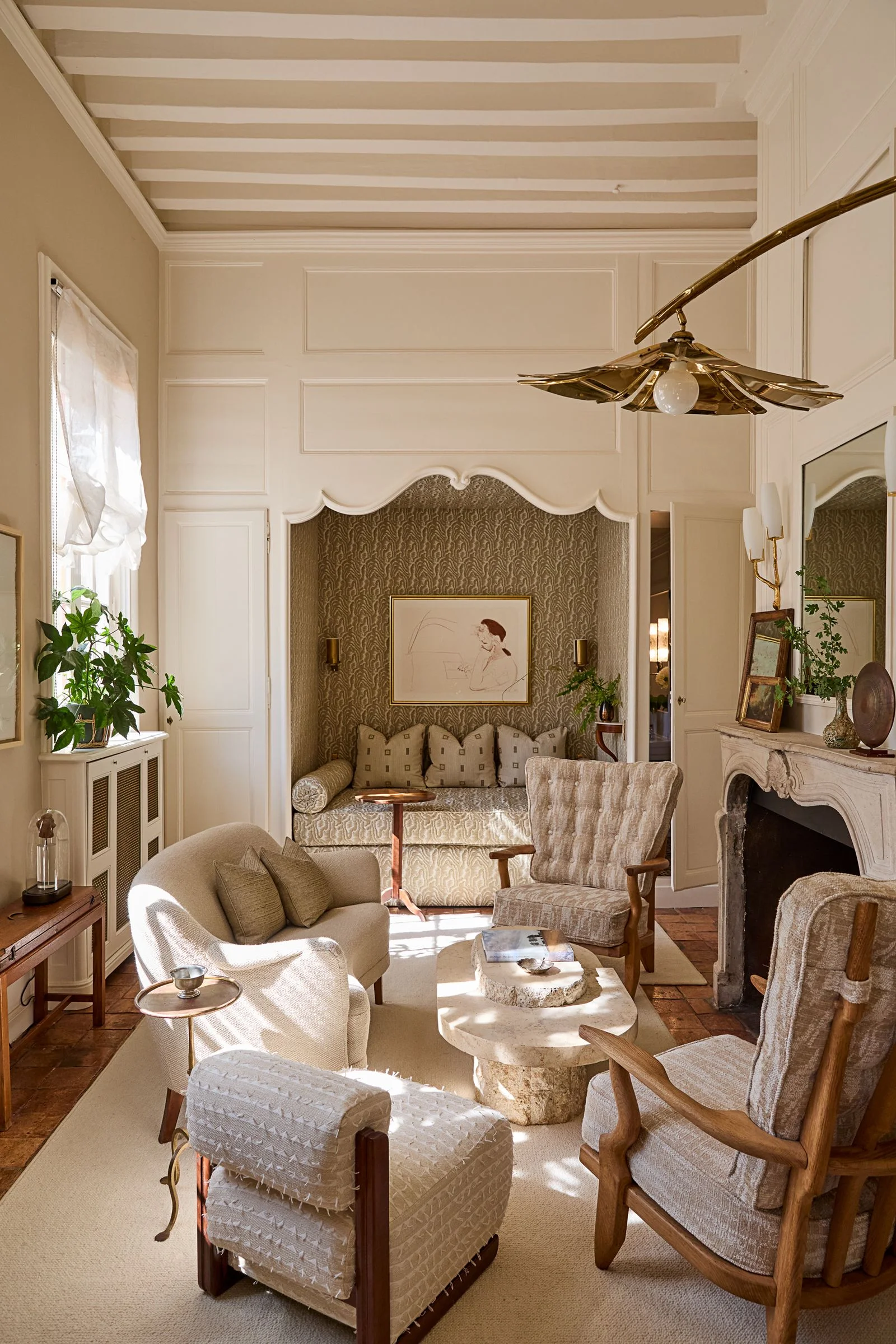
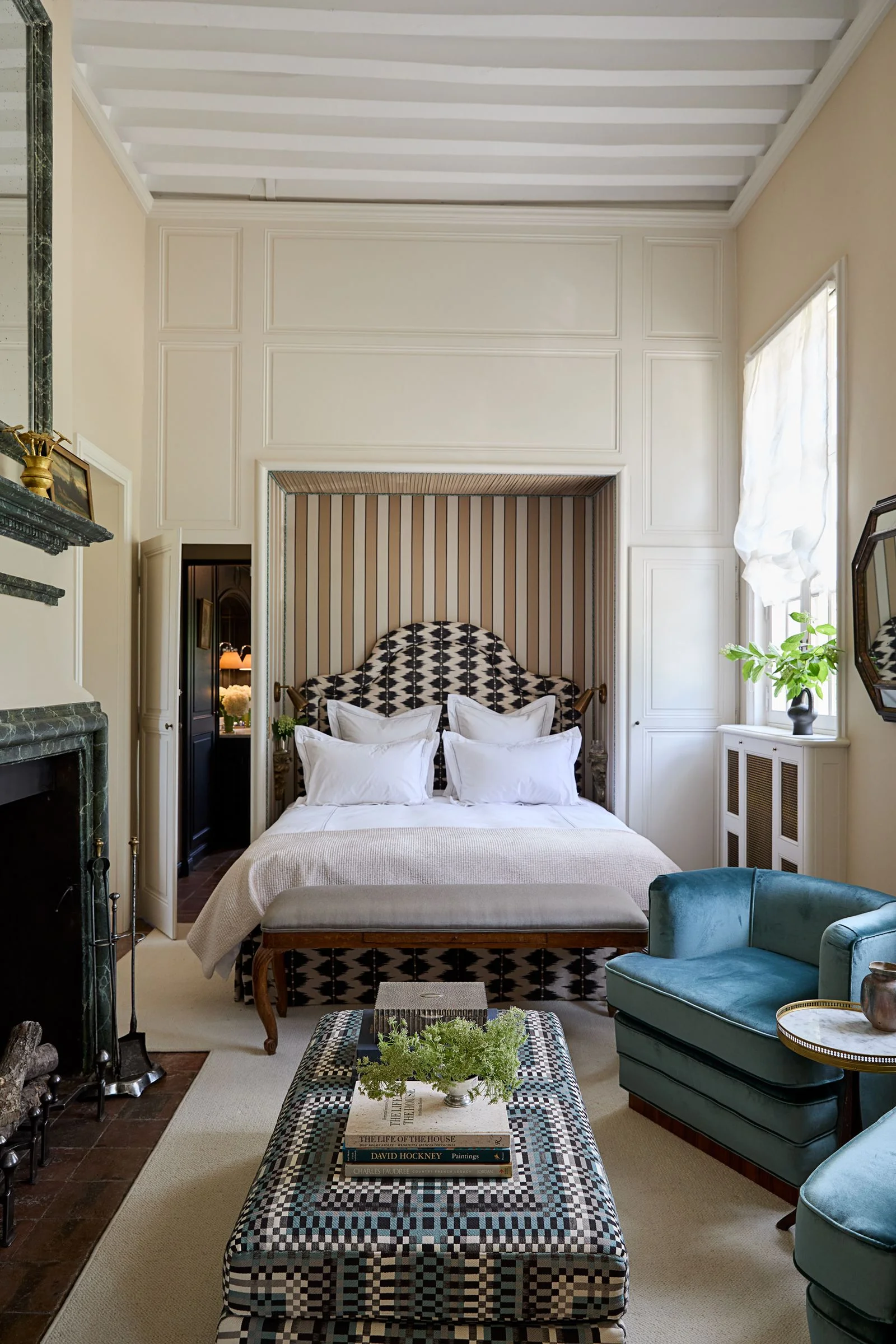
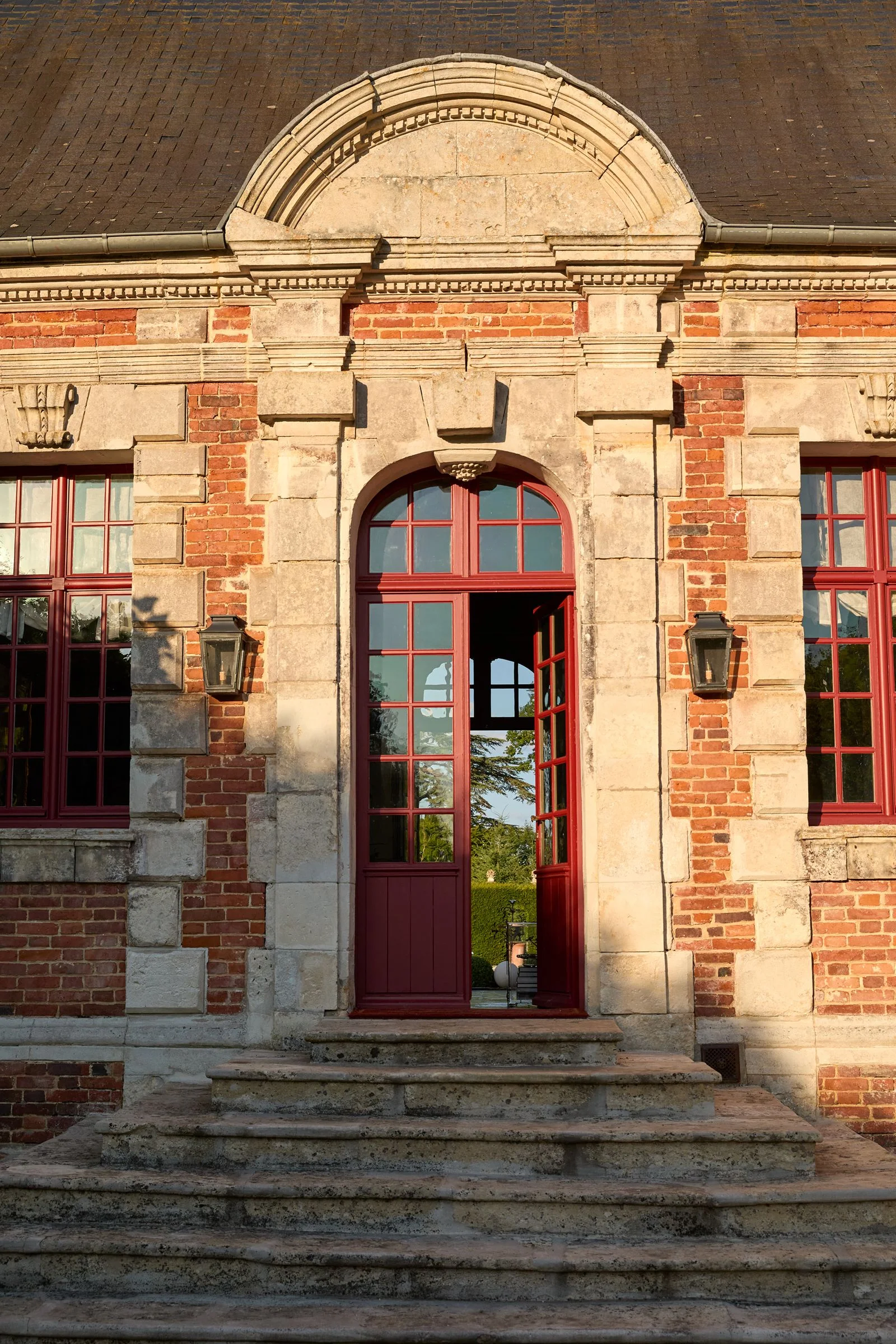
The former hunting lodge had been largely gutted before Studio Paiire started working on it. The Los Angeles–based interior designers sought the opportunity to move away from the bright colors, heavy fabrics, and theatrical sensibilities of the past, adopting a more understated vision of maximalist luxury. Their approach made sense: The house was never intended to be a historical monument preserved under glass, but rather a place meant to be lived in and used. The main challenge was to respect the centuries-old architecture while incorporating the midcentury French and Italian design pieces that the owners particularly appreciate. “The furniture had to blend harmoniously with the manor’s characteristic features: transoms, moldings, small-paned French windows, fireplaces and mantels, and decorative alcoves,” says the owner. “It was a matter of finding the right balance.”
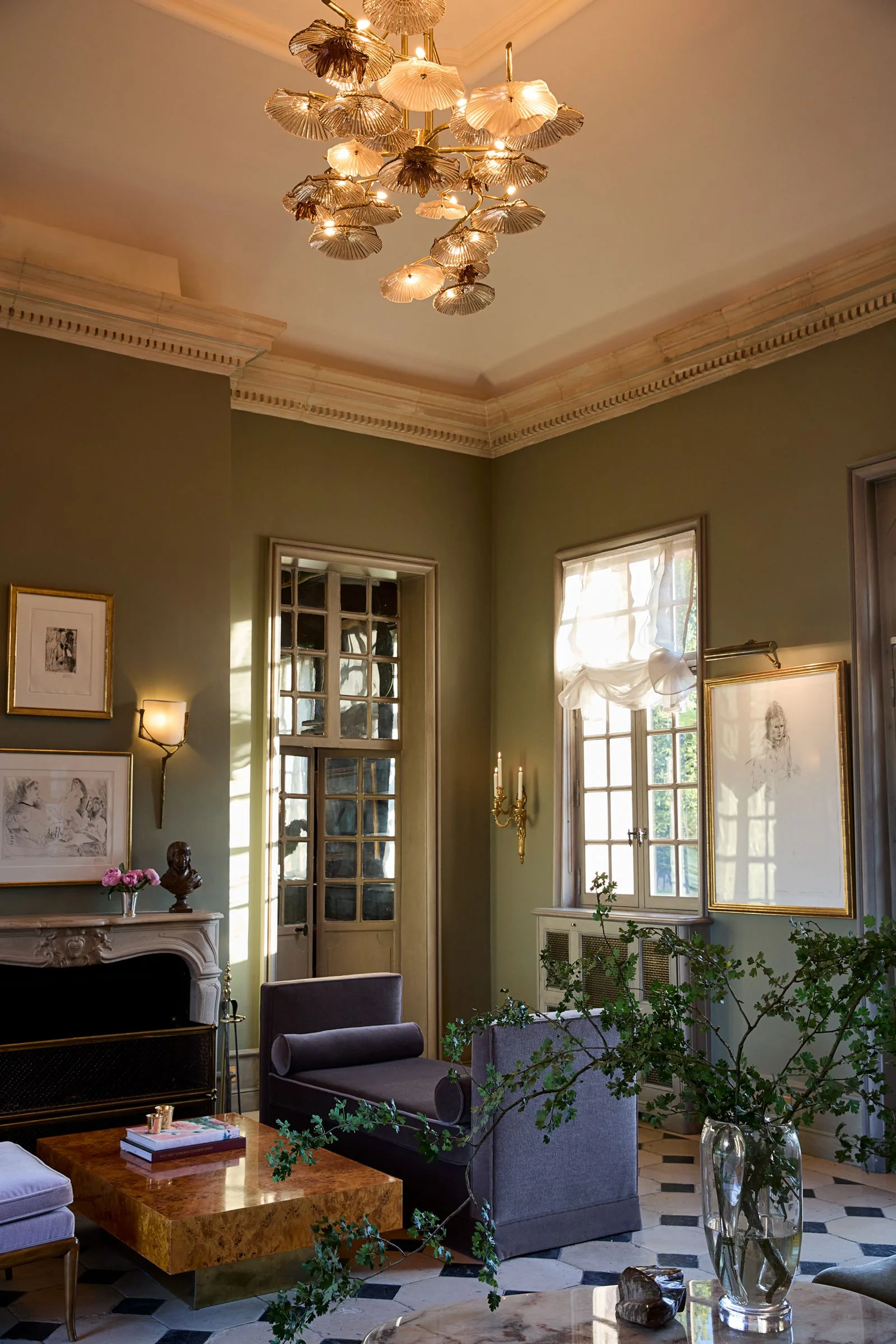
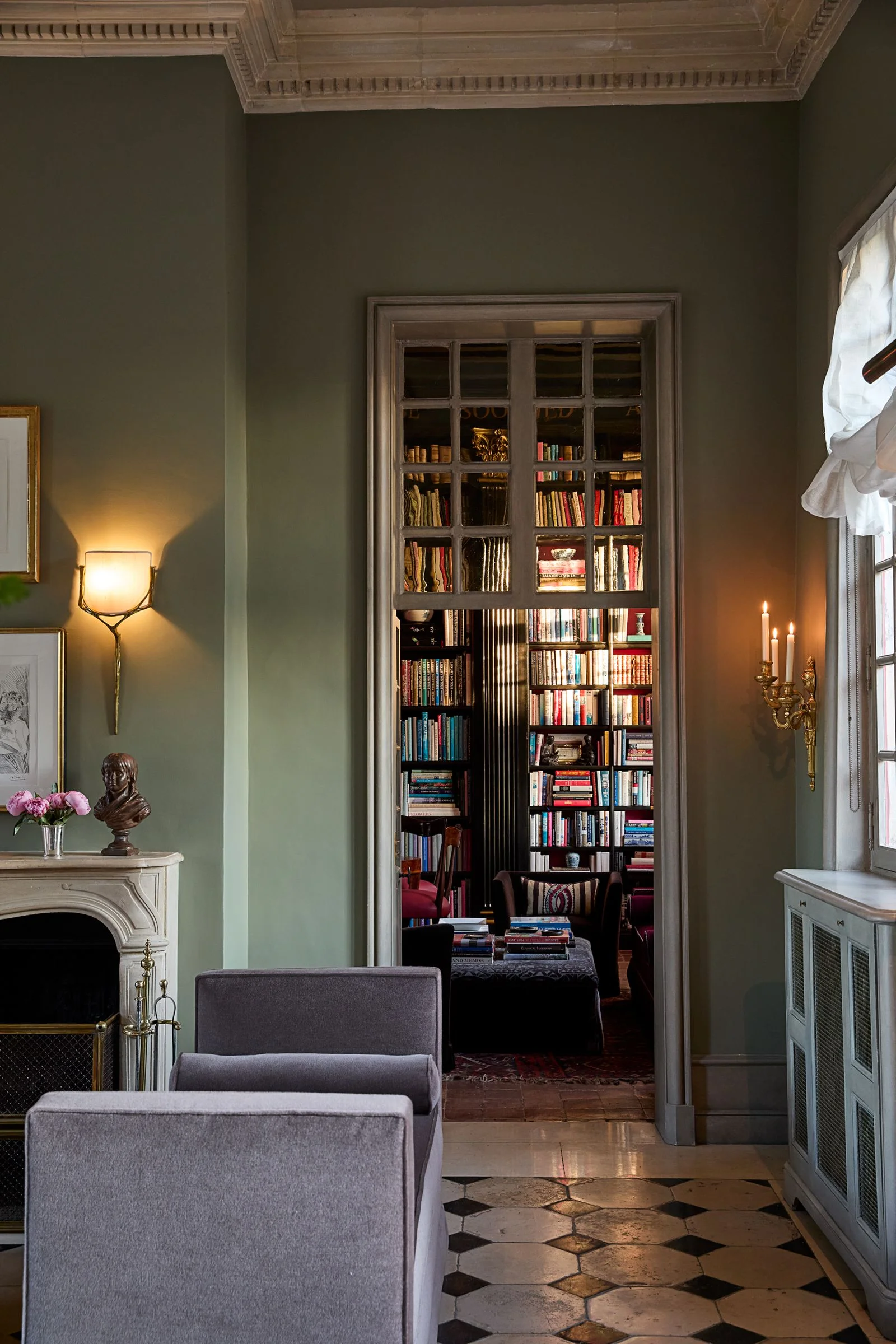
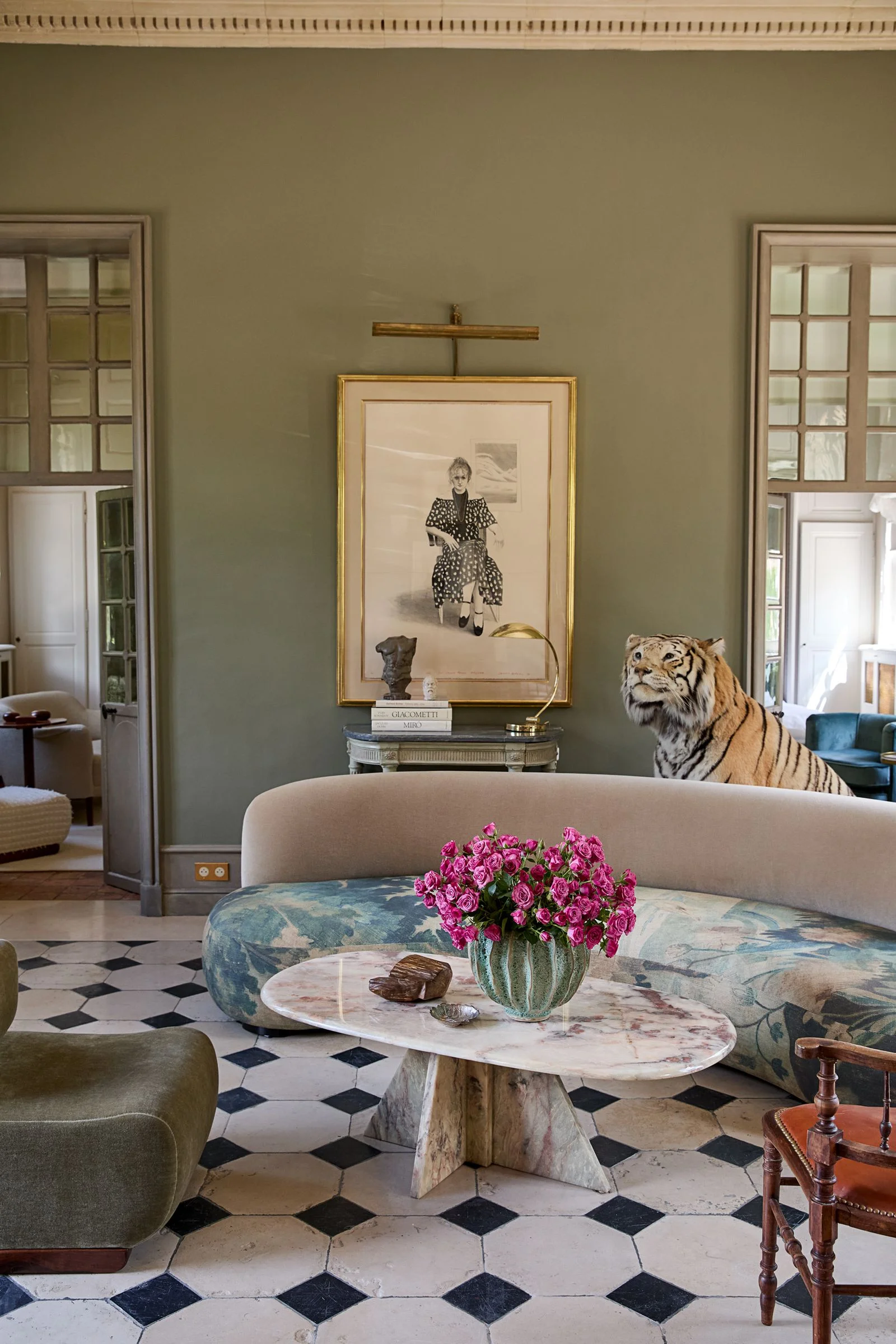
Drawing on a palette of softer colors, Studio Paiire experimented with contrasts when it came to shapes, angles, and volumes. Furniture with clean lines sit alongside more sculptural pieces, while stone blends harmoniously with wood. Materials and textures play a central role: mohair, tapestry, velvet, and wool are layered to create depth without weighing down the space—the goal was to create a warm and harmonious interior that avoids dampening excess.
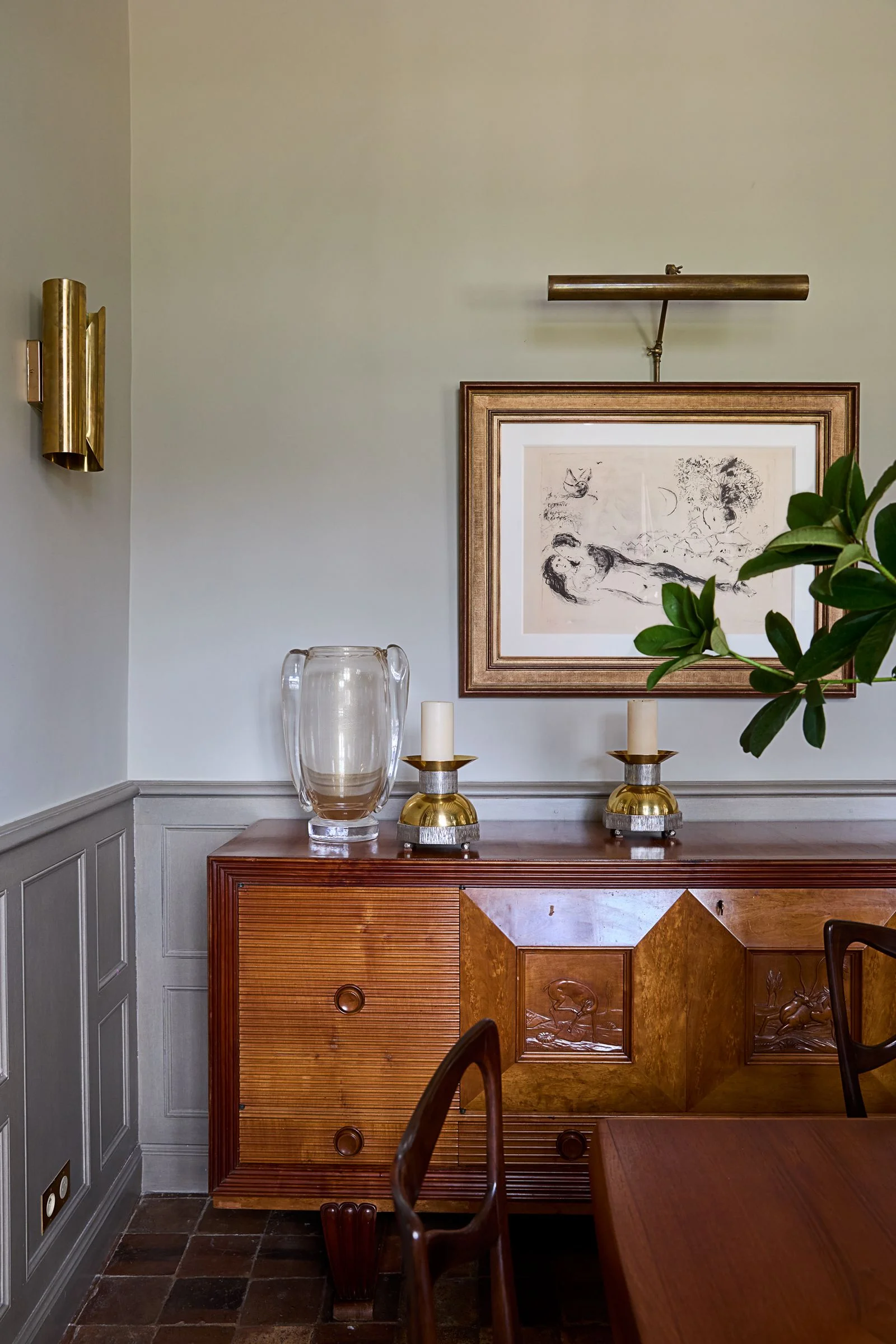
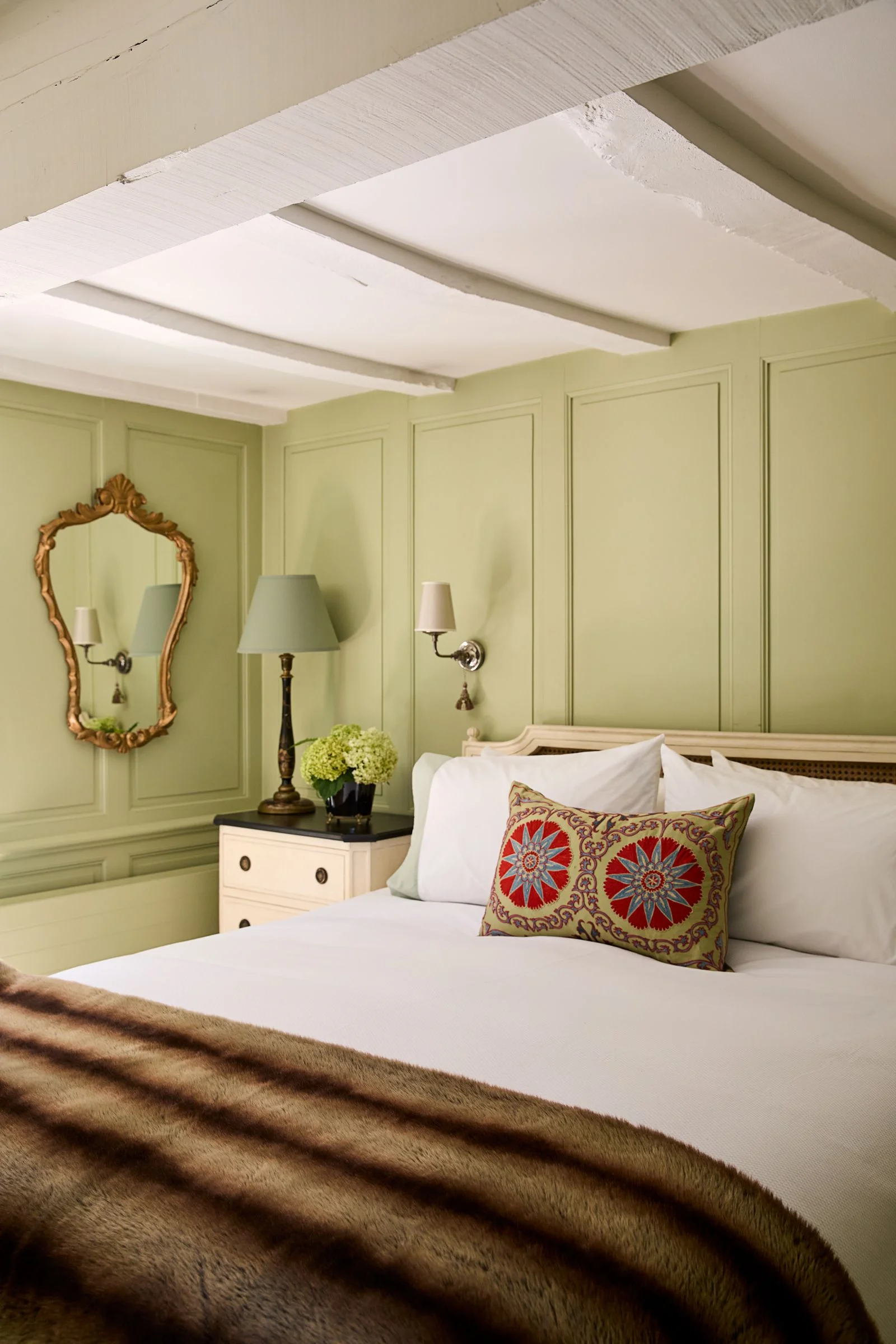
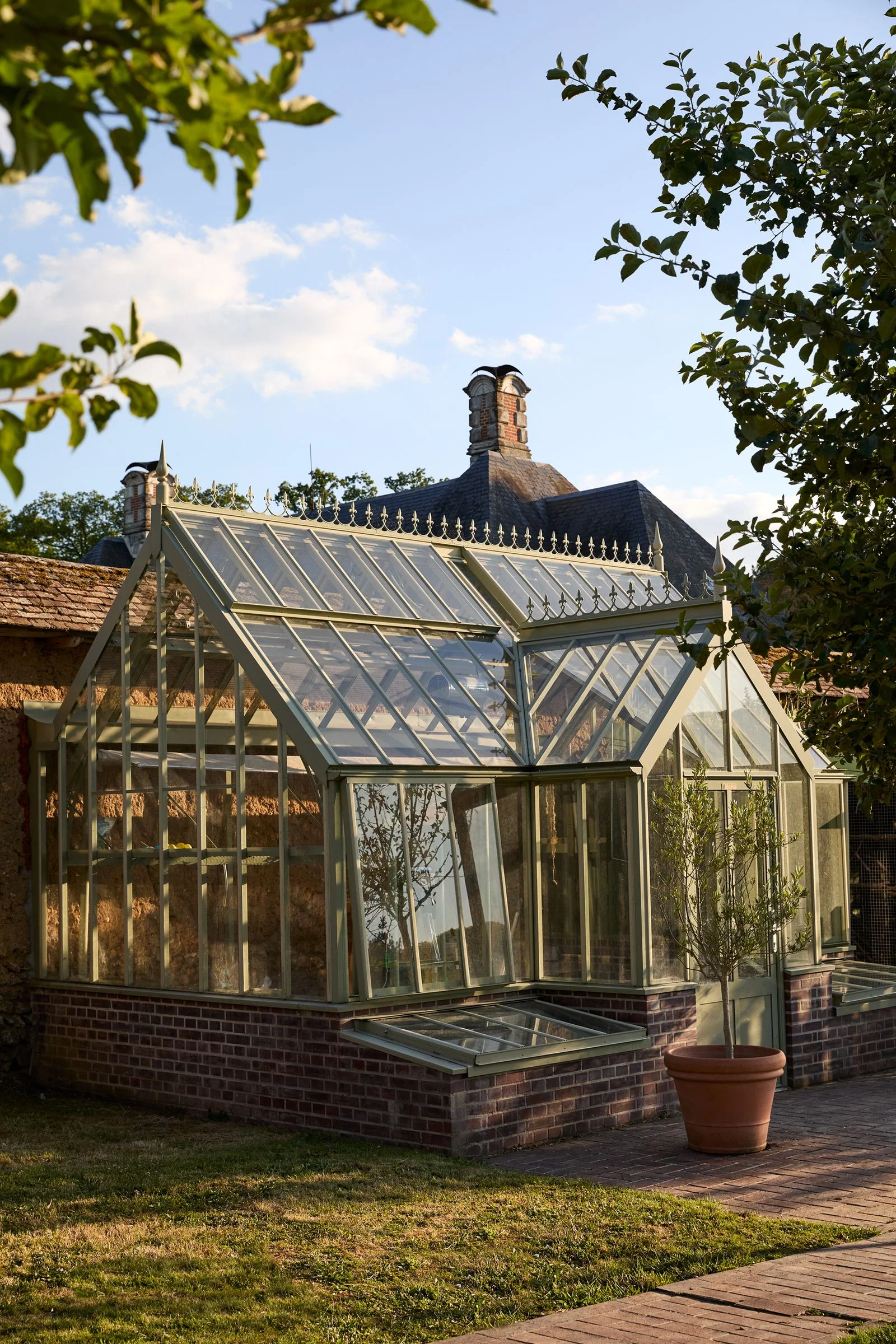
While the manor house retains its classic proportions and high ceilings, the guest house, on the other hand, is a traditional half-timbered construction with exposed beams typical of Normandy. The two designers took advantage of the building’s more intimate scale to focus on warm textures. “The history of the hunting lodge permeated the entire project,” says Cobb, who utilized a lot of the furniture that was already placed there. “One of the most important discoveries was a sideboard by Paola Buffa, which we unearthed after a long search. With its carved animal motifs, it echoes the manor’s past while also anchoring the modern furniture.”
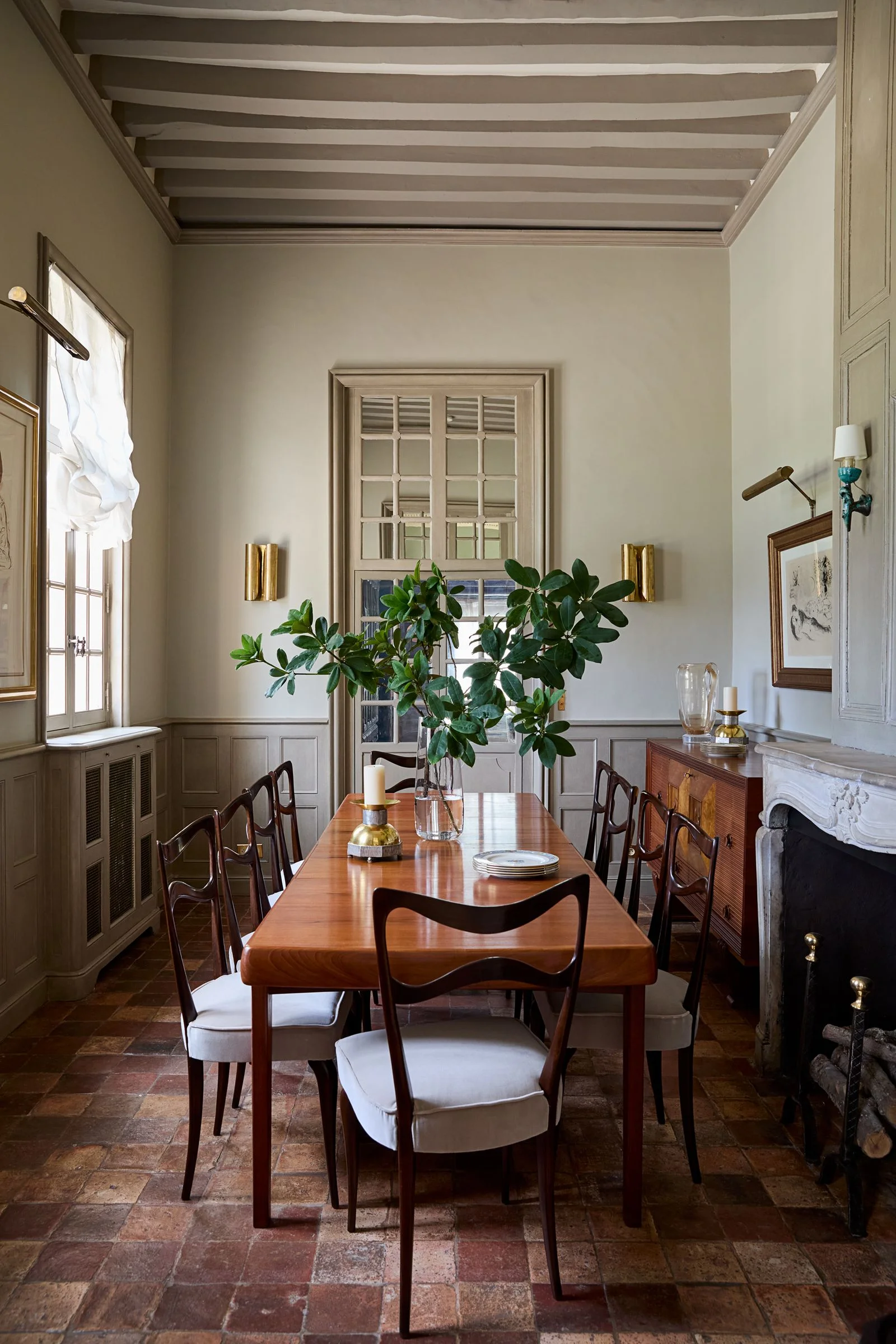
A stunning 20th-century design collection
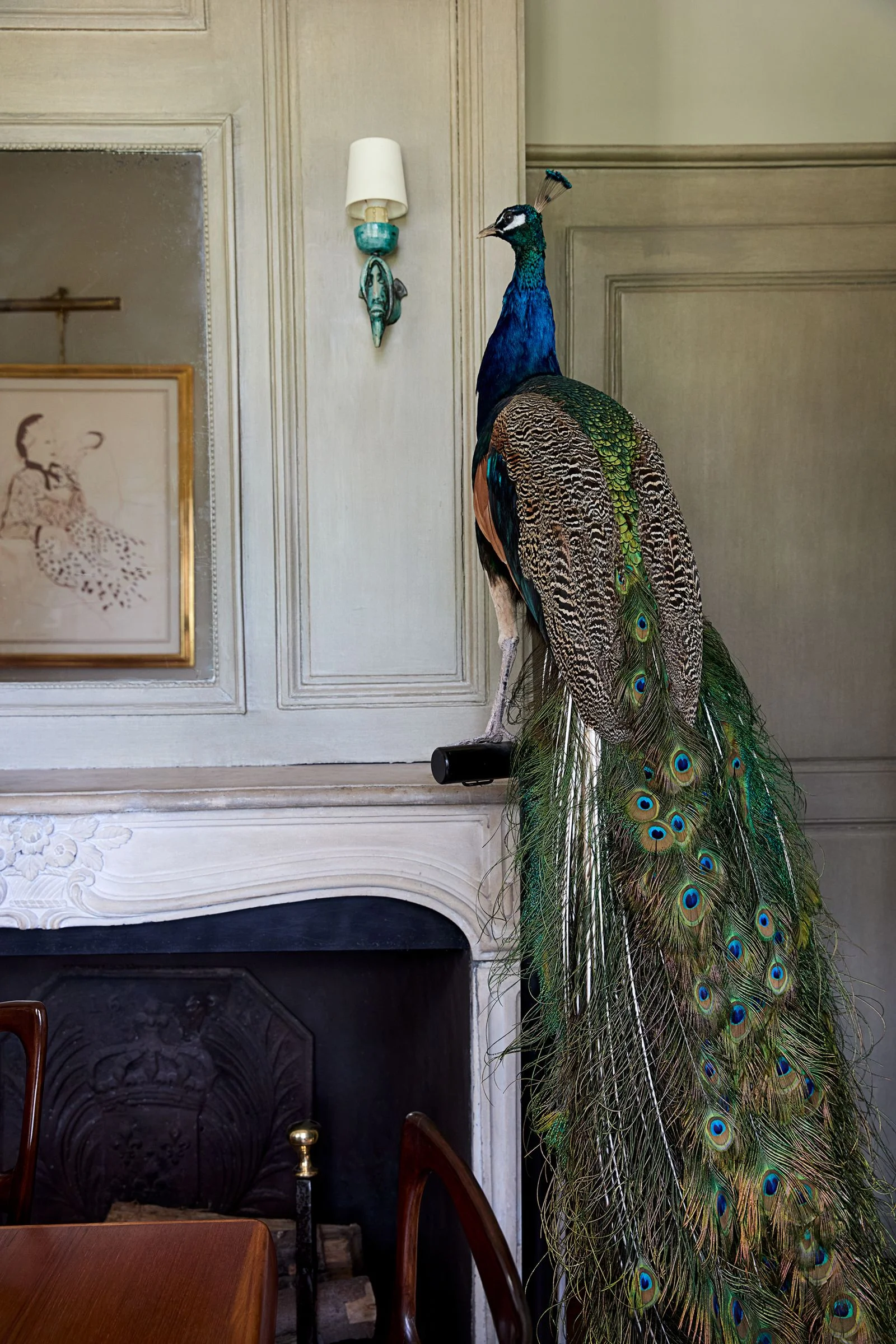
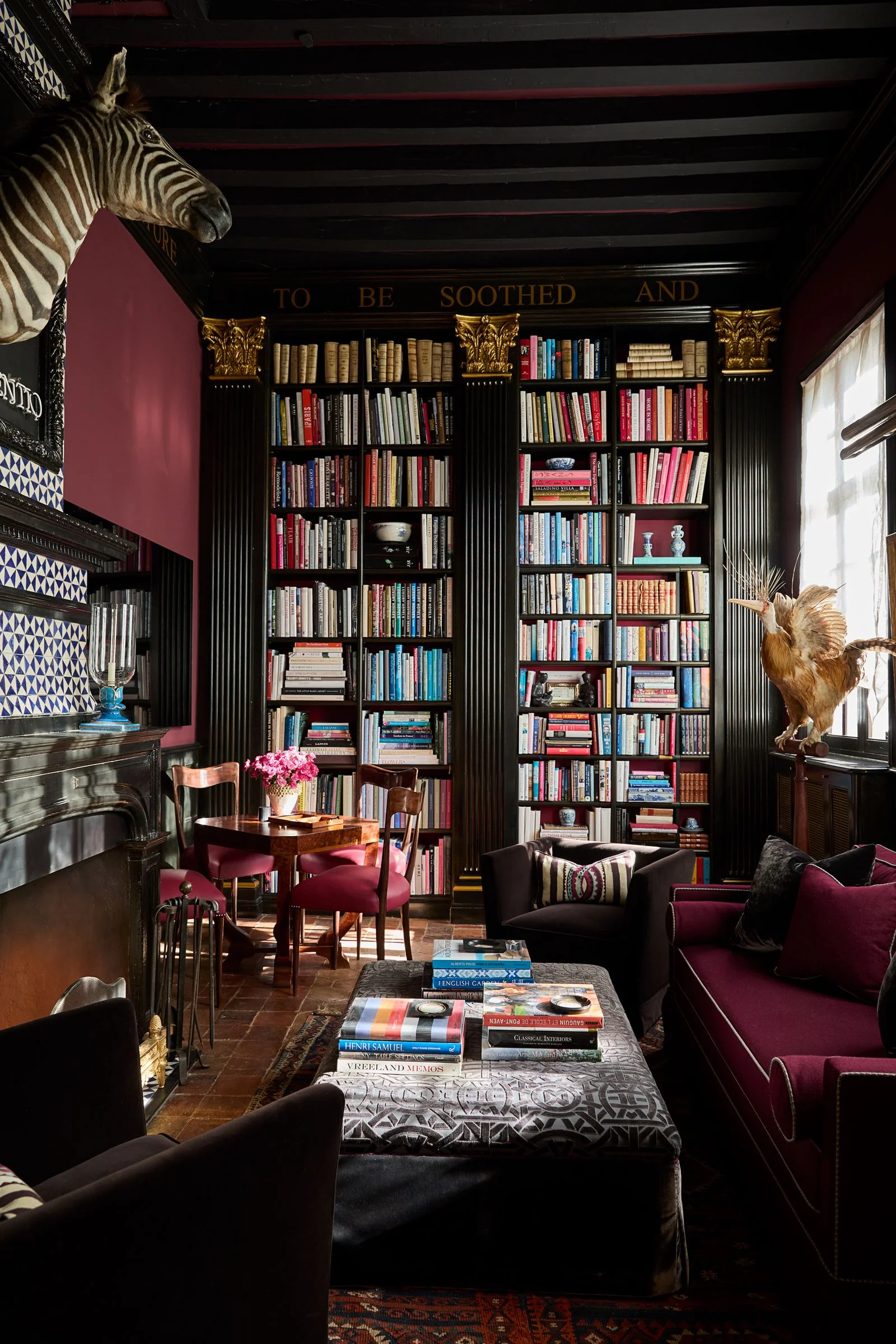
The interior designers chose to highlight the manor’s historic architecture by combining it with 20th-century design pieces by Jean Prouvé, Felix Agostini, Guillerme et Chambron, Guglielmo Ulrich, and T.H. Robsjohn-Gibbings, to name but a few. There are unexpected combinations, such as an 18th-century bust of a young girl mounted on a black marble column custom-made in a Parisian workshop; both are placed in front of a magnificent sketch. These are complemented with works by iconic 20th-century artists, as well as inherited taxidermy animals from Deyrolle. The ménage makes the space refined without being overly formal; signature pieces are elevated within a still-comfortable home. Every room is beautiful and functional, designed to be lived in.
This French château was first published by AD France. It was translated by John Newton.