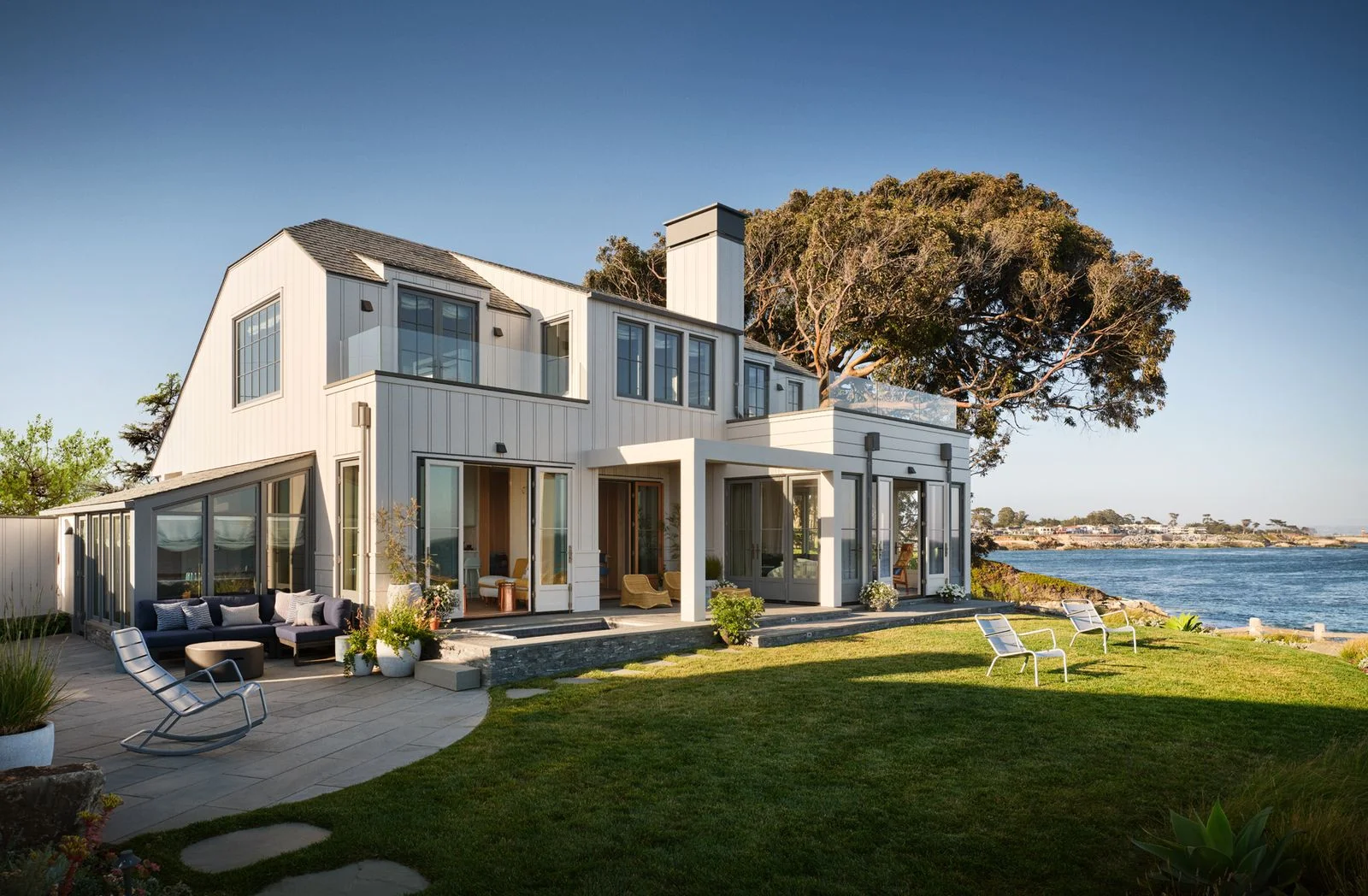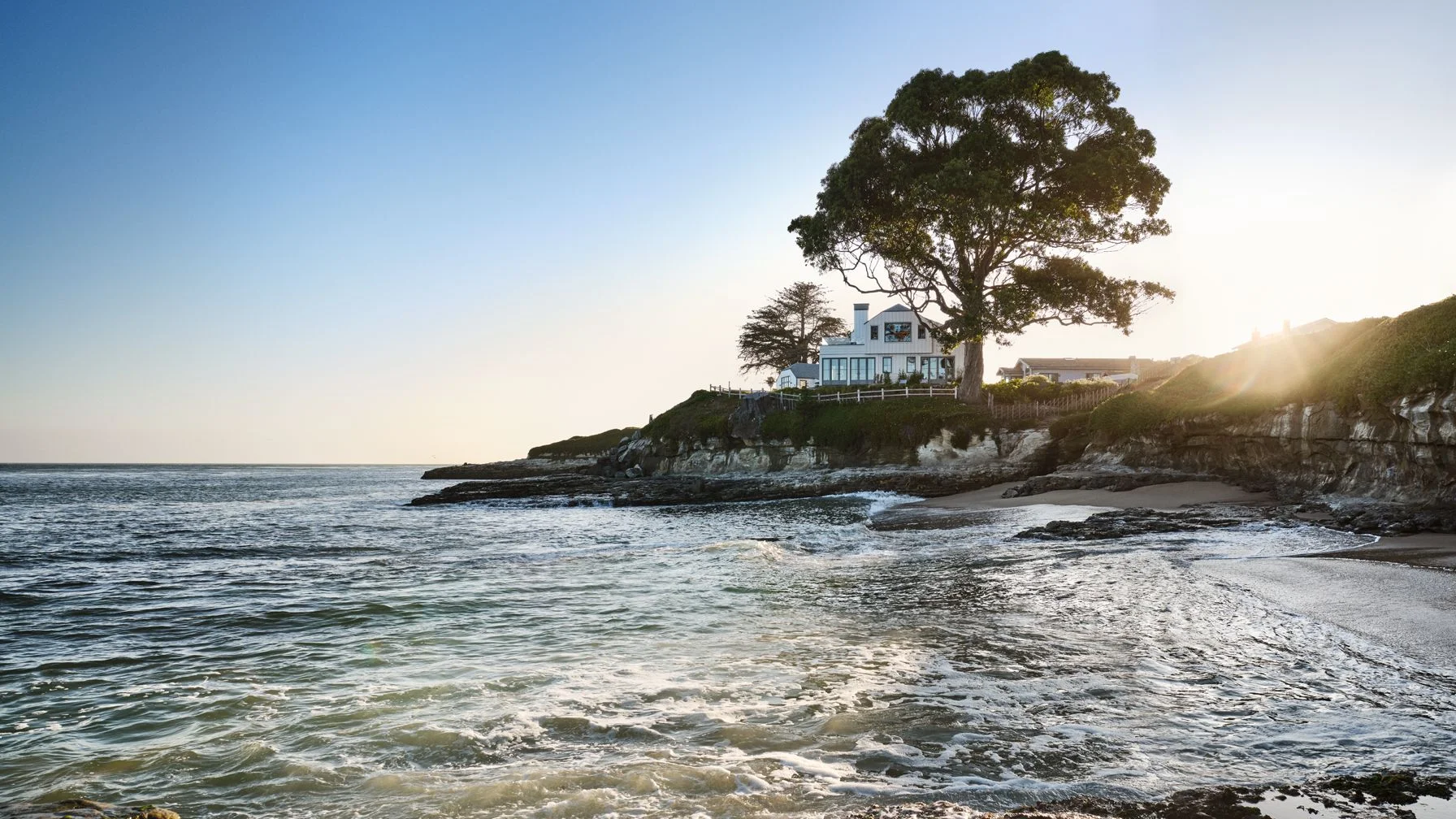
Every Santa Cruzan knows it—the lone house still standing on the ocean side of the coastal bluff, the last survivor of a stretch of homes gradually claimed by erosion. Since it was built in 1937, the Santa Cruz cottage has captivated the community’s imagination, appearing on postcards, inspiring amateur novelists, and serving as a dramatic backdrop to the city’s famed promenade from its perch overlooking Monterey Bay.
When the king tides roll in every winter, there’s no better vantage point for watching the ocean’s power up close. Unlike the sleek mansions lining much of California’s shoreline, this unassuming house has always felt like something out of a fisherman’s tale—its weathered exterior often shrouded in salt spray as swells crash against the rocks below. Today, you can often find the family of six, who call this their second home, scrambling down to the shore to spy the tiny octopuses, sea stars, and nudibranchs navigating the tide pools.
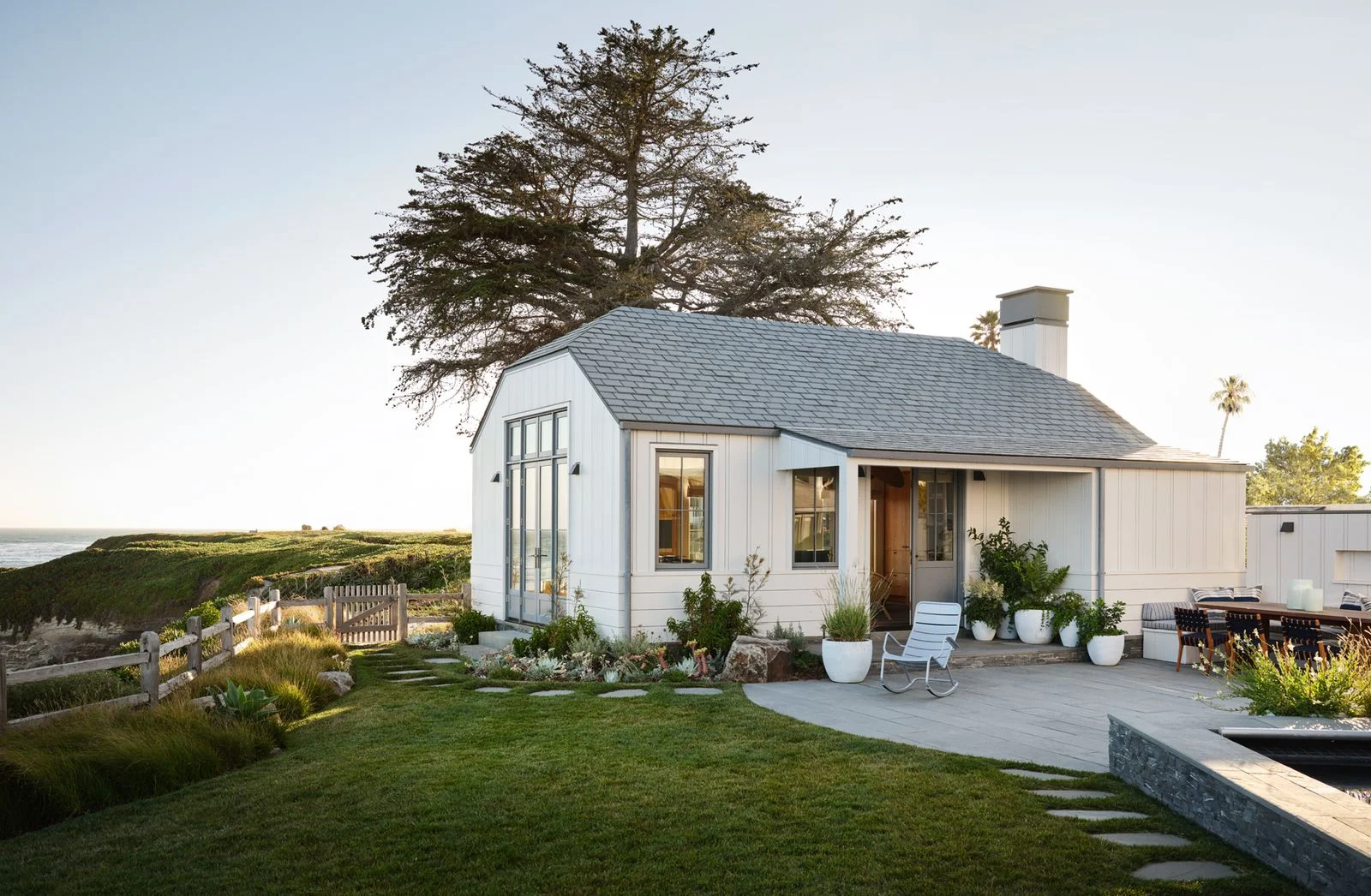

“It felt like the house was always trying to be of the place, and that it wasn’t very showy or pretentious,” says the homeowner, a Northern California native, of the 2,400-square-foot cottage and 600-square-foot casita. That authenticity nearly convinced the couple to purchase the house sight unseen—if not for a town ordinance requiring buyers to view the property first.
Of course, the town’s caution wasn't unfounded. The blufftop property is widely expected to eventually go the way of its former neighbors, succumbing to the encroaching sea. Not that it’s a pressing concern for the family. “Nothing lives forever. The trade-off of having something this special for a potentially short time was preferable to having something not so special,” she says. “It’s obvious that there’s only one house left on this side. We knew that the coastal commission would only allow one renovation for the life of the property, and that we had one chance to get it right.”
To preserve the cottage’s character and modest footprint while adapting it for modern life—the homeowners enlisted San Francisco architect Benjamin McGriff, who worked on the family’s Silicon Valley house and had spent years admiring the West Cliff property while visiting his in-laws in Santa Cruz. He was intimately familiar with the site’s challenges, including just how high-touch the permitting and sign-off process would be—and how many eyes would be watching their every move.
“You’re dealing with lots of different exposures and trying to create sanctuary in a coastal environment that can be blustery at times but also embrace the views and evocative nature of the property,” he explains. “At the same time, there’s a lot of responsibility because the house holds such a dear place in the community.”

With that in mind, McGriff brought in friends and frequent collaborators, Leann Conquer and Alexis Tompkins of AD PRO Directory firm Chroma. Together they created a fully integrated concept that combines style with meaning, leaning into the coastal legacy of local heroes like William Wurster, the architect behind San Francisco’s Ghirardelli Square, and Joseph Esherick, who designed the Monterey Bay Aquarium.
To give the Santa Cruz cottage staying power, they took the house down to the studs, then raised the existing frame eight feet to make room for a new foundation, weaving in corrosion-resistant siding and walls of hurricane-strength glazing. (McGriff even engineered the house in modular sections allowing the structure to be relocated if necessary.) A courtyard-style layout reorients each room around a view of the Pacific as it wraps along the bluff’s edge. “There’s a sensitivity to how the ocean is part of the house,” says Conquer. “That’s what makes the property feel alive and in tune with nature.”
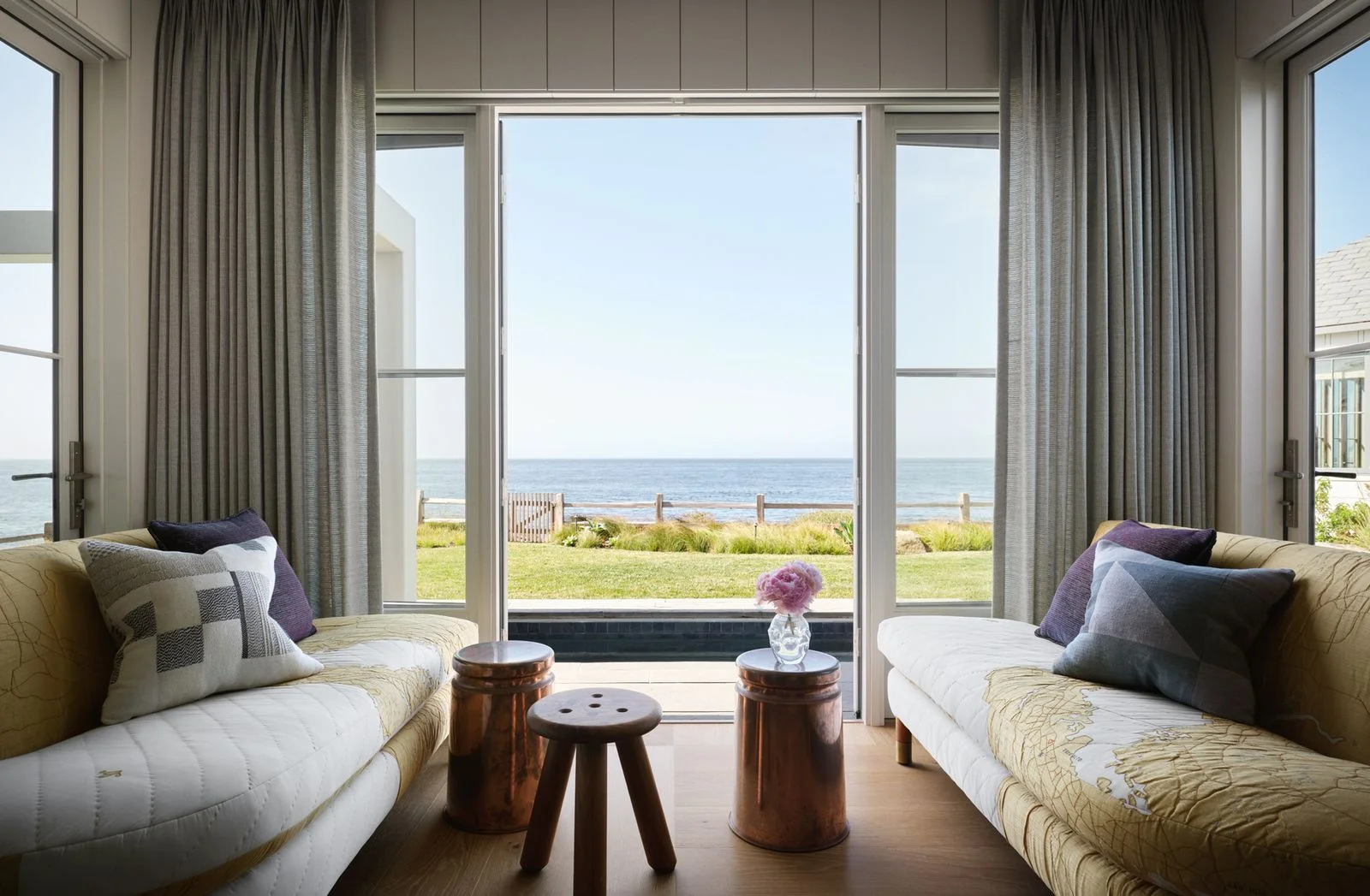


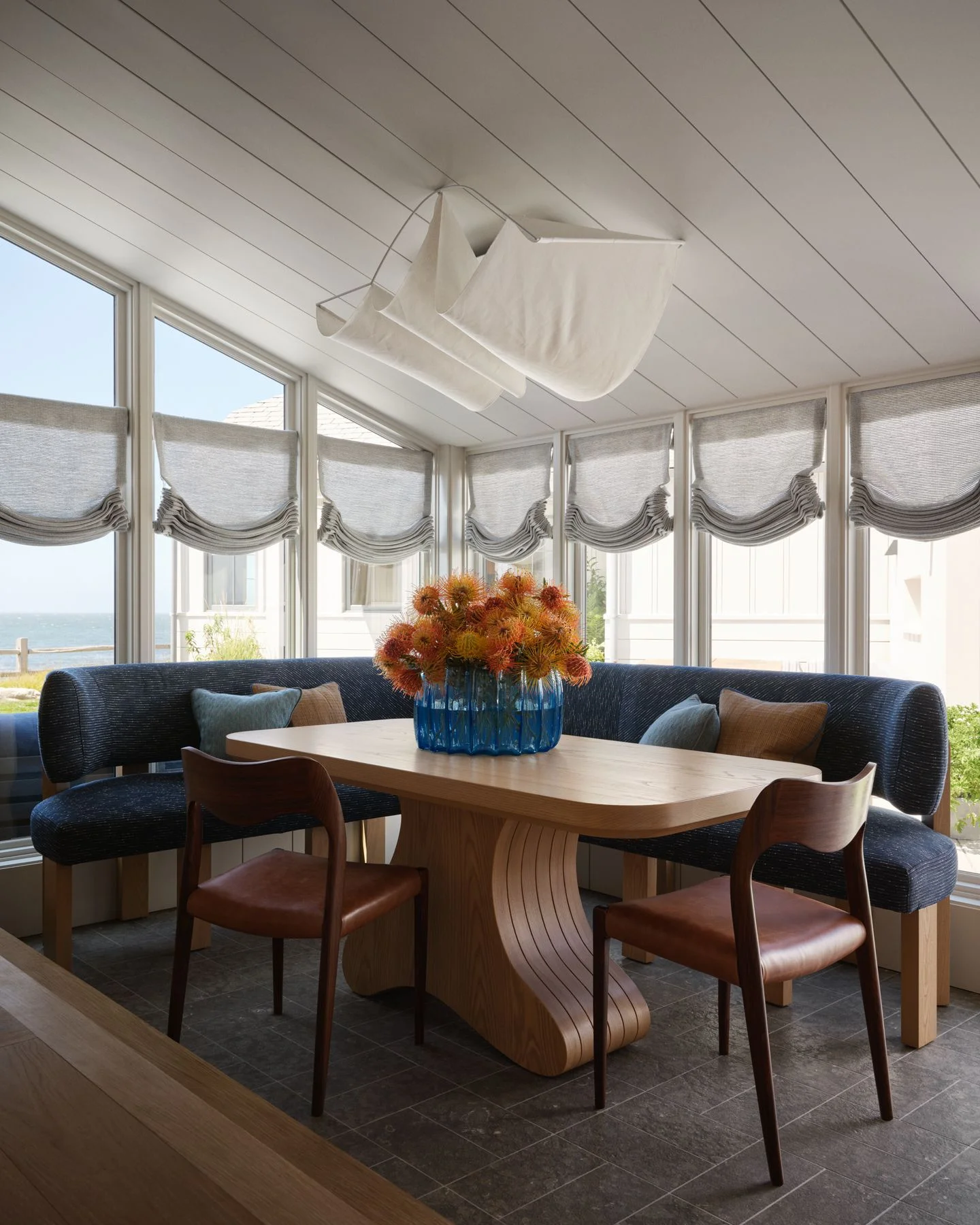
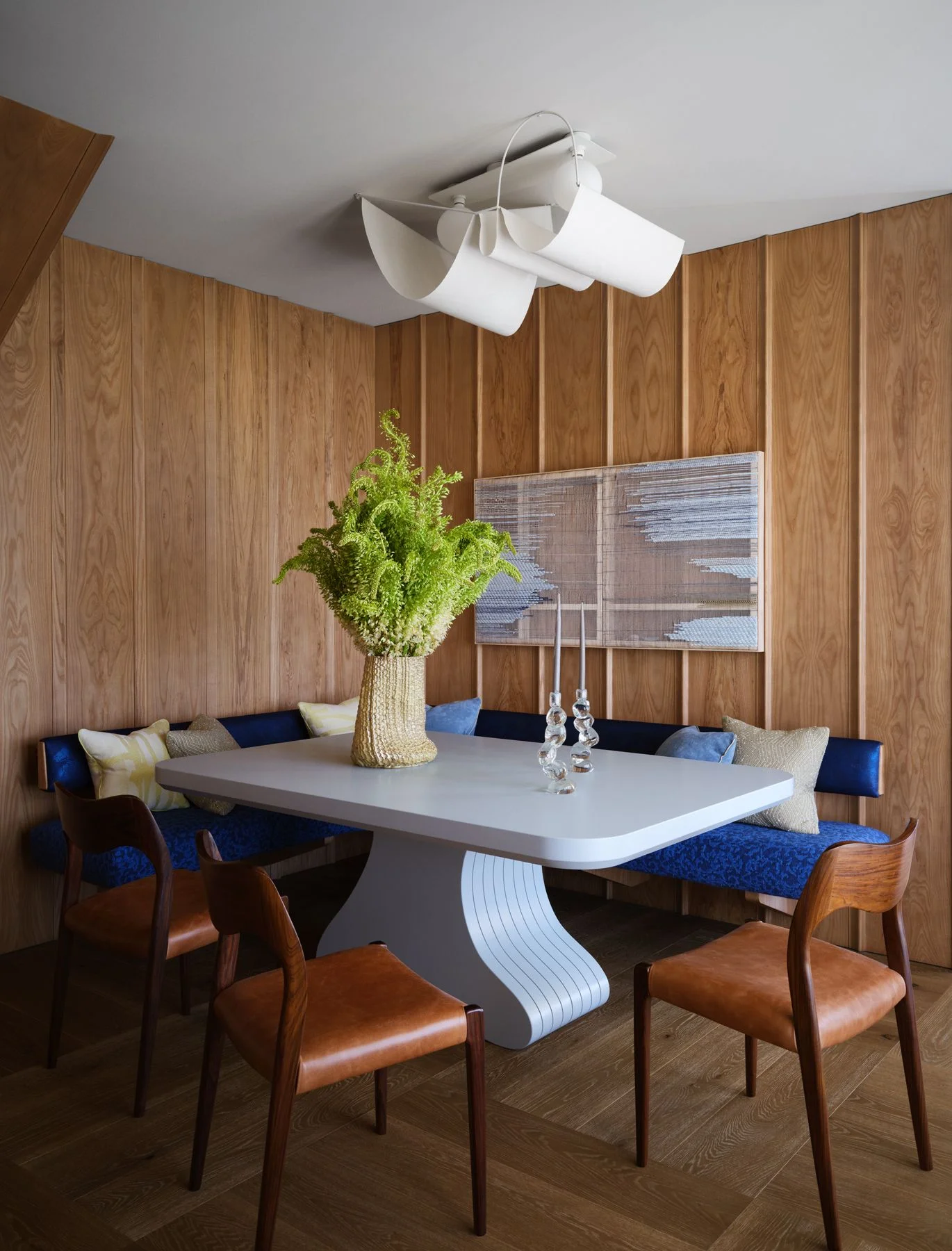
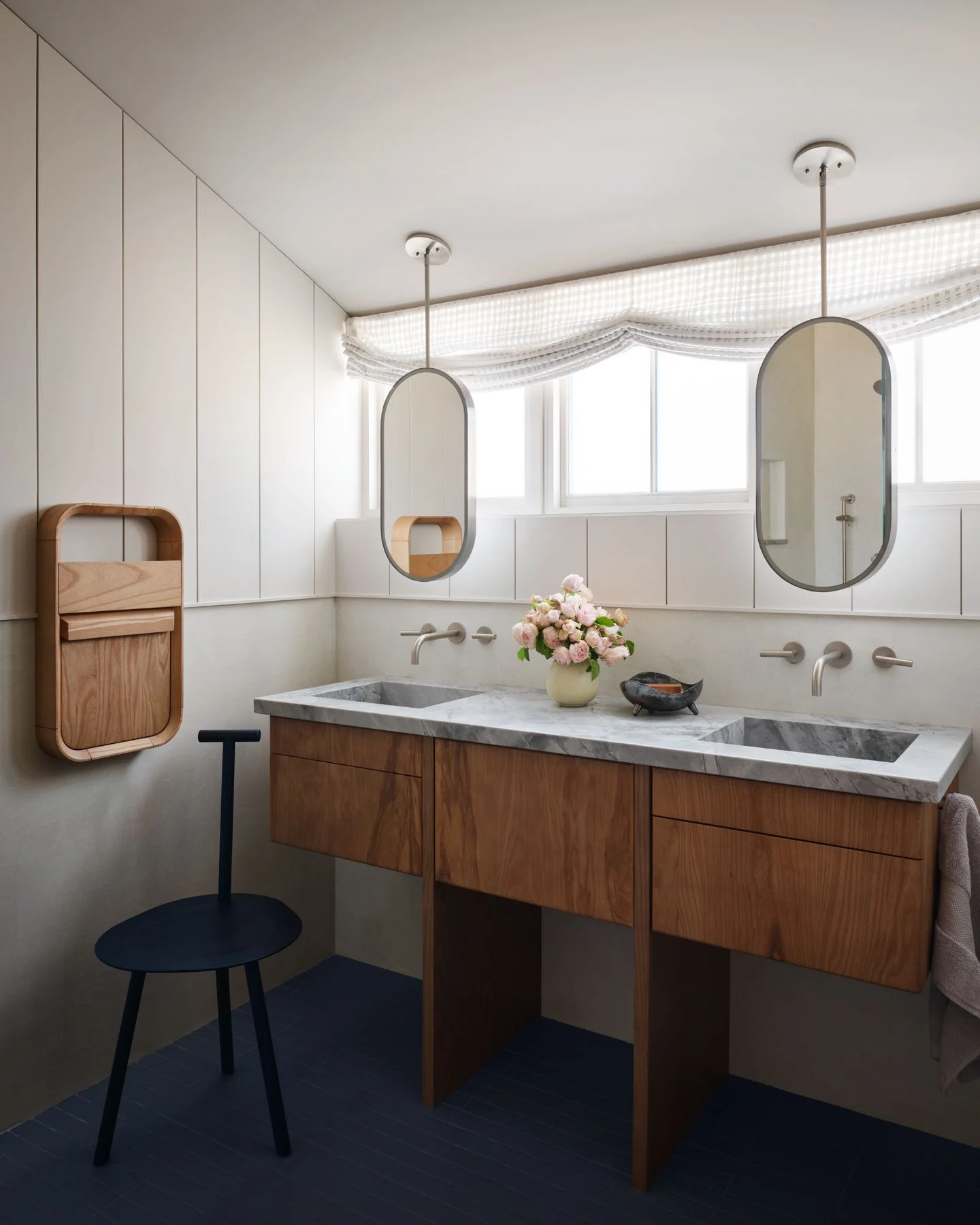
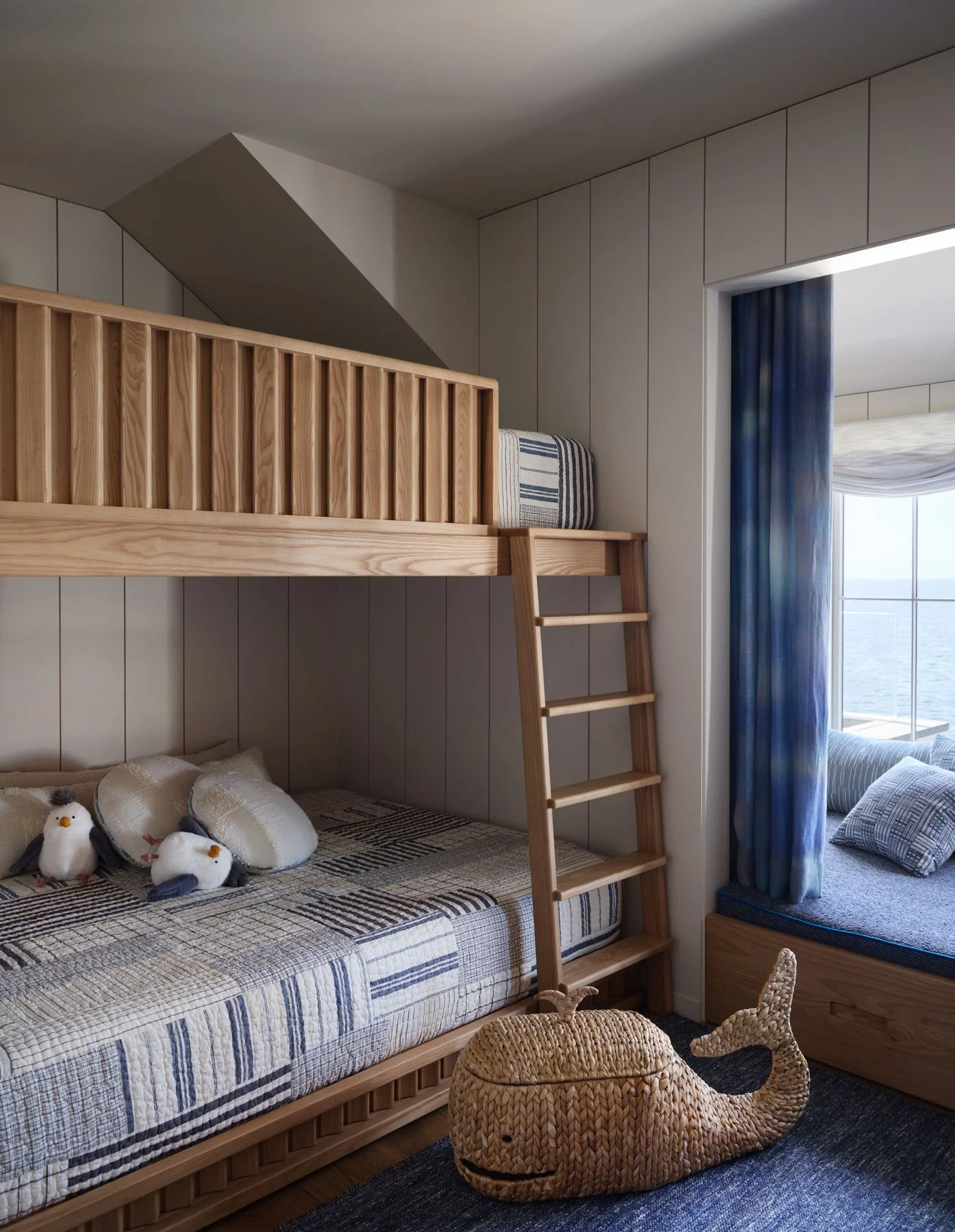
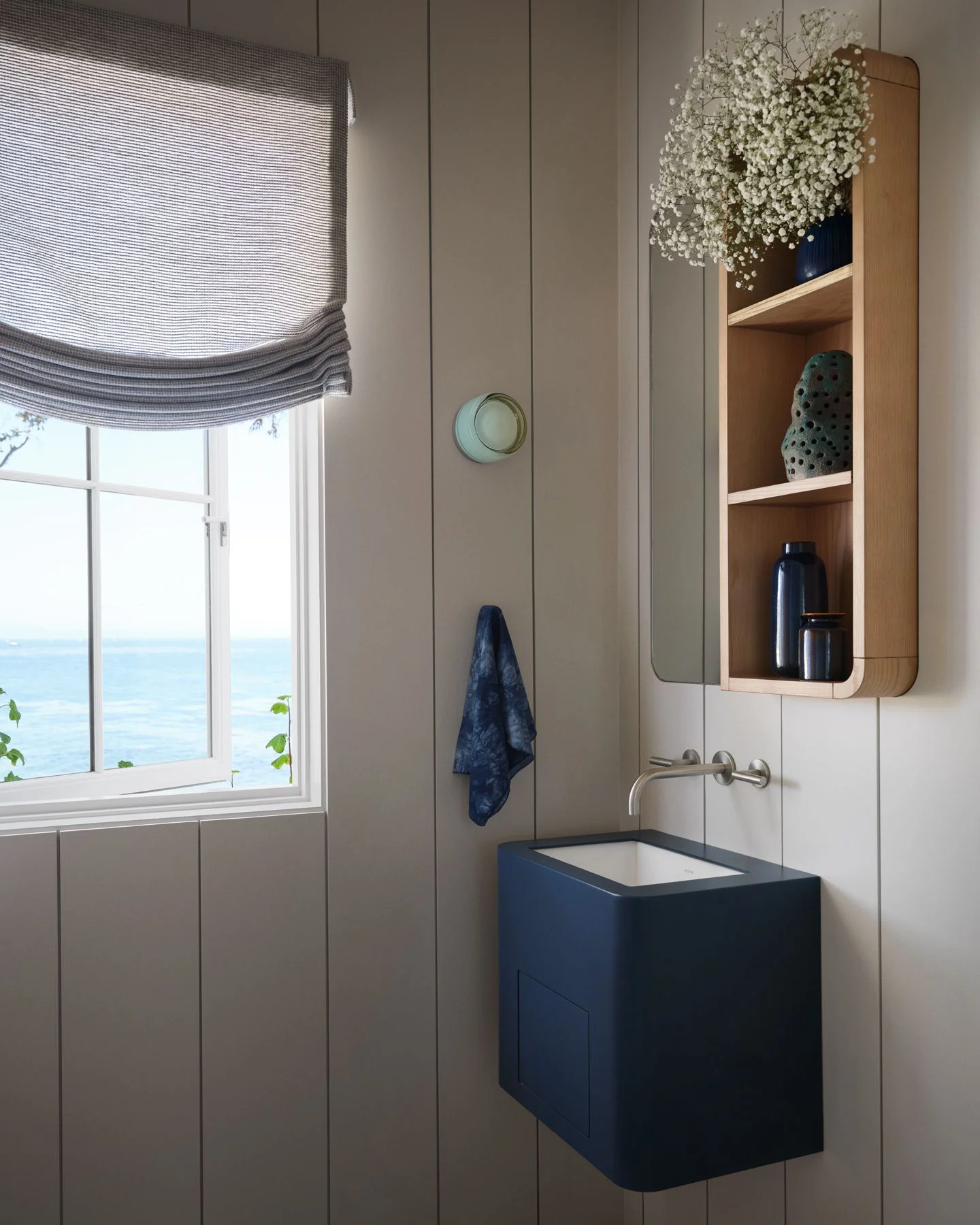
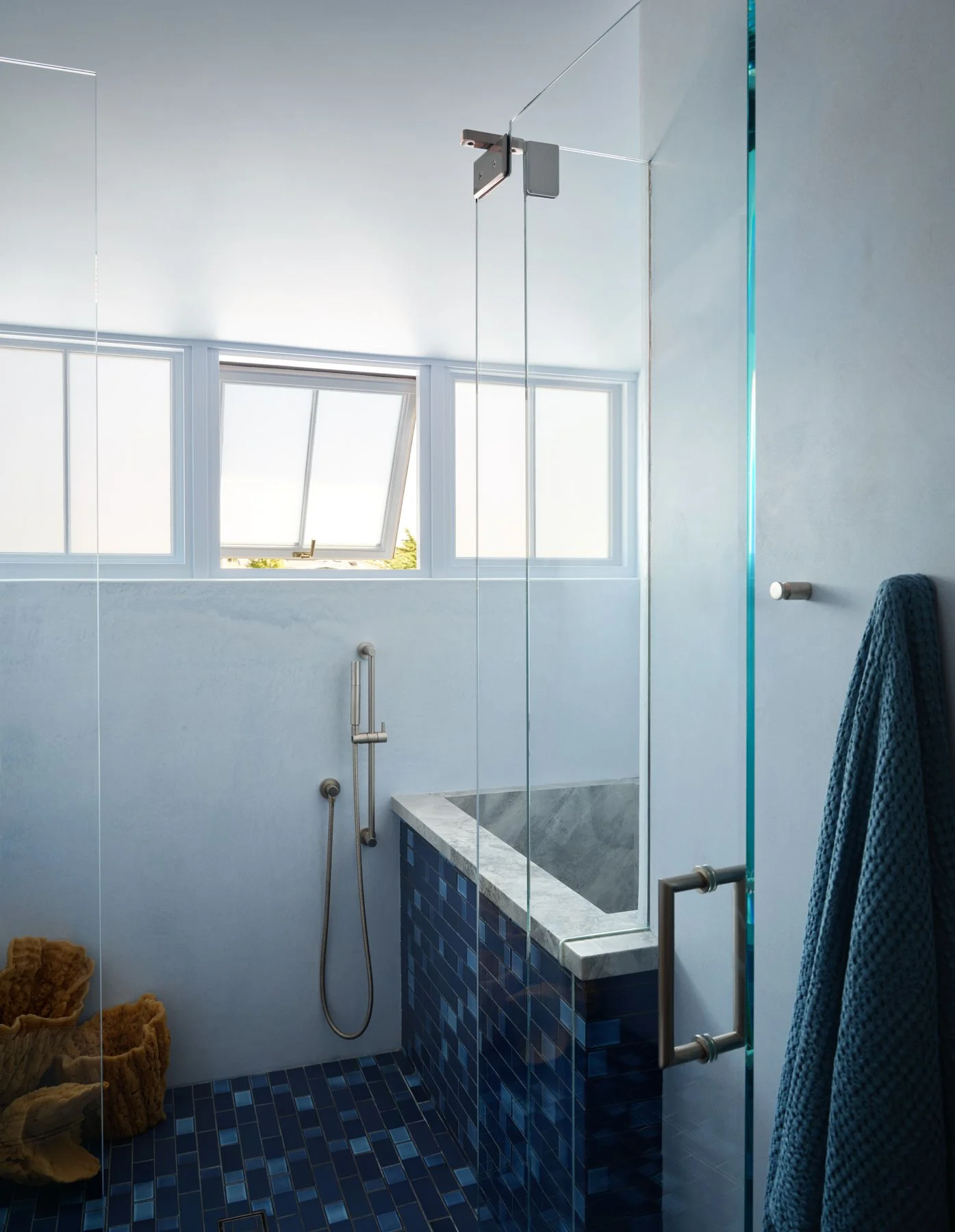
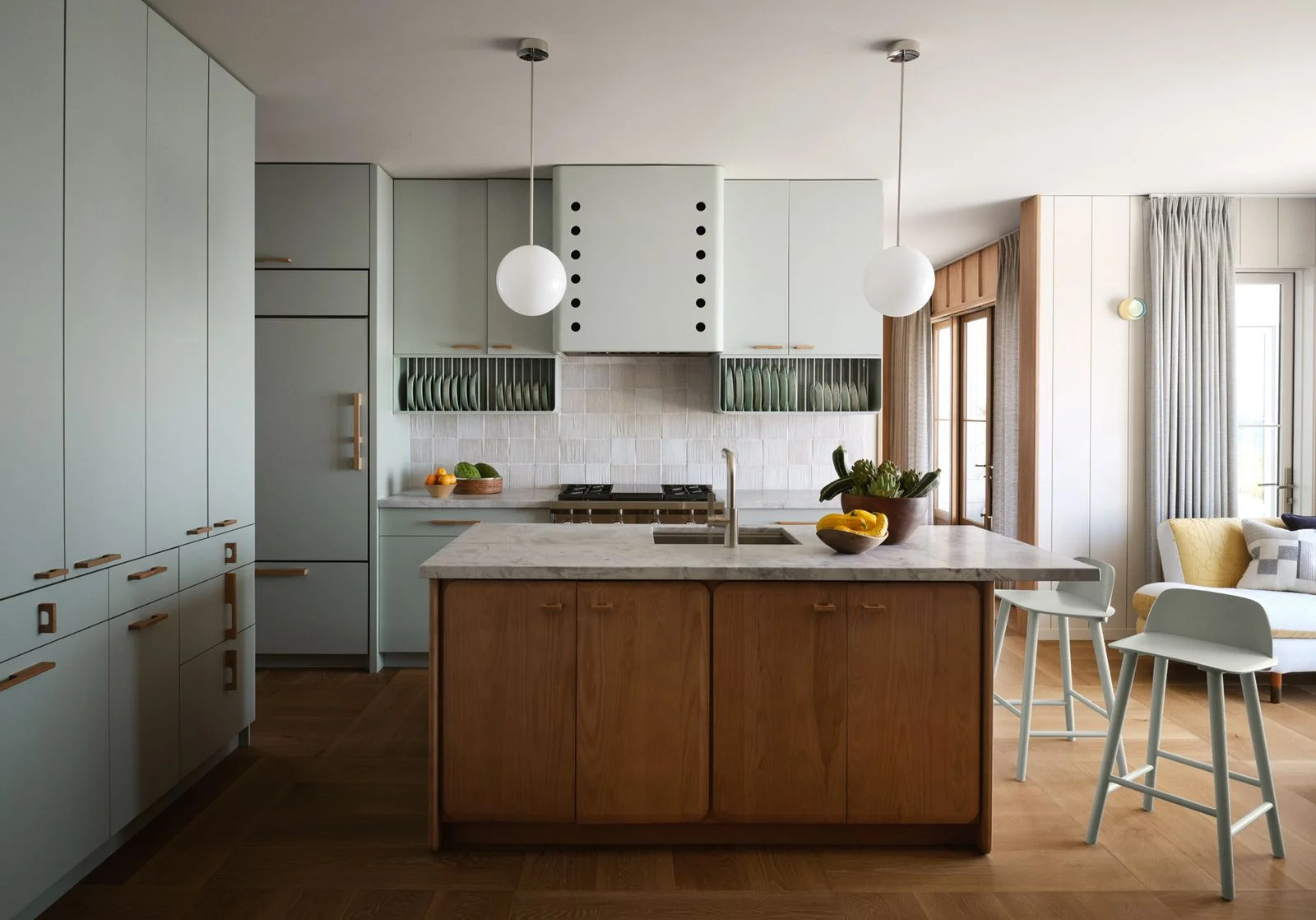
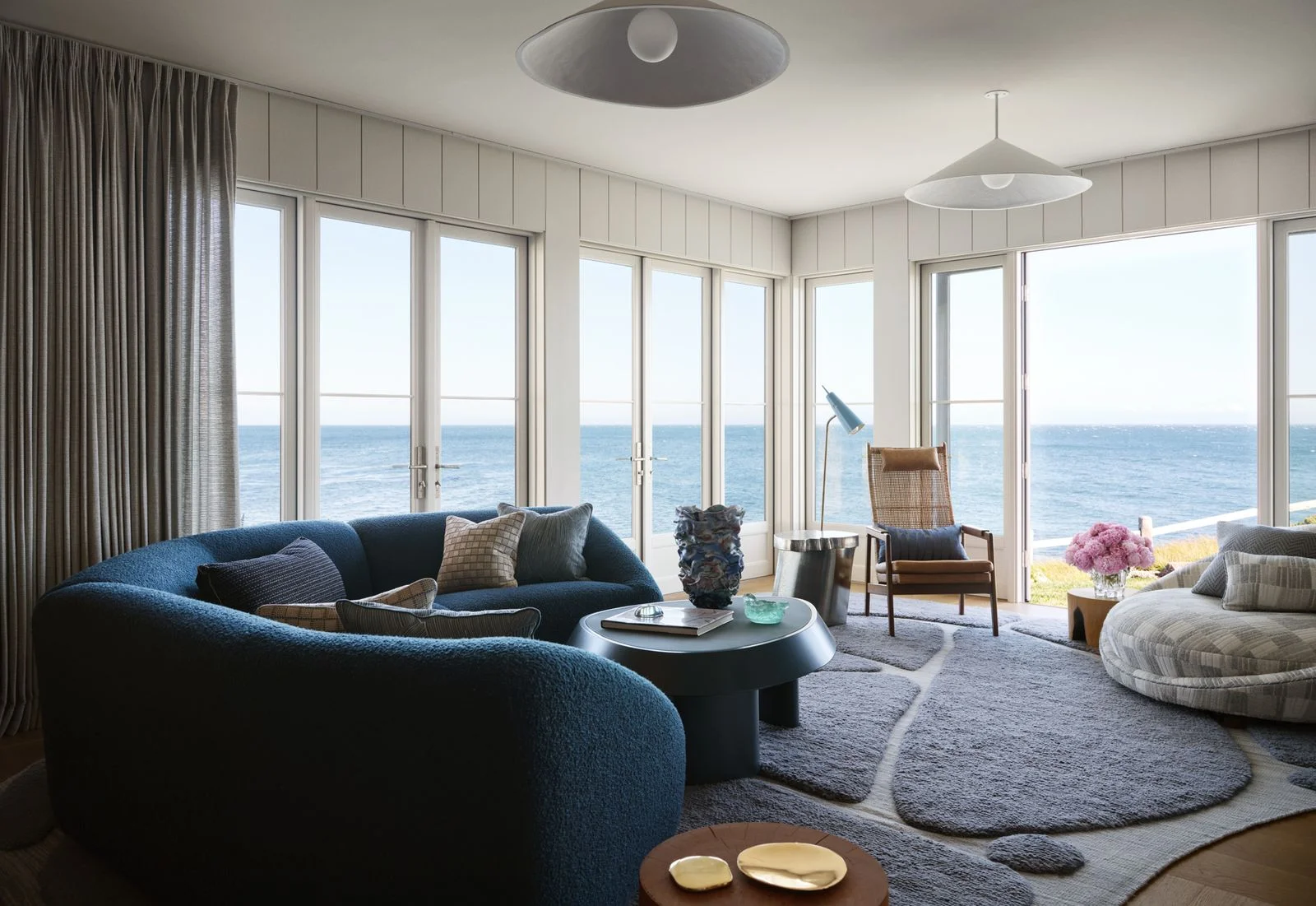
The interiors incorporate nautical references to Santa Cruz’s surf culture and fishing history, most evident in the palette of watery blues and driftwood grays—a nod to the Pacific visible from nearly every room. “The house is always bringing the outside in and acting as a frame for the bay,” says the homeowner. Indoors and out, tables take the shape of surfboards. In the living room, a raised-textured custom rug evokes nearby tide pools, while the metallic eglomise surface of a custom cocktail table recalls water splashed over rock. In the dining room, a sloped dowel detail on the overlapping vertical wall paneling echoes the movement of waves approaching shore (the undulating ceiling fixture does as well). In the kitchen, a pair of vintage midcentury settees are upholstered in custom quilt fabric mapping the Bay Area, complete with embroidered hearts marking beloved locations.
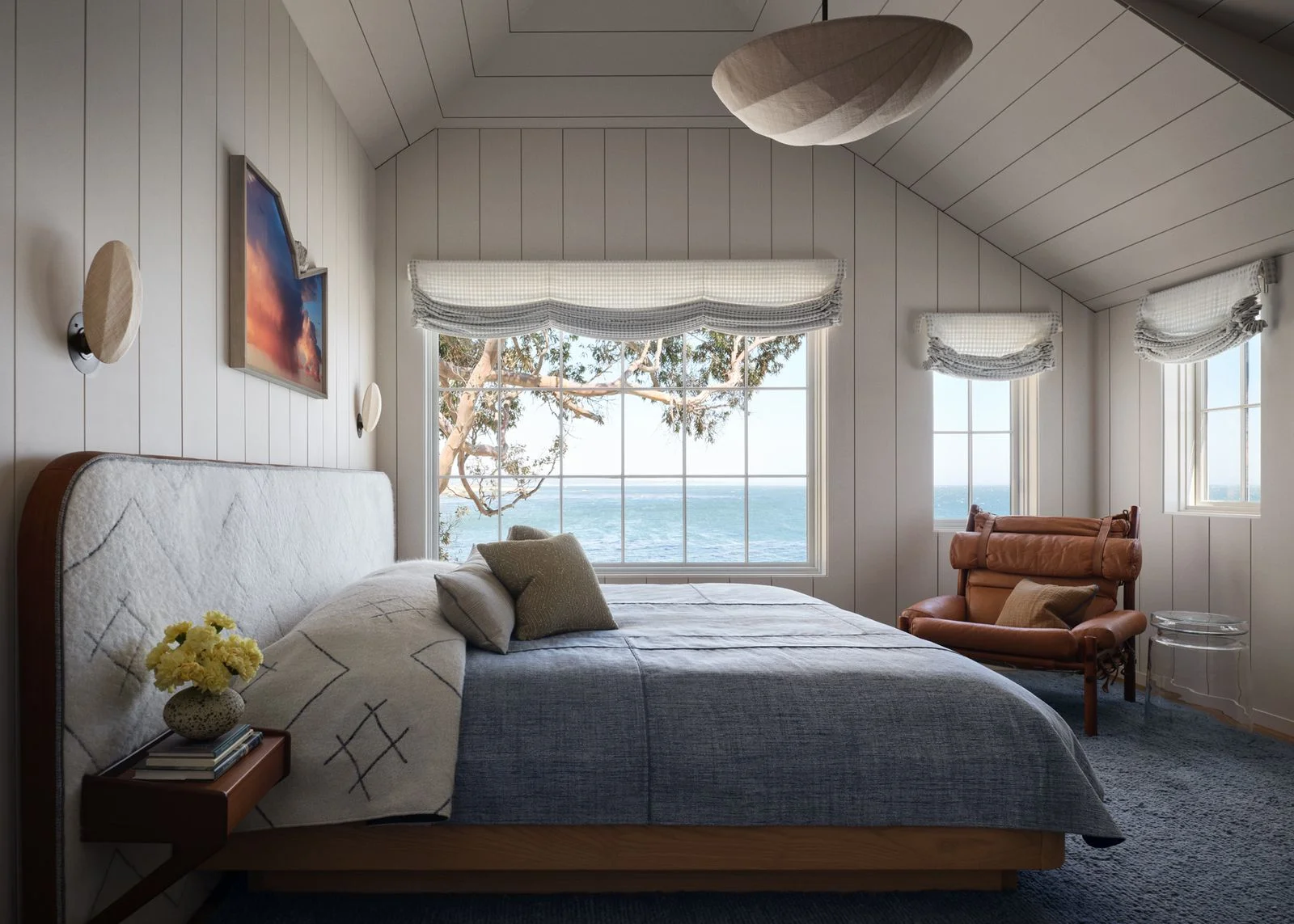
An even more obvious reference to the sea lies in the house’s compact architecture, which draws inspiration from boat design—out of preference and necessity. It is both a nod to the husband’s previous service in the Navy and a response to the large amount of wall space converted to glass. Yet the tight configuration needed to flow with balance and comfort—no small task for a family with four young boys—so the team opted for rounded silhouettes, as in the living room’s curvaceous sectionals, and what McGriff calls “Swiss Army knife-like compartmentalization” throughout. “We needed every corner to be easily navigable because the house is so small, and we needed that much more room for the kids to breeze by rather than get caught on sharp corners,” says Tompkins.
The homeowners say it can feel like standing on the prow of a ship when looking out toward the horizon, particularly from the terrace off the primary suite, where water stretches along three sides of the property. From there and elsewhere around the house, the family watches as whales breach, dolphins surface, surfers catch breaks, and neighbors stroll the promenade. The house places them both within the rhythms of the community and slightly apart from it—connected, yet quietly removed. They are grateful for every moment, however long it lasts.