If you don’t have a washer at home, we’re willing to bet you don’t have a dedicated room for drying, either. Figuring out how to hang laundry in small spaces is difficult—and clothes horses or drying racks are more often than not an eyesore. The task only gets harder when you consider air circulation, room climate, and design in equal measure. But we promise there are functional solutions that fit naturally into the furnishings, even with just a few square feet to spare.
First, we’ll take you through the best rooms for drying laundry—then, we’ll get into some space saving hacks that you can build into your place.
Rooms for hanging your clothes
There are lots of considerations that come into play when drying laundry: air circulation and temperature, of course, but also a given room’s utility (in other words, how annoying will it be for you to navigate a heavy-traffic room with a drying rack in the middle?) A few places to bear in mind:
Living rooms often have the best air circulation and the highest ceiling heights. Both of these factors promote even drying—but the same time, a living room is usually the most visible place in a home. Integration is therefore crucial: A minimalist drying rack can look sculptural if it is deliberately positioned. If you have an open floor plan, you should make sure to keep sight lines clear. We recommend placing a drying rack in one corner, or even as a temporary room divider. The more deliberate the position, the less the clothes horse looks like a makeshift solution.
Bedroom climates react more sensitively, usually because they’re more closed off—and damp laundry noticeably increases humidity, which can be particularly problematic in small or poorly insulated rooms. However, if you cannot avoid drying clothes in your bedroom, try to ventilate the room consistently and keep the damp clothes a sufficient distance from the bed and curtains, so as to not encourage mold.
In the same vein, a bathroom is ideal for hanging laundry, as long as you ventilate it regularly. In windowless bathrooms, on the other hand, additional moisture collects quickly and the drying time is significantly longer. We recommend the bathroom for a few items of clothing, but not for complete machine loads.
The kitchen is an underestimated option. This is because regular ventilation during cooking often results in excellent air circulation. But make sure your clothes keep their distance from the stove and work surfaces, to prevent odors or grease particles from settling into their fabric.
Space-saving solutions
In small apartments in particular, it’s worth considering alternatives to the classic drying rack, which will remain bulky even when folded up. Many of the clever solutions we outline below are vertically aligned, or can disappear completely when not in use.
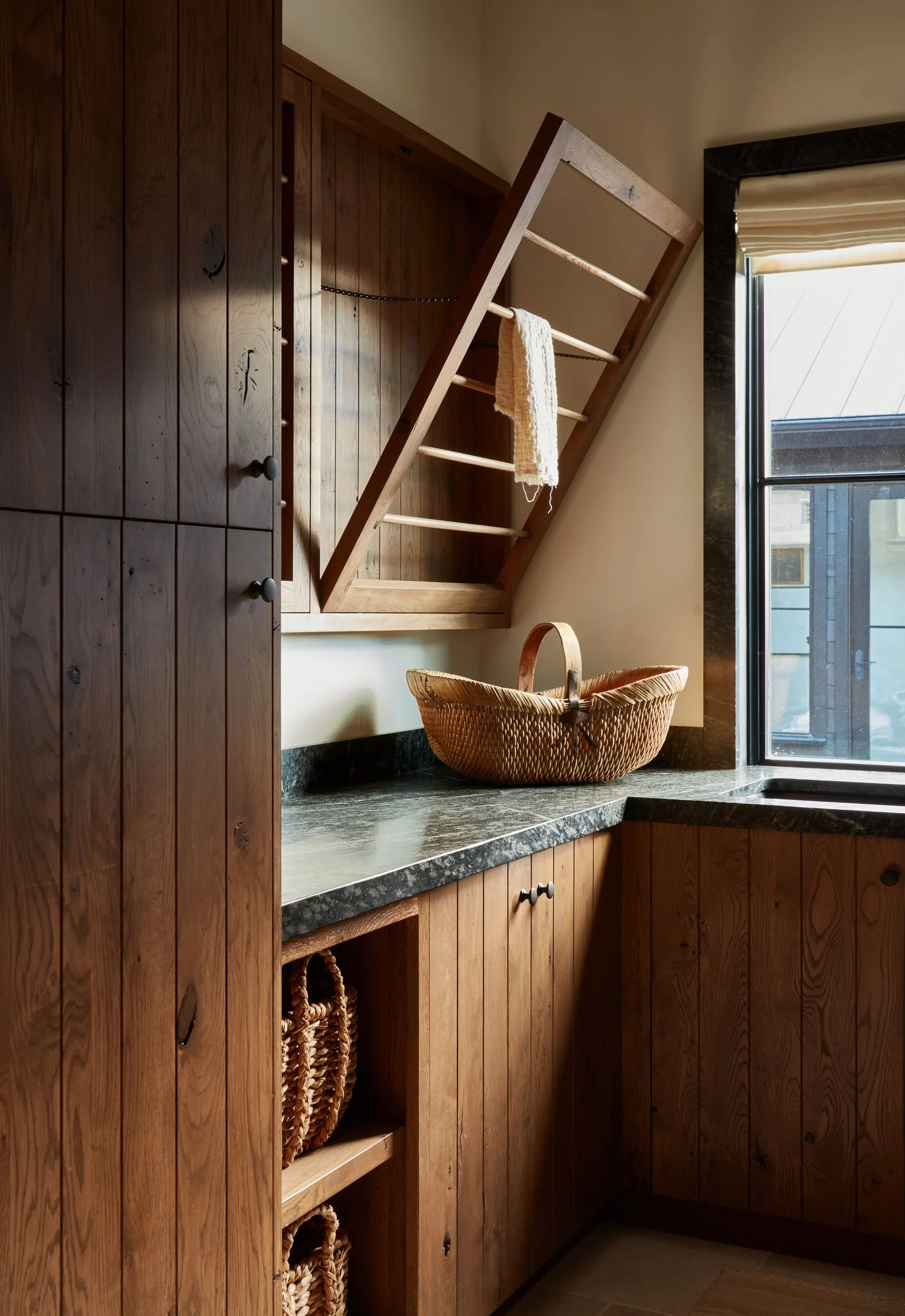
Folding wall-mounted dryers are among the most efficient options for small rooms. Sort of like a fold-out desk, they are permanently mounted and can be pulled out as required. When closed, they lie very flat against the wall and take up hardly any depth. They are particularly suitable for narrow rooms such as corridors, alcoves, or areas behind doors. It is important that they are mounted securely—especially on old walls, where you should make sure to use anchors—and hung in a place with sufficient air circulation (ideally, they should be installed close to windows or on interior walls).
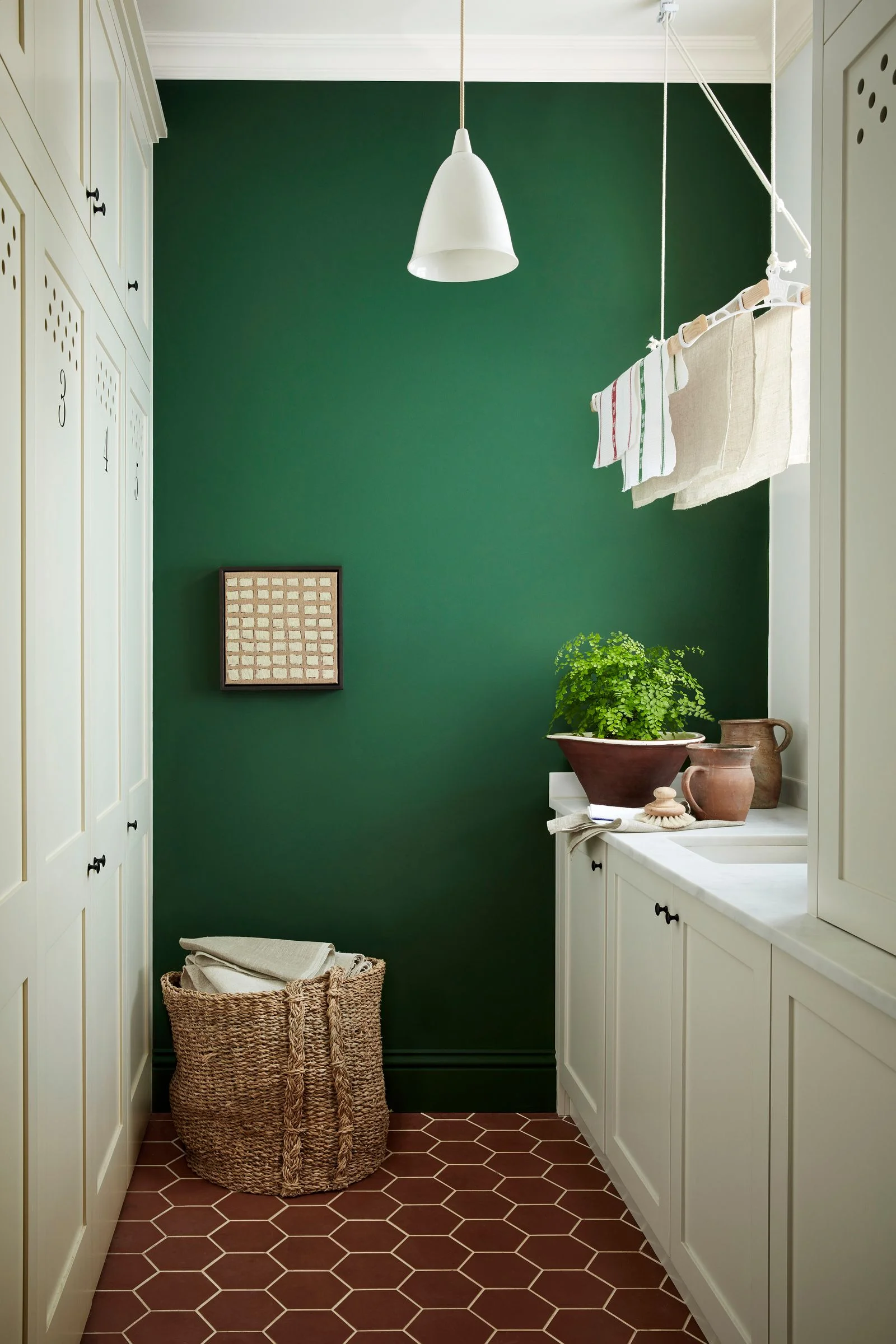
Lofty heights can be used when there is a lack of floor space. Ceiling dryers with cable pulls or rail systems can be pulled down as required and then pushed back up to the ceiling. Floors can remain free, walkways won’t be restricted, and laundry will hang out of direct sight. This solution is particularly suitable for old apartments with high ceilings, or for rooms that are not used permanently as a place to stay—like powder rooms or mud rooms.
Classic free-standing dryers, like clothes horses, can also work—if they are chosen carefully. Narrow, simple models with clear lines look better than expansive designs with many foldable elements. The decisive factor is the rack in proportion to the room: in very small apartments, compact models with several levels often make more sense than wide-hinged dryers. In addition, the model should be easy to fold up and stow away to save as much space as possible—behind a door, for example, or under a bed with sufficient floor space.

Solutions that are integrated into the architecture from the outset are particularly elegant. Niches can be fitted with extendable rods or hinged elements. And under pitched roofs, custom-made hanging systems can be adapted to the existing geometry. Ventilated areas for drying can also be provided in fitted wardrobes or dressing rooms—but make sure there is sufficient air exchange.
Think outside the box—ladders can also serve as towel rails, and narrow rail systems can act as coat racks. Make double use of existing structures like room dividers, and always pay attention to the balance between function and spatial effect: the more minimalist the system, the less attention it’ll draw to your wet laundry.
Quick tips for hanging laundry
As mundane as the process may seem, incorrect drying can damage your textiles and your home in the long term. Bear these four points in mind:
If laundry hangs too close together, the drying time will be significantly longer. Keeping garments a few inches from the wall, and with sufficient air circulating between each individual item.
Make sure you ventilate regularly to quickly move moist air outside. “Shock ventilation” a is a German method of fully opening all windows and doors for 5-10 minutes (twice daily) to rapidly exchange indoor air with fresh outdoor air. We recommend this over keeping your windows only ajar all day.
Solid wood, parquet, textile wall coverings, and carpets react sensitively to the increased humidity that comes from wet clothing. Try not to dry your clothes in the immediate vicinity of sensitive surfaces.
Anyone who regularly dries indoors should consider a dehumidifier. Modern appliances work efficiently and reduce the risk of moisture damage.
This how to hang laundry in small spaces guide was originally published in AD Germany.