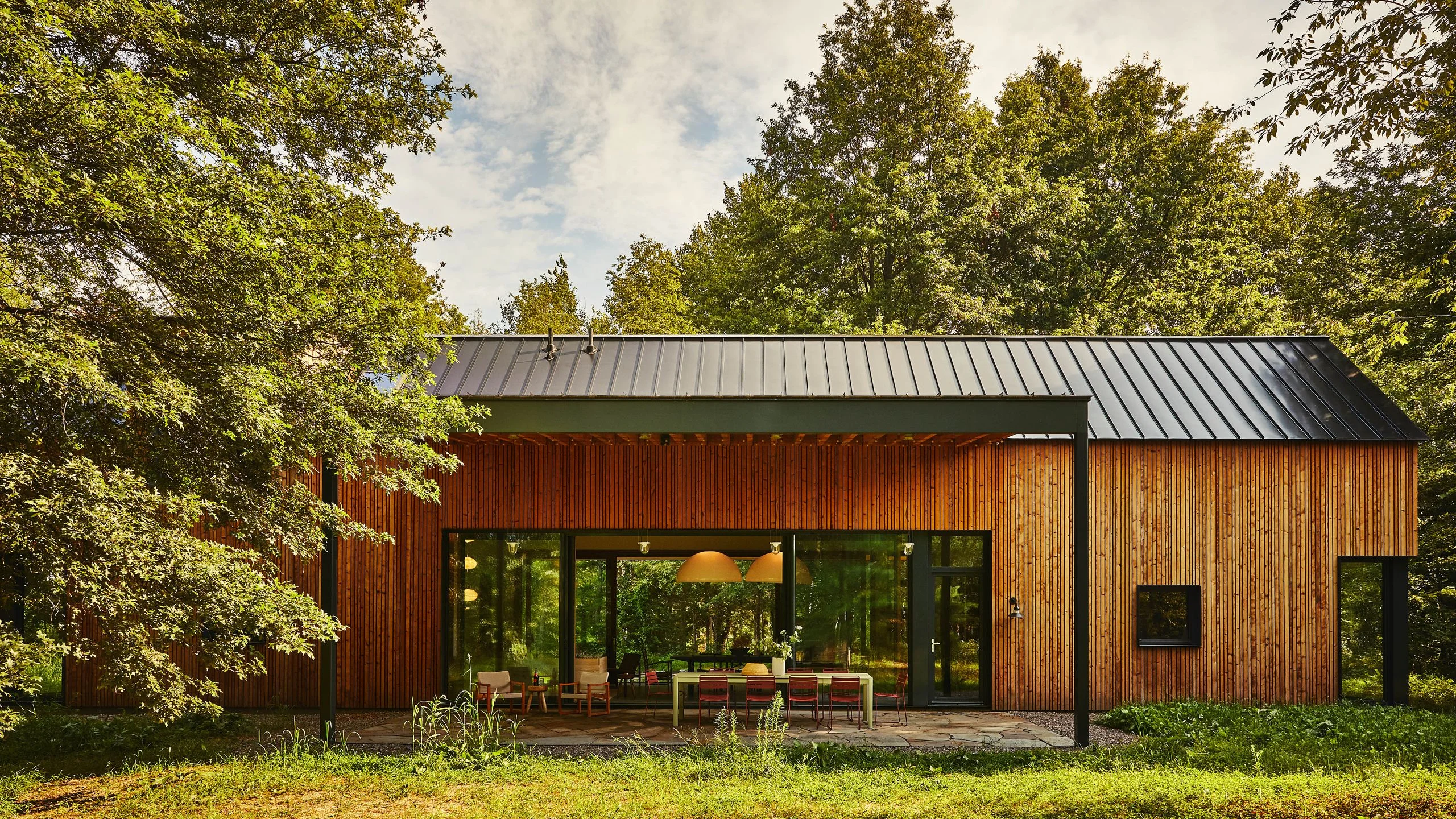
For one Hudson Valley couple, building a guesthouse and writer’s studio was less an expansion than an expression of values. They envisioned a refuge for artists, writers, and fellow creatives—defined as much by environmental rigor as by romance. The new structures would need to settle gently into the landscape while meeting passive house and net-zero standards, adhere to a strictly vegan material palette, and channel a restrained Japanese-Shaker sensibility.
The studio, the homeowners say, is deliberately solitary—a contemplative space designed to foster creative work. The guesthouse, by contrast, was imagined as an extension of family life. “For the guesthouse, it was important to us to create a place where far-flung friends and family could come stay and get to know our children as they grow up,” the husband explains. “It’s also a way of sharing this beautiful area we’re so lucky to live in.”
To translate their vision into built form, the couple turned to Hudson Valley architecture firm North River. The challenge of the two-and-a-half-year project, says principal Chris Ruel, was to insert two new structures into the side yard without competing with the existing home—allowing them to “fall away into nature” while still feeling meaningful for guests.
Working alongside partners Samantha Roesemann and Miles Dandrew, Ruel designed both buildings to passive house standards: net-zero, all-electric, and built for long-term durability. “We’re trying to build homes that not only last 150 years because the quality of the build is beyond, but that also have a minimal impact on the environment for that entire lifespan,” Ruel says. Thermally modified wood siding and powder-coated aluminum trim help the volumes recede into the forest. “What we love about passive houses and net-zero homes is not that they have a badge or that there’s some cachet to it, but that when you’re in one, it’s the most comfortable living experience you can have.”
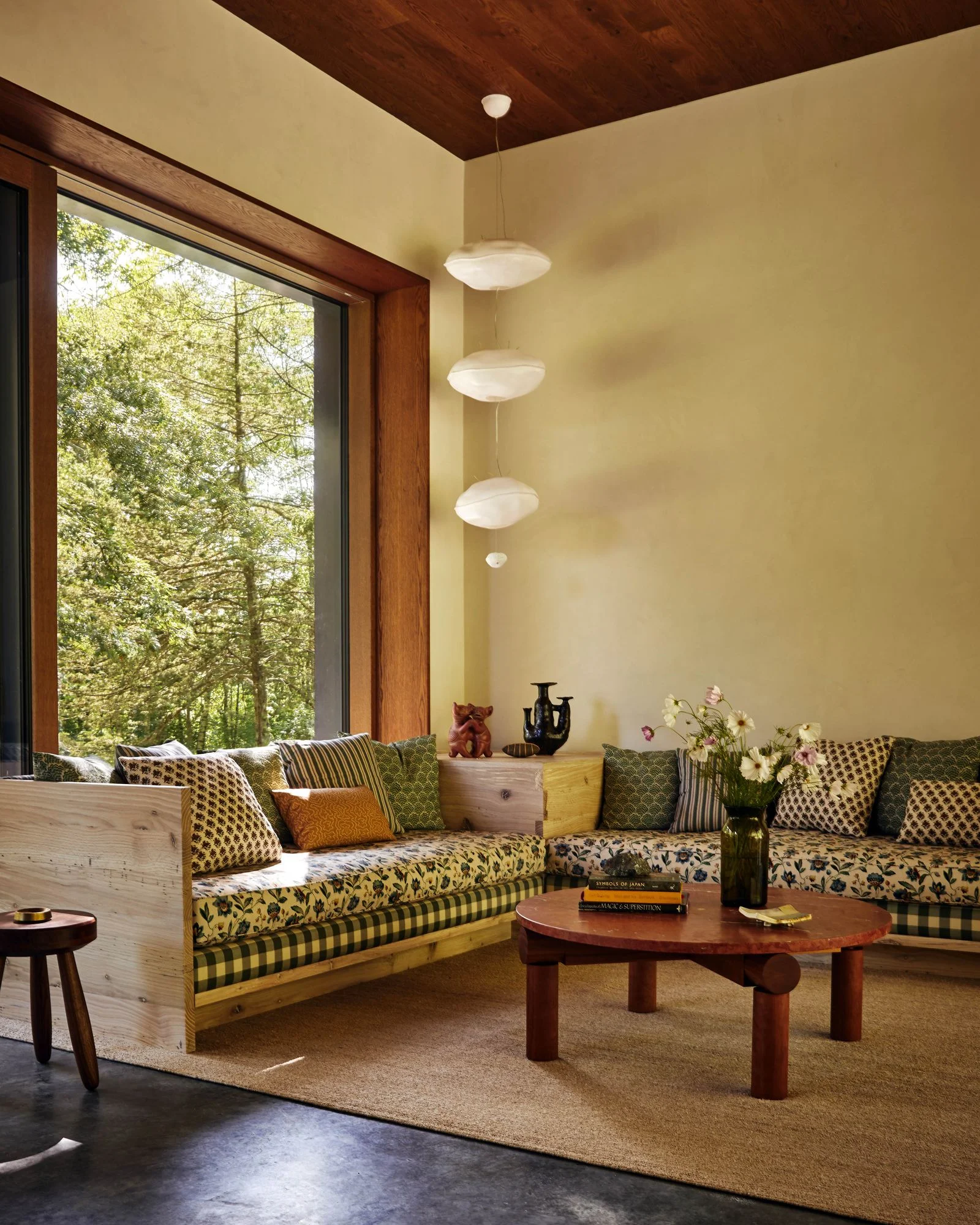
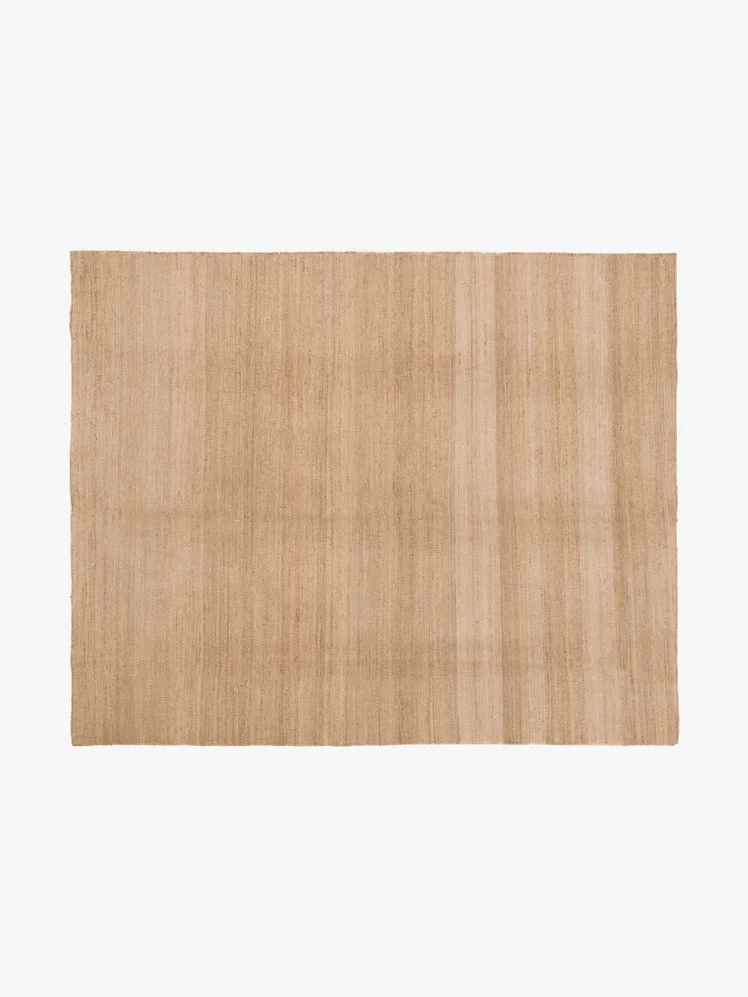
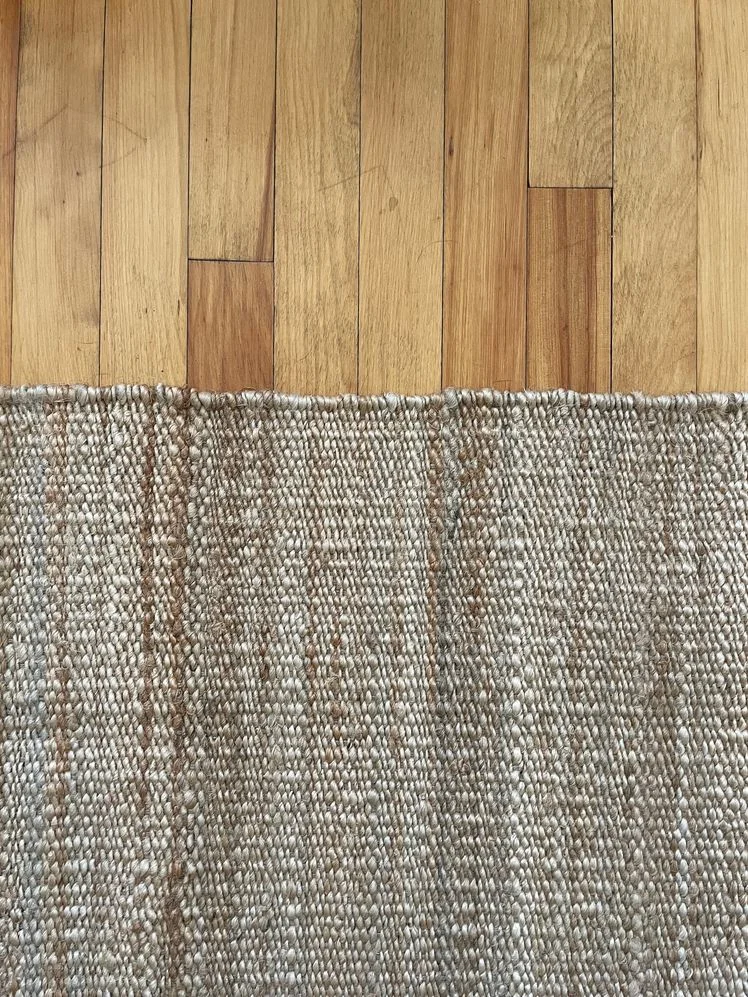
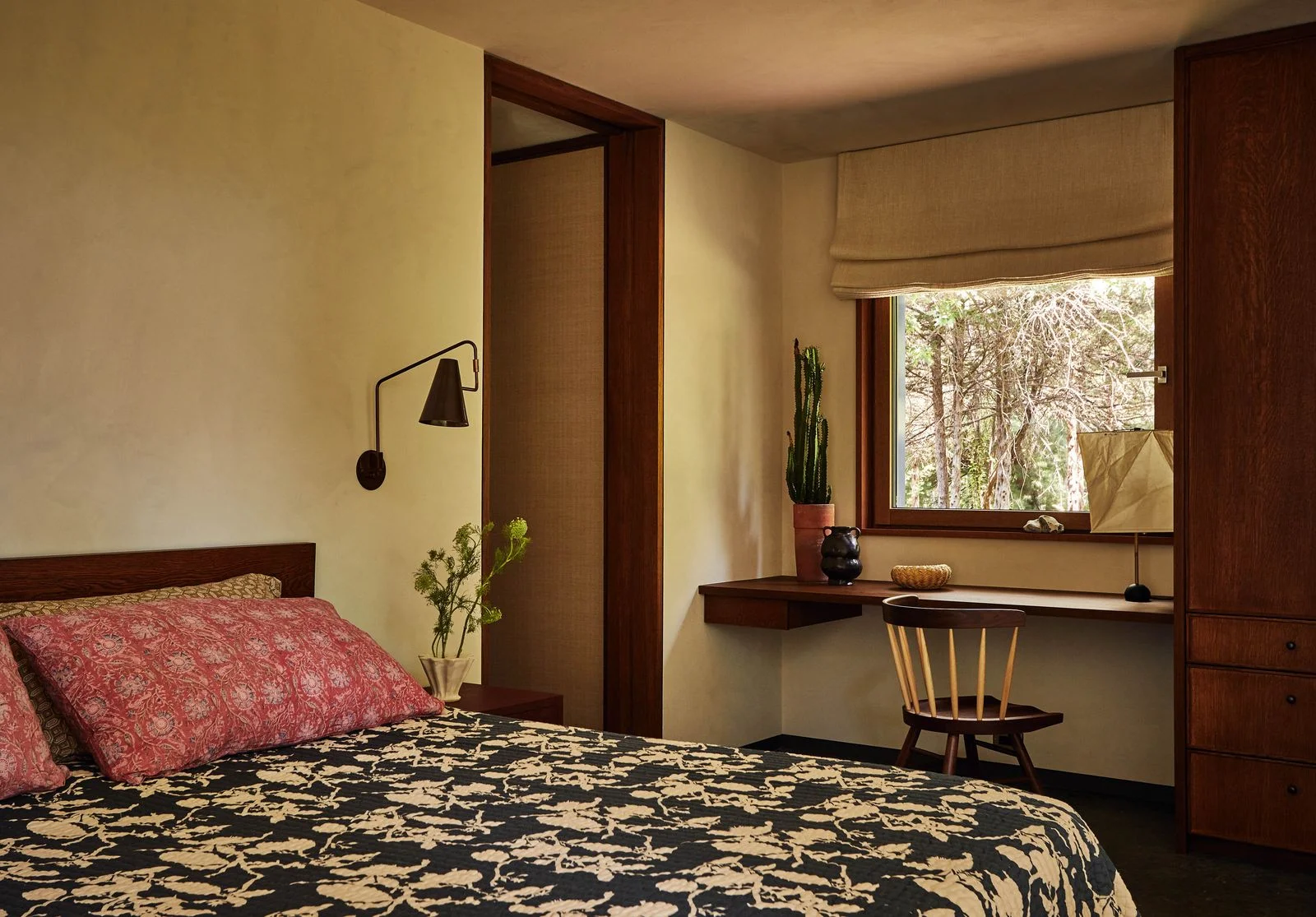
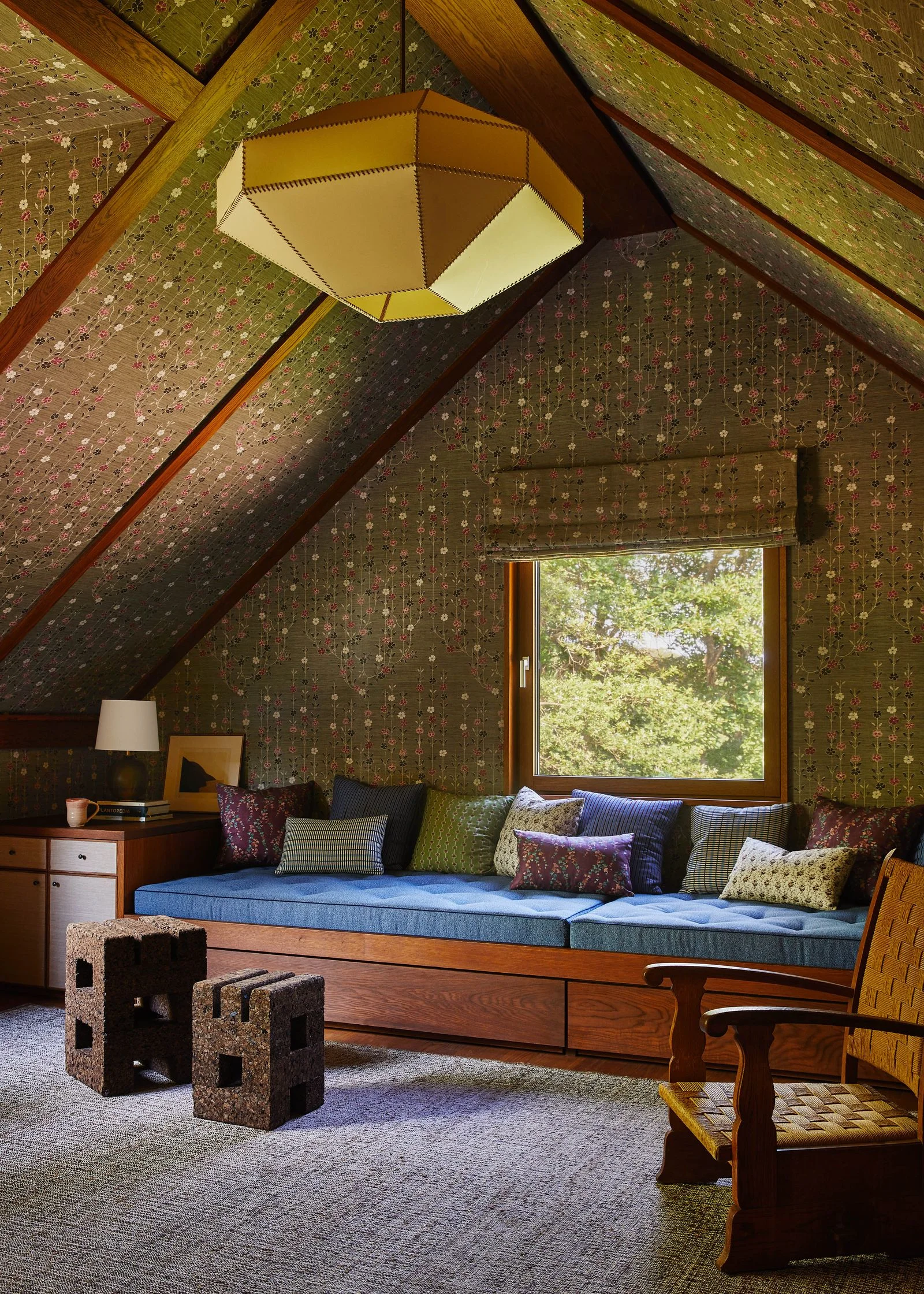
For the interiors, the homeowners reunited with Frances Mildred, the architectural and interior-design practice founded by Lauren MacCuaig and Brian Papa, who had previously collaborated with them on their Manhattan home. The goal was to make North River’s crisp architecture feel lived-in—all while sticking to a strictly vegan material palette. “The question became: ‘How do we bring warmth into this kind of restrained architectural language that North River has created so elegantly?’” MacCuaig says. “We really had to research new materials that would recreate the feeling and comfort that animal products like down and wool give you,” the designer continues.
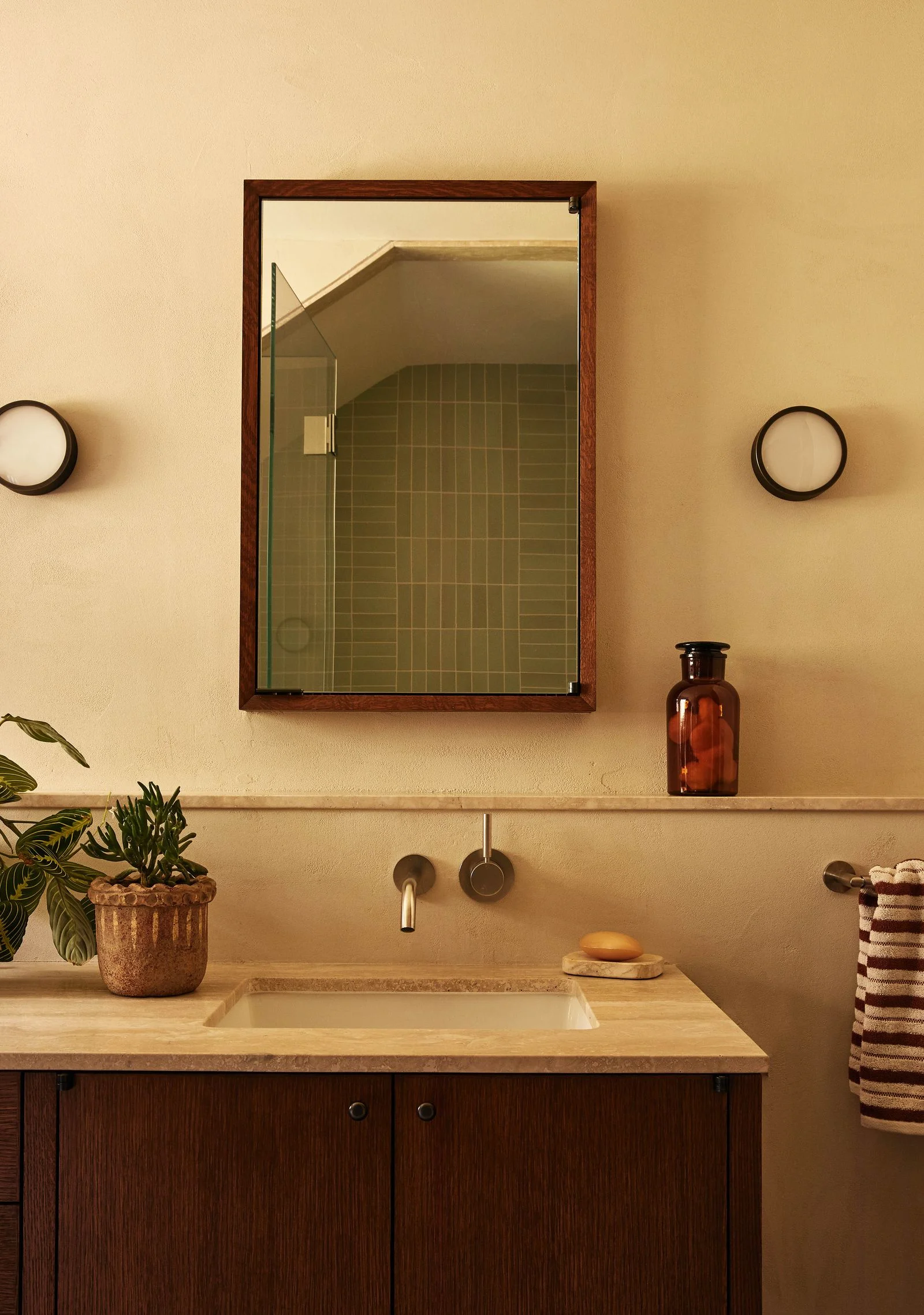
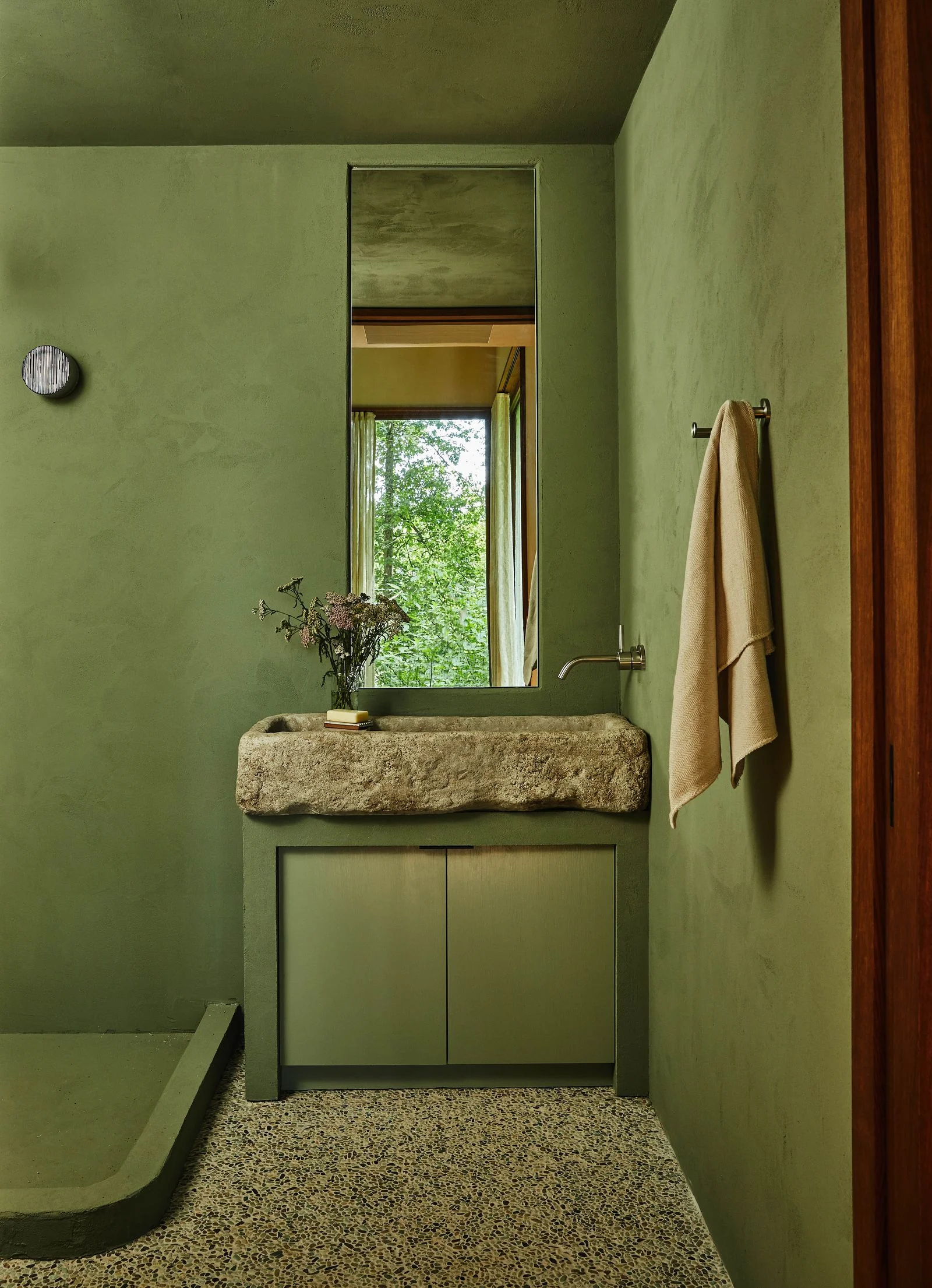
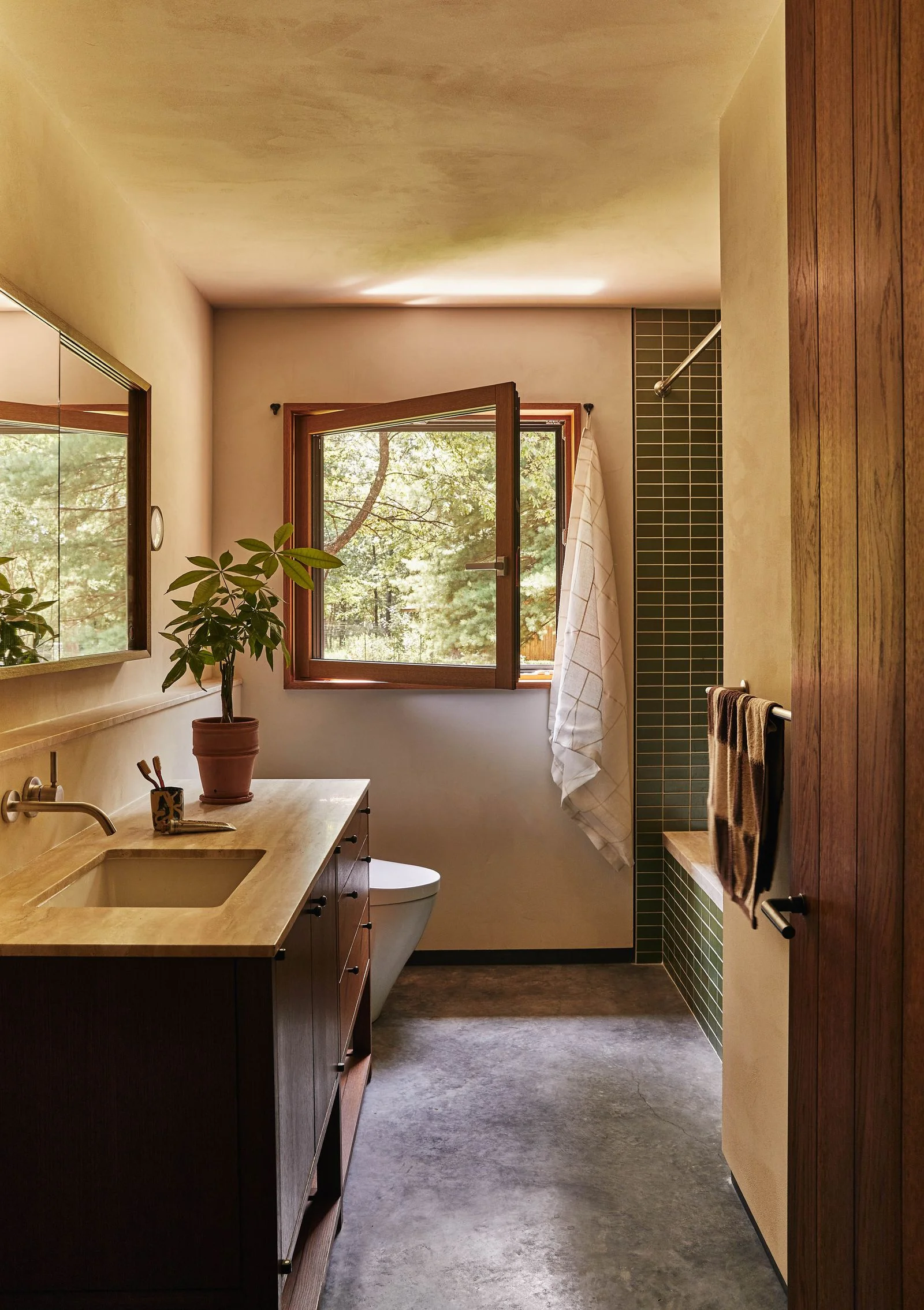
Material shifts carry the narrative. In the studio bathroom, a deep-green plaster coats the walls. “I think enveloping small spaces with rich color really actually makes the space feel more expansive,” MacCuaig says of the saturated hue. Meanwhile, in the two guest baths, white travertine and Heath Ceramics tile were chosen not to repeat exactly but to feel “very well coordinated,” she says, shifting subtly from room to room rather than reading as overly matched.
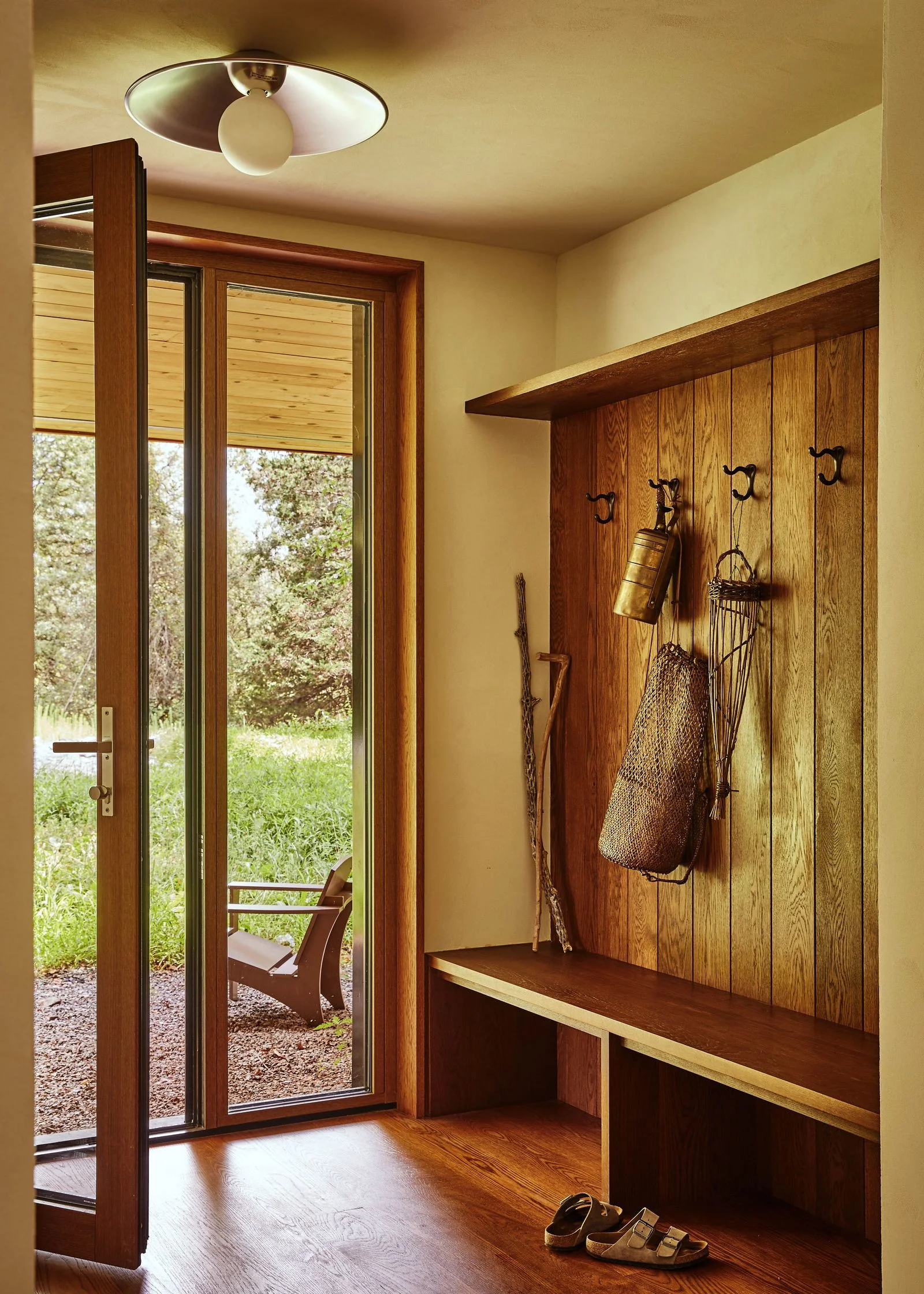
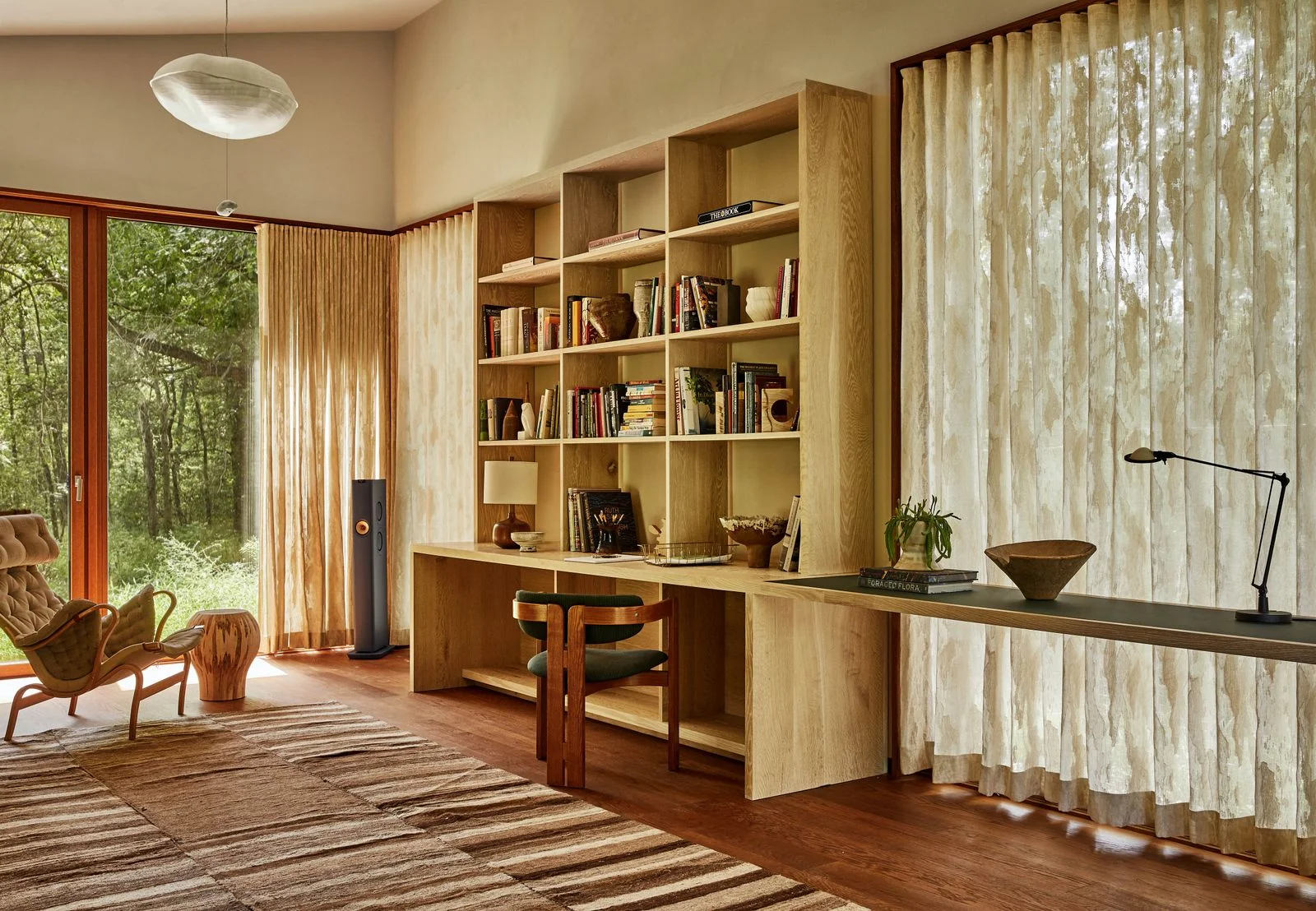
Inside the writer’s studio, a custom desk designed by Frances Mildred and built by Daniel Kent takes center stage. “Just looking at it at a glance, it looks very simple,” MacCuaig says. “But the proportions and details were actually quite precise and really beautiful.” Even the studio’s entry, beneath a Workstead flush mount, was approached pragmatically. “This is Upstate, where weather changes throughout the seasons pretty dramatically,” the designer explains. “So there was a lot of talk about where to place wet muddy shoes or your snowy boots—how do you take that all off without damaging the walls or bringing the mud into the main space?”
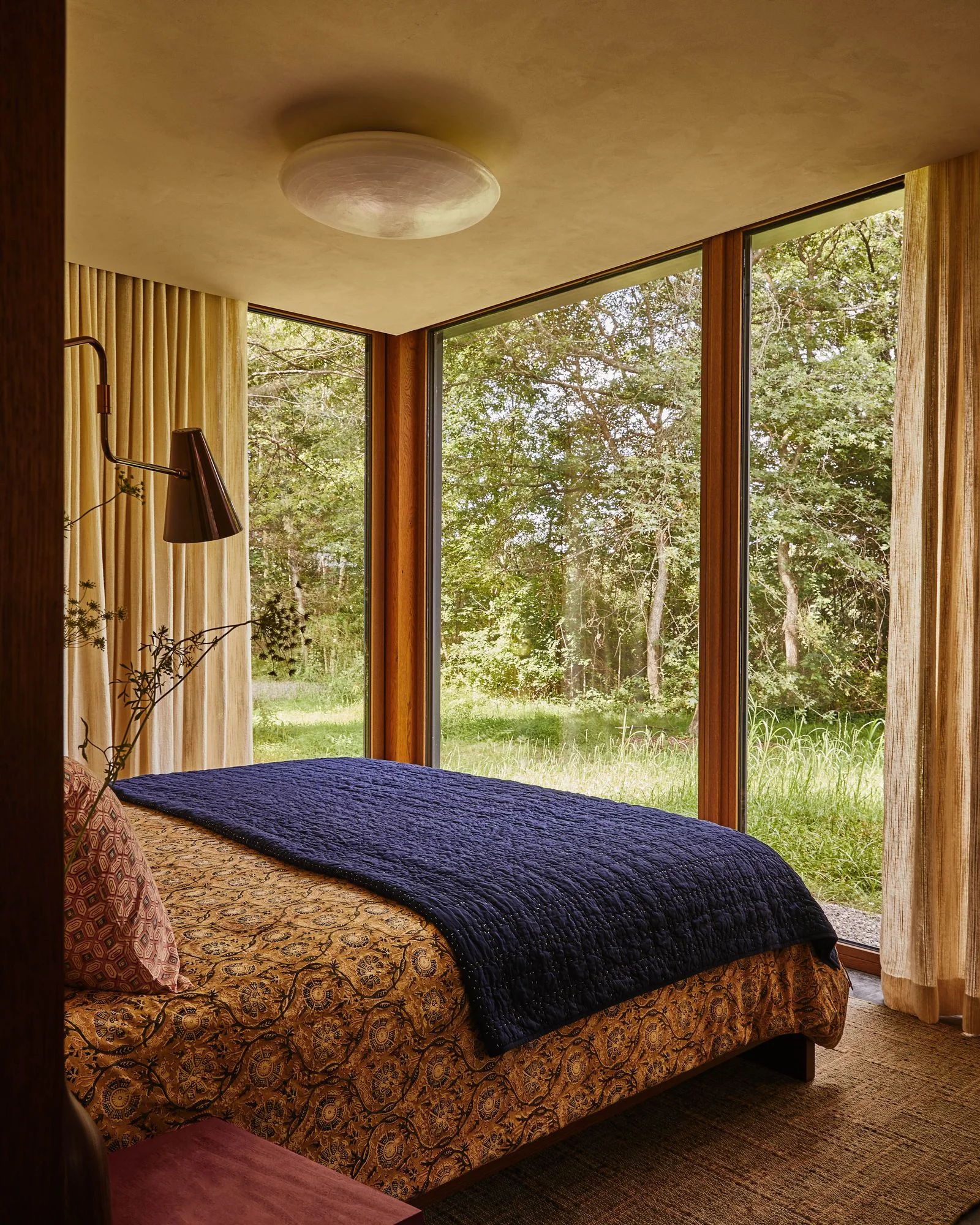
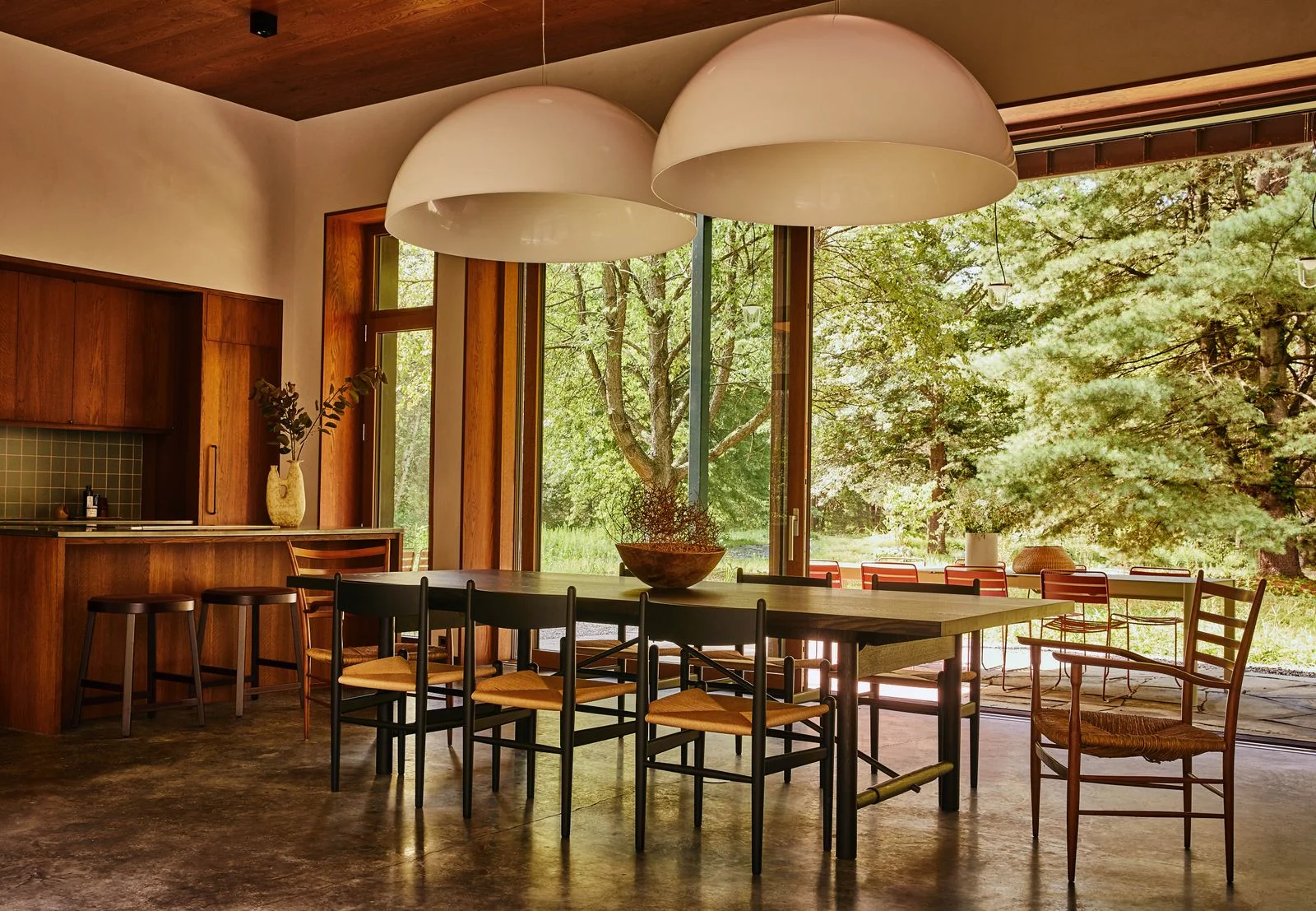
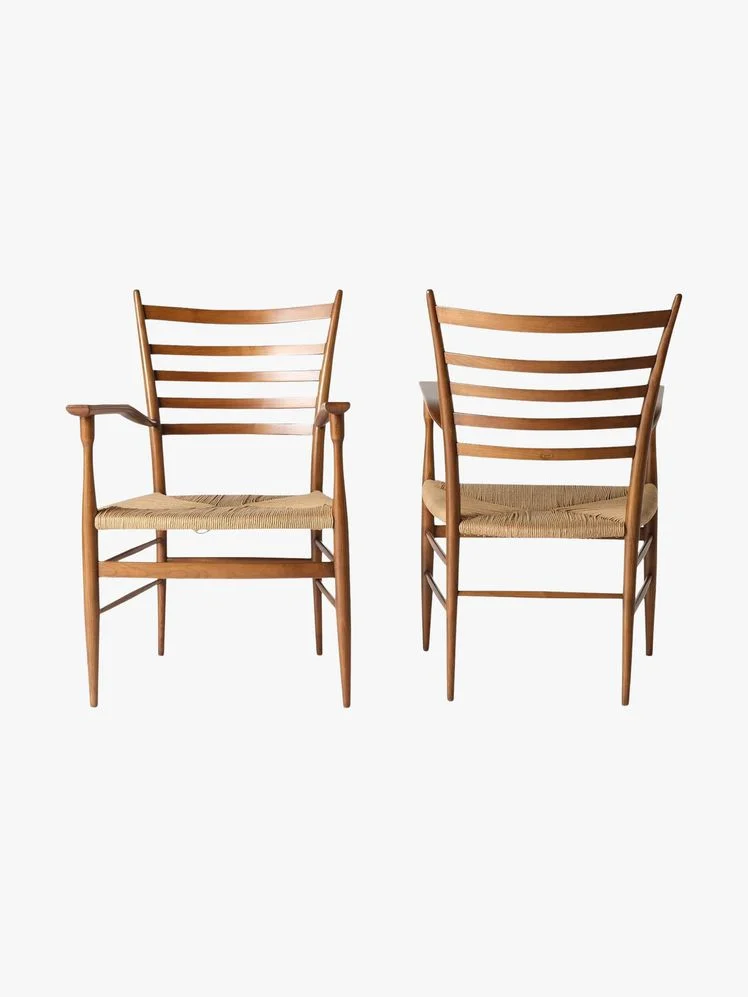
That same clarity plays out in the social spaces. In the dining area, where a Michael Robbins table in ebonized white oak is paired with Carl Hansen and vintage Paolo Buffa chairs, the setup is intentionally flexible. “This space functions as both a place where people can gather [for a meal] inside, but they can also clear out the center for a larger group,” MacCuaig says. The oversized Oluce pendants are calibrated to feel right whether everyone’s seated—or mingling.
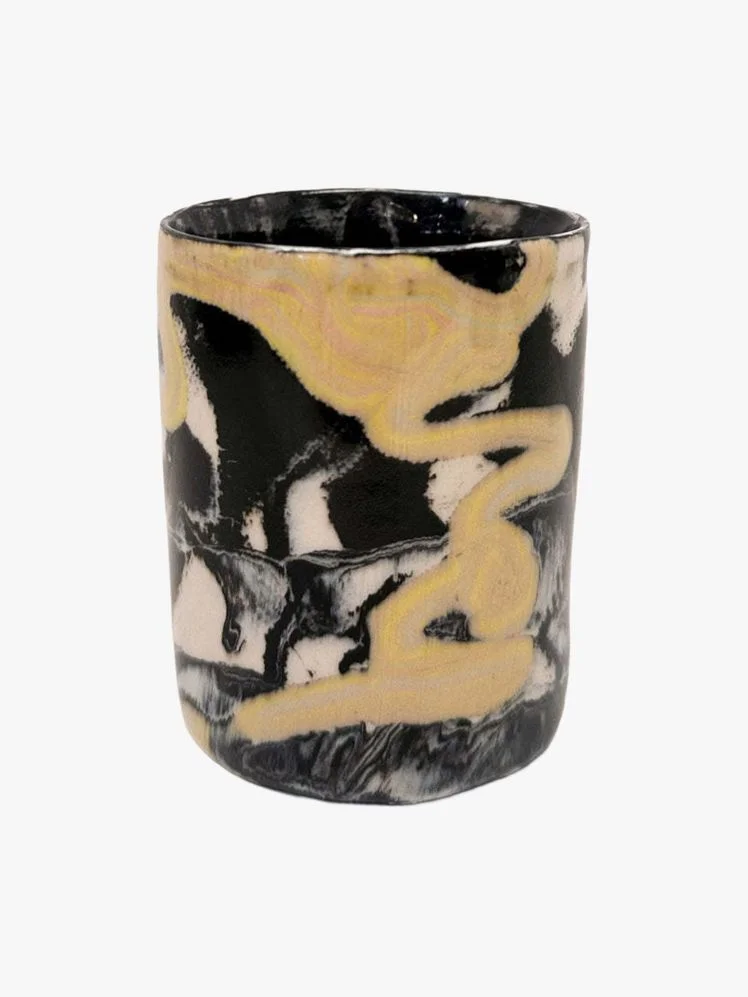
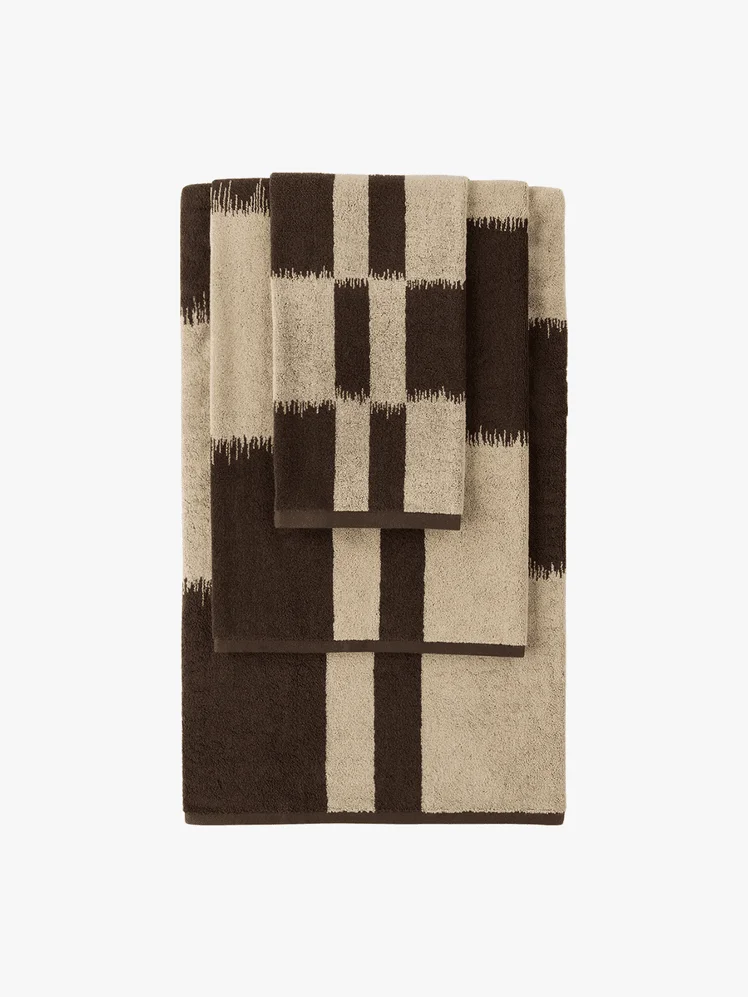
Now, the studio invites solitude, while the guesthouse encourages gathering. What unites them is the seamless dialogue between North River’s performance-driven architecture and Frances Mildred’s tactile restraint. In balancing precision with personality, the team created a compound that feels as considered as it does designed to be used.