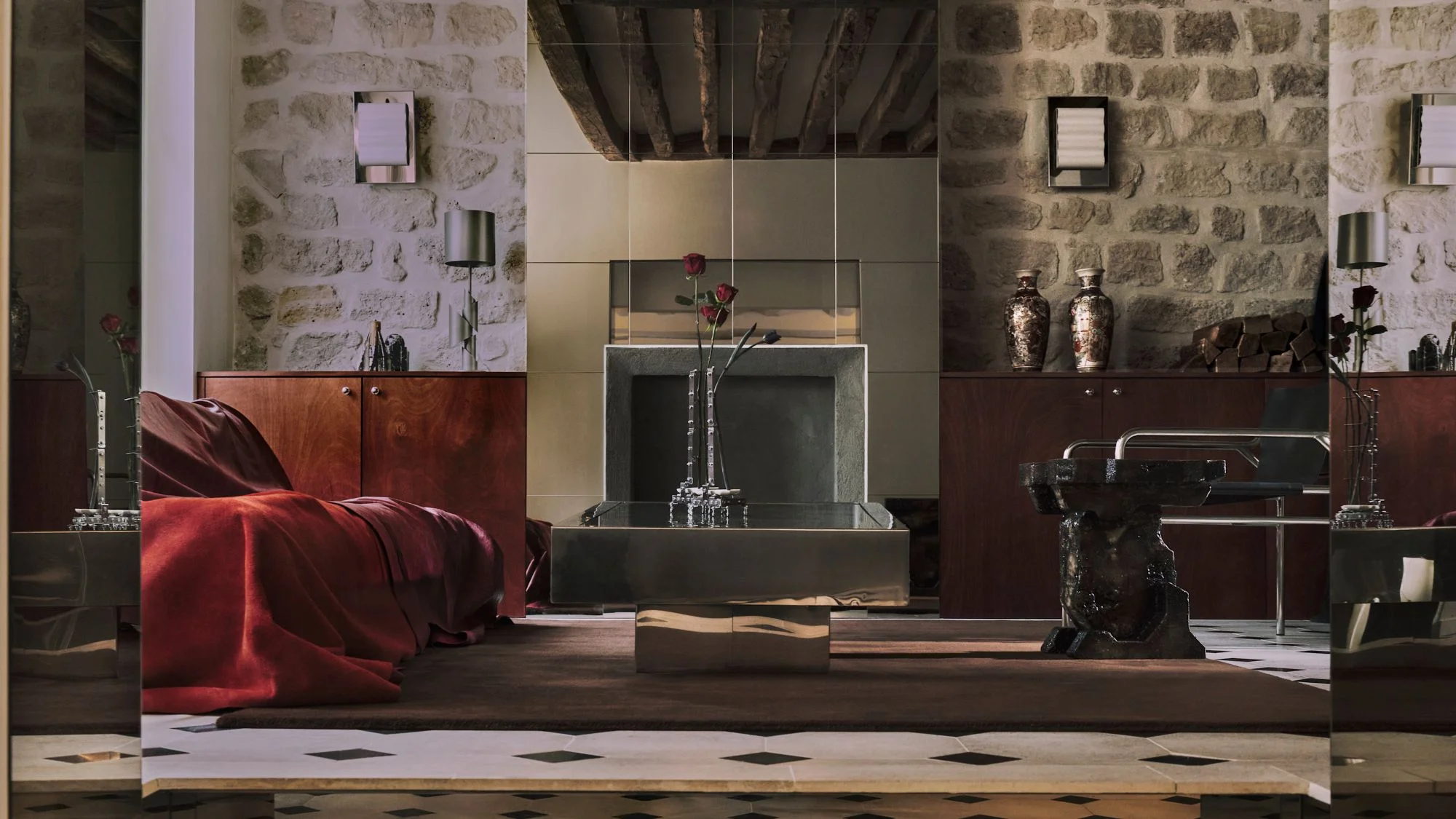
Just a few steps from the Place des Vosges, a 14th-century building looks like a typical Marais structure: half-timbered, stone-walled, and decidedly Parisian. But once you step inside, you can tell some interventions have been made over the past 700 years (as one would hope). “There were originally two separate buildings that were later joined together. It was one of the main challenges of the space," says architect, designer, and artistic director Jérémy Chaillou, founder of the multidisciplinary firm Chaille. “And it was also the starting point of our design.”
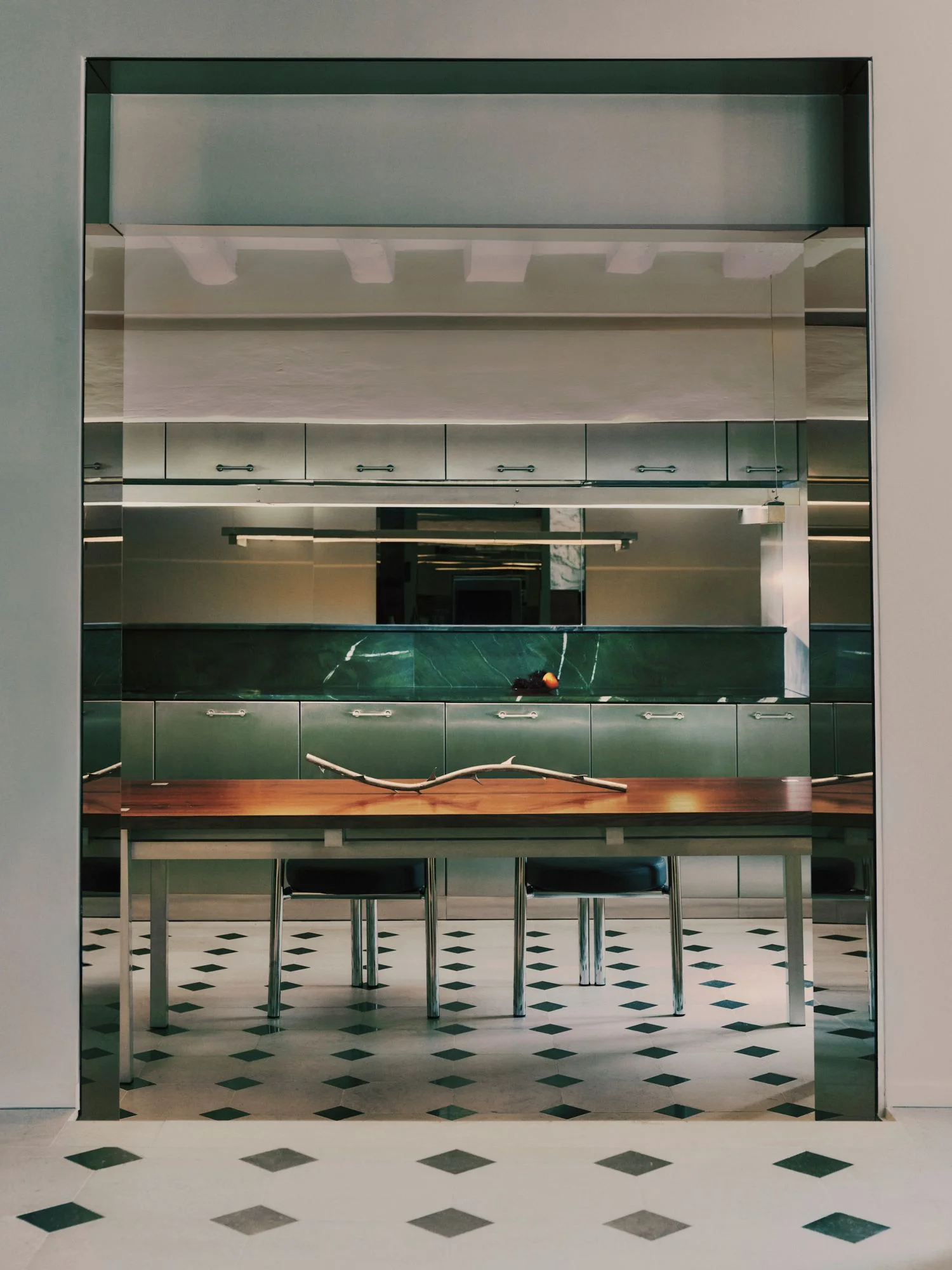
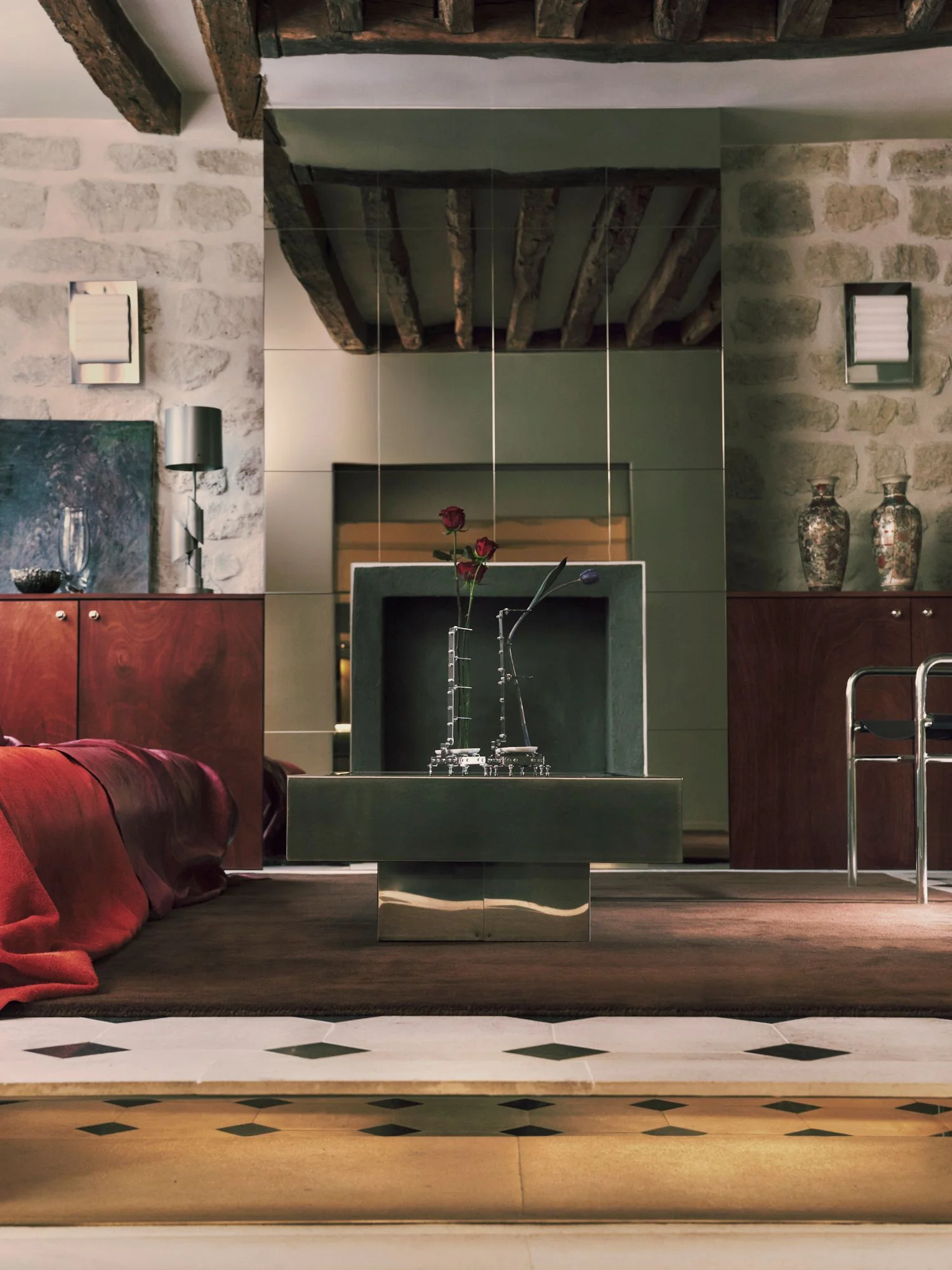
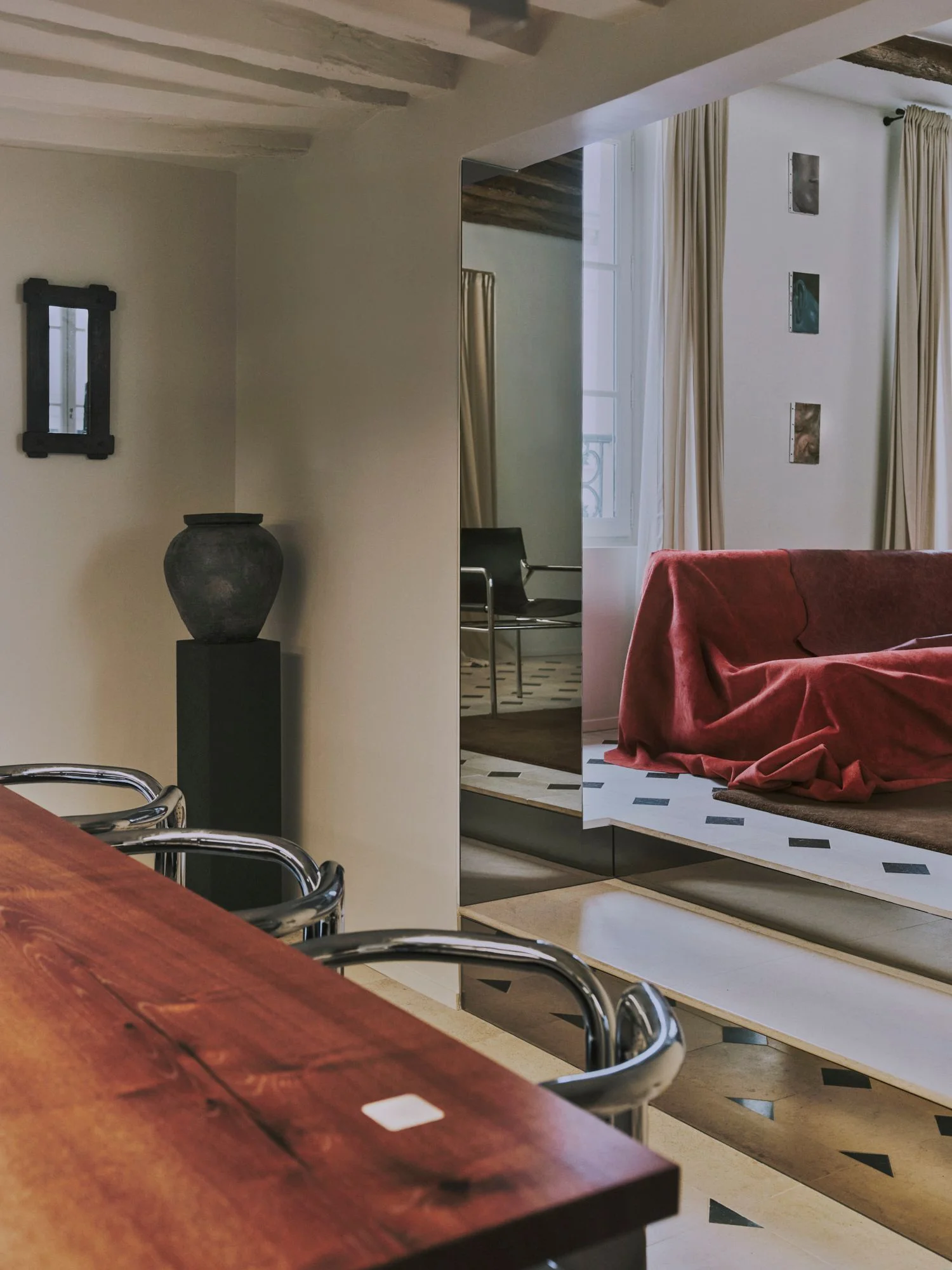
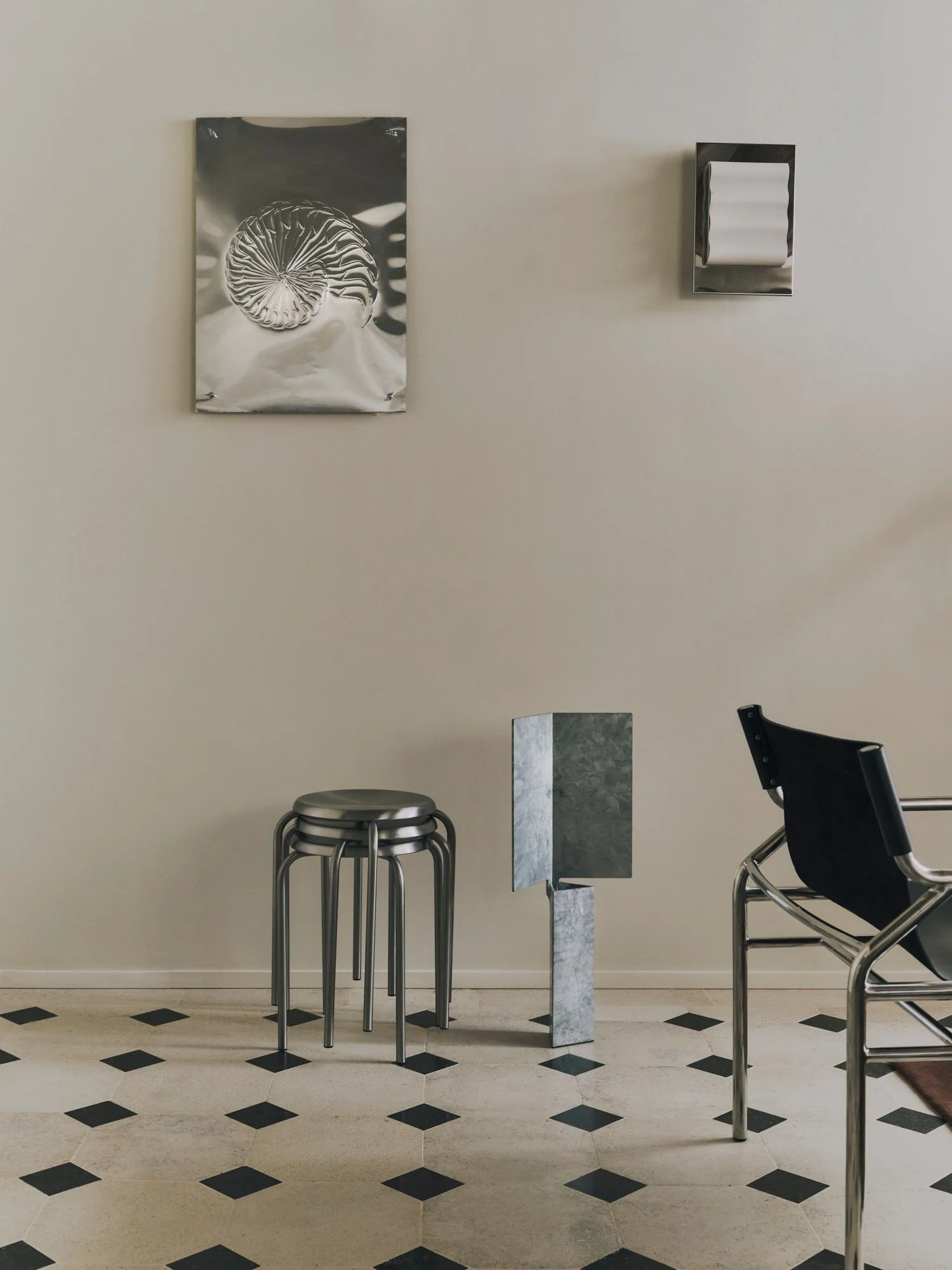
The line where the two buildings meet—marked by a mirrored step—runs from the kitchen to the dining room, and then crosses the living room to a fireplace. It's the main axis of the apartment, and is what Chaillou decided to emphasize in his reimagining of the space. Now, various materials run along its length, mirrors meet lime wash on bare walls, and cabochon floors boast limestone from France’s Nivernais region. Chaillou kept the ceiling beams exposed, a reminder that they have witnessed centuries of life unfold below.
Stone, steel, and mirrors
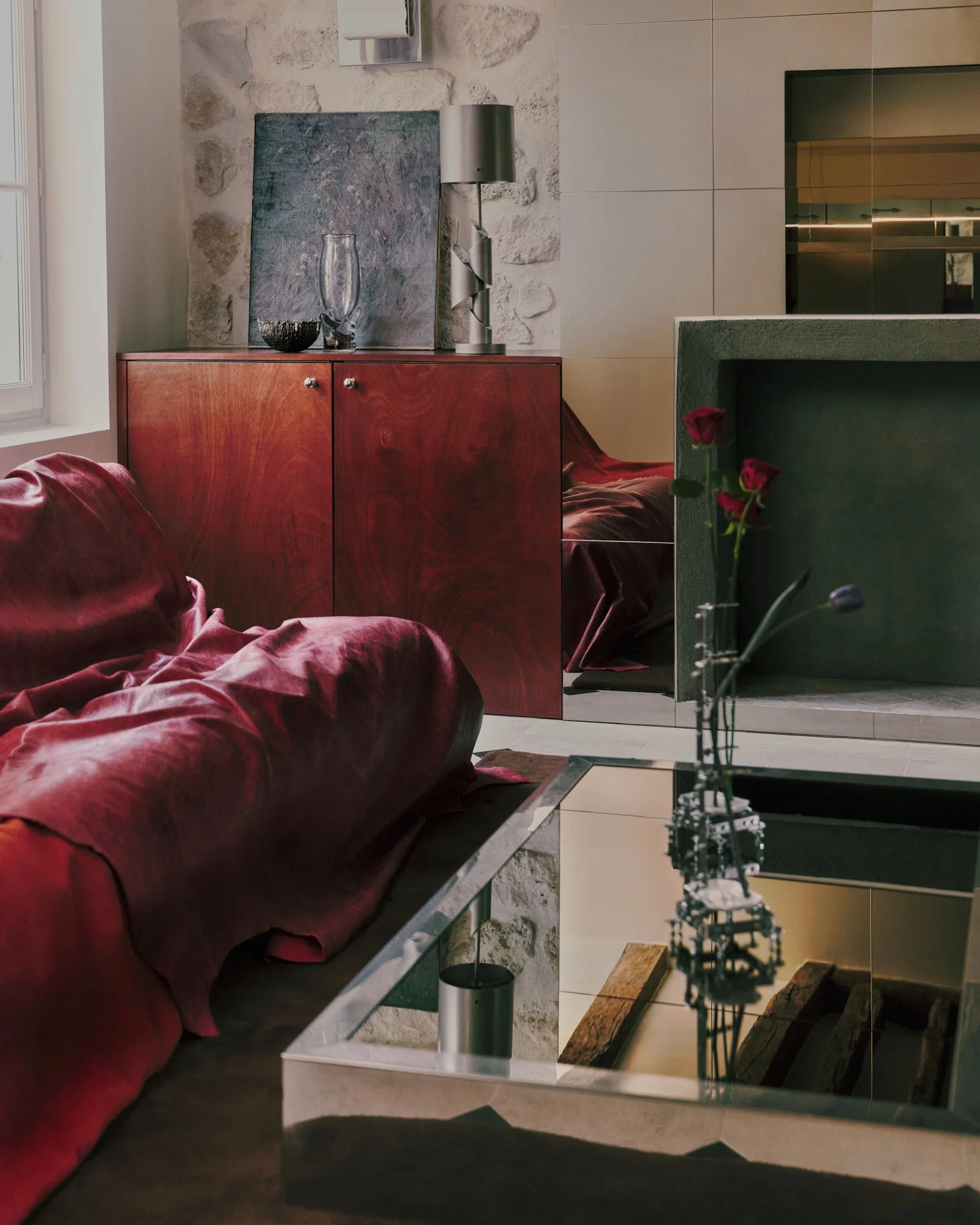
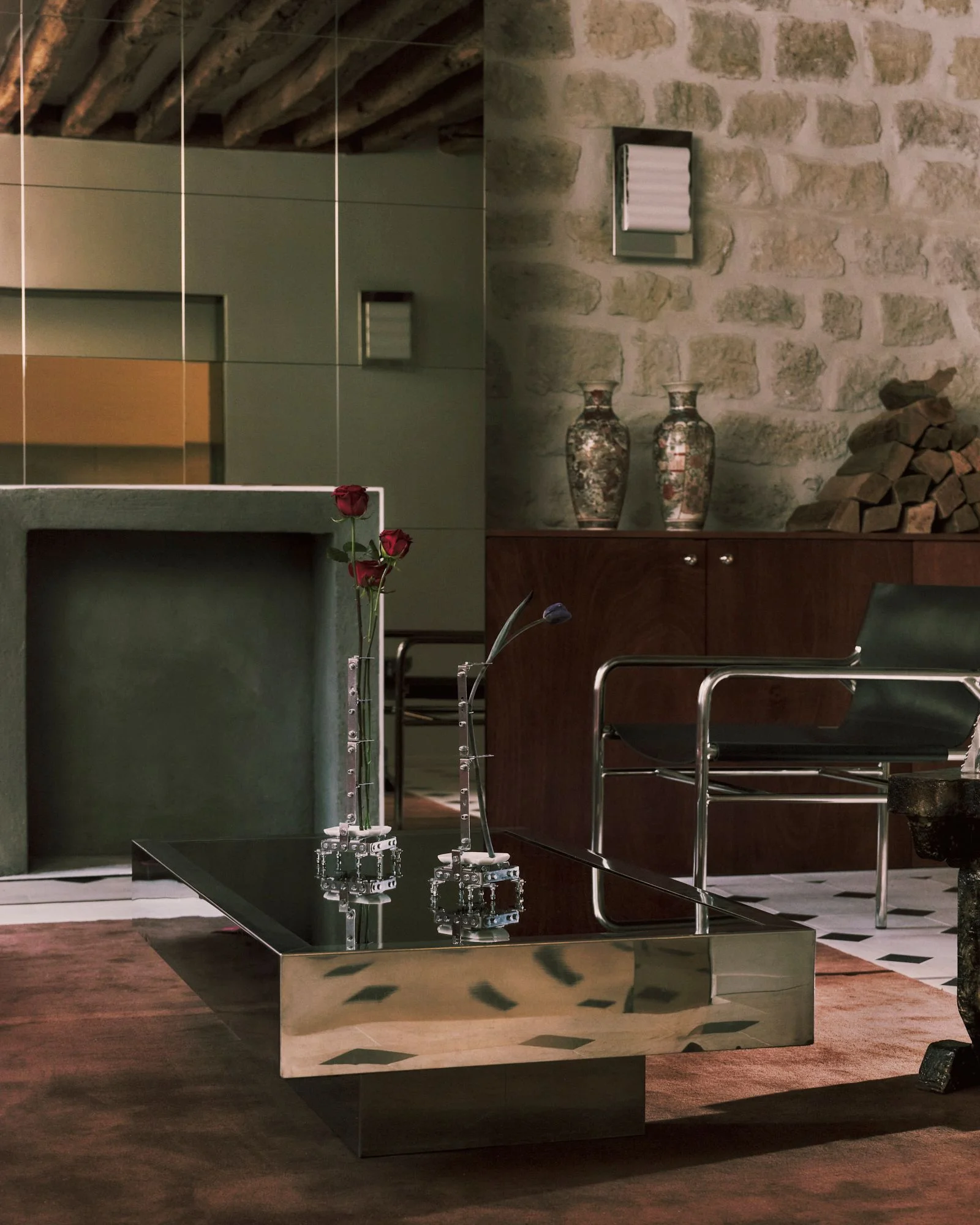
The existing building determined the material choices for an assertive redesign. Chaille’s approach fits the owner’s personality: “He’s 28 years old, single, and has a boldness and confidence, which translates into confident choices and subtle references,” Chaillou says of his client. “We created a rich, joyful decor to match.”
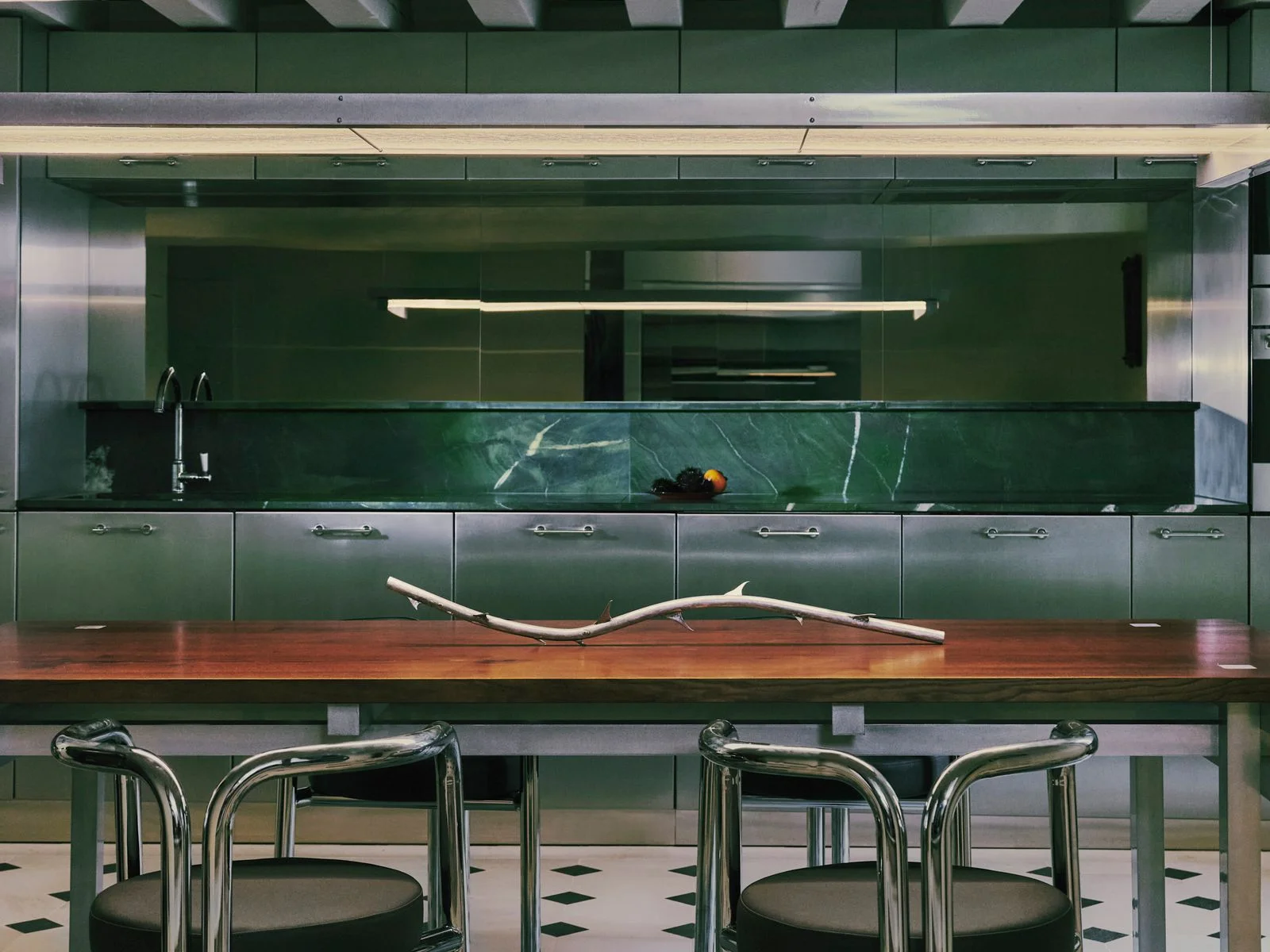
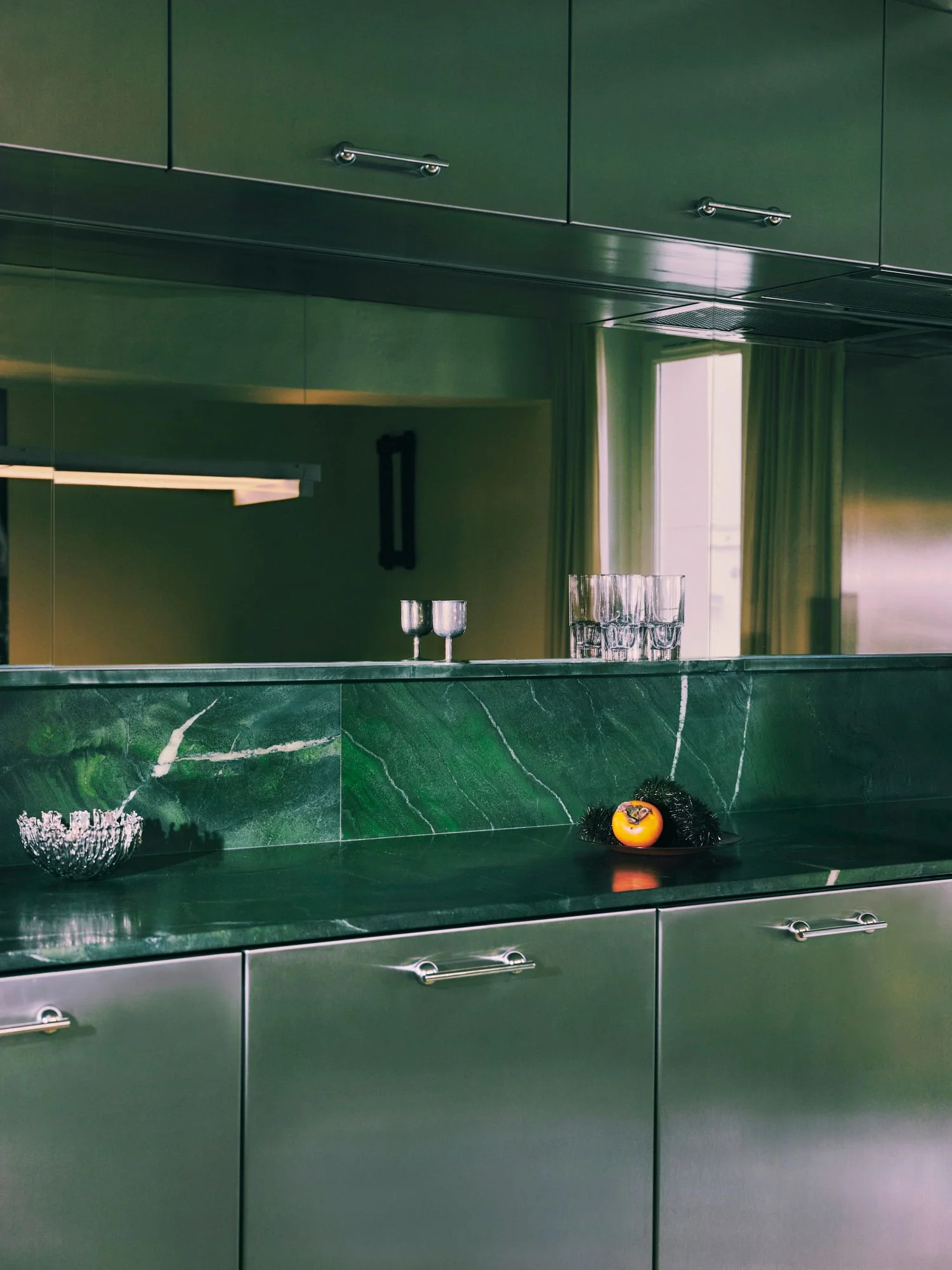
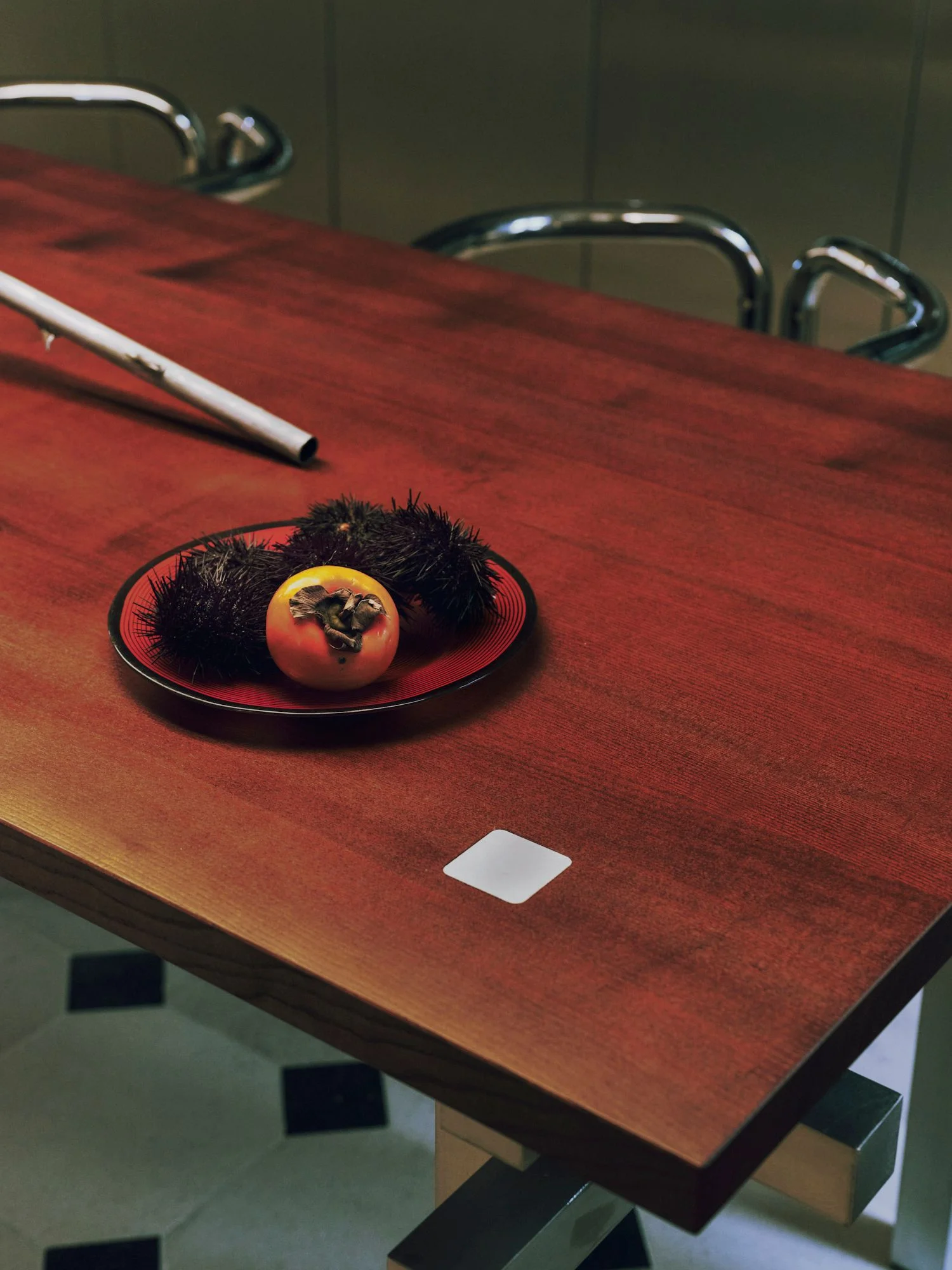
Avocatus marble paired with a mirrored backsplash, stainless steel cabinetry, and stone floors bring a layered mix of sheen and texture to the kitchen. The kitchen table, living room furniture, and millwork in the bedroom are all made of stained and varnished mahogany, reminiscent of the wood used for Italian Riva yachts, according to Chaillou. Mirrors also play an important role in Chaille’s design by multiplying perspectives, whether around the fireplace, in the hall leading from the kitchen to the living room, or above the Avocatus backsplash. “I like to play with perspectives and blur points of reference,” Chaillou says. “It brings an apartment to life.”
Sharply modern
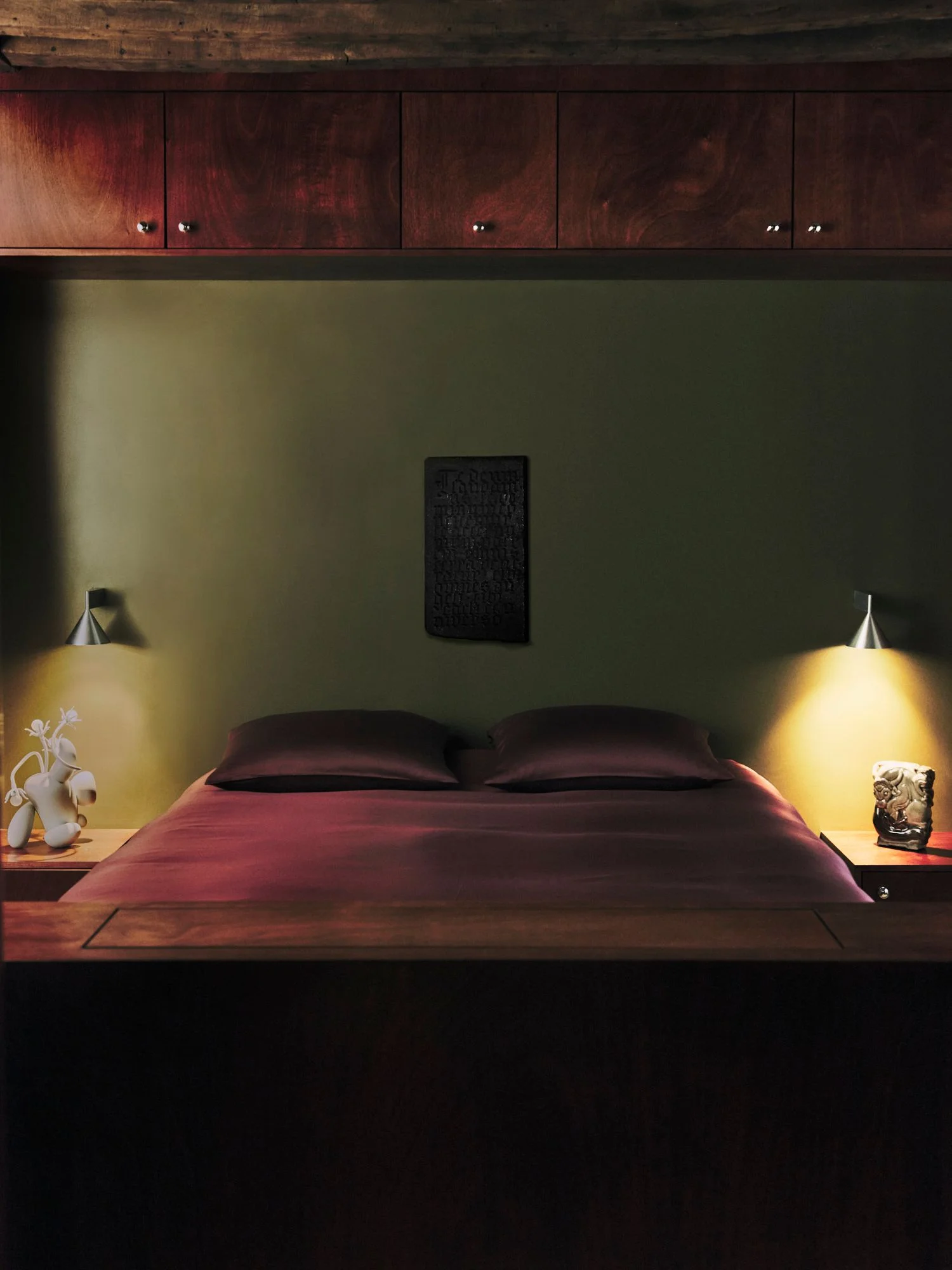
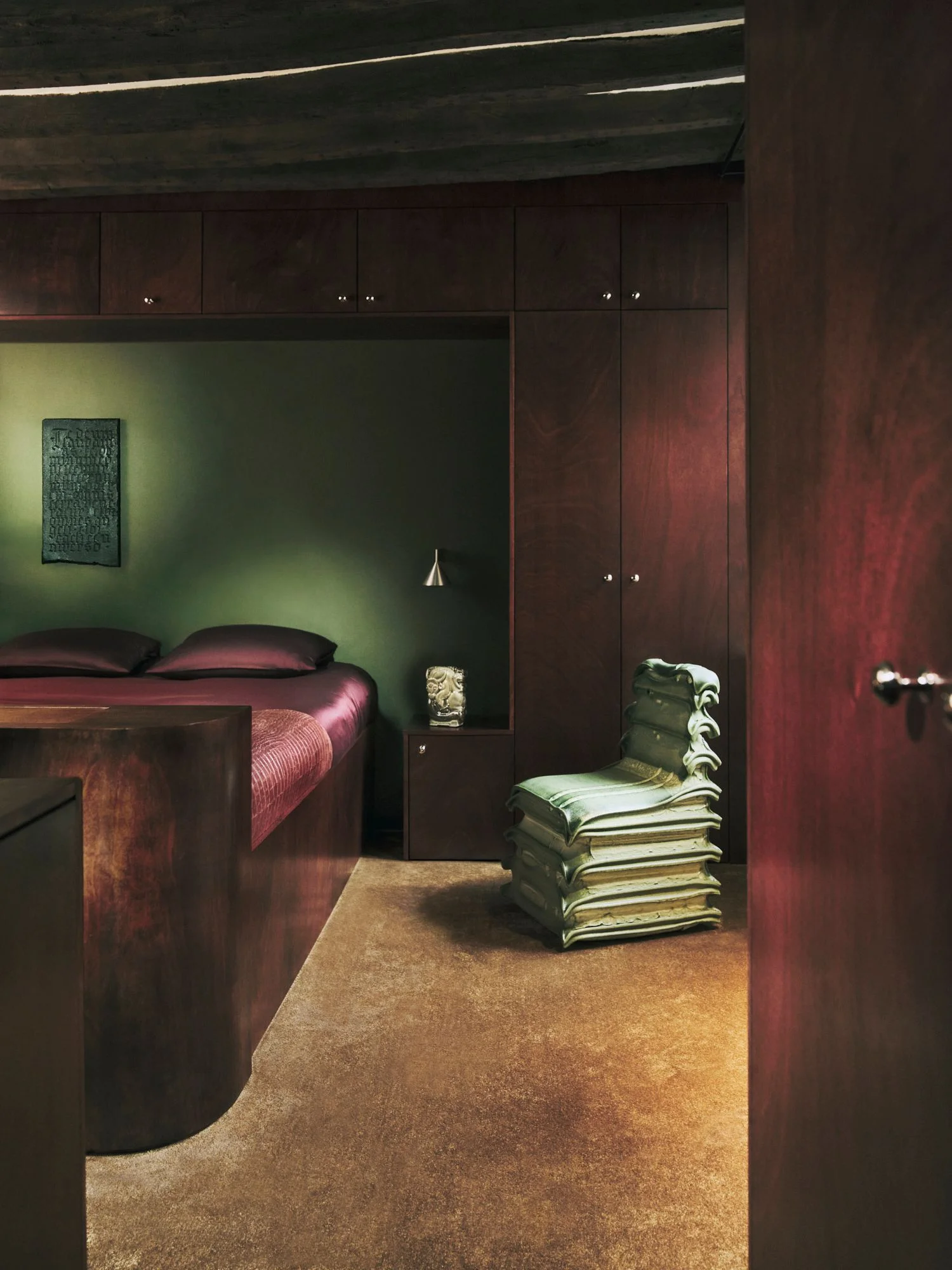
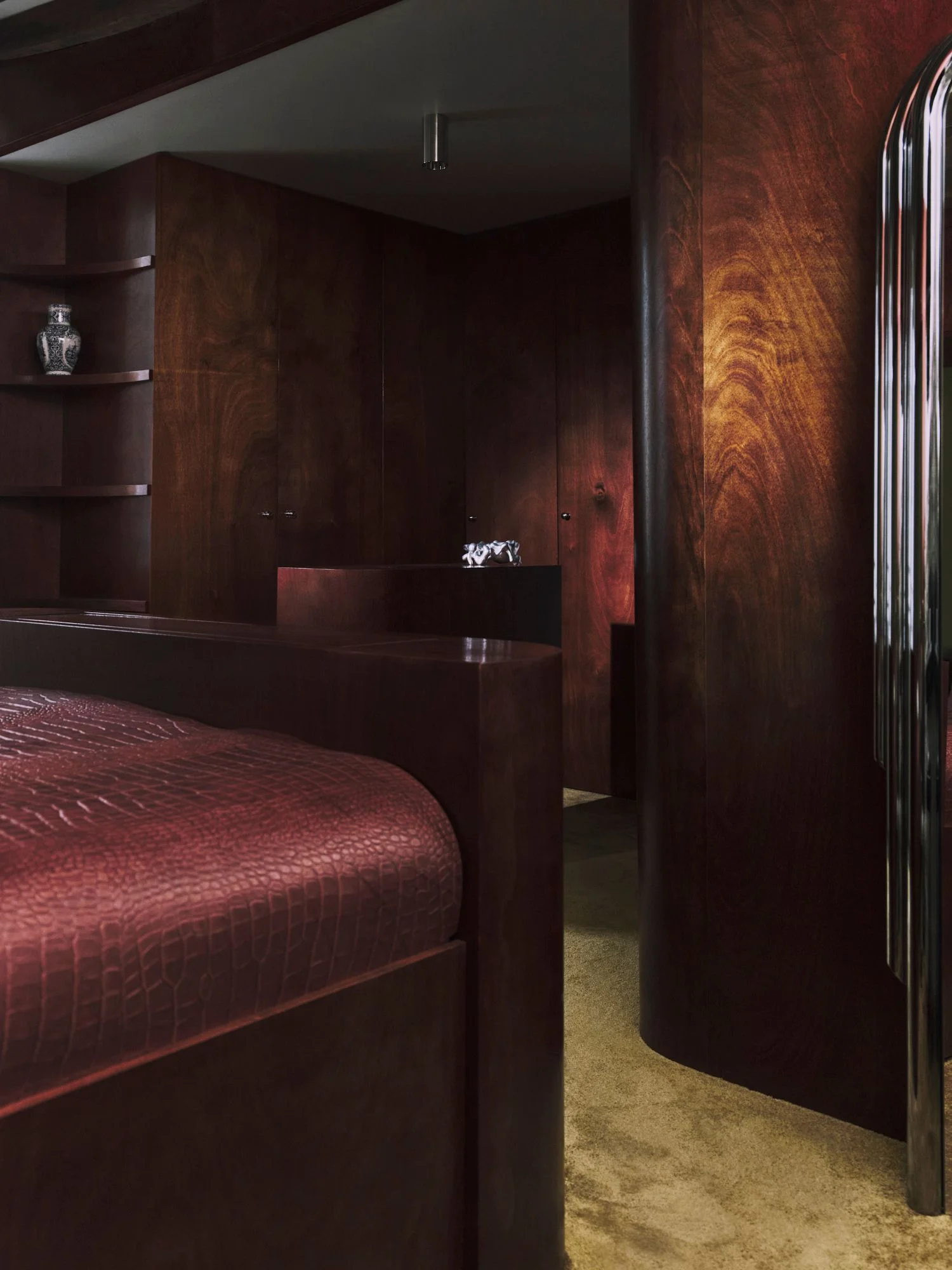
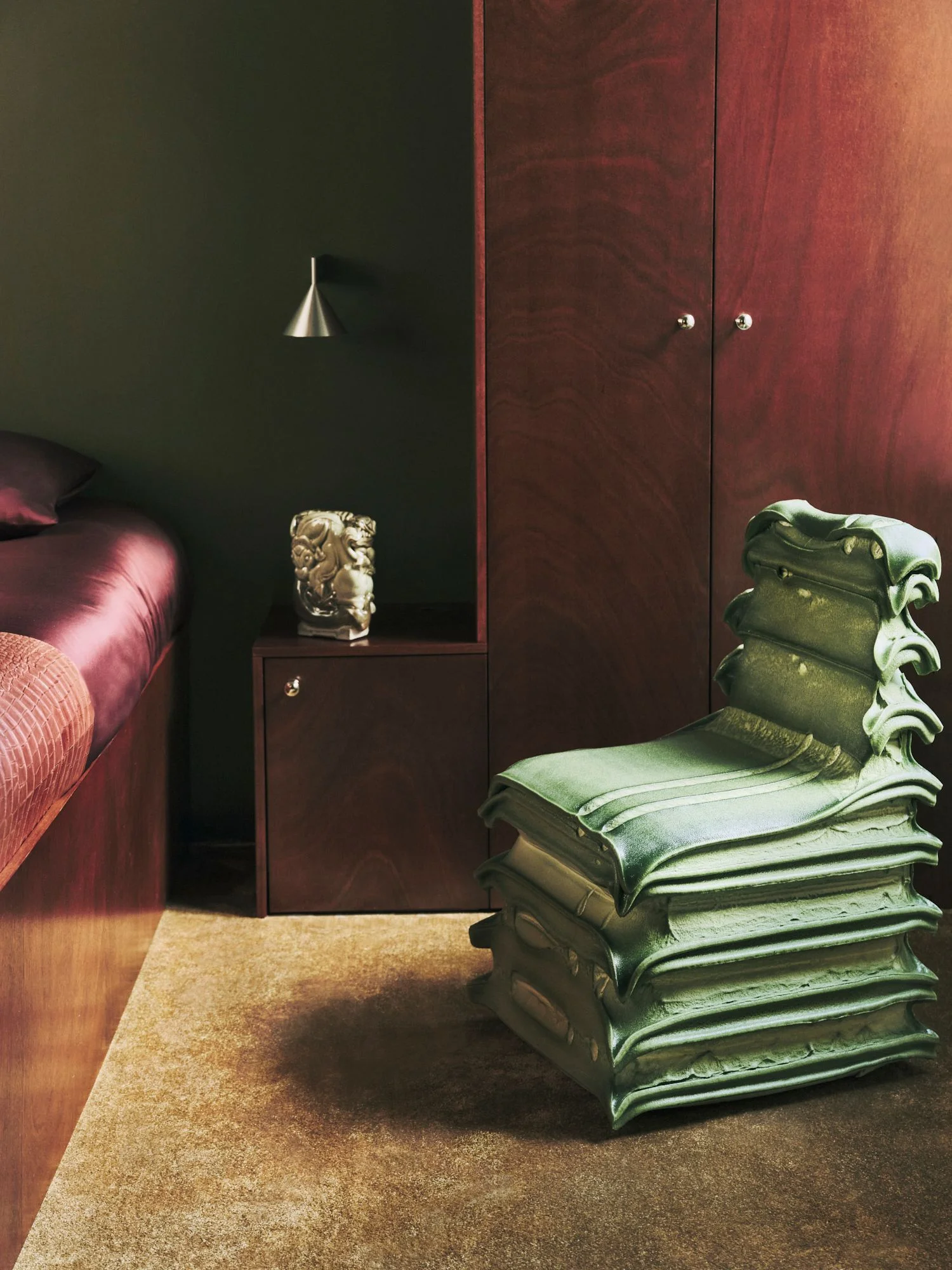
The entire primary suite is small and L-shaped, with wood-paneled walls. The bedroom feels part boudoir, part ship captain’s cabin, and mimics the tones found elsewhere in the home. The bed and headboard (which features built-in storage), for example, are made of red-stained mahogany, finished with a high-gloss varnish that leaves the grain of the wood visible. “The interior changes with the light during the course of the day,” Chaillou says. “You see the wood come to life. It’s very beautiful.” Red satin sheets and a dark red leather bedspread with crocodile embossing complement the grain. A dressing table stands opposite the bed, and offers storage for wallets, bags, and watches. A gold-carpeted floor complements the wall behind the bed, which is painted a deep green—the same hue is echoed in a nearby chair designed by Nicolas Zanoni. Completing the scene is a full-length mirror outlined with smooth chrome tubes.
Something old, something new
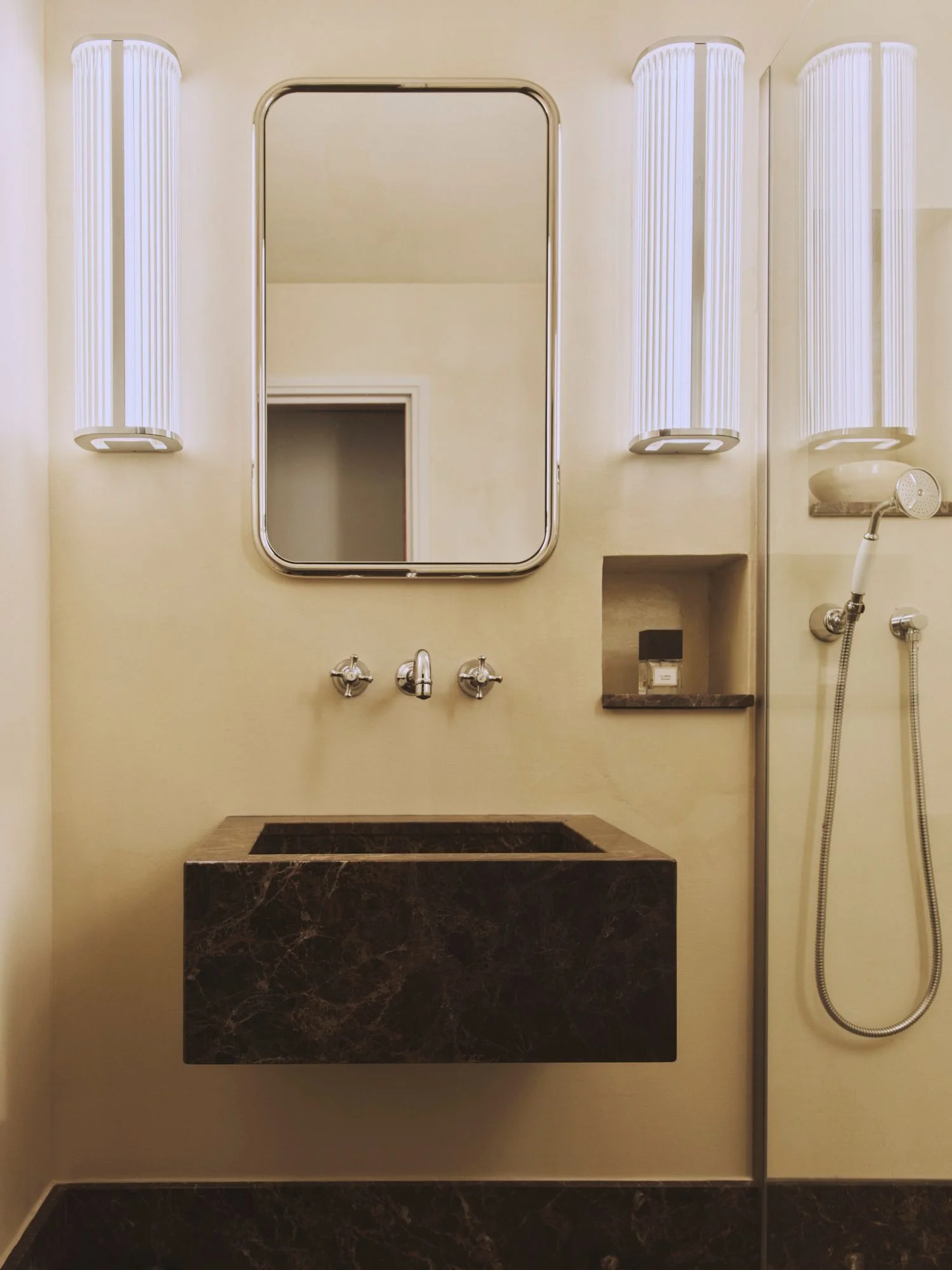
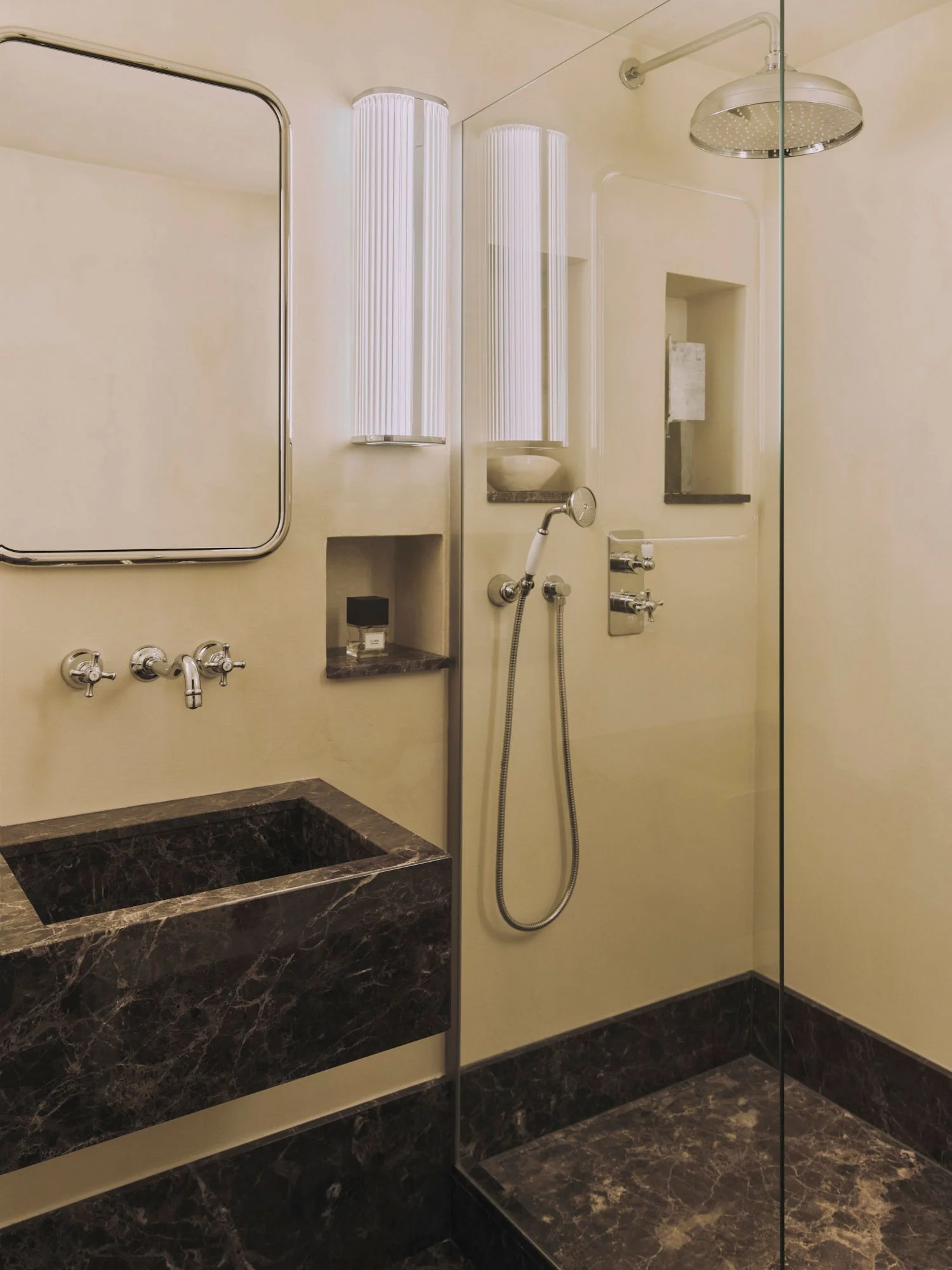
Off of the hallway to bedroom, the bathroom has whitewashed walls, while the floor, baseboards, shower, shelves, and sink are all made of Emperador marble. The stone's brown, red, and yellow veins complement the apartment’s wood elements and carpet.
Chaillou believes that as a designer, he should create interiors that are easy to understand, and allow people to quickly feel at home. This is the ultimate goal, before adding in intriguing details and unusual juxtapositions to avoid boredom and sterile repetition. “I like this idea of creating anachronisms between this old building and my contemporary interventions,” the designer says. “The owner always plays as important role in my work and, in this case, he has a real vision for beauty. We’ve built a friendship that has lasted beyond the conclusion of this project.”
This 14th-century building's reimagining was originally published by AD France. It was translated by John Newton.