
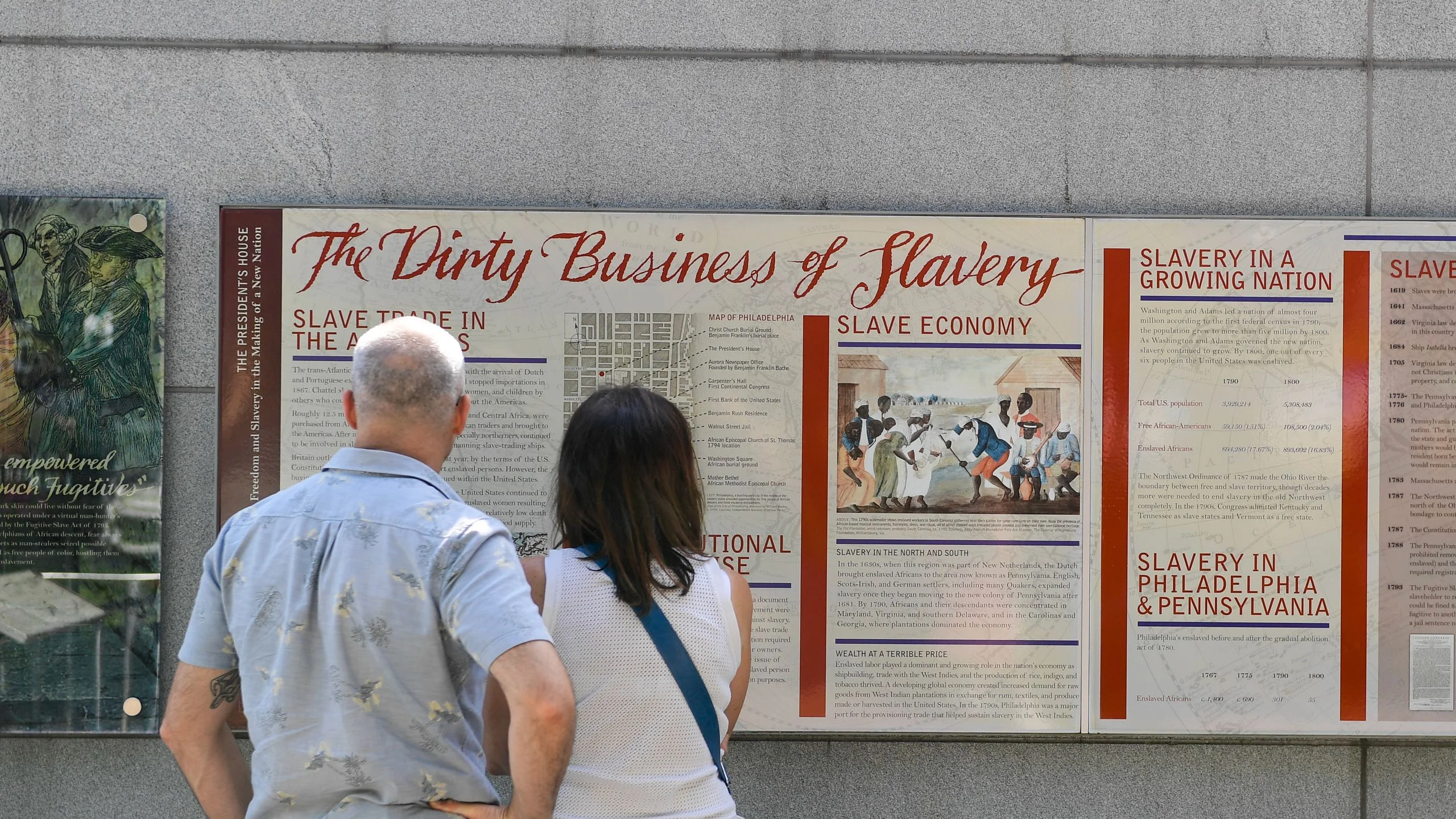
A legal battle is currently raging over the President’s House Site in Philadelphia—a house where George Washington lived during the nation’s earliest years while enslaved people labored within his household. Last month, following President Donald Trump’s March 2025 executive order aimed at “restoring truth” in American history, National Park Service workers removed interpretive plaques detailing what life was like for those enslaved people. The City of Philadelphia filed a lawsuit against the Department of the Interior and the National Park Service in response, and on Monday, Judge Cynthia M. Rufe granted an injunction stating that the removed material must be temporarily reinstated while it all plays out in court, citing 1984 by George Orwell in her 40-page ruling.
“As if the Ministry of Truth in George Orwell’s 1984 now existed, with its motto ‘Ignorance Is Strength,’ this court is now asked to determine whether the federal government has the power it claims—to dissemble and disassemble historical truths when it has some domain over historical facts,” she wrote. “It does not.”
A spokesperson for the Department of the Interior, the parent agency of the Park Service, told The New York Times that the service was “taking action to remove or revise interpretive materials,” to ensure “accuracy, honesty and alignment with shared national values.” They did not respond to follow-up questions about the removal of specific materials.
Trump’s dystopian decision raises a more fundamental concern about historic houses themselves: What do they become when their historical context—particularly in regards to Black history—is stripped away?
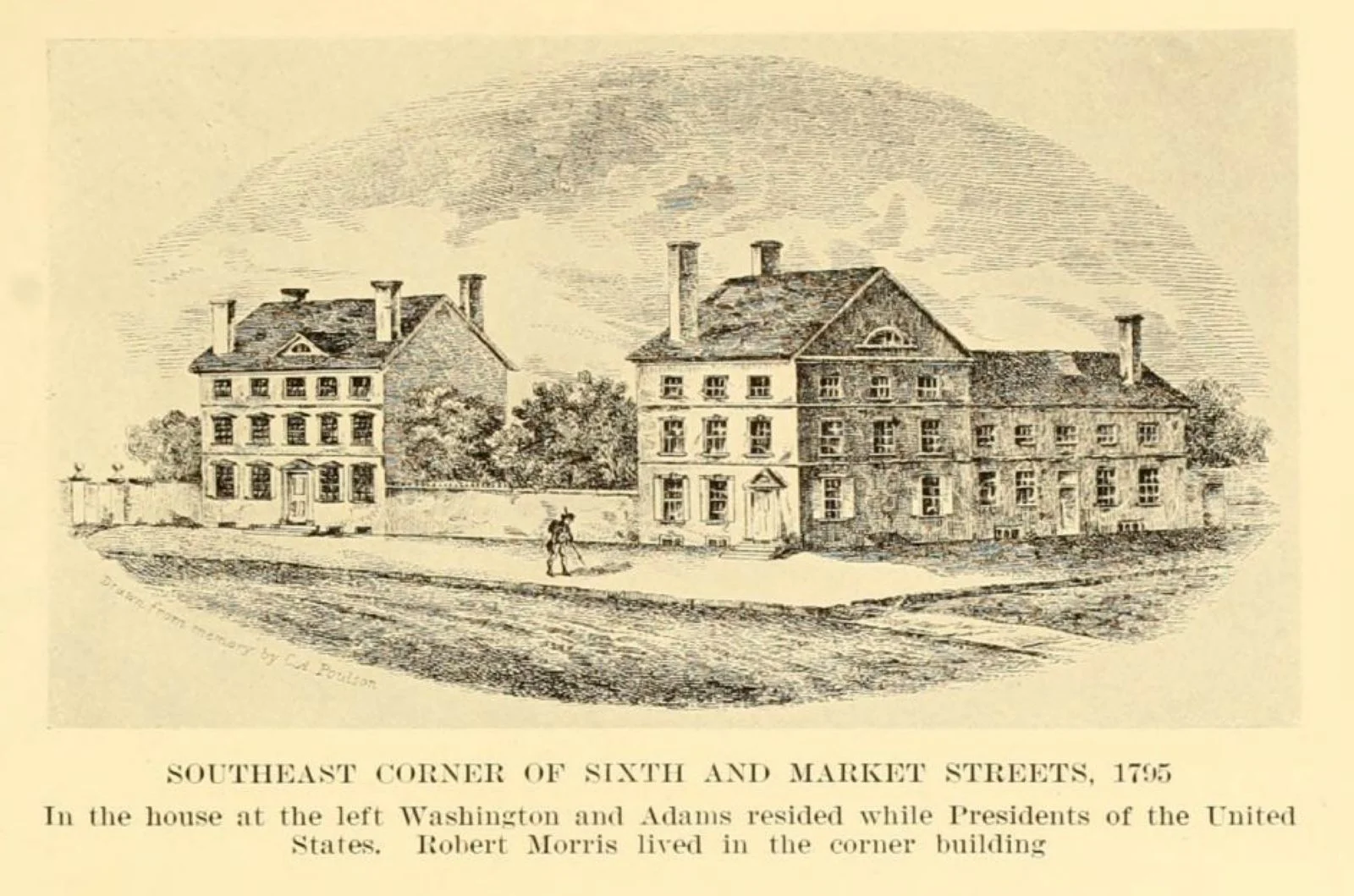
Historic houses are tasked with helping us visualize the past, drawing on research, material evidence, and interpretation to illuminate the period they represent. That task depends on context. Without it, architecture becomes an incomplete record, its forms intact but its meaning truncated. With this administration’s removal of historical material, the picture grows narrow and unclear, reshaping how history is observed in spaces where meaning depends on as much as what is acknowledged as what physically survives.
That narrowing, however, is not experienced evenly. Racial erasure is felt most acutely by the people whose histories are rendered invisible—here, African Americans—despite the fact that their contributions helped shape the nation and still remain too often absent from formal education. The loss is a disservice to the country as a whole, denying the public a fuller understanding of its history.
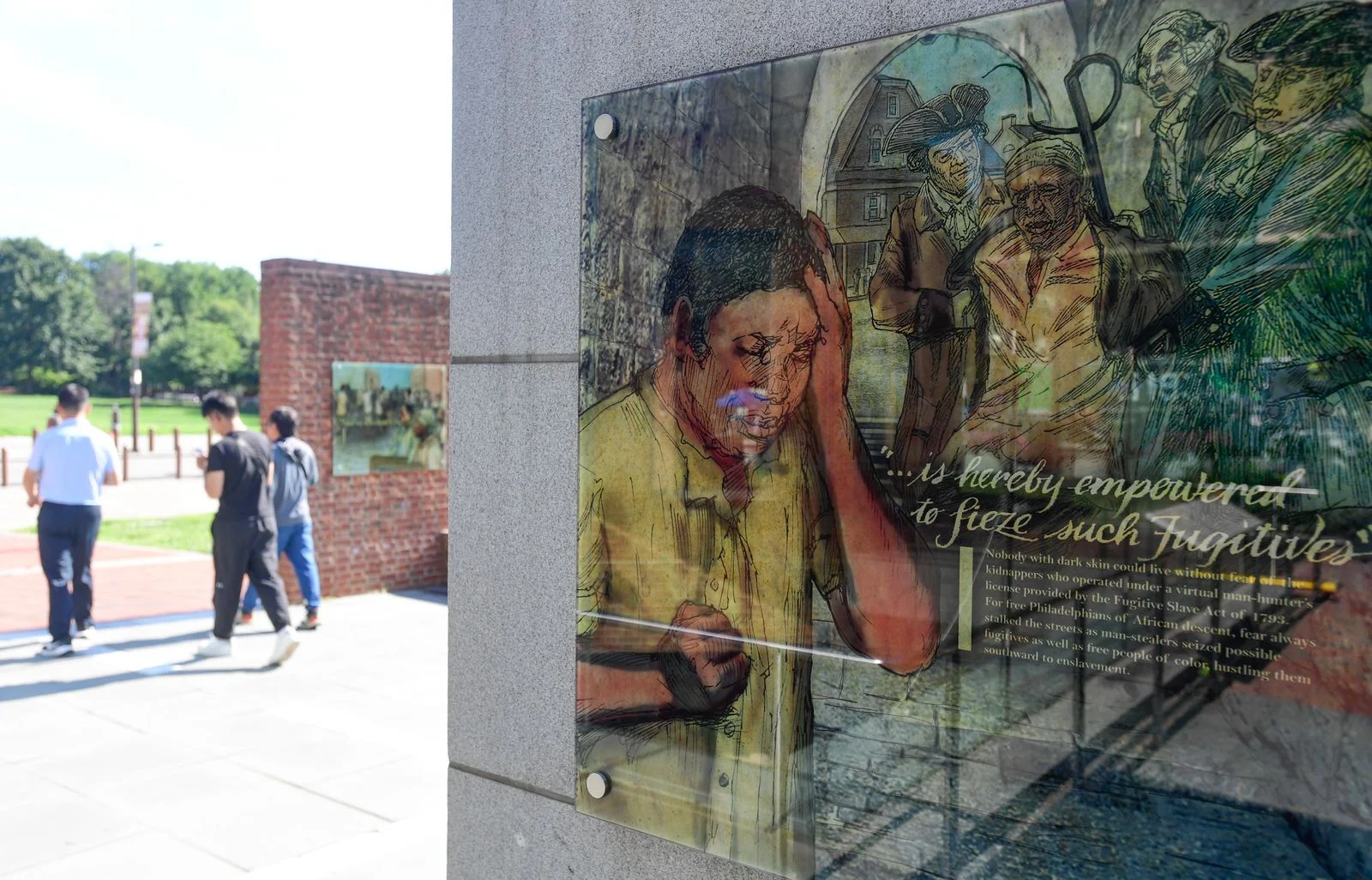
What occurred at the President’s House is not an isolated decision, but part of a broader effort to recast national history in more palatable terms. The subtraction of factual material, no matter how uncomfortable, does not foster neutrality; it is erasure. For Mabel O. Wilson, an architect and scholar who was part of the team that worked on the University of Virginia’s memorial to enslaved laborers, the act is corrosive regression. “What Trump has done is destructive,” she tells AD. “It’s iconoclasm. It’s an effort to erase the progress that was made to see the broad spectrum of the history of the United States.”
The progress Wilson speaks of refers to a period in which the National Park Service began more deliberately expanding whose histories were told and where. In the 1990s and 2000s, and particularly after Robert Stanton became the first African American director of the Park Service in 1997, the organization added more context reflecting the diversity of the nation’s history in parks and house museums, and acquired more sites telling the stories of America’s minorities. With this executive order—which calls this progress “a concerted and widespread effort to rewrite our nation’s history”—that decades-long trajectory is abruptly reversed.
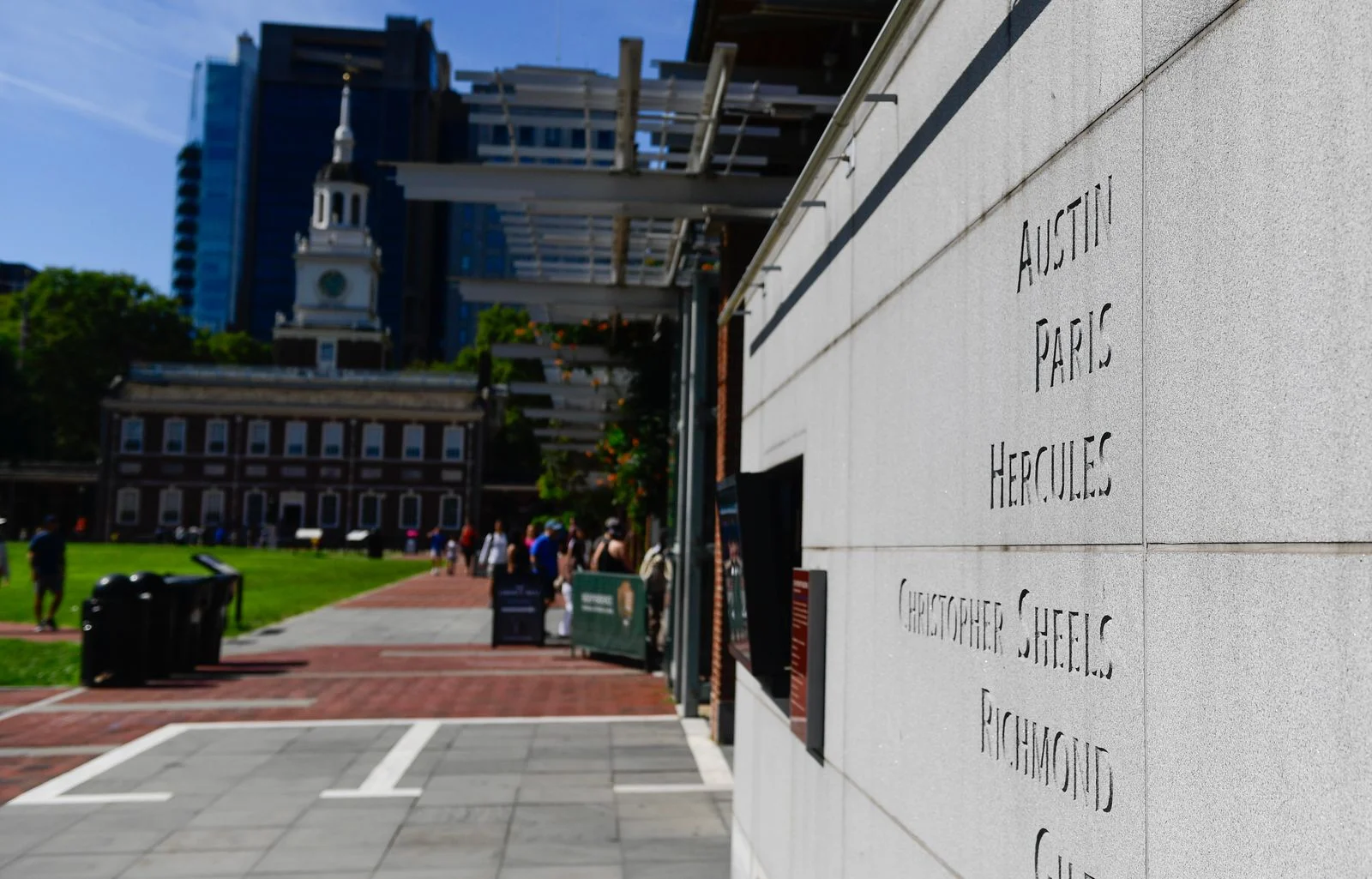
“The story of how the United States came into being is a much more complicated narrative” than what will be presented at the President’s House Site without the material in question, says Wilson. Essentially, according to her, the narrative should tell the truth of how our country has struggled to live up to its founding aspirations. The nation’s founding ideals aspired to equality and opportunity, even as those principles were unevenly applied in practice. To acknowledge that tension is not to distort history, but to tell it honestly.
Favoring comfort over that complexity renders invisible the people whose histories are being removed in the process, along with their present-day descendants. It becomes easier, then, to overlook the foundational role African Americans played in building the United States, and easier still, to be dismissive of their lives in the present. As Wilson puts it: “It’s a symbolic act of removal as an assertion of domination. That is the history of racial domination.”
For Wilson, the removal also reflects a longer historical pattern. Efforts to silence African American history, she argues, are not aberrations but continuations of the same legally entrenched violence that shaped the nation from the start. “This kind of behavior isn’t new at all,” she says. “As Americans, this is who we are at a structural level.” The fact that only within the last 35 years of the National Park Service’s 110-year existence has contextual history been added to sites is proof. The challenge, Wilson adds, lies in whether the country is willing to confront that reality and continue aspiring toward the ideals set out in the Declaration of Independence and the Bill of Rights.
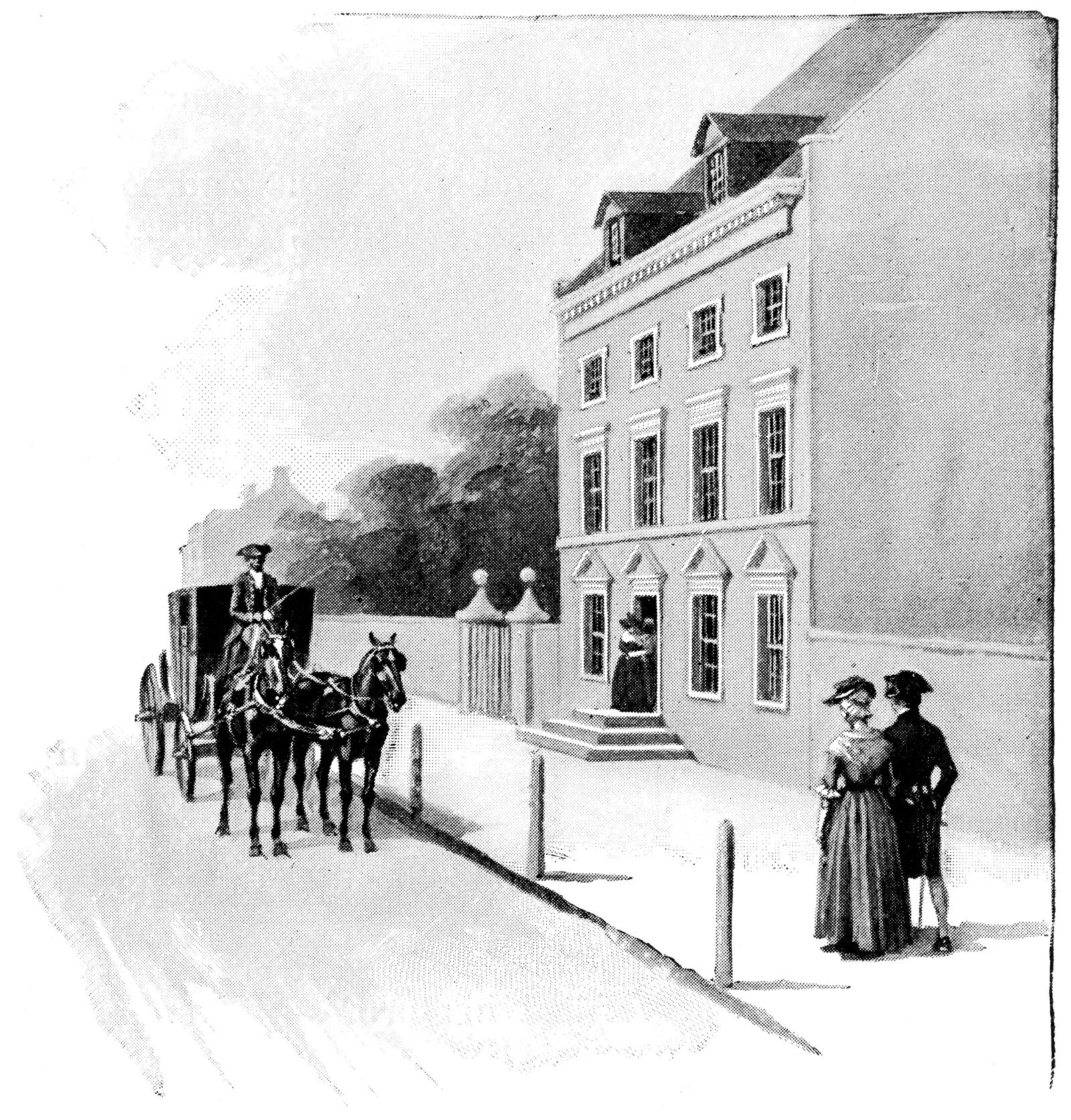
Philadelphia is certainly willing to do so. The city’s lawsuit cites a 2006 agreement requiring conferment with the city before making alterations to the President’s House. In solidarity, neighboring counties submitted a joint amicus brief, while local organizations protested in front of the site, calling for the restoration of its full history. The Department of the Interior called the lawsuit “frivolous,” maintaining their position against what they call a “revisionist movement” that casts the United States in a negative light.
The Department of Justice, on behalf of the Trump administration, filed a notice of appeal on Tuesday, and what happens next at the President’s House will signal more than the fate of a single site. It will showcase whether historic places are treated as static backdrops or as tools for understanding the nation in full—who built it, who is allowed to be seen, and how honestly it is willing to self-reflect. A country that withholds parts of its history denies visibility to those who shaped it, and in doing so, denies itself a complete understanding of who it is.