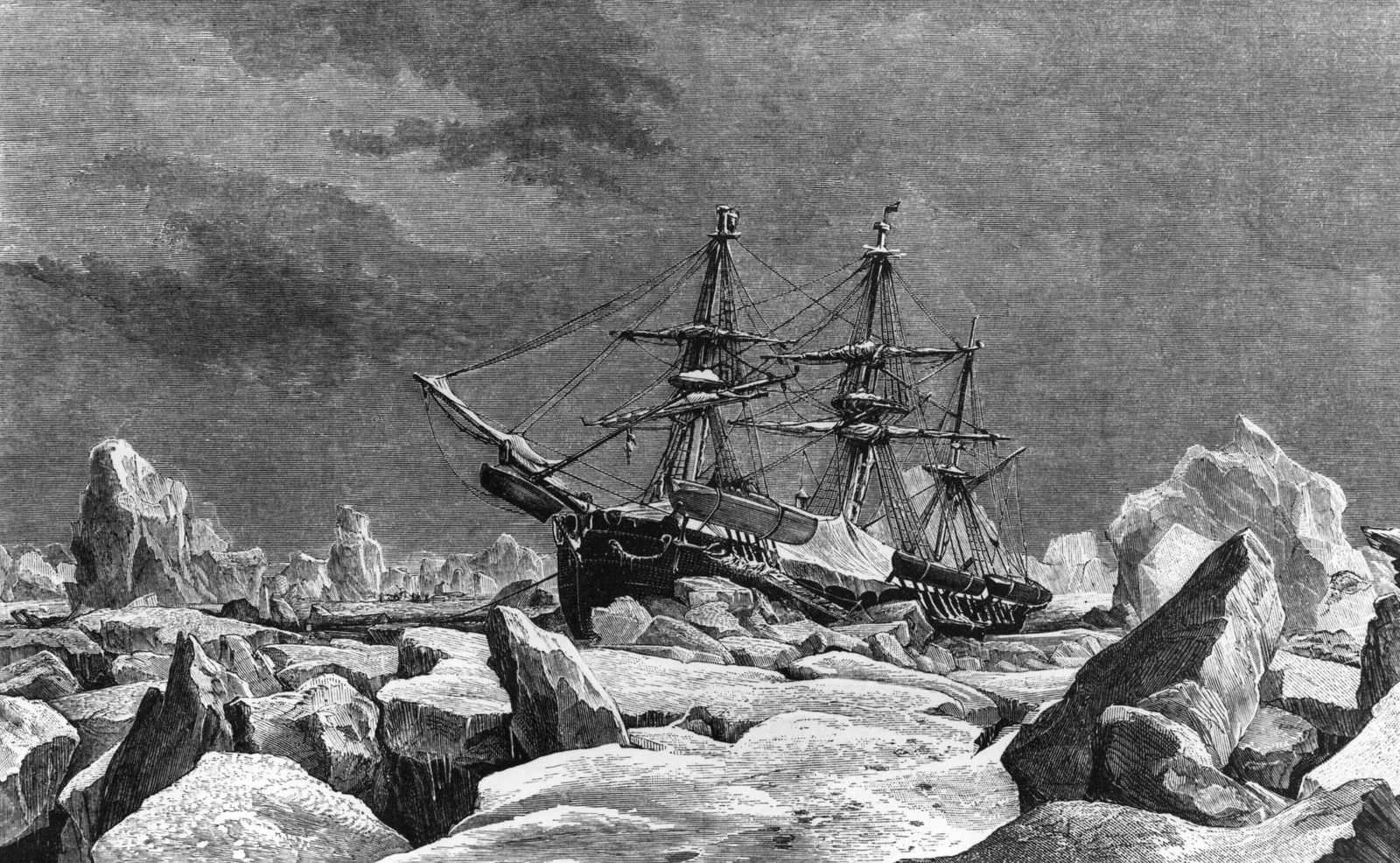
In May of 1845, it took 30 days for two three-mast ships carrying 134 men to sail from Kent, England to the west coast of Greenland before setting out through the Northwest Passage. They were helmed by Sir John Franklin and sent by the British Admiralty to look for a faster route from Europe to Asia. And it was in Greenland, among the sawtoothed cliffs and iceberg-speckled water in Baffin Bay, the sailors were seen for—what was long presumed—the last time.
Here’s what we know now: For roughly three years, the explorers were lost at sea, living off of canned goods and rationed portions, their—at the time—state-of-the-art ships trapped in ice so dense that buoyancy likely became a superfluous quality. Those who didn’t die onboard eventually tried to walk to across the frozen waters to mainland Canada, perishing on their journey. The abandoned ships ultimately sank, and were lost until 2014 and 2016 when modern expeditions finally found the vessels off the coast of King William Island in Nunavut, Canada.
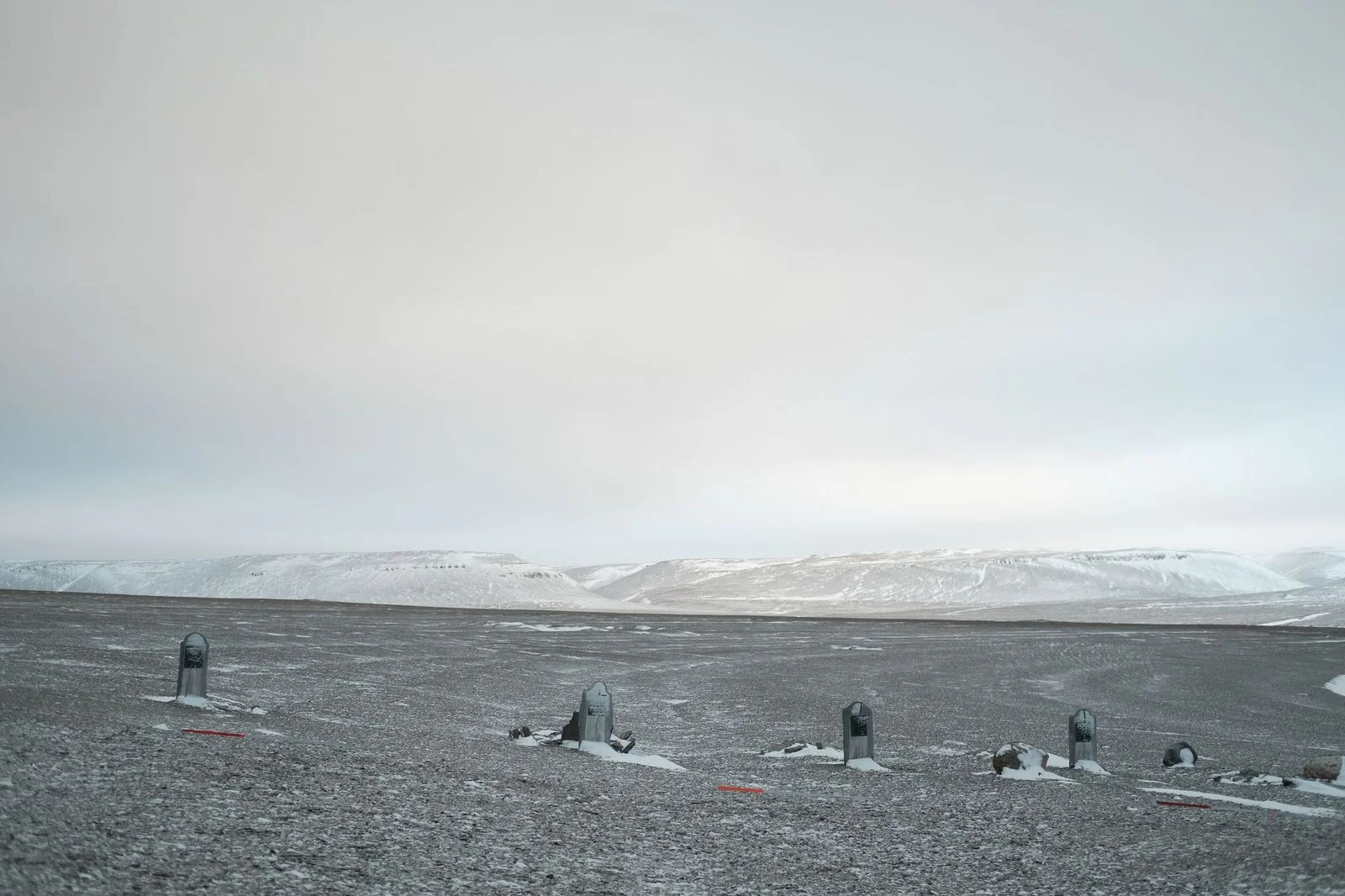
Now, in 2025, I found myself standing on a rocky shore 2,000 miles from home on Beechey Island in Nunavut, Canada, staring at the final resting spot of the first three sailors who died during the fated Franklin mission. I wanted to have some kind of profound reflection that would cement the enormity of my visit to such a historic and remote place, but all I could think when I saw the point in person was—actually, no, my brain was frozen. I had no thoughts. I was so damn cold.
Or maybe, I’d spent the past week in such a blissful state of pleasant dependence that I’d forgotten how to think critically. Because today, traveling to the Arctic doesn’t require a month-long journey, self sufficiency, or the ability to brave exceptional natural conditions—at least not the way I did it. I’d traveled here aboard Viking’s Octantis ship for a 13-day journey through Greenland and Canada, aptly titled “Into the Northwest Passage.” Instead of preserved food in metal cans, I’d enjoyed chef-prepared meals three—sometimes more—times per day. I’m talking everything from a fresh (maybe the best I’ve ever had) Caesar salad with parmesan straight from a cheese wheel to homemade al dente ravioli. If ice had diverted us in any way, I was prepared to weather the storm on the heated stone lounge chairs near the pool, book in hand. And when I did come back from an excursion, teeth chattering from the frigid air, a crew member was always there to hand me a hot chocolate, steaming tea, or a warm muffin.
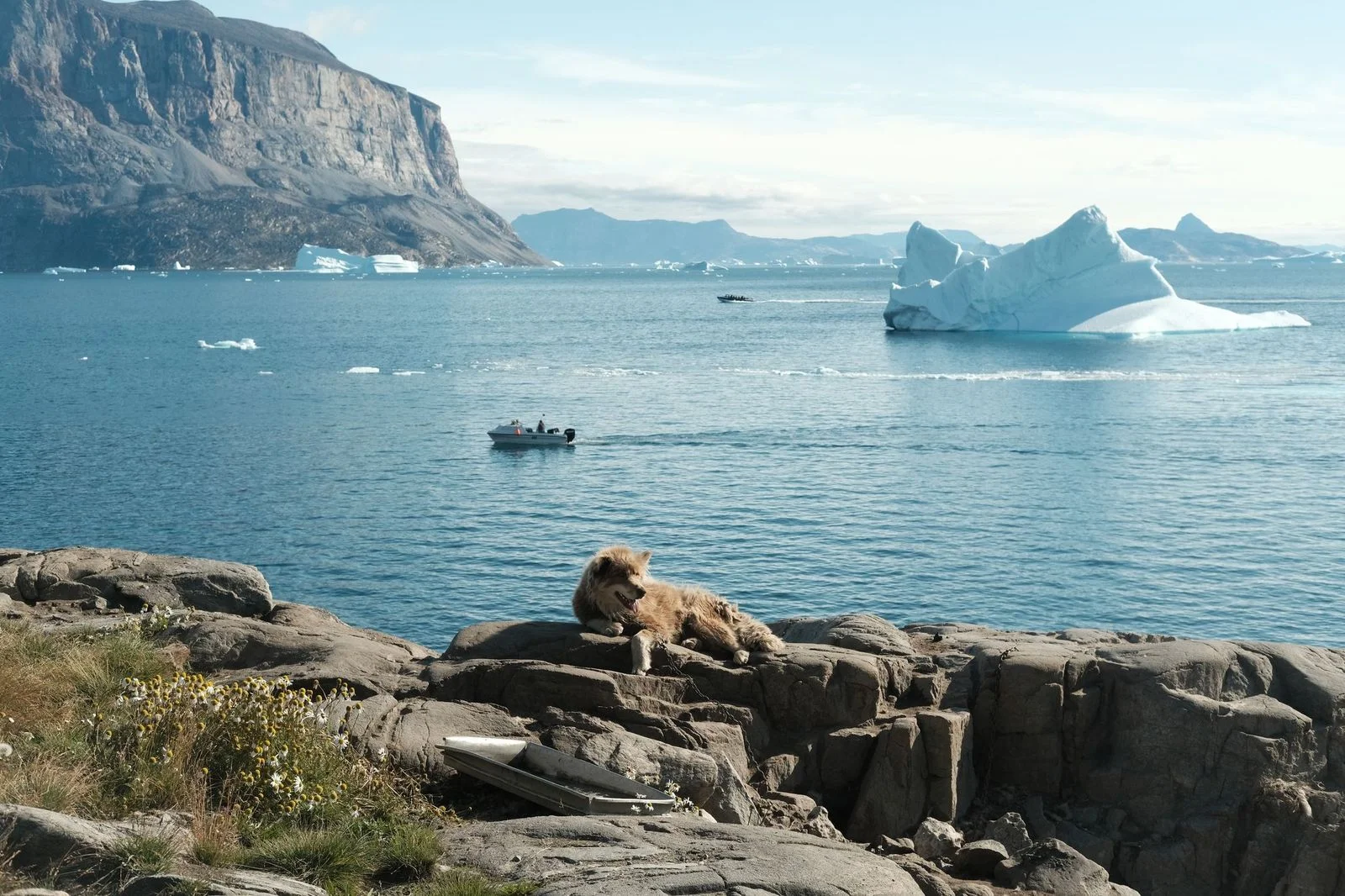
I’m not a typical cruise-goer, but I quickly realized that it was among the most magical and—important to a Type A girlie like me—strategic ways to explore this region. After all, it’s nearly impossible to do without a boat. In Greenland, there are no roads between towns and only some have airports, making sea the only consistent option to get from one settlement to the next. In some of the bigger cities, like Nuuk and Ilulissat, you could stretch a visit over a few days, but I also believe you can see many of the highlights in just one. Likewise, much of the Canadian High Arctic is only accessible via water.
I wasn’t alone. “We’re not really cruise people,” one couple, probably in their 60s, told me over morning coffee, checking over their shoulders so as not to offend others on board. Many, myself included, were drawn to this particular adventure for one reason: because everyone’s doing it. Arctic tourism, especially in Greenland, is booming. In fact, visits to the territory grew by 46% between 2018 and 2023. We wanted to find out why, to see first hand what this far-off part of the world was actually like.
The reasons for this surge in visitors are many. Of course, there’s Trump. Since returning to the White House, he has continued to assert that the US should be in control of Greenland, which is currently semi-autonomous and part of the Kingdom of Denmark. This massive geopolitical attention has boosted tourism, according to some reports. Locally, there has also been a concerted push to increase visitors through improved infrastructure. Just last year, Nuuk, Greenland’s capital, opened a highly anticipated International Airport and United began offering a twice-weekly direct flight from Newark. Technology has also gotten better: Ships like Viking’s Octantis, which is specifically designed as an ice-strengthened vessel for polar regions, were not traditionally accessible to tourists.
Departing from Nuuk, our itinerary took us across Greenland—starting in the capital and making stops in the Itilleq Fjord, Ilulissat, and Uummannaq—then traversing through the Canadian High Arctic, before swinging back to Greenland for a visit to Sisimiut, and returning to Nuuk. The stop on Beechey Island was part of the Canadian leg of the journey, and to complement it, Viking offered an onboard lecture the night before from the ship’s official historian to give us the tea—to use the term I taught some fellow travelers—on the Franklin Expedition.
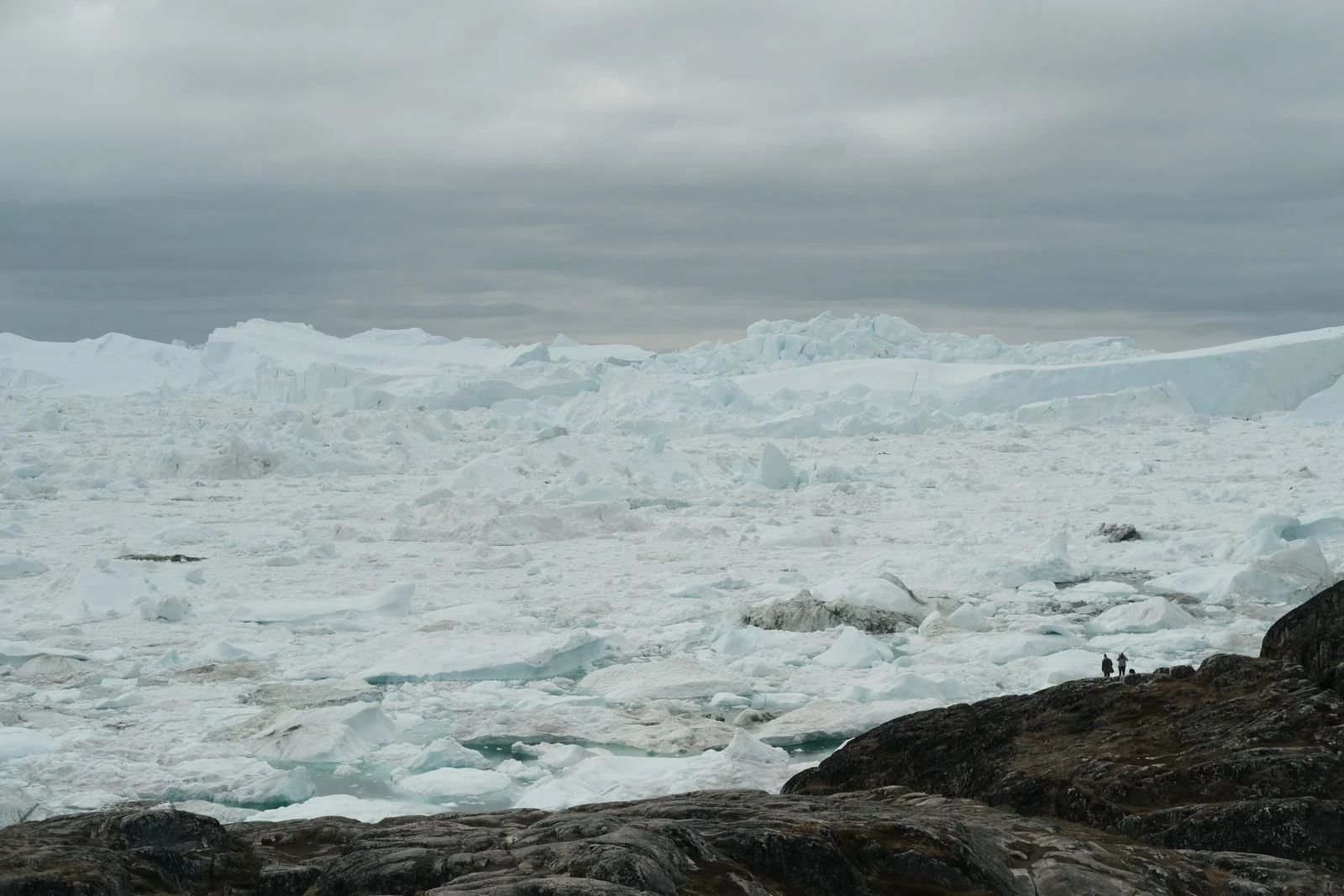
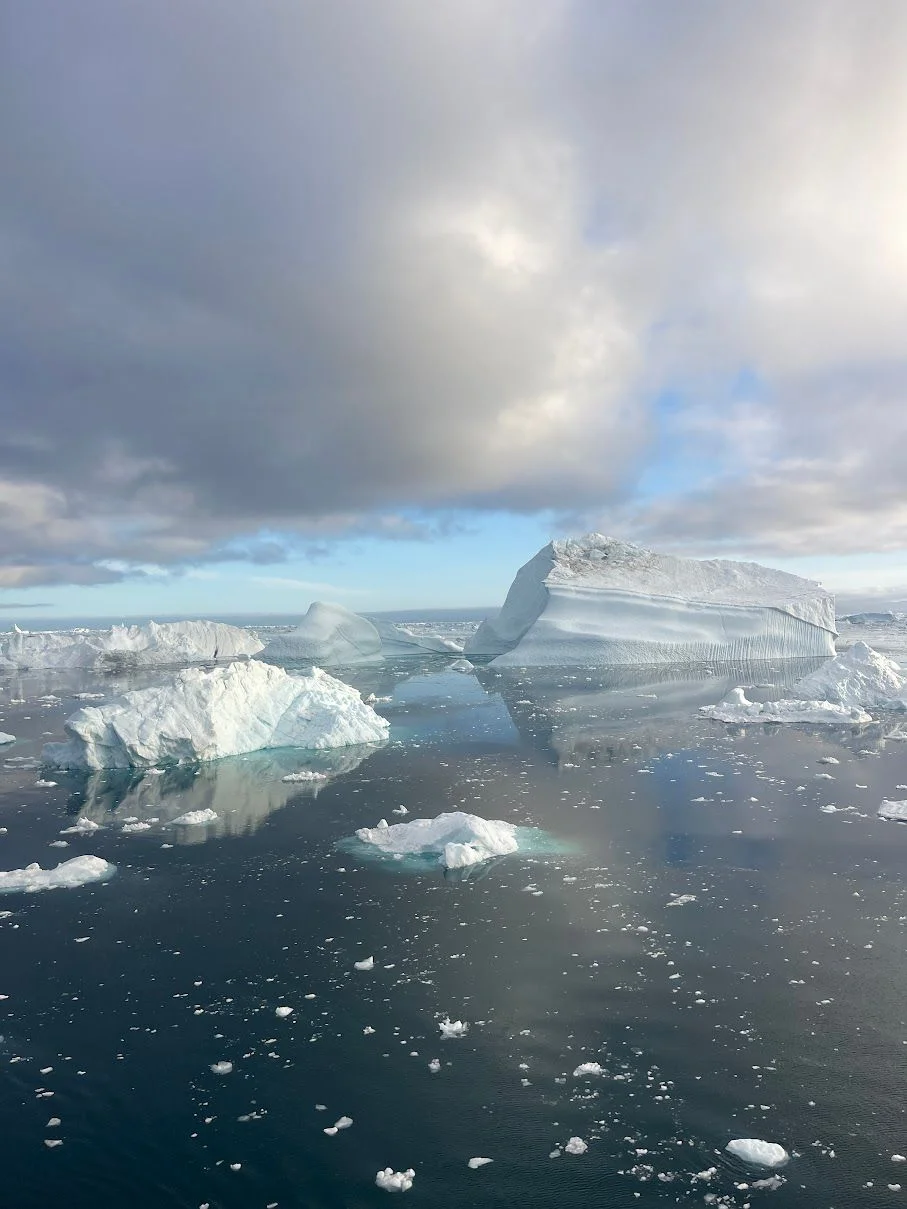
But this trip isn't just for history buffs. The Northwest Passage has enough natural beauty to overflow any aesthete’s cup. I kayaked in the Davis Straight, a southern arm of the Arctic, paddling along the shore of rocky islands and land masses. About 150 miles north of the Arctic Circle, I hiked to the Ilulissat Icefjord and saw the Jakobshavn Glacier, one of the most active in the world and responsible for 10 percent of all of Greenland’s icebergs. I felt like I’d traveled to a different planet in Disko Bay, which was dotted with brash ice in deep blue waters that reminded me of a celestial landscape. And yes, I even saw a polar bear camouflaged against the snowy terrain as the ship drifted safely by an uninhabited island.
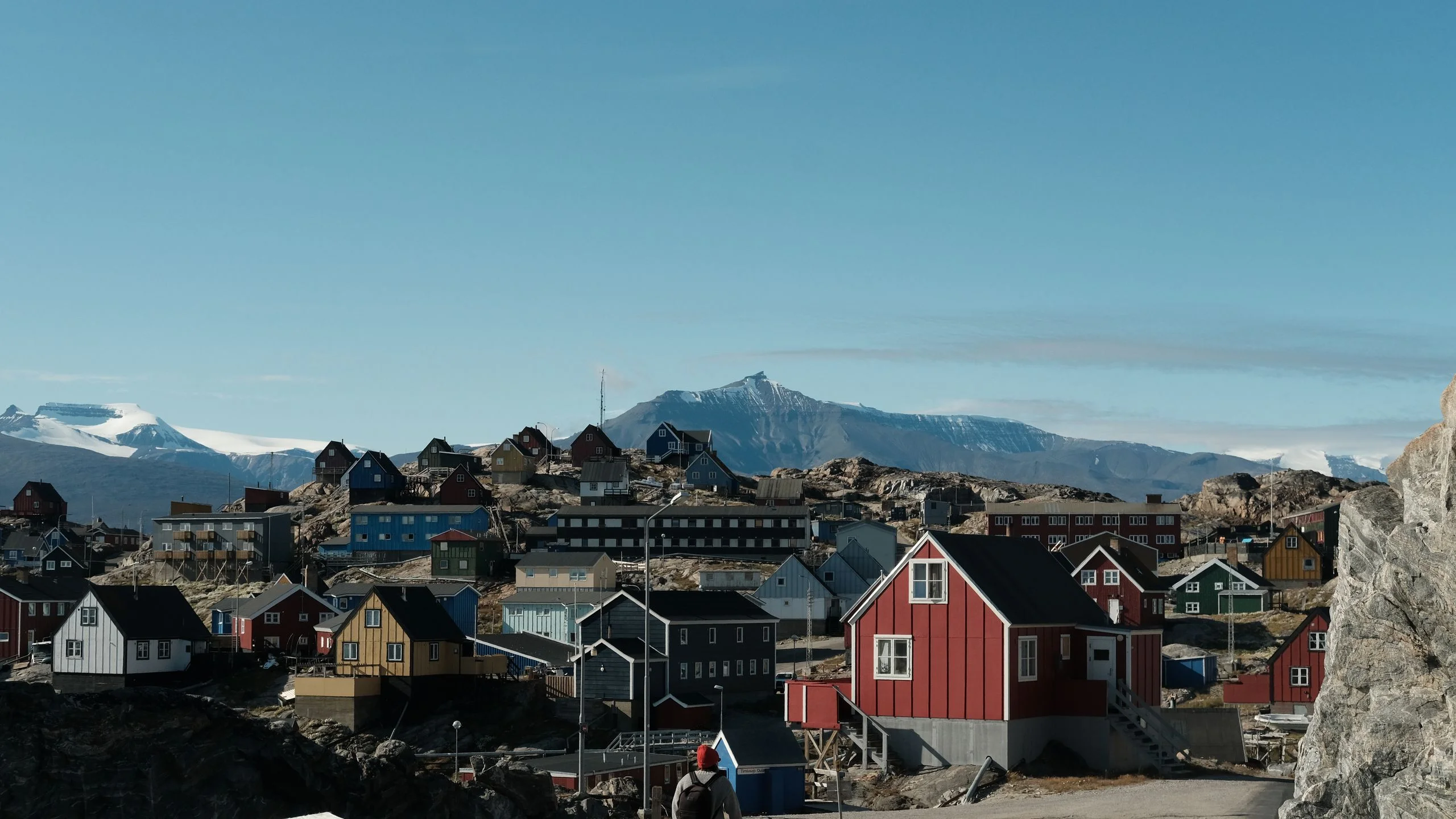
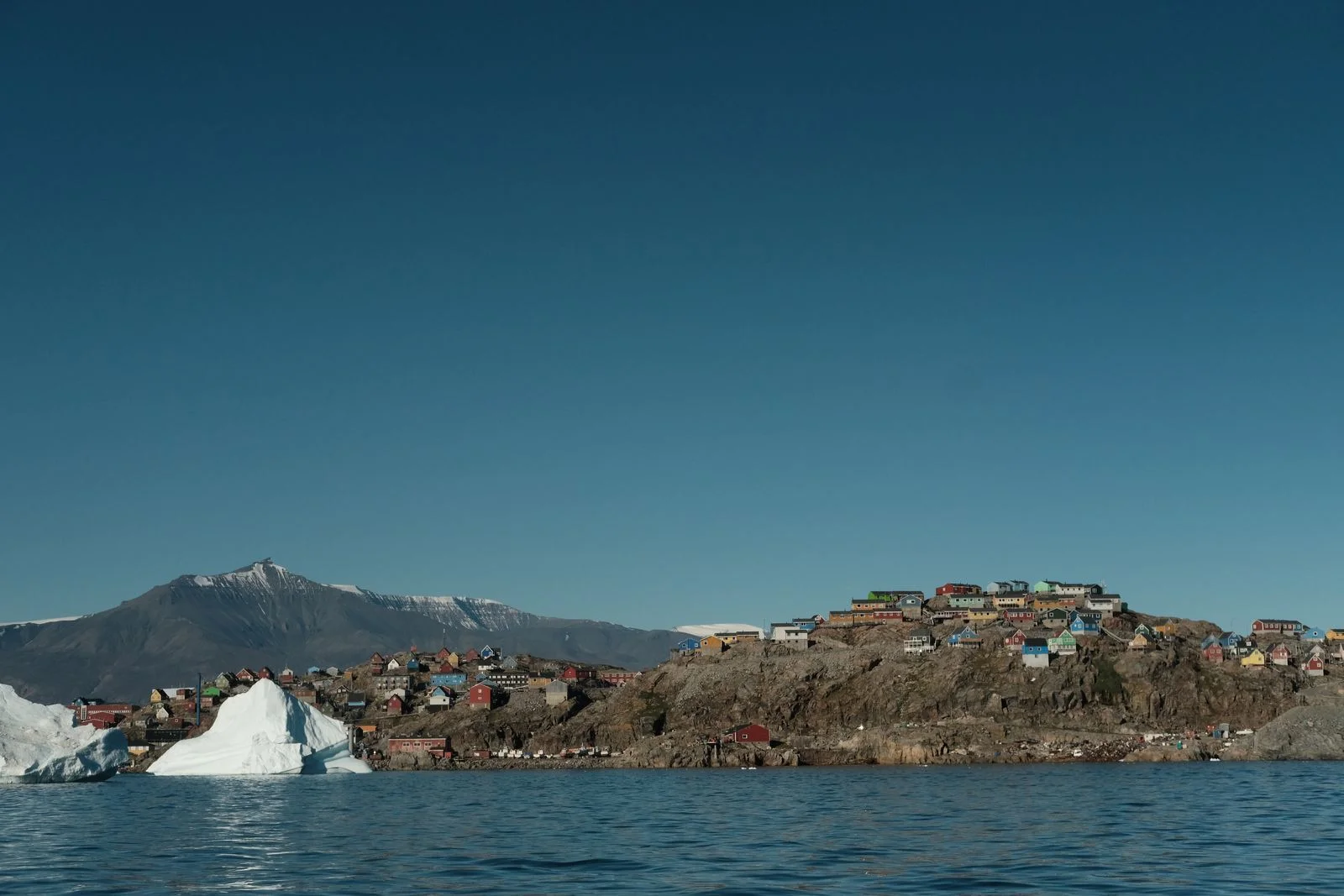
Alongside natural wonders came plenty of fodder for a design lover like myself. In most settlements, colorful homes with high pitched roofs sat mere feet from the ocean and were often the first signs of life we’d see after a night at sea. Not surprisingly, they were designed for that exact kind of easy visibility. Tied to Greenland’s colonial history, these homes were historically built by Dutch settlers in the 18th century and were color-coded for passing ships and visitors. Red signified churches, schools, or the homes of teachers and ministers; hospitals and doctors’ houses were yellow; power, auto mechanics, and similar trade professionals used green houses and buildings; blue structures designated the fish industry; and police stations were black. Today, this system is no longer in use, though the culture of brightly painted, wood buildings remains.
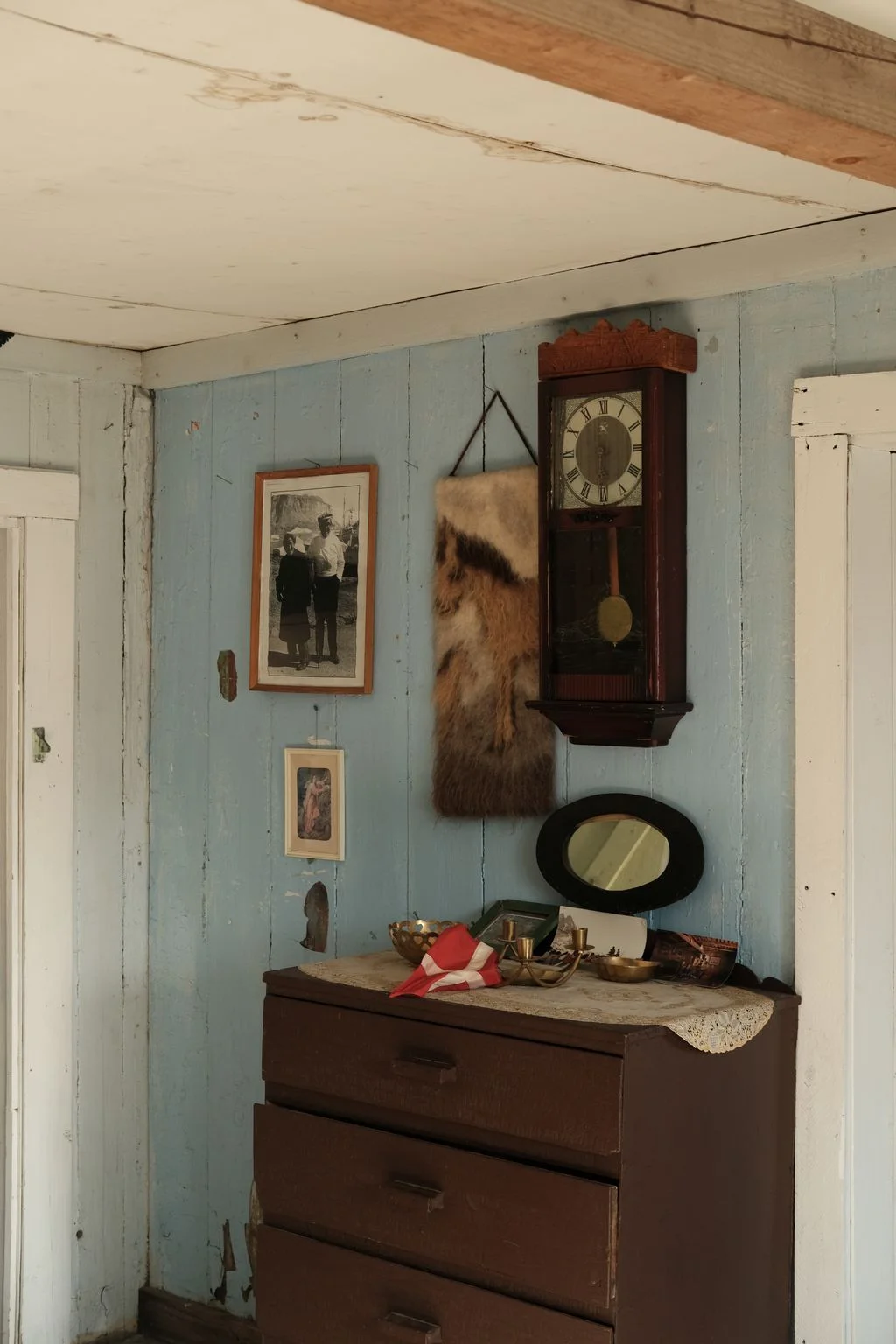
While less common, there are also remnants or re-creations of native architecture. In Uummannaq, I toured a peat hut, a traditional Inuit home built from rock and turf. Inside, the interiors resembled what a traditional home would have looked like on the island: large sleeping platforms made from wood planks and covered in animal pelts, and a wood burning stove in a corner. Demonstrating Greenland’s spirit of self-sufficiency, the survival-first, practical homes were often used primarily in winter by a largely nomadic society.
One of my favorite activities was among the simplest. At a roughly 80-person village in the Itilleq Fjord, the Viking team arranged for us to enjoy a kaffemik—a traditional social gathering centered around coffee—with locals, who invited travelers into their homes. I walked past a dirt soccer field to a red, square-planned wooden home, where a grandmother and two granddaughters welcomed us inside. While enjoying a homemade apple cake, I spoke with the women about what it was like to have multiple cruise ships pass through the tiny village each week. They told our group about fishing, hunting, and traditional Inuit games. We, naturally, had many differences, but also found similarities: The oldest granddaughter was in college studying to be a journalist.
When I returned to the ship each afternoon, I still felt a sense of adventure—one that is cleverly cultivated by the vessel’s design. Each member of the Viking fleet pulls from the same design vernacular: a neutral palette, Scandinavian-inspired furniture, clean lines, and natural materials. Richard Riveire, principal of Rottet Studio and Viking’s primary designer, calls it residential modernism. “We started there, then found ways to add in this singular experience,” he says.
At the Aquavit Terrace bar, bottles of gin and whisky are displayed on shelves shaped like skis—a very subtle, but totally delightful, detail. A display of felted birds on the second deck transitions from Antarctic penguins to Arctic terns, an homage to Octantis’s route. A playful wallpaper recreated from a textbook diagram depicts a whale in the Living Room. Throughout the entire ship are images of distinctly polar subject matter, from fine art photography that captures the vivid purples and greens of the Northern Lights to field-note-style snapshots of historic expeditions.
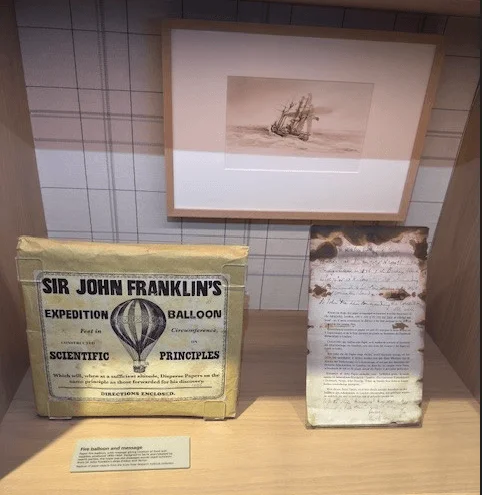
In the Explorer’s Lounge, a moody seating area filled with live music most nights, floor-to-ceiling shelves held objets that feel less like decor and more like artifacts collected during a whirlwind journey. My personal favorite: a small parcel on a bottom shelf, wrapped in what looked like brown paper with the words “Sir John Franklin’s Expedition Balloon” in bold letters on the front. Following the crew’s disappearance, these balloons were produced for search parties to release throughout the Northwest Passage. They included a note “giving location of food and supplies…the hope was the messages would reach survivors of Sir John Franklin’s ships,” a plaque, similar to a museum display, read. Other shelves held magnifying glasses, traditional snow goggles, and a recreated cairn.
I was certainly the right target for this type of subtle, I Spy design. After seeing the Franklin balloon, I had to know more about the rescue operations, and I began to look it up—let’s just say I was deep in the Wikipedia rabbit hole. (Would you believe me if I said the Resolute Desk in the Oval Office plays into this story? Look it up!) Now, I’ve lived a little part of that tale in my own small way. And isn’t that the whole point of traveling? Getting to be a part of something so much bigger than yourself? So maybe in the end I did get my moment of reflection, I just had to defrost a bit first.