Sometimes a piece of furniture does more than anchor a room—it forges a friendship and sparks a home renovation. For Waltham, Massachusetts–based homeowner Amanda Knorr, founder of Knosen Antiques, and Utah interior designer Meta Coleman, a shared love of antique wooden sleigh beds sparked an intentionally slow-paced renovation of the 1930s Cape Cod–style house that Knorr shares with her husband, David Senft, and son, Isaac. “I was like, ‘Oh, this is my person,’” Knorr recalls of her early conversations with Coleman.
Over five years, the pair gathered furnishings, art, and antiques to shape an inviting ode to the past—snug and soulful, sentimental and nature-filled, with earthy colors offset by bold, saturated moments of Americana. Like squirrels preparing a winter cache, they collected objects patiently, adding layers over time.
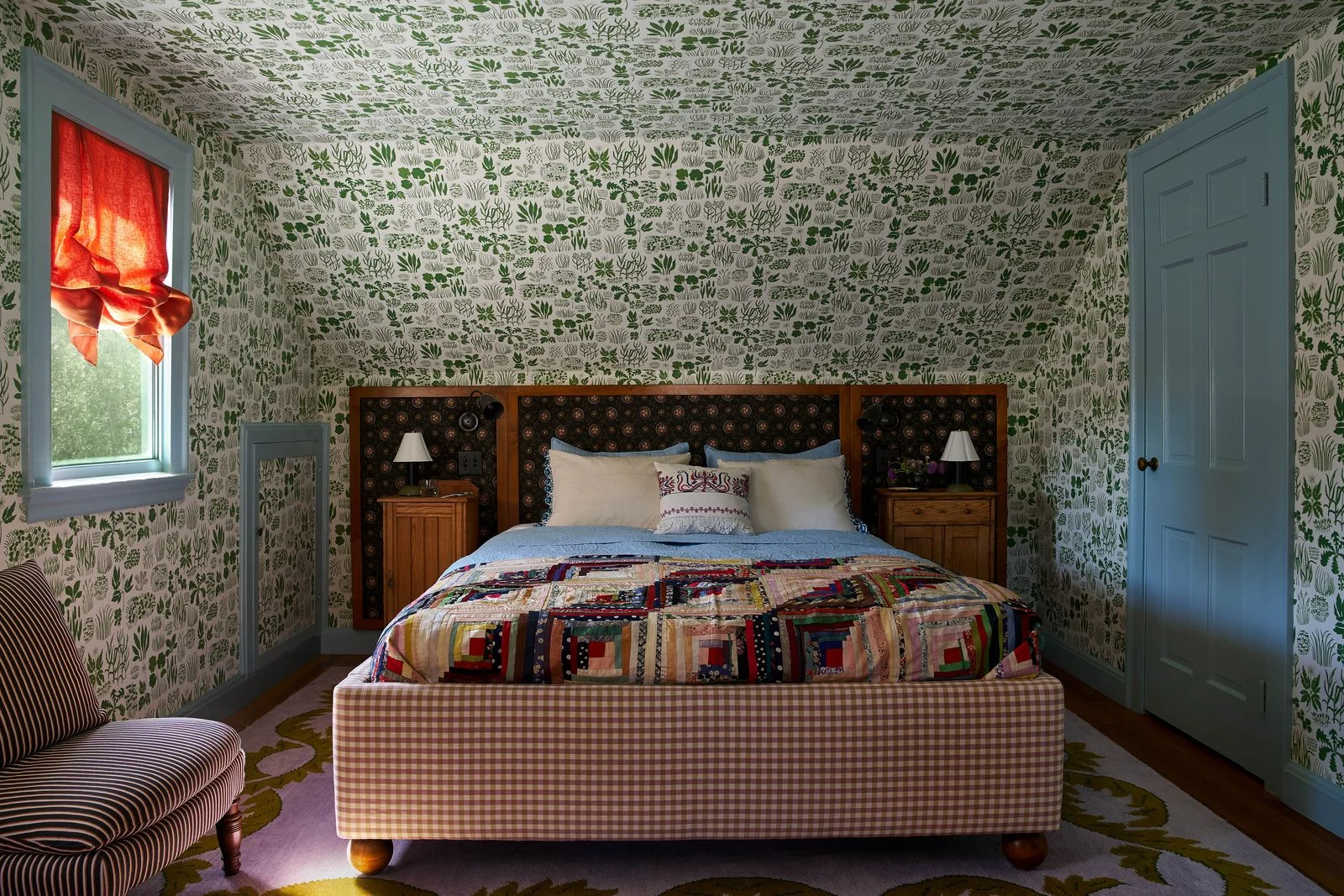
In the son’s bedroom, a sleigh bed from Knosen Antiques takes pride of place, where Mark Hearld’s Squirrel & Sunflower wallpaper sends a parade of woodland creatures marching across the walls. The choice feels especially fitting for a child who, when the project began in 2020, was a three-year-old whose pockets were perpetually filled with acorns, pinecones, rocks, and sticks. Inspired by Isaac’s small trove of treasures—and perhaps their own collecting instincts—Knorr and Coleman threaded a squirrel motif quietly throughout the home, with acorn details appearing in several rooms.

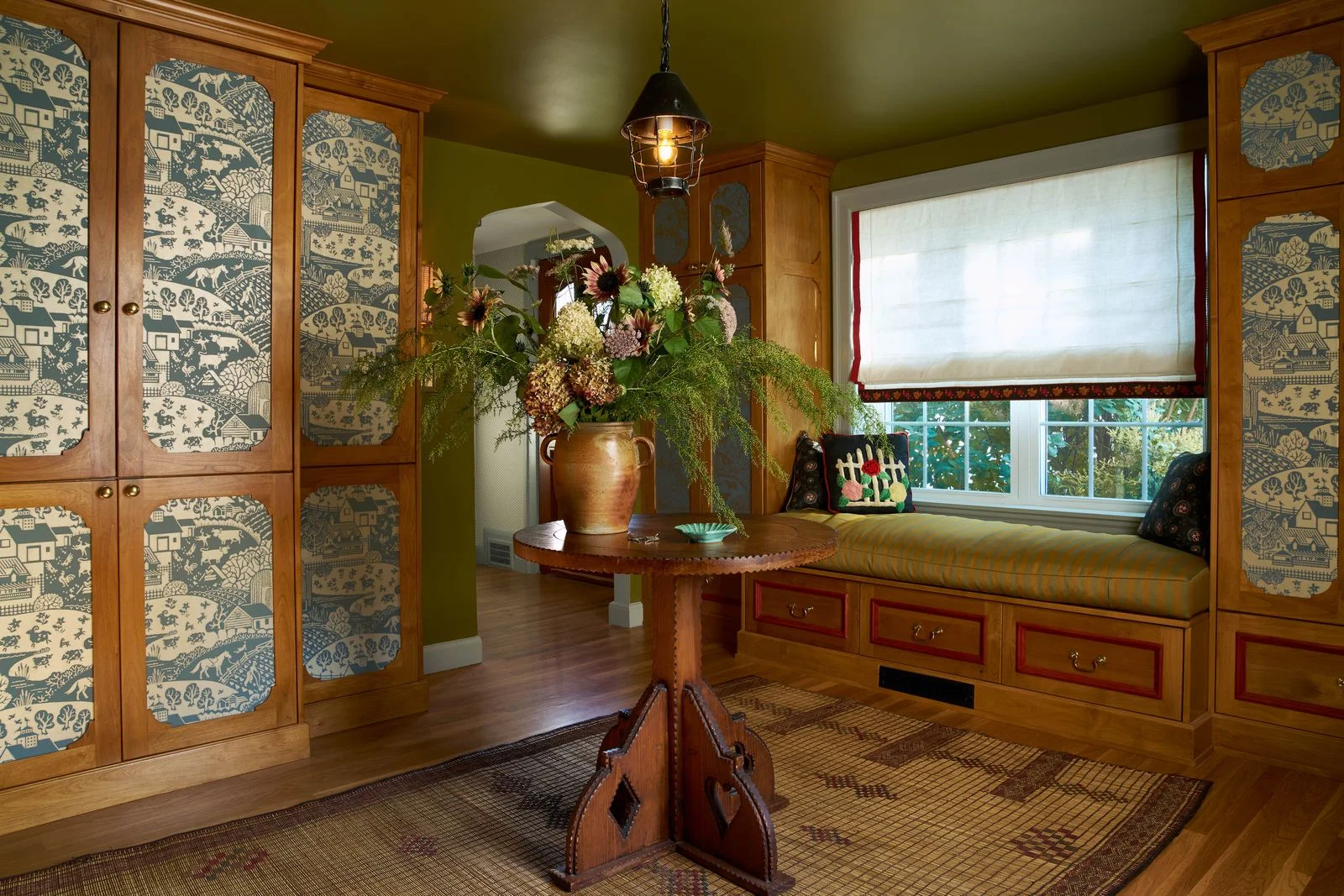
Coleman’s process begins with an exhaustive questionnaire designed to “get into the mind of the client, because they’re the main inspiration for the interiors.” After learning how the family lives, the designer rejiggered the floor plan—moving a staircase, lowering a ceiling, and transforming an impractical formal dining room into a dreamy mudroom entry with custom cabinetry inlaid with bucolic Farrow & Ball wallpaper depicting scenes of farm life. “Once you have a good layout, everything else kind of falls into place,” says Coleman—an ethos reflected in a layered mix where tramp art meets art nouveau and traditional English details brush up against Greek Revival notes.
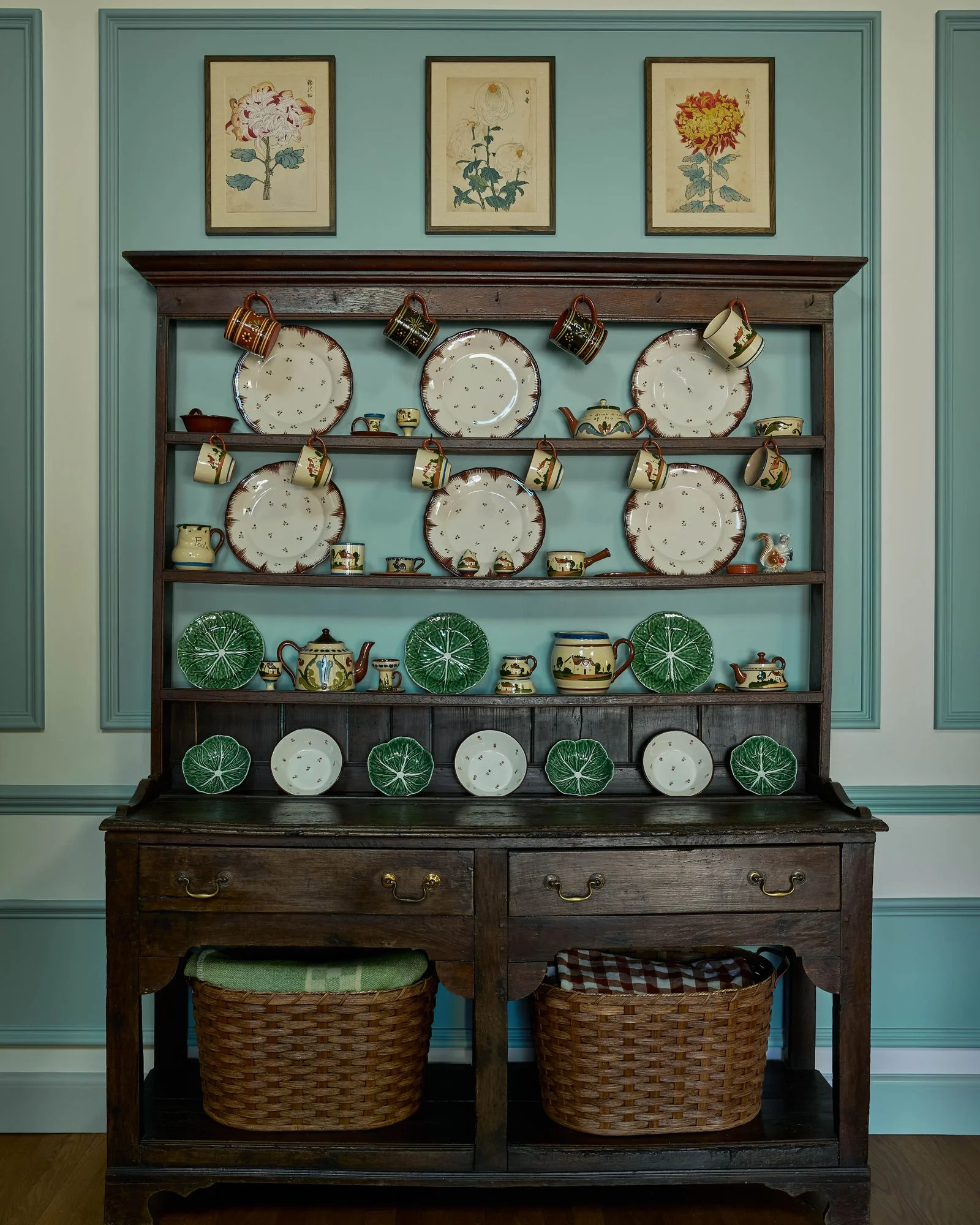
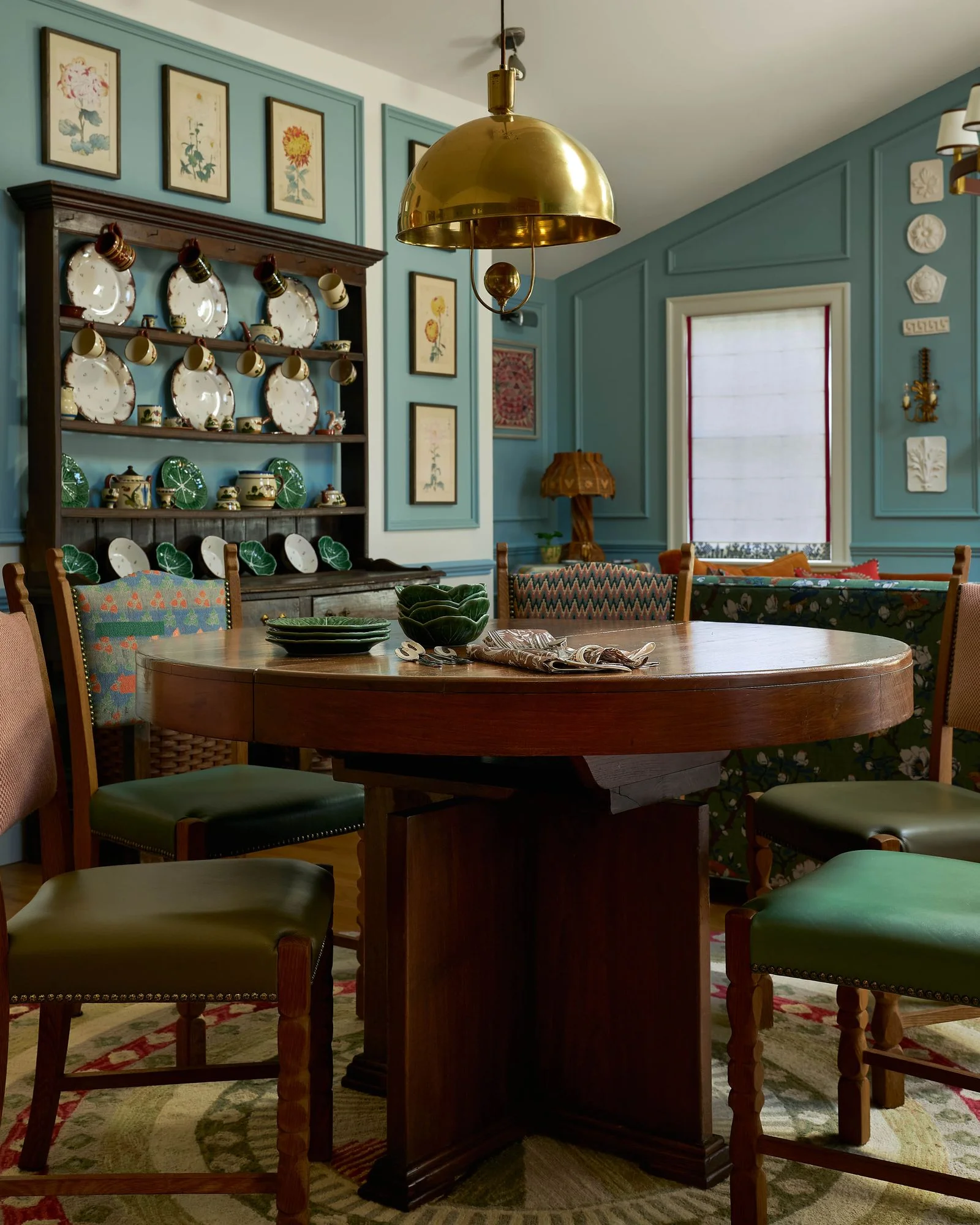
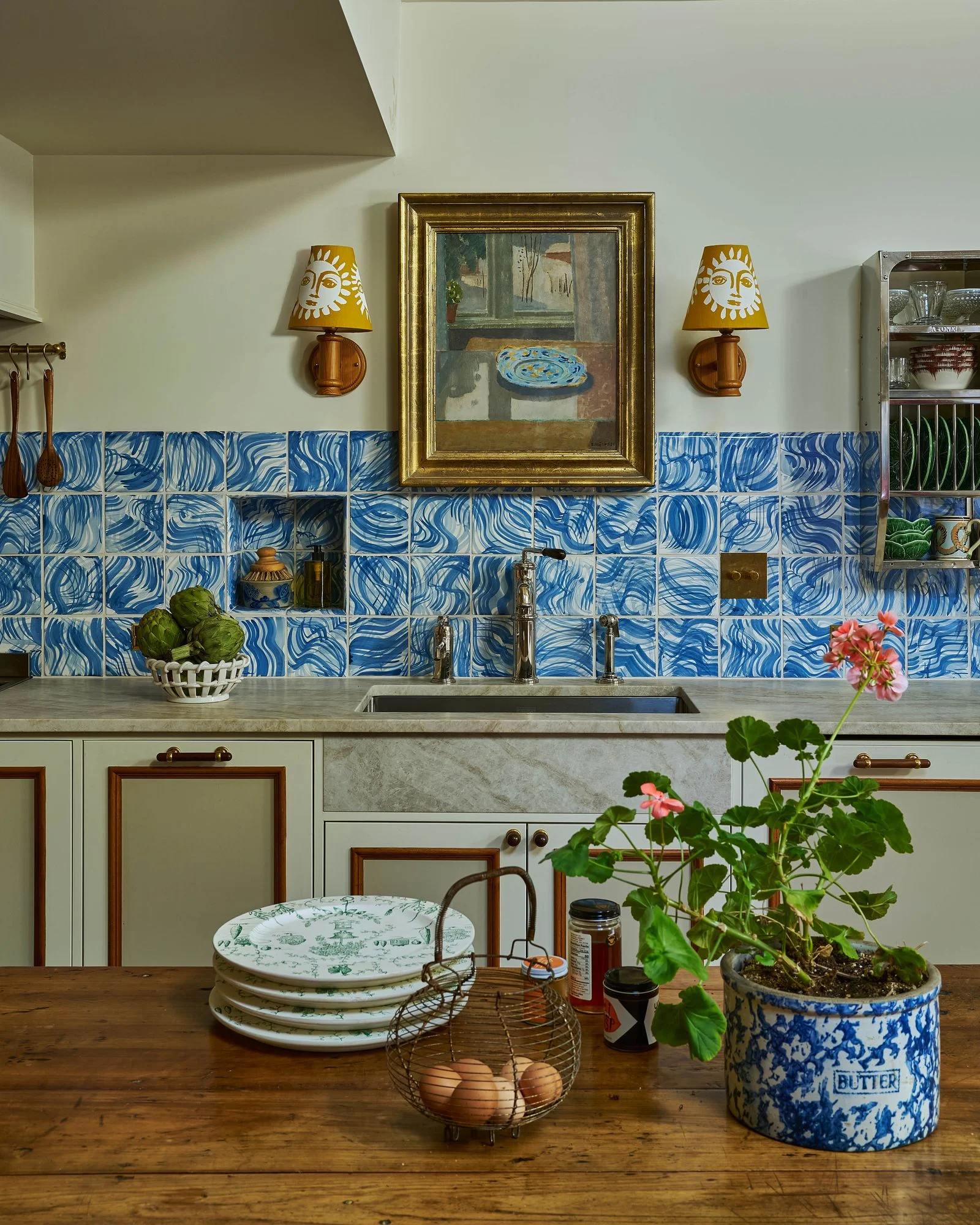
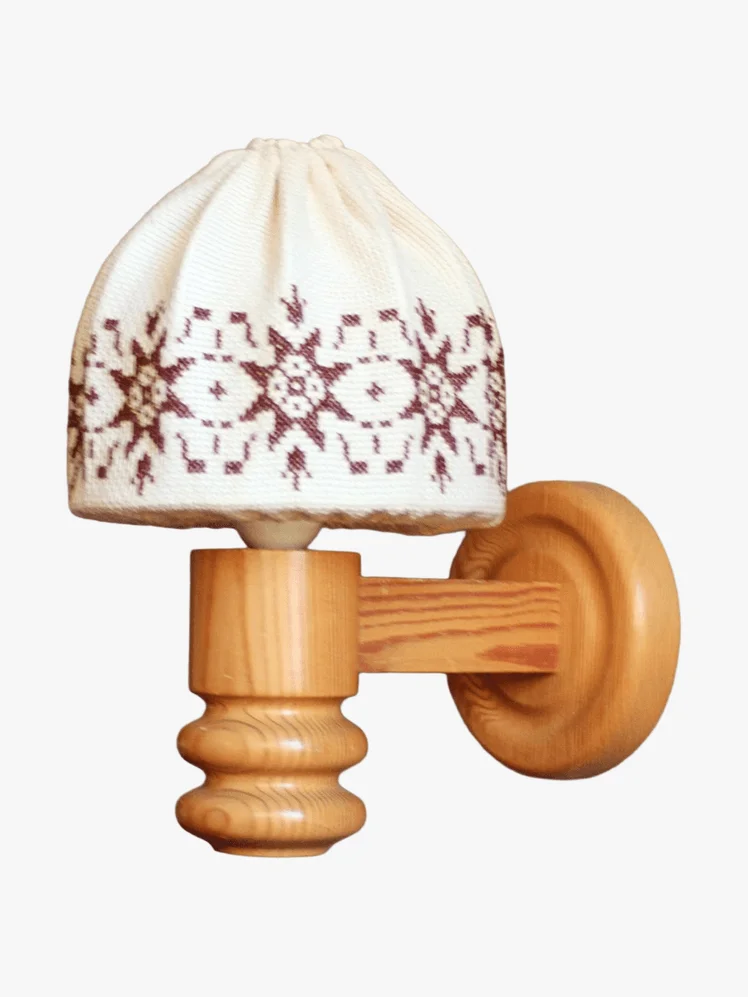
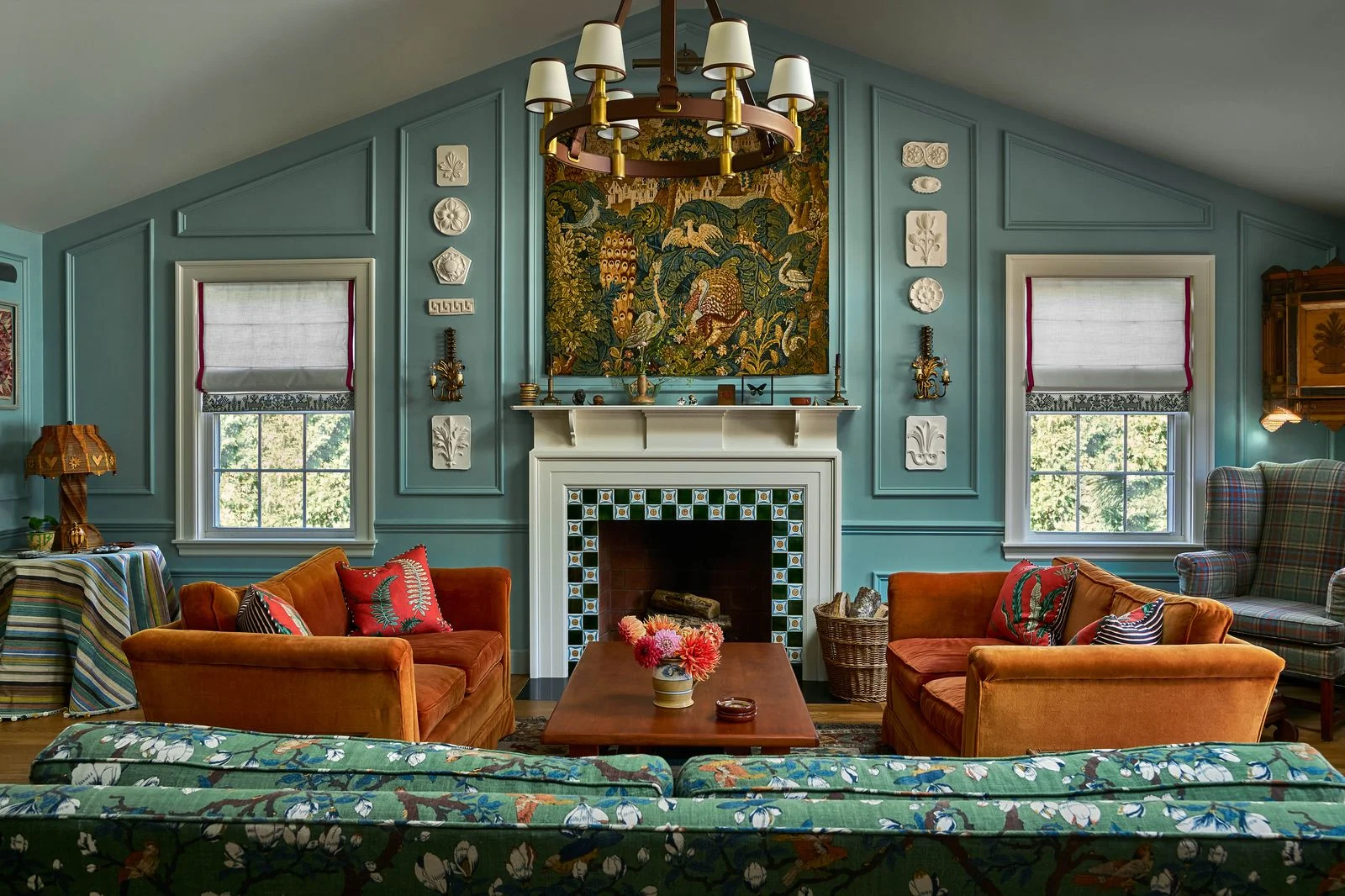
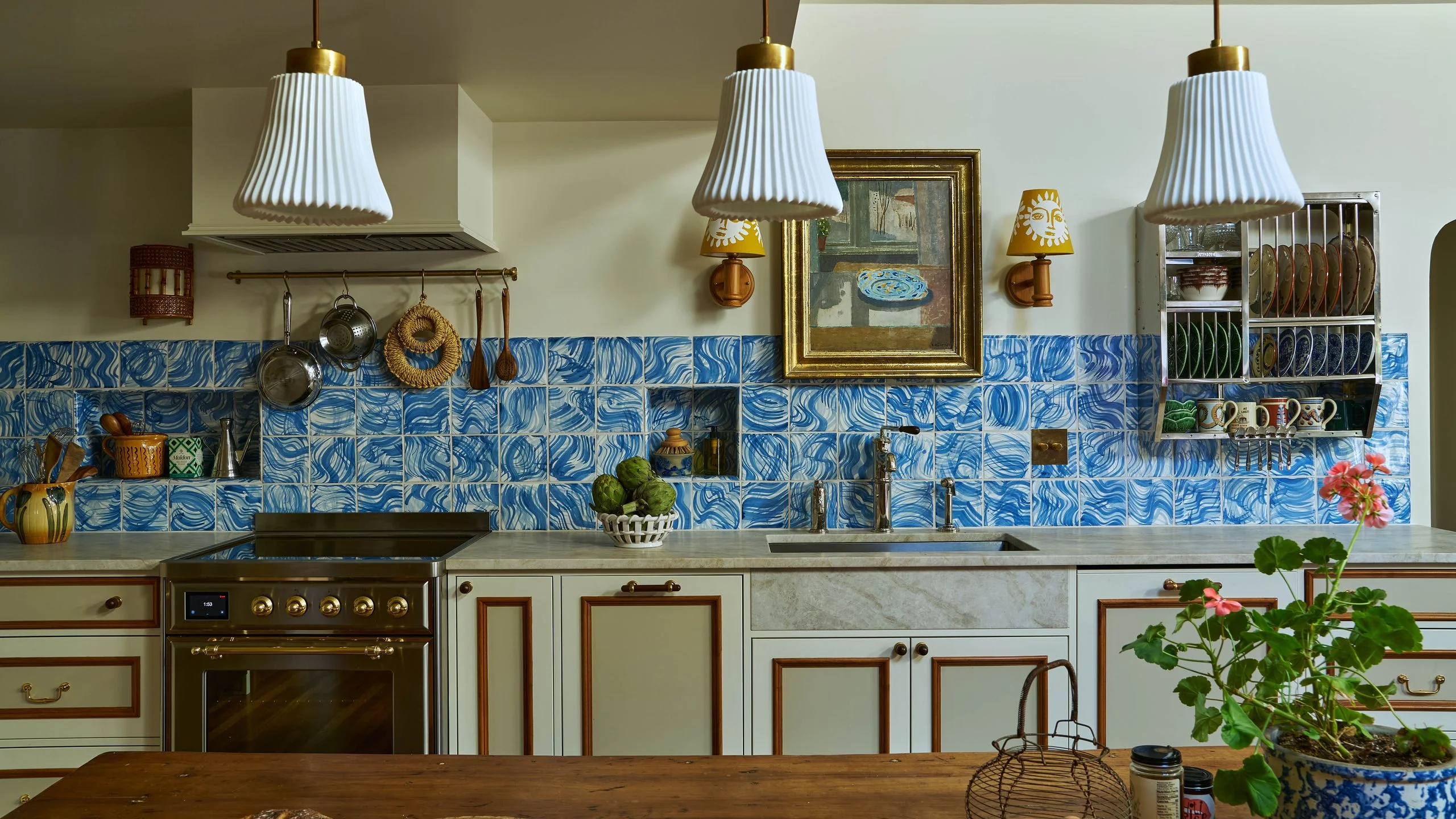
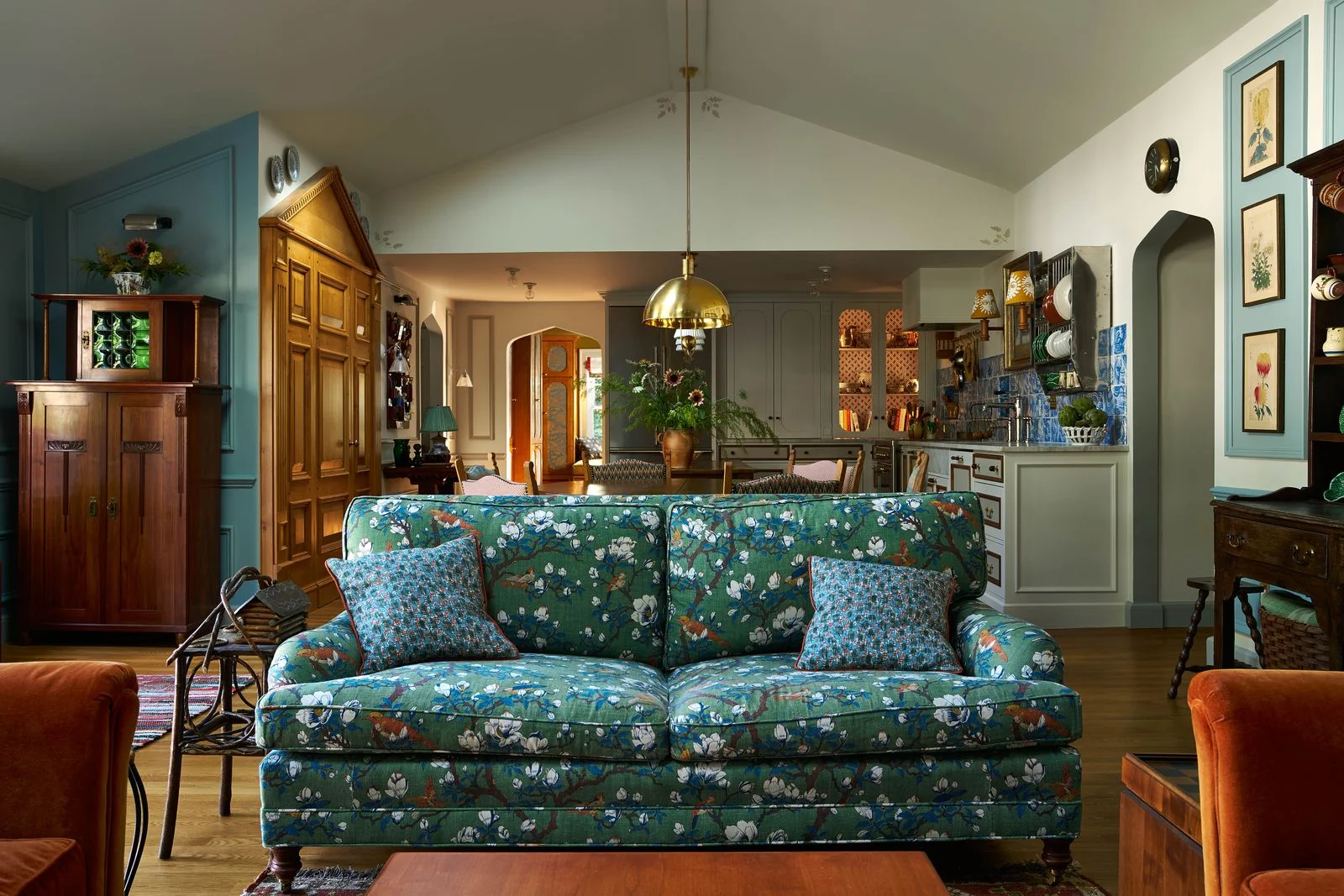
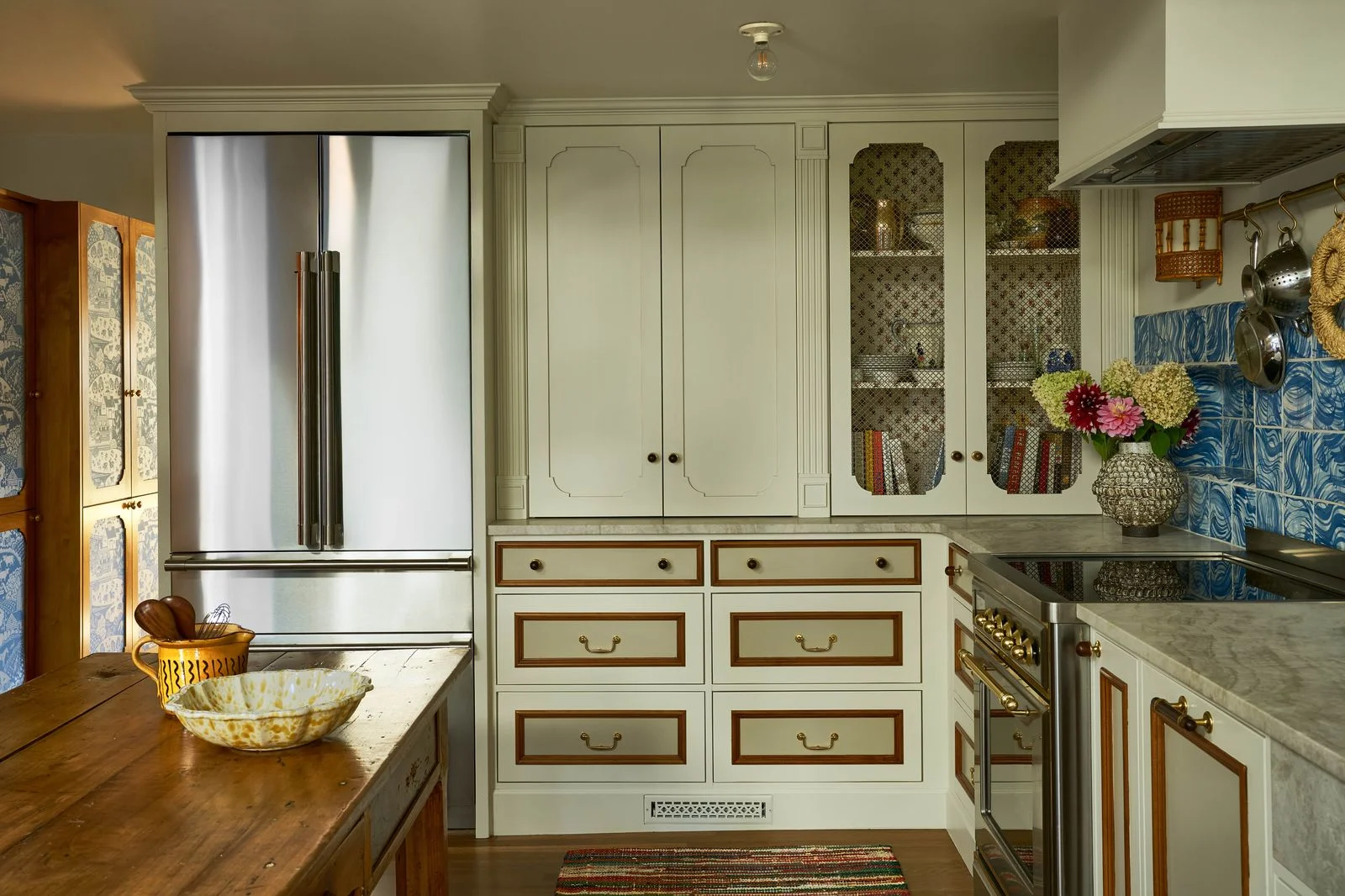
The payoff of Coleman’s layout logic is most evident in the kitchen-dining-living space, where Knorr’s top priority was a sense of coziness. “Cozy is really important to me, and [it’s] a really lived-in feel—pattern, color, textures. And I think that’s where Meta really shines,” she says, adding that the designer “does not waver” on her vision: “She’s even keeled.” Meanwhile, function was equally important. For the warm, lively L-shaped kitchen, Coleman designed millwork that mixes stained trim with two-toned painted cabinetry for depth and dimension, layering in energetic custom Balineum tiles that she likens to marbled Delftware, and vintage sconces. Knorr sourced a charmingly nicked 19th-century French cherry baker’s table—now used as the island—to “ground the space and make it not feel too new,” she says. “The emotion behind certain pieces, you can really feel it sometimes, and I love that,” she adds.
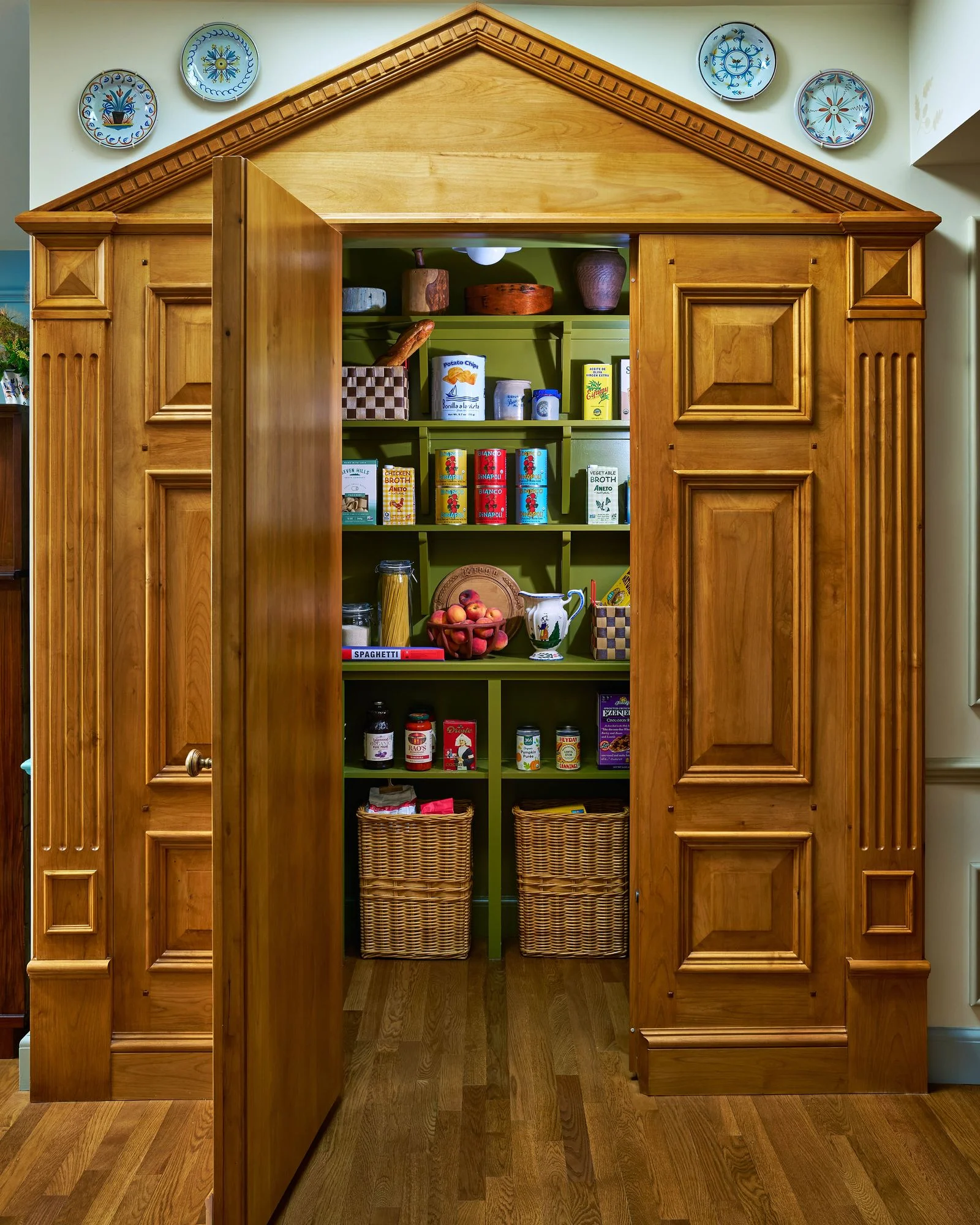
Perhaps the most eye-catching feature is the green-walled pantry concealed behind a pedimented façade with Greek-style columns, molding, paneling, and a hidden door. “I have always loved jib doors,” says Coleman, who designed the façade. “I love that sense of secretiveness.” The family has affectionately dubbed the hidden space “the confessional.” “It’s fun to use,” the designer adds. “When you can elevate the everyday, it just makes for joy in living.”
According to Knorr, joy is what the unhurried, lovingly assembled house provides consistently. “For me, it’s cozy, and inviting, and colorful, and that’s exactly what I wanted in my home. I wanted it to be dynamic and a mix of old and new, with little treasures everywhere,” says the antique lover. “It’s impossible to walk into this space and not feel something.”